
In the rapidly evolving landscape of music technology, the intersection of ancient mathematical theory and modern software engineering has birthed a new era of digital creativity. To the uninitiated, the term “tetrachord” might sound like a relic of ancient Greek philosophy or a niche concept buried in a dusty music theory textbook. However, for software developers, AI researchers, and digital signal processing (DSP) engineers, the tetrachord represents something much more functional: a fundamental data structure for sound.
Understanding what a tetrachord is—and how it functions within the context of technology—is essential for anyone involved in the development of generative AI, MIDI sequencing software, or digital audio workstations (DAWs). At its core, a tetrachord is a series of four notes spanning the interval of a perfect fourth. In the digital realm, these four notes serve as the foundational building blocks for scales, modes, and complex harmonic algorithms that power today’s most sophisticated audio tools.

Understanding the Framework: The Tetrachord as a Data Structure
To build software that understands music, one must first translate musical concepts into logical frameworks. In technology, we often view a tetrachord not just as a musical interval, but as an array of four specific values. This structural approach allows programmers to automate the creation of musical scales and harmonies with mathematical precision.
From Ancient Theory to MIDI Logic
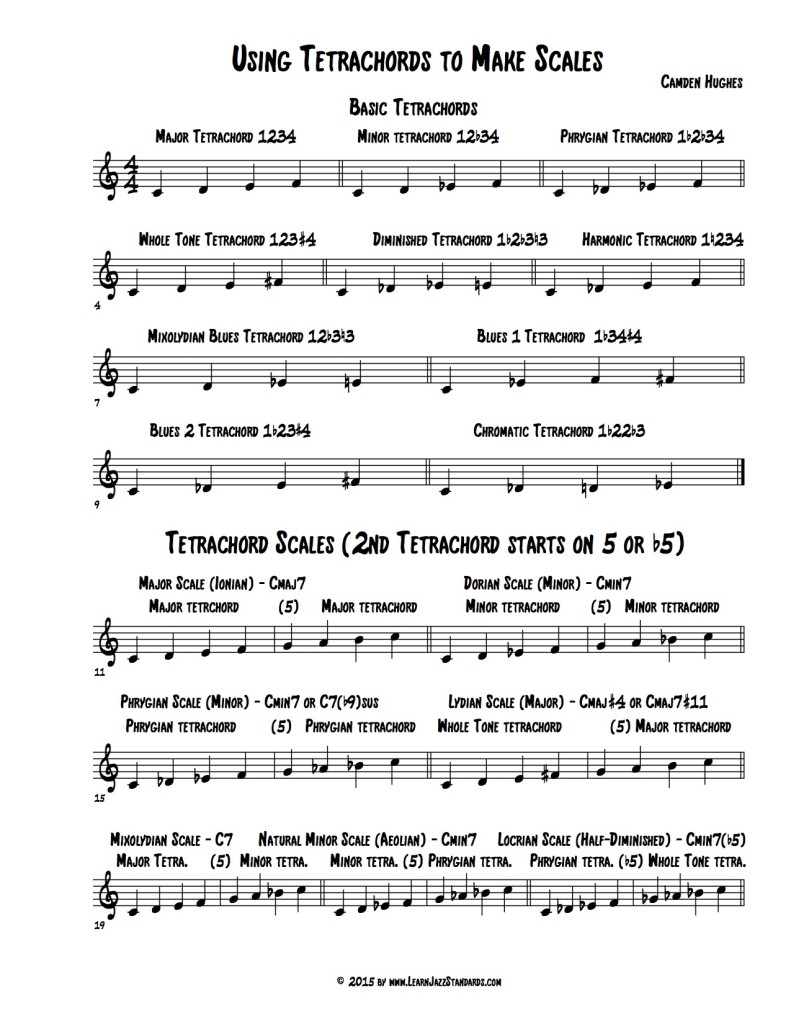
Historically, the tetrachord was the basis of the Greater Perfect System in ancient Greece. Fast forward to the 21st century, and this system has been digitized. In MIDI (Musical Instrument Digital Interface) programming, a tetrachord is represented by a sequence of four integers. For example, a major tetrachord follows a specific pattern of intervals: Whole step, Whole step, Half step (W-W-H).
When a developer writes code for a virtual instrument, they utilize these patterns to ensure that when a user selects a “Major Scale,” the software correctly populates the notes. By stacking two tetrachords together with a whole step in between, the software generates a complete heptatonic (seven-note) scale. This modularity is a hallmark of efficient software design.
The Four-Note Foundation of Scalable Audio Algorithms
Why stop at four notes? In computing, modularity is key to scalability. By breaking a scale down into two tetrachordal components, developers can create “algorithmic flexibility.” For instance, if a developer wants to create a software tool that explores microtonal music (music using intervals smaller than a semitone), the tetrachord provides a manageable unit of measurement to manipulate frequency ratios.
By treating the tetrachord as a “logic gate” for melody, developers can create software that predicts the next note in a sequence or suggests harmonies based on the structural properties of the four-note set. This is the bedrock upon which modern “smart” plugins are built.
Powering the AI Revolution: Generative Music and Tetrachordal Logic
The current boom in Artificial Intelligence has significantly impacted the music industry. Tools like Suno, Udio, and various Google Magenta projects rely on deep learning models that have been trained on vast datasets of musical theory. At the heart of these models lies the ability to recognize and replicate the structural patterns of the tetrachord.
Pattern Recognition in Neural Networks
Artificial Intelligence doesn’t “hear” music the way humans do; it processes patterns. When a neural network is tasked with composing a melody, it looks for the most statistically probable sequence of notes. Because Western music is heavily reliant on the diatonic scale—which is composed of two tetrachords—AI models use tetrachordal logic to maintain “harmonic cohesion.”
If the AI initiates a melody using a Lydian tetrachord (Whole-Whole-Whole), the underlying tech recognizes the unique “augmented” character of that structure and ensures the subsequent notes follow a consistent logic. This prevents the AI from producing dissonant or “broken” melodies, making the output sound more human and intentional.
Automating Harmonic Progression with Procedural Generation
In game development, procedural audio is used to create soundtracks that change dynamically based on player actions. Tech lead developers use tetrachordal building blocks to ensure these transitions are seamless. By swapping the “upper tetrachord” of a scale while keeping the “lower tetrachord” the same, the software can shift the emotional tone of the game’s music (e.g., from Major to Mixolydian) without a jarring break in the audio stream. This application of tetrachordal theory is a prime example of how classical music principles are hard-coded into the user experiences of the digital age.
Software Engineering for Virtual Instruments (VSTs)
Virtual Studio Technology (VST) has revolutionized how music is produced. Modern VSTs often include “scale assistants” or “chord triggers” that help producers stay within a specific key. These features are built entirely on the logic of the tetrachord.
Quantization and Scalar Mapping
When a producer plays a “wrong” note on a MIDI controller, software can use “quantization” to snap that note to the nearest correct pitch. To do this efficiently, the software refers to a map of intervals. By defining the scale as a combination of tetrachords, the software engine can perform real-time calculations with minimal latency.
For developers, using tetrachords as a reference point simplifies the math involved in transposition. Instead of calculating 12 individual semitones, the engine can simply “shift” the tetrachordal block up or down the frequency spectrum. This efficiency is crucial for mobile apps and web-based DAWs where processing power may be limited.
UX/UI Design for Music Creation Apps
The influence of the tetrachord extends even to the User Interface (UI). Many modern apps designed for beginner musicians use visual “grids” or “pads” to represent musical notes. Developers often group these notes into sets of four to align with the natural human tendency to perceive rhythm and melody in four-note clusters (related to the tetrachord). This makes the technology more intuitive, lowering the barrier to entry for creative expression.
The Digital Evolution of Tuning Systems and Global Music Tech
While Western music focuses on the diatonic tetrachord, global music technology must account for a wider variety of structures. The versatility of the tetrachord makes it an ideal tool for developers building software for global markets.
Integration of Maqam and Raga into Digital Platforms
In Middle Eastern music (Maqam) or Indian Classical music (Ragas), tetrachords—often called jins or angas—are the primary units of construction. Technology companies looking to expand into these markets must build software that supports non-Western interval structures.
Modern tuners and composition apps now use “microtonal tetrachords” as a standard for their algorithms. By allowing users to adjust the “cents” (1/100th of a semitone) within a tetrachordal structure, tech firms are creating inclusive tools that honor diverse musical traditions while maintaining the structural integrity of the software.
Data Compression and Audio Synthesis
In the realm of Digital Signal Processing, researchers are constantly looking for ways to compress audio data without losing quality. Some experimental synthesis techniques use “structural modeling” where, instead of recording every note, the software records the mathematical “seed” of a scale—often a tetrachord—and reconstructs the audio using additive synthesis. This represents a frontier where music theory meets high-end computational efficiency.

Conclusion: The Coding of Creative Expression
The question “What is a tetrachord?” might begin with an answer rooted in music theory, but in today’s world, the answer is undeniably technological. The tetrachord is a fundamental unit of data, a logical framework for AI, and a modular component in software engineering.
As we move further into the era of AI-driven creativity and sophisticated digital audio, the ability to bridge the gap between human artistry and machine logic becomes increasingly vital. By leveraging the ancient simplicity of the tetrachord, developers are building the complex, intuitive, and powerful tools of the future. Whether it is through a smartphone app that helps a child write their first song or a complex neural network generating a cinematic score, the tetrachord remains the silent, four-note engine driving the digital symphony.
aViewFromTheCave is a participant in the Amazon Services LLC Associates Program, an affiliate advertising program designed to provide a means for sites to earn advertising fees by advertising and linking to Amazon.com. Amazon, the Amazon logo, AmazonSupply, and the AmazonSupply logo are trademarks of Amazon.com, Inc. or its affiliates. As an Amazon Associate we earn affiliate commissions from qualifying purchases.