
In the traditional world of linguistics, a sentence fragment is often viewed as a fundamental error—a breakdown in the structural integrity of communication. However, as we transition deeper into the digital age, the definition and implications of a sentence fragment have evolved significantly. For software developers, AI engineers, and digital content strategists, the sentence fragment is no longer just a grammatical “no-no”; it is a data point, a stylistic tool in UX design, and a challenge for Natural Language Processing (NLP) models.
Understanding what a sentence fragment is through a technological lens allows us to see how machines interpret human thought. Whether it is a code snippet failing to compile or an AI-powered editor flagging a missing predicate, the fragment represents an incomplete transfer of information. In this exploration, we will dive into the technical mechanics of sentence fragments and how modern technology manages, corrects, and even utilizes them for better digital communication.
The Mechanics of a Sentence Fragment: A Technical Overview
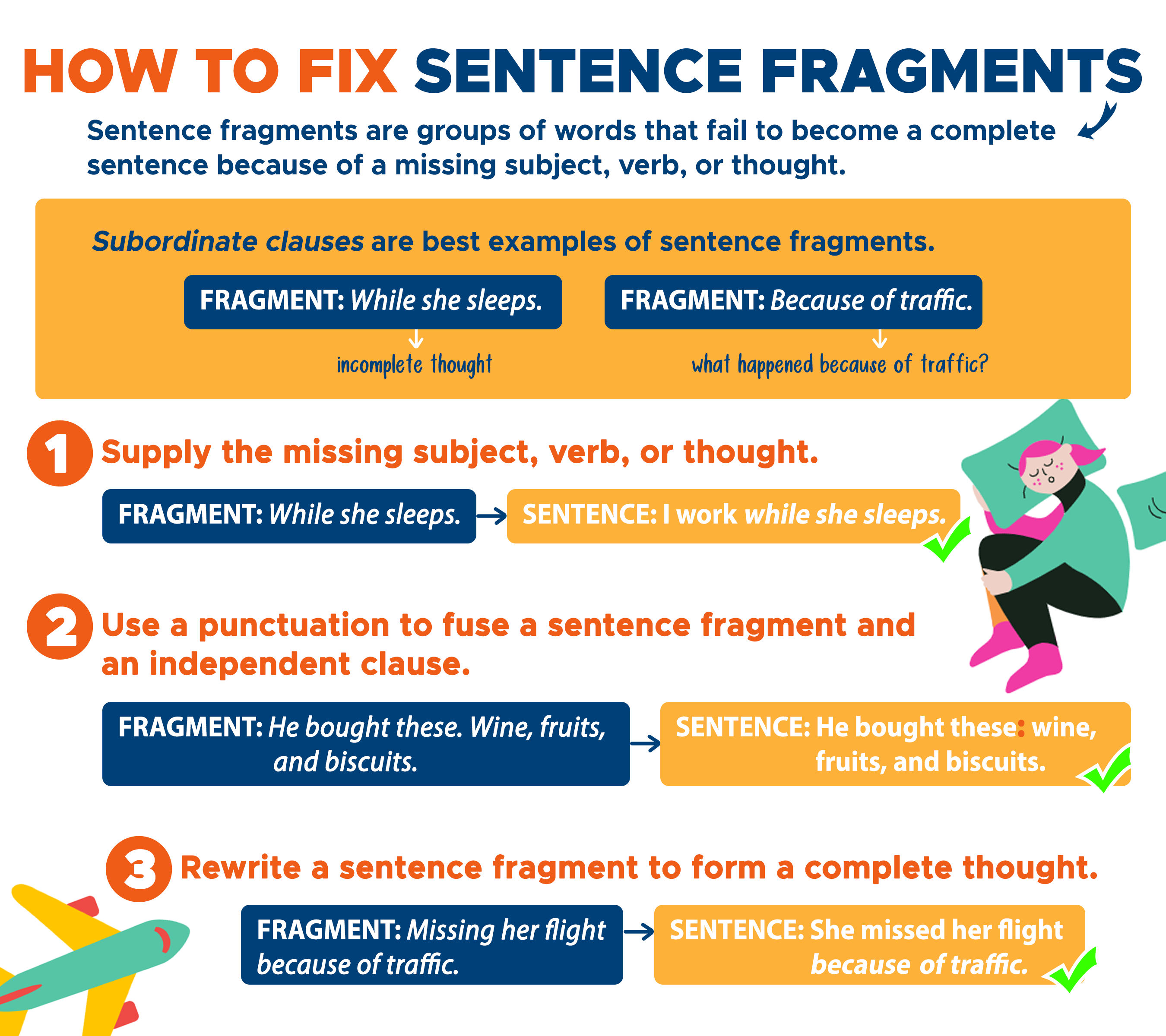
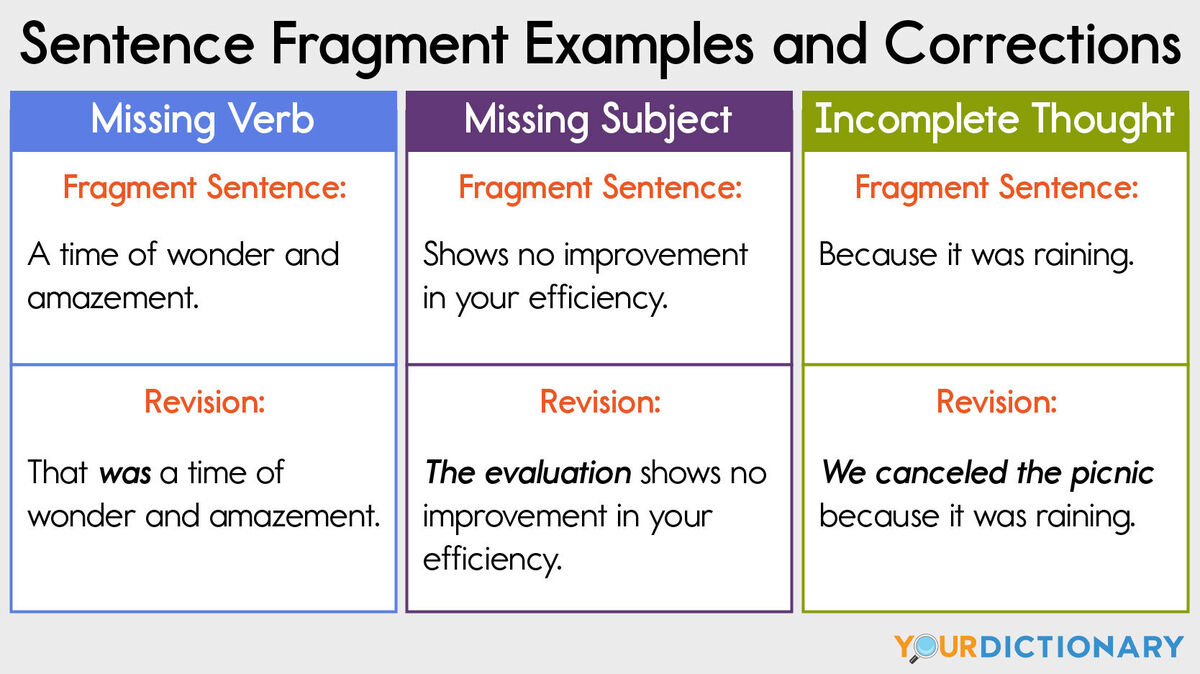
At its core, a sentence fragment is a group of words that looks like a sentence but lacks one of the essential building blocks required to stand alone: a subject, a verb, or a complete thought. In programming terms, you might think of a fragment as a line of code that lacks a terminating semicolon or a necessary closing bracket; the logic is started but never successfully executed.
Missing Subjects and Predicates
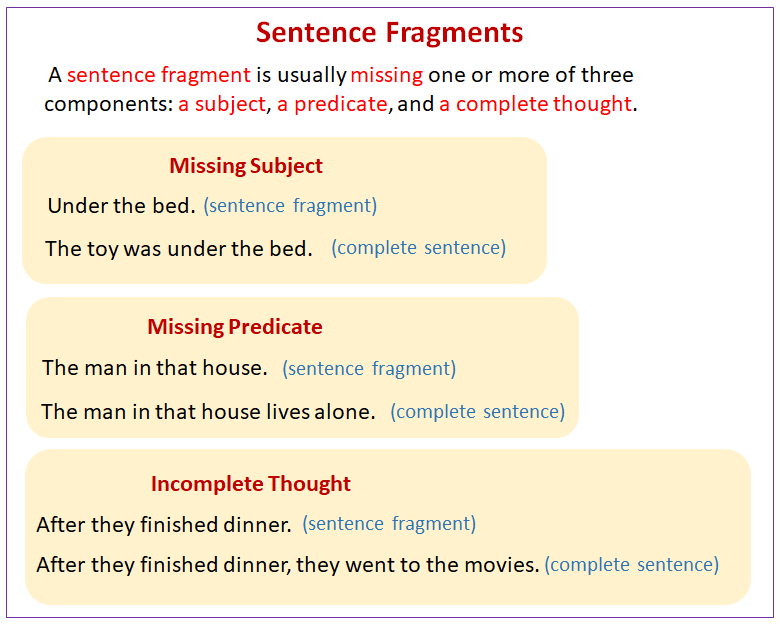
For an AI-driven grammar checker to identify a fragment, it first scans for the “hardware” of the sentence. The subject (the actor) and the predicate (the action) must be present and linked. When a writer provides a predicate without a subject—for example, “Running through the server room”—the software detects an orphan action. From a data processing perspective, this is an unresolved dependency. Tech-heavy documentation often falls into this trap when writers assume the subject is implied by the surrounding context, yet software requires explicit declarations to maintain high readability scores.
Dependent Clause Traps
Another common form of the fragment is the standalone dependent clause. These often begin with subordinating conjunctions like “because,” “although,” or “if.” In the context of technical writing for software manuals, a fragment like “Because the API key was invalid” leaves the user hanging. From a computational linguistics standpoint, these are “subordinate structures” that require a “main structure” to resolve their logical state. Modern AI tools are now trained to recognize these conditional loops that never reach a “then” statement, prompting users to connect the fragment to a main clause.
How Modern AI Tools Detect and Rectify Fragments
The leap from the simple spell-checkers of the 1990s to the sophisticated AI writing assistants of today—such as Grammarly, Hemingway, and ChatGPT—has changed how we interact with sentence fragments. These tools do not just look for missing periods; they perform deep syntactic analysis to understand intent.
Deep Learning and Syntactic Analysis
Contemporary editing software uses Neural Networks to parse human language. When you type a sentence fragment into a cloud-based editor, the system isn’t just checking a dictionary. It is using “Part-of-Speech” (POS) tagging to label every word. By analyzing the sequence of tags, the AI can see that a “Noun Phrase” is followed by a “Participle” without a “Finite Verb.”
The technology uses transformers—the same architecture behind Large Language Models (LLMs)—to predict what the rest of the sentence should have been. This is why a modern AI tool can suggest not just that you have a fragment, but specifically how to fix it based on the probability of the next logical word in a technical sequence.
The Evolution from Rule-Based to Context-Aware Editing
Older technology relied on “if-then” rules. If a group of words started with a capital letter and ended with a period but didn’t have a verb, the software flagged it. This was often inaccurate, especially in technical writing where “Save and exit.” is a functional command.
Modern “Context-Aware” AI understands that in a technical tutorial or a software interface, brevity is often prioritized over formal syntax. These tools use machine learning to differentiate between an accidental fragment (an error) and a “rhetorical fragment” used for emphasis or speed. This nuance is critical for developers who need to write clear, punchy documentation that adheres to the “Don’t Make Me Think” philosophy of UX design.
Sentence Fragments in the Digital User Experience (UX)
While fragments are generally avoided in long-form essays, they are the lifeblood of the tech industry’s User Interface (UI) and User Experience (UX) writing. In the world of app development, the sentence fragment is a feature, not a bug.
Microcopy and App Interface Design
Microcopy refers to the small bits of text on buttons, error messages, and tooltips. “Login successful.” “Checking for updates…” “Incorrect password.” None of these are technically complete sentences, as they often lack subjects or formal verb structures. However, in the tech world, these fragments are more effective than complete sentences.
A full sentence like “The system has successfully completed your login process” takes too much cognitive load and screen real estate. Technology leverages fragments to create a streamlined, efficient dialogue between the machine and the human. Here, the “fragment” is a design choice that prioritizes the speed of information transfer over the rules of 18th-century grammar.
Voice Search and Natural Language Queries
The rise of voice-activated technology like Siri, Alexa, and Google Assistant has normalized the use of fragments. When a user asks, “Weather in San Francisco?” they are using a sentence fragment. Technology has had to adapt to this “fragmented” input.
Search algorithms are now designed to perform “Entity Recognition” on fragments. They identify the “Entity” (San Francisco) and the “Intent” (Weather) without needing a subject or a verb. This has shifted the focus of SEO (Search Engine Optimization) away from rigid keyword matching toward understanding the “long-tail” fragments that users naturally speak into their devices.
The Impact of Sentence Fragments on SEO and Content Algorithms
For tech bloggers and digital marketers, the presence of sentence fragments can have a measurable impact on how algorithms rank their content. Google’s algorithms, particularly after the “Helpful Content” updates, prioritize readability and user intent.
Readability Scores and Google’s Preference
Most SEO tools, like Yoast or SEMrush, incorporate readability tests such as the Flesch-Kincaid scale. These algorithms penalize excessive use of complex, run-on sentences, but they also flag unintended sentence fragments as “unprofessional” or “low-quality.”
From a technical SEO perspective, a page riddled with accidental fragments may be perceived by the crawler as “thin content” or AI-generated gibberice. However, a strategic use of fragments—especially in bullet points or “How-To” steps—can actually improve a page’s “Time on Page” metric because it makes the technical information easier to scan. The key is distinguishing between a “broken” fragment and a “scannable” fragment.
Technical Writing vs. Conversational AI
As more companies integrate AI chatbots into their websites, the way these bots “speak” is being fine-tuned. A bot that speaks in perfectly structured, 20-word sentences feels robotic and slow. Developers are now programming conversational AI to use fragments to sound more human.
By mimicking the natural, fragmented speech patterns of humans—”Got it. Looking that up for you.”—technology is bridging the uncanny valley. The goal is to create a digital interaction that feels intuitive, even if it violates the strict rules of English composition.
Future Trends: Can AI Master Fragmentary Communication?
As we look toward the future of technology, the line between “correct” and “incorrect” grammar will continue to blur. The focus is shifting toward “Semantic Meaning”—does the message reach its destination?
Intent Recognition and Predictive Text
Future iterations of predictive text and Large Language Models are becoming so adept at “filling in the blanks” that the sentence fragment may become the primary mode of digital input. We are already seeing this in “Smart Compose” features in email clients, where the software suggests the remainder of a fragment before the user even thinks of it. This suggests a future where technology doesn’t just correct our fragments but anticipates them, turning our incomplete thoughts into completed actions.
The Synthesis of Style and Structure
The ultimate goal of tech-driven writing tools is the synthesis of human style with machine-grade structure. We are moving toward a world where software can analyze your “Brand Voice” and decide if a sentence fragment is appropriate for your specific technical niche. If you are writing a white paper on cybersecurity, the AI will likely suggest you fix every fragment to maintain authority. If you are writing a script for a tech-focused YouTube channel, the same AI might suggest adding fragments to create a more engaging, conversational flow.
In conclusion, a sentence fragment is more than just an unfinished thought; in the realm of technology, it is a fascinating intersection of linguistics, logic, and design. Whether through the lens of an NLP algorithm trying to parse a messy data set, or a UX writer crafting a three-word button, the fragment reminds us that communication is about more than just rules—it is about the efficient and effective transmission of meaning in an increasingly fast-paced digital world.
aViewFromTheCave is a participant in the Amazon Services LLC Associates Program, an affiliate advertising program designed to provide a means for sites to earn advertising fees by advertising and linking to Amazon.com. Amazon, the Amazon logo, AmazonSupply, and the AmazonSupply logo are trademarks of Amazon.com, Inc. or its affiliates. As an Amazon Associate we earn affiliate commissions from qualifying purchases.