
In the rapidly evolving landscape of medical technology, industrial engineering, and energy research, few subjects are as fundamental—yet as frequently misunderstood—as the radionuclide. While the term may sound like something relegated to a theoretical physics laboratory, radionuclides are, in fact, the technological workhorses behind some of the most advanced diagnostic tools and therapeutic treatments available today.
At its core, a radionuclide is an unstable form of a chemical element that releases energy as it decays. However, from a technology perspective, a radionuclide is a precise biological and industrial sensor. By understanding how these unstable atoms function and how we can engineer them, we unlock capabilities in imaging, precision medicine, and non-destructive testing that were previously relegated to the realm of science fiction.
Understanding the Core Technology: The Science of Unstable Atoms
To appreciate the technological value of a radionuclide, one must first understand the “hardware” of the atom. Every element on the periodic table is defined by the number of protons in its nucleus. However, atoms of the same element can have different numbers of neutrons; these variations are known as isotopes.
The Atomic Architecture: Nucleus and Neutrons
Most isotopes found in nature are stable. Their internal configuration of protons and neutrons is balanced, meaning they do not change over time. Radionuclides, however, are isotopes with an unstable nucleus. This instability arises from an excess of either protons or neutrons, or an excess of total energy within the nucleus.
From a technical standpoint, this instability is a feature, not a bug. Because the atom is “uncomfortable” in its current state, it seeks a more stable configuration by shedding energy. This process is known as radioactive decay. The energy emitted during this process—whether in the form of alpha particles, beta particles, or gamma rays—is what tech innovators harness for various applications.
Decay and Emission: The Technological Mechanism
The “software” of a radionuclide is its half-life—the predetermined amount of time it takes for half of the radioactive atoms in a sample to decay. In technology, we categorize radionuclides based on these half-lives.
Short-lived radionuclides are ideal for medical diagnostics because they provide high-intensity signals for a brief window before disappearing, minimizing exposure to the patient. Conversely, long-lived radionuclides are utilized in industrial gauges or power sources for deep-space probes, where a consistent energy output is required over decades. Engineering the right radionuclide for the right task is a cornerstone of modern radiotechnology.
Radionuclides in Medical Technology: From Diagnostics to Precision Treatment
Perhaps the most visible application of radionuclide technology is in the healthcare sector. Nuclear medicine has transitioned from a niche specialty to a primary pillar of diagnostic imaging and oncology.
Positron Emission Tomography (PET) Imaging
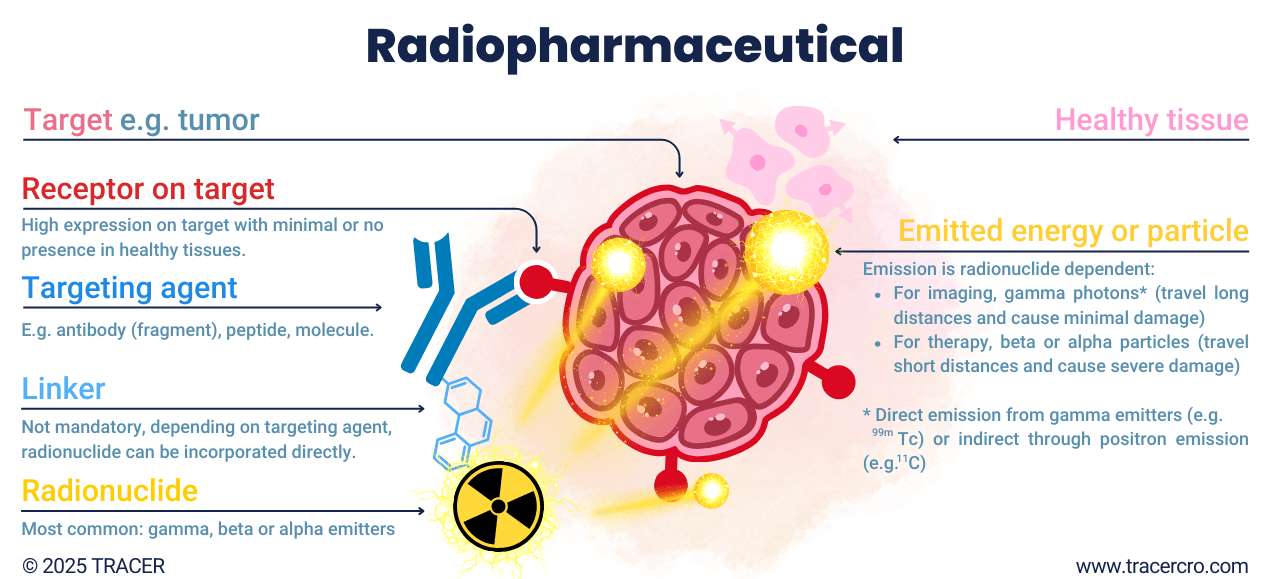
The PET scan is one of the most sophisticated pieces of diagnostic hardware in a modern hospital. It operates using radionuclides like Fluorine-18. In this technological process, the radionuclide is attached to a biological molecule (like glucose) to create a radiopharmaceutical.
Once injected, the PET scanner’s sophisticated software tracks the radionuclide as it travels through the body. Because cancer cells consume glucose at a higher rate than healthy cells, the “tech-tagged” glucose clusters around tumors. As the Fluorine-18 decays, it emits positrons that collide with electrons, producing gamma rays. The PET scanner’s detectors capture these rays and use complex algorithms to reconstruct a 3D map of the body’s metabolic activity. This allows doctors to “see” disease at a cellular level long before structural changes appear on an X-ray or MRI.
Targeted Alpha Therapy (TAT) and Radiopharmaceuticals
Beyond imaging, radionuclides are being utilized as “smart bombs” in cancer treatment. Targeted Alpha Therapy (TAT) represents a massive leap in medical tech. Unlike traditional external beam radiation, which can damage healthy tissue as it passes through the body, TAT involves attaching a radionuclide that emits alpha particles to a monoclonal antibody.
This antibody acts as a GPS, seeking out specific markers on the surface of cancer cells. Once the radionuclide reaches the target, it releases alpha particles. Because alpha particles have high energy but a very short range (only a few cell diameters), they destroy the DNA of the cancer cell without harming the surrounding healthy tissue. This is the pinnacle of precision medicine—a marriage of molecular biology and nuclear technology.

Industrial and Analytical Applications: More Than Just Medicine
While healthcare is a major driver of radionuclide demand, industrial technology relies heavily on these elements for quality control, safety, and environmental monitoring.
Non-Destructive Testing (NDT) in Engineering
In the world of civil engineering and aerospace, ensuring the structural integrity of a component without breaking it is a constant challenge. Radionuclides facilitate Non-Destructive Testing (NDT) through industrial radiography.
By using powerful gamma-ray-emitting radionuclides like Iridium-192, engineers can “X-ray” thick metal welds, pipelines, and aircraft turbine blades. The radiation passes through the object and is captured on a digital sensor or film. Any internal cracks, voids, or inclusions appear as anomalies on the scan. This technological application is vital for maintaining the safety of global infrastructure, from oil refineries to nuclear power plants.
Tracers in Environmental and Agricultural Tech
Radionuclides serve as high-tech “tracers” in environmental science. By introducing a small, safe amount of a radionuclide into a water system, researchers can use specialized sensors to map the flow of groundwater or detect the source of industrial leaks.
In agriculture, radionuclide technology is used to optimize fertilizer use. By labeling fertilizers with phosphorus-32, tech-savvy farmers and researchers can track exactly how much nutrient a plant absorbs and how much is lost to the soil. This data allows for the development of high-precision agricultural software that maximizes crop yields while minimizing environmental runoff.
Safety and Security: Managing Radiotechnology in the Digital Age
As with any powerful technology, the use of radionuclides requires robust security frameworks and sophisticated monitoring systems. The digital security of nuclear data and the physical security of radioactive sources are paramount.
Detection Systems and Nuclear Cybersecurity
The proliferation of radionuclides necessitates a global network of sensors. Modern radiation detectors are now integrated with IoT (Internet of Things) technology, allowing for real-time monitoring of radioactive materials as they move through ports and borders. These sensors feed data into AI-driven platforms that can distinguish between naturally occurring radiation (like that from granite or bananas) and potential security threats.
Furthermore, as nuclear facilities become more digitized, cybersecurity has become a critical focus. Protecting the software that controls radionuclide production and storage is essential to prevent “digital sabotage” that could lead to physical leaks or the loss of sensitive materials.
Waste Management and Robotic Disposal Solutions
One of the most significant technological hurdles in the use of radionuclides is the management of radioactive waste. This has spurred innovation in robotics and automation. Because of the hazards associated with high-level waste, many disposal facilities now utilize autonomous robots equipped with radiation-shielded sensors and high-precision manipulators. These machines can sort, package, and transport waste into deep geological repositories, removing the human element from high-risk environments.
The Future of Radionuclide Innovation: AI and Beyond
The next frontier of radionuclide technology lies at the intersection of nuclear physics, artificial intelligence, and nanotechnology. We are moving toward a future where radionuclides are more efficient, easier to produce, and more integrated into our digital lives.
AI-Driven Radiobiology and Predictive Modeling
Artificial Intelligence is currently being used to revolutionize how we discover and use new radionuclides. Predictive modeling software can simulate how a new isotope will decay and how its particles will interact with various materials or human tissues. This accelerates the R&D process, allowing scientists to bypass years of “wet lab” experimentation. AI is also enhancing the precision of radiopharmaceutical dosing, tailoring treatments to the specific genetic makeup of an individual patient’s tumor.

Emerging Isotopes in Nanotechnology
At the nanoscale, radionuclides are opening doors to new types of batteries and sensors. “Betavoltaic” cells—essentially nuclear batteries—use the decay of radionuclides like tritium to generate electricity. Unlike chemical batteries, these can last for 20 years or more without a recharge. While they don’t produce enough power for a smartphone yet, they are the perfect tech solution for low-power sensors in remote locations, medical implants like pacemakers, and deep-space hardware where solar power is not an option.
In conclusion, a radionuclide is far more than a scientific curiosity; it is a foundational technology that touches almost every aspect of modern life. From the sensors that ensure our airplanes are safe to the targeted therapies saving lives in oncology wards, these unstable atoms are the silent drivers of the technological age. As we continue to refine our ability to produce, manipulate, and secure these elements, the potential for radionuclide technology to solve some of the world’s most complex challenges remains limitless.
aViewFromTheCave is a participant in the Amazon Services LLC Associates Program, an affiliate advertising program designed to provide a means for sites to earn advertising fees by advertising and linking to Amazon.com. Amazon, the Amazon logo, AmazonSupply, and the AmazonSupply logo are trademarks of Amazon.com, Inc. or its affiliates. As an Amazon Associate we earn affiliate commissions from qualifying purchases.