
In the early days of the automotive industry, monitoring tire pressure was a manual, often neglected chore involving a handheld gauge and a bit of guesswork. Today, determining what is a “normal” PSI (pounds per square inch) for tires has evolved from a simple maintenance check into a sophisticated integration of hardware engineering, sensor technology, and real-time data analytics. As vehicles transition into “computers on wheels,” the air inside your tires has become a critical data point within the broader Internet of Things (IoT) ecosystem of the modern car.

Understanding normal PSI is no longer just about safety; it is about understanding the Micro-Electro-Mechanical Systems (MEMS) and the software algorithms that keep a vehicle performing at its peak.
Understanding PSI and the Engineering of Automotive Sensors
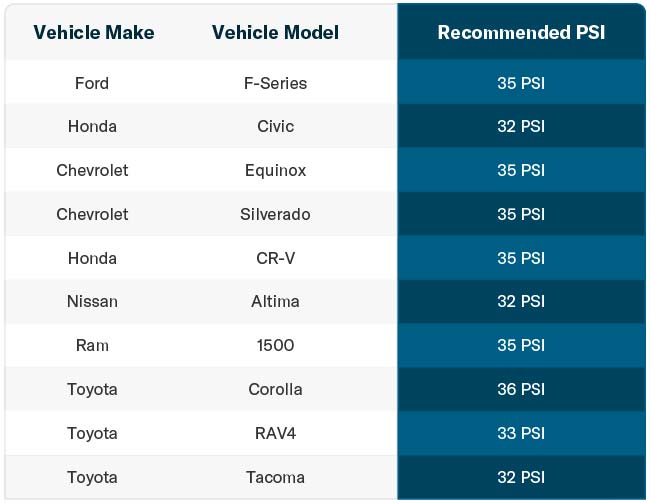
The term “normal PSI” typically refers to the manufacturer-recommended cold inflation pressure, usually found on a sticker inside the driver’s side door jamb. While this number—often ranging between 32 and 36 PSI for passenger vehicles—seems static, the technology used to monitor it is incredibly dynamic.
The Physics of Pounds per Square Inch (PSI) and Digital Transducers
At its core, PSI is a measurement of force exerted by the air inside the tire casing. From a technological standpoint, capturing this measurement requires a pressure transducer. Modern automotive sensors use silicon-based piezoresistive elements. When the air pressure inside the tire changes, it physically deforms a microscopic diaphragm on the sensor. This deformation changes the electrical resistance of the circuit, which is then converted into a digital signal. This is the first step in the “tech stack” of a tire, turning a physical state into a readable bit of data.
How MEMS Technology Revolutionized Pressure Accuracy
Micro-Electro-Mechanical Systems, or MEMS, are the backbone of modern Tire Pressure Monitoring Systems (TPMS). These are tiny, integrated devices that combine mechanical elements, sensors, and electronics on a common silicon substrate. Because tires are harsh environments—subject to extreme heat, centrifugal force, and moisture—these sensors must be ruggedized. The engineering feat here is significant: a sensor the size of a coin must transmit accurate data while spinning at 1,000 RPMs and enduring temperature fluctuations from -40°C to over 100°C.
The Evolution of TPMS: From Basic Alerts to Real-Time Data
The transition from “checking your tires” to “receiving a push notification” happened because of the evolution of Tire Pressure Monitoring Systems (TPMS). There are two primary technological approaches to identifying whether a tire is at its normal PSI: Direct and Indirect TPMS.
Direct vs. Indirect TPMS Technology
Direct TPMS is the hardware-heavy approach. It involves a physical sensor mounted inside each wheel (usually as part of the valve stem). These sensors use radio frequency (RF) to transmit data to the vehicle’s On-Board Diagnostics (OBD) system. This provides the most accurate, real-time PSI reading for each individual tire.
Indirect TPMS, conversely, is a software-driven solution. It doesn’t use pressure sensors at all. Instead, it leverages the vehicle’s Anti-lock Braking System (ABS) wheel speed sensors. The software monitors the rate at which each wheel spins. If a tire’s pressure drops, its diameter decreases slightly, causing it to spin at a different speed than the other tires. The vehicle’s Electronic Control Unit (ECU) calculates this discrepancy and alerts the driver. This represents a fascinating shift toward “virtual sensors,” where software interprets hardware data to infer a secondary measurement.
The Role of the Central Processing Unit (ECU) and Telemetry
Once the sensor (direct or indirect) captures the data, it is sent to the vehicle’s ECU. Here, the raw data is processed. The “normal” PSI is programmed into the ECU’s firmware as a baseline. When the incoming data deviates by more than 25% from this baseline, the software triggers a MIL (Malfunction Indicator Lamp). Advanced vehicle telemetry now allows this data to be transmitted via cellular or Wi-Fi modules to the manufacturer’s cloud, allowing for remote diagnostics and fleet management.
Digital Ecosystems and App Integration for Tire Maintenance
In the current tech landscape, the dashboard light is just the beginning. The “normal PSI” of your tires is now part of a broader digital ecosystem that connects the vehicle to the driver’s smartphone and the manufacturer’s service network.
Smart Tires and IoT Connectivity
We are entering the era of the “Smart Tire.” Leading tech firms and tire manufacturers are developing tires with embedded Bluetooth Low Energy (BLE) sensors. Unlike traditional RF sensors, BLE sensors can communicate directly with a smartphone without needing the car’s ECU as a middleman. This allows for “tires-as-a-service” models, where fleet managers can monitor the health of hundreds of vehicles through a centralized dashboard. These sensors track not just PSI, but also tread wear, internal temperature, and even road surface conditions.
Predictive Analytics and Maintenance Software
The most significant tech advancement in this space is the move from reactive alerts to predictive analytics. By using Machine Learning (ML) algorithms, vehicle software can analyze historical PSI data alongside ambient temperature and driving habits. If the software detects a slow leak that is too minute for a standard TPMS alert, it can predict a future failure. For example, if a tire loses 0.5 PSI every week while the others remain stable, the predictive software recognizes the anomaly and suggests a repair before the tire reaches a dangerous level. This is the same logic used in high-end server maintenance, now applied to rubber and road.
Cybersecurity and Data Integrity in Vehicle Sensors
As tire pressure data becomes part of the vehicle’s wireless network, it introduces a modern technological challenge: cybersecurity. If a vehicle relies on sensor data for autonomous driving or stability control, the integrity of that data is paramount.
Protecting Sensor Data from External Hacks
Research has shown that unencrypted TPMS signals can be intercepted or even spoofed. A “man-in-the-middle” attack could theoretically send a false PSI reading to the car’s computer, causing the vehicle to trigger emergency braking or disable certain safety features. Consequently, the latest generation of automotive sensors utilizes encrypted RF protocols and rolling codes, similar to those used in keyless entry systems. Ensuring that the “32 PSI” reported by the sensor is authentic is a major focus for automotive cybersecurity engineers.
Future Trends: AI-Driven Tire Optimization and Self-Regulating Systems
The future of tire pressure tech is self-correction. We are seeing the emergence of Central Tire Inflation Systems (CTIS) in high-end consumer EVs and autonomous trucks. These systems use an onboard compressor and a rotary union in the wheel hub to adjust PSI on the fly.
Using Artificial Intelligence, the vehicle can analyze the terrain—switching to a lower PSI for better traction on soft surfaces or a higher PSI for optimized battery range on highways. In this scenario, “normal” PSI is no longer a fixed number but a fluid, AI-optimized state that changes every second to maximize energy efficiency. This represents the ultimate integration of mechanical engineering and algorithmic control.
Conclusion: The Digital Future of a Physical Measurement
“What is a normal PSI for tires?” is a question that once had a simple, analog answer. In the modern technological landscape, however, it is a gateway into the complex world of MEMS, IoT, and predictive software. The “normal” state of a tire is now a managed data point that affects a vehicle’s carbon footprint, its safety rating, and its digital health profile.
As we move toward fully autonomous vehicles, the importance of this technology will only grow. A car that drives itself must be able to trust its own “senses,” and the tire pressure sensor is one of the most vital sense organs the vehicle has. By treating tire pressure as a critical component of the automotive tech stack, we ensure that our journey toward the future of mobility is both efficient and secure. Through constant innovation in sensor accuracy, data encryption, and AI integration, the simple act of maintaining air pressure has become a testament to the power of modern digital engineering.
aViewFromTheCave is a participant in the Amazon Services LLC Associates Program, an affiliate advertising program designed to provide a means for sites to earn advertising fees by advertising and linking to Amazon.com. Amazon, the Amazon logo, AmazonSupply, and the AmazonSupply logo are trademarks of Amazon.com, Inc. or its affiliates. As an Amazon Associate we earn affiliate commissions from qualifying purchases.