
In the world of brand strategy and corporate identity, few physical objects carry as much weight, history, and psychological impact as the military challenge coin. While its origins are rooted in the grit and camaraderie of the battlefield, the challenge coin has evolved into a sophisticated tool for branding, team-building, and organizational storytelling. For modern brand strategists, the challenge coin represents more than just a piece of struck metal; it is a physical manifestation of a brand’s values, a symbol of exclusive membership, and a masterclass in creating emotional resonance through tactile design.

The Origins of Belonging: How the Challenge Coin Built the Ultimate Military Brand
To understand why the challenge coin is such an effective branding tool today, one must first look at its historical role in establishing the “brand” of elite military units. Long before corporations were worrying about “brand touchpoints,” military commanders were using coins to instill a sense of pride and shared identity among their troops.
Historical Roots and the Symbolism of Honor
The most common legend of the challenge coin dates back to World War I. As the story goes, a wealthy lieutenant ordered solid bronze medallions for his squadron to create a sense of unity. When one pilot was shot down behind enemy lines and escaped to French outposts, he lacked identification. He was nearly executed as a saboteur until he presented his medallion. The insignia on the coin matched those of the allied forces, saving his life.
From a branding perspective, this story highlights the coin’s primary function: identification. In the military, your unit is your brand. The coin acts as a “logo” that you carry at all times. It represents a promise of quality, a history of service, and a standard of excellence. When a soldier carries a coin from the 101st Airborne or the Navy SEALs, they are not just carrying metal; they are carrying the entire weight of that organization’s brand equity.
The Psychology of the “Challenge” in Community Building
The “challenge” aspect of these coins is a brilliant example of experiential branding. Traditionally, a “coin check” involves a member slamming their coin on a table. Anyone who cannot produce their own coin must buy a round of drinks for the group. If everyone has their coin, the challenger buys the round.
This ritual reinforces the brand community. It creates a “gamified” sense of belonging where the stakes are social acceptance and shared history. For a brand, this level of engagement is the holy grail. It ensures that the “customer” (in this case, the service member) is constantly mindful of their affiliation with the organization, reinforcing loyalty through repeated social interaction.
Translating Military Tradition into Corporate Identity
In the modern business landscape, the challenge coin has successfully transitioned from the barracks to the boardroom. Organizations from Google and Amazon to small boutique agencies are utilizing these tokens to solidify their corporate identity. This transition is not merely about imitation; it is a calculated brand strategy designed to foster internal culture.
Tangible Values: Moving Beyond Digital Branding
We live in an era of digital-first branding. Logos exist on screens, and company culture is often relegated to Slack channels and PDF handbooks. The challenge coin provides a necessary “tangible” touchpoint. When an employee is handed a heavy, custom-designed coin for a project milestone, the brand becomes physical.
The weight of the coin in a person’s hand triggers a different psychological response than a digital badge or an email of appreciation. It represents “High-Value Branding.” In brand strategy, the medium is often the message. A physical coin communicates that the brand is stable, enduring, and willing to invest in high-quality representations of its identity. It transforms abstract corporate values into something that can be touched, held, and displayed.
Case Studies in Corporate Adoption: From Tech Giants to Local SMBs
Major tech firms have adopted challenge coins to mark the release of major software updates or the completion of secret hardware projects. For example, some teams within Google have created coins to celebrate the launch of specific iterations of Android. By doing so, they create a “sub-brand” within the larger corporate umbrella.

This strategy is equally effective for Small and Medium Businesses (SMBs). A local fire department or a specialized law firm might use coins to establish a “heritage brand” feel. For a small business, a challenge coin serves as a premium business card. It is an object that is rarely thrown away, ensuring that the brand identity remains on the recipient’s desk or mantle for years, providing perpetual brand impressions.
Design Strategy: Crafting a Visual Narrative on a Two-Inch Canvas
The effectiveness of a challenge coin as a branding tool depends heavily on its design. Because the physical real estate is limited—usually a circle two inches in diameter—every design choice must be intentional. This is where brand strategy meets industrial design.
The Role of Iconography and Metal Finish in Brand Perception
In branding, color and texture communicate emotion. A challenge coin allows for a variety of finishes—antique gold, polished silver, black nickel, or copper—each conveying a different brand personality.
- Antique Gold: Suggests tradition, longevity, and high status.
- Black Nickel: Suggests modernism, stealth, and cutting-edge technology.
- Polished Silver: Suggests clarity, precision, and professional sophistication.
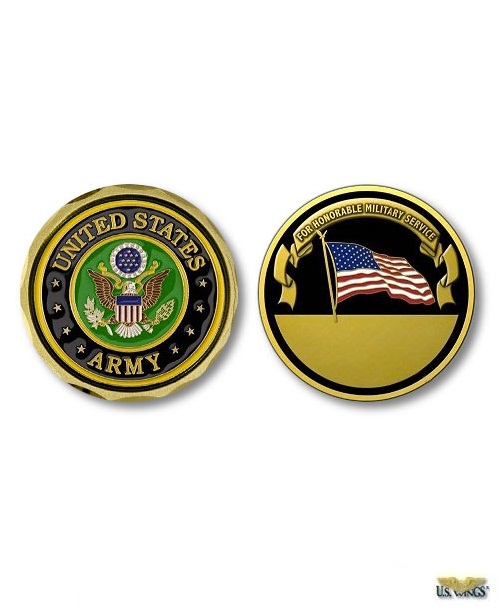
The iconography used on the coin must be a distillation of the brand’s core essence. Unlike a website, there is no room for filler text. Designers must use 3D relief (raised metal) and 2D enamel (painted sections) to create a hierarchy of information. The primary logo usually takes center stage, while the edges (the “reeding”) or the perimeter text might include the brand’s mission statement or a significant date. This “narrative compression” is a vital exercise for any brand looking to simplify its message.
Customization as a Tool for Internal and External Marketing
Customization is where the coin truly shines as a marketing asset. Brands can create “tiered” coins to denote different levels of achievement or membership.
- Internal Marketing: A “Founder’s Coin” might be given only to those who were with the company since its inception, creating an elite “inner circle” brand within the staff.
- External Marketing: Limited edition coins can be given to “VIP” clients or partners.
By adding unique features like bottle opener cutouts, spinning centers, or glow-in-the-dark enamel, a brand can demonstrate its creativity and attention to detail. These features make the coin a “conversation piece,” which is the ultimate goal of any brand-building effort. When someone asks, “What is that?” the owner of the coin becomes a brand ambassador, retelling the story of the organization.
The Challenge Coin as a Marketing and Loyalty Engine
Beyond internal culture, challenge coins serve as powerful tools for external marketing and customer loyalty. They tap into the human desire for exclusivity and the psychological pull of being part of an “in-group.”
Exclusivity and the “Secret Society” Effect
Strong brands often act like “tribes.” Think of Harley Davidson, Apple, or CrossFit. These brands have successfully moved beyond being service providers to being identity markers. The challenge coin is the perfect accessory for a tribal brand.
By making coins difficult to obtain—perhaps they are only given after a certain purchase threshold or at a specific event—the brand creates “earned exclusivity.” In the world of luxury branding, scarcity drives value. A coin that cannot be bought, but only earned, becomes a highly coveted asset. This elevates the brand’s perceived value and fosters a deep, emotional connection with the brand’s most loyal advocates.
Building Long-term Brand Equity through Collectibility
One of the most overlooked aspects of the challenge coin in brand strategy is its longevity. Most marketing materials (brochures, ads, promotional pens) have a short lifecycle. They are consumed and discarded. A high-quality challenge coin, however, is a “permanent” asset.
Because they are made of durable metals and carry significant aesthetic appeal, they are often collected. Collectors’ markets for military and corporate coins are robust. When a brand enters the realm of collectibility, it has achieved a level of brand equity that few other strategies can match. The brand is no longer just a company; it is a piece of history. Each coin circulating in the world acts as a silent, durable billboard, reinforcing the brand’s presence in the physical world long after a marketing campaign has ended.
In conclusion, the military challenge coin is a masterclass in brand strategy. It combines history, psychology, tactile design, and exclusivity into a single, pocket-sized object. Whether used to unify a team of developers or to reward a top-tier client, the challenge coin proves that in a world of fleeting digital impressions, the most powerful brands are those that can be held in the palm of your hand. For any organization looking to deepen its corporate identity and foster unwavering loyalty, the challenge coin remains the gold standard of symbolic branding.
aViewFromTheCave is a participant in the Amazon Services LLC Associates Program, an affiliate advertising program designed to provide a means for sites to earn advertising fees by advertising and linking to Amazon.com. Amazon, the Amazon logo, AmazonSupply, and the AmazonSupply logo are trademarks of Amazon.com, Inc. or its affiliates. As an Amazon Associate we earn affiliate commissions from qualifying purchases.