
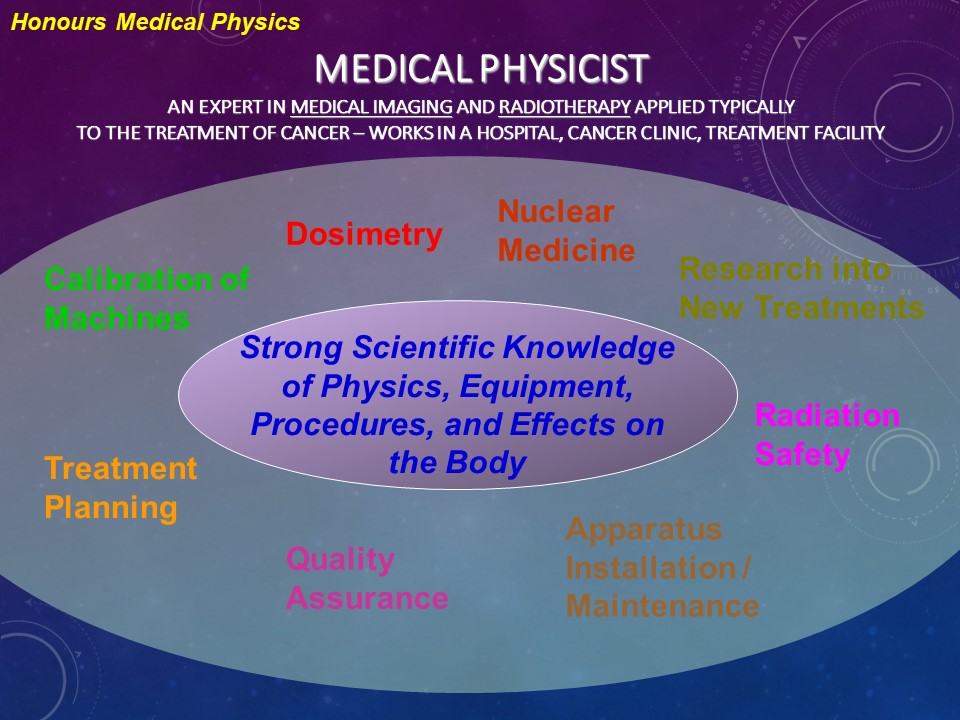
At the intersection of complex mathematical equations, advanced engineering, and life-saving clinical care lies the field of medical physics. While patients often interact with doctors and nurses, the silent engine driving modern diagnostic and therapeutic outcomes is a sophisticated array of technology managed by medical physicists. In its simplest form, medical physics is the application of physics principles to the hardware, software, and data systems used in medicine. As we move deeper into the 20th century, this field has evolved from basic X-ray interpretation into a high-tech powerhouse dominated by artificial intelligence, cloud computing, and precision robotics.
The Technological Foundations of Modern Medical Physics
To understand medical physics through a technological lens, one must first look at the hardware that defines the field. The discipline is primarily divided into two main technological streams: diagnostic imaging and radiation oncology. Both rely on the manipulation of the electromagnetic spectrum and subatomic particles to visualize the human body and treat diseases like cancer.
Diagnostic Imaging Systems: Beyond the X-Ray
The evolution of diagnostic technology has been meteoric. Traditional X-rays have given way to Computed Tomography (CT), which uses rotating X-ray tubes and complex reconstruction algorithms to create 3D cross-sections of the body. Magnetic Resonance Imaging (MRI) represents another technological peak, utilizing superconducting magnets and radiofrequency pulses to manipulate proton alignment in the body. The medical physicist’s role here is highly technical, ensuring that these high-cost gadgets maintain “image quality assurance.” They calibrate the signal-to-noise ratios and ensure that the digital output is accurate enough for a radiologist to detect a millimeter-sized lesion.
Radiation Therapy Equipment: The Linear Accelerator
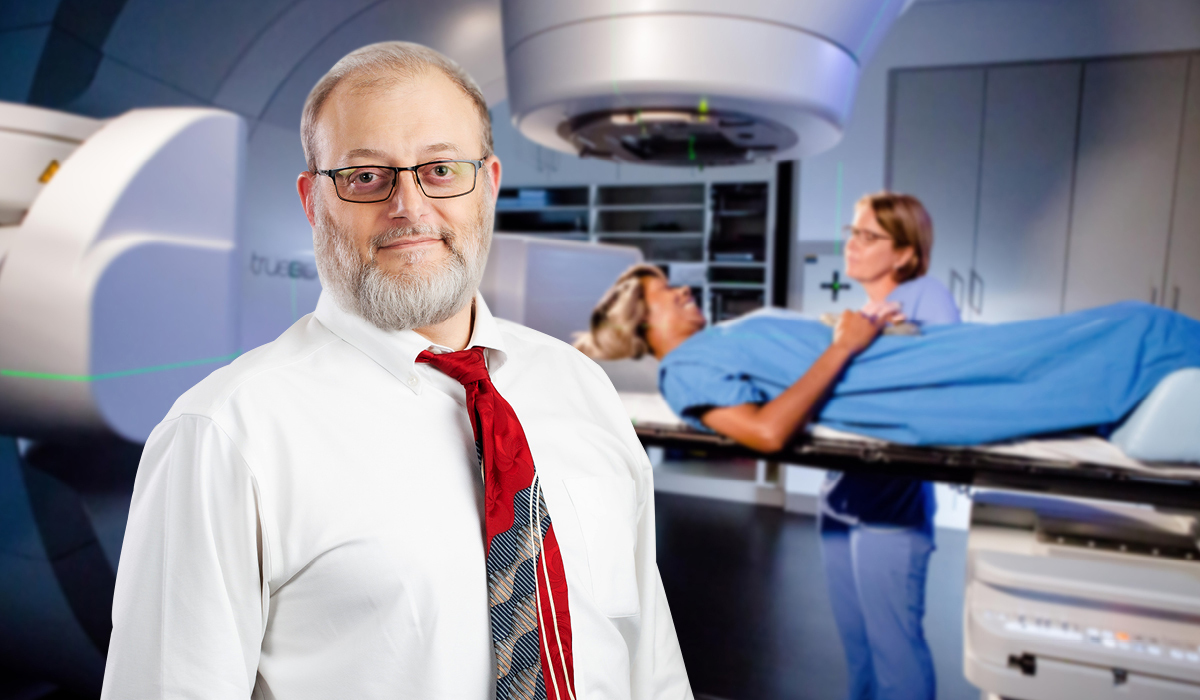
In the realm of treatment, the Linear Accelerator (LINAC) is perhaps the most complex piece of technology in a hospital. This device uses microwave technology to accelerate electrons to near-light speed, which then collide with a heavy metal target to produce high-energy X-rays. These beams are shaped by “Multi-Leaf Collimators” (MLCs)—hundreds of computer-controlled tungsten slats that move in real-time to conform the radiation beam to the exact shape of a tumor. The integration of hardware and software here is seamless, requiring precise synchronization to destroy malignant cells while sparing healthy tissue.
Nuclear Medicine and Molecular Imaging
Medical physics also encompasses the tech of nuclear medicine, such as Positron Emission Tomography (PET) scans. This involves the use of radioactive tracers and sophisticated “gamma cameras” that detect photon emissions. The tech stack involved here includes advanced sensors and photomultiplier tubes that convert light into digital signals, allowing physicists to map metabolic activity at a cellular level.
Software Innovations and Computational Treatment Planning
While the hardware is impressive, the “brain” of medical physics resides in its software. Modern medicine is increasingly a software-defined field, where algorithms determine how a patient is treated long before they ever step into a treatment room.
Dose Calculation Algorithms and Monte Carlo Simulations
One of the most critical technological contributions of medical physics is the development of Treatment Planning Systems (TPS). These software suites use complex algorithms to calculate how radiation interacts with human tissue. The gold standard in this area is the Monte Carlo simulation—a computational algorithm that relies on repeated random sampling to obtain numerical results. In medical physics, this means simulating the path of millions of individual photons or electrons as they travel through a patient’s unique anatomy to ensure the radiation dose is delivered with pinpoint accuracy.
4D Visualization and Motion Tracking Software
One of the greatest challenges in medical technology is patient movement—even the simple act of breathing can shift a lung tumor. To solve this, medical physicists use 4D-CT and real-time motion tracking software. This technology “gates” the treatment, meaning the radiation beam only turns on when the tumor is in the correct position. This level of synchronization requires high-speed data processing and low-latency software response times, representing a pinnacle of real-time digital control in healthcare.
DICOM and Data Interoperability
Medical physics is also deeply rooted in the “Digital Imaging and Communications in Medicine” (DICOM) standard. This is the universal language of medical tech, allowing an MRI machine made by one manufacturer to communicate seamlessly with a treatment planning system made by another. The management of these massive datasets and the ensuring of their integrity across hospital networks is a core technological responsibility in the field.
The AI and Machine Learning Paradigm Shift

We are currently witnessing the most significant technological shift in the history of medical physics: the integration of Artificial Intelligence (AI) and Machine Learning (ML). This is moving the field from manual oversight to automated, data-driven precision.
Automated Contouring and Image Segmentation
Historically, medical physicists and dosimetrists spent hours manually “contouring” (drawing outlines around) tumors and healthy organs on CT scans. Today, deep learning algorithms, specifically Convolutional Neural Networks (CNNs), can perform this task in seconds. These AI tools are trained on thousands of previous cases, allowing them to recognize anatomical structures with a level of consistency that exceeds human capability. This tech-driven automation allows for “adaptive radiotherapy,” where a treatment plan can be re-calculated daily to account for changes in a patient’s anatomy (such as weight loss or tumor shrinkage).
Radiomics and Predictive Analytics
Beyond just looking at images, medical physics now involves “Radiomics.” This is the extraction of a large number of features from medical images using data-characterization algorithms. These features, which are often invisible to the human eye, can be used to create models that predict how a specific tumor will respond to a specific type of radiation. By treating an image as data rather than just a picture, medical physicists are at the forefront of the “Big Data” movement in oncology.
Quality Assurance (QA) Automation
AI is also revolutionizing the safety checks performed on medical equipment. Instead of manual testing, AI-driven software can now monitor the performance of imaging and treatment machines in real-time, predicting when a component might fail before it actually does. This “predictive maintenance” is a concept borrowed from high-tech manufacturing and applied to the life-critical environment of a hospital.
Digital Security and Ethics in a Connected Environment
As medical physics becomes increasingly digital, the focus has shifted toward the security and ethical management of the technology. A modern radiotherapy department is a massive network of interconnected IoT (Internet of Things) devices, making it a potential target for cyber threats.
Protecting Sensitive Radiotherapy Data
The “tech” of medical physics now includes robust cybersecurity protocols. Because treatment plans contain both sensitive personal health information and precise technical data, they are high-value targets. Medical physicists work with IT security teams to ensure that the data pipelines between imaging scanners, planning workstations, and treatment machines are encrypted and isolated from the general internet. A breach in this system isn’t just a data leak; it could theoretically lead to a malfunction in treatment delivery, making digital security a matter of physical safety.
The Intersection of IoT and Hospital Infrastructure
The “smart hospital” relies on a web of sensors. In a medical physics context, this includes environmental sensors that monitor the temperature of superconducting magnets or the radiation levels in a room. Managing this digital infrastructure requires a deep understanding of networking, cloud storage, and real-time data monitoring. The transition from local servers to cloud-based treatment planning is currently one of the biggest digital transformations in the niche, offering the promise of remote “Tele-Physics” services for underserved regions.
The Future of Medical Physics Tech: Nanotechnology and Beyond
Looking forward, the technology of medical physics is set to shrink in scale but grow in impact. The next frontier involves the integration of physics at the molecular level.
Nanoparticles and Targeted Delivery
Technological research is currently exploring the use of high-Z (high atomic number) nanoparticles, such as gold, to enhance radiation effects. When these nanoparticles are injected into a tumor and hit by radiation, they release a secondary burst of energy, essentially turning the tumor itself into a source of localized destruction. This “nanotechnology” approach represents a fusion of physics, chemistry, and digital targeting.
Proton Therapy and Flash Radiotherapy
Perhaps the most “gadget-heavy” future trend is the expansion of Proton Therapy. Unlike X-rays, protons can be stopped at a specific depth, releasing all their energy in a “Bragg Peak.” This requires massive particle accelerators (cyclotrons) and incredibly complex magnetic steering systems. Furthermore, “FLASH” radiotherapy—a technique that delivers an entire course of radiation in less than a second—is currently being developed. The technological requirements for FLASH are immense, requiring ultra-high dose rate monitoring systems that can operate at speeds previously thought impossible in a clinical setting.
In conclusion, medical physics is the high-tech backbone of the modern hospital. It is a field defined not just by the laws of nature, but by the relentless pursuit of technological innovation. From the massive superconducting magnets of an MRI to the microscopic precision of AI-driven contouring, the medical physicist is the ultimate “tech lead” in the journey toward more effective, safer, and more personalized healthcare. Without this intersection of science and technology, the most advanced treatments of today—and the cures of tomorrow—would remain firmly in the realm of theory.
aViewFromTheCave is a participant in the Amazon Services LLC Associates Program, an affiliate advertising program designed to provide a means for sites to earn advertising fees by advertising and linking to Amazon.com. Amazon, the Amazon logo, AmazonSupply, and the AmazonSupply logo are trademarks of Amazon.com, Inc. or its affiliates. As an Amazon Associate we earn affiliate commissions from qualifying purchases.