
In the contemporary healthcare landscape, the term “medical infusion” has transcended its traditional roots as a simple clinical procedure. Historically, an infusion was viewed merely as the administration of fluids or medication via a needle. Today, however, it represents a sophisticated intersection of bio-engineering, software integration, and data analytics. From a technology perspective, a medical infusion is a complex delivery system governed by advanced hardware and “smart” protocols designed to ensure precision, safety, and real-time monitoring.
As we move further into the digital age, the technology powering medical infusions—ranging from smart pumps to AI-driven dosage calculators—is undergoing a rapid transformation. This evolution is not just about the delivery of medicine; it is about the integration of medical devices into the broader Internet of Medical Things (IoMT).

The Hardware Revolution: From Gravity Drips to Smart Pumps
The fundamental technology of medical infusion has evolved from rudimentary gravity-fed systems to highly precise, computerized mechanical devices. At its core, modern infusion technology is designed to overcome the limitations of human error and mechanical inconsistency.
The Mechanics of Volumetric and Syringe Pumps
Modern medical infusion relies on two primary types of hardware: volumetric pumps and syringe pumps. Volumetric pumps, often used for large-volume infusions like saline or total parenteral nutrition, utilize peristaltic mechanisms. These devices use programmed rollers to compress silicone tubing, moving fluid at a hyper-precise rate.
Syringe pumps, conversely, are the “gadgets” of the intensive care unit. They utilize a motorized screw mechanism to push the plunger of a syringe with micron-level accuracy. For tech enthusiasts, the engineering here is fascinating; these devices must maintain steady pressure against varying physiological resistances, requiring advanced pressure sensors and feedback loops to ensure the motor speed adjusts in real-time.
Smart Pump Technology and Dose Error Reduction Systems (DERS)
The “Smart Pump” is perhaps the most significant technological leap in infusion therapy. These devices are equipped with specialized software known as Dose Error Reduction Systems (DERS). DERS acts as a digital safety net, containing a “drug library” programmed into the pump’s memory.
When a clinician inputs a dosage, the software checks the parameters against pre-set hard and soft limits. If a technician accidentally enters a dosage that is a decimal point off, the software’s algorithm flags the anomaly and locks the device. This is a prime example of “Human-Factors Engineering,” where the software design accounts for potential human fallibility to ensure 100% uptime in patient safety.
Software Integration and the Interoperable Infusion Ecosystem
In the tech niche, hardware is only as good as the software that manages it. The modern medical infusion process is increasingly defined by its connectivity and its ability to communicate with a hospital’s central nervous system—the Electronic Health Record (EHR).
EHR Integration: Closing the Digital Loop
The “Holy Grail” of infusion technology is bi-directional interoperability. In a fully integrated tech stack, a physician’s digital order is transmitted via the hospital’s wireless network directly to the infusion pump. This is known as “auto-programming.”
The pump receives the specific medication, concentration, and rate directly from the software, eliminating manual entry. Once the infusion begins, the pump “talks” back to the EHR, auto-documenting the start time, volume infused, and any interruptions. This creates a seamless data loop that utilizes HL7 (Health Level Seven) protocols, the standard for exchanging information between medical applications.
Real-Time Data Monitoring and Remote Telemetry
Modern infusion platforms now utilize centralized monitoring software, often referred to as “infusion dashboards.” Much like a network administrator monitors server health, nursing stations can monitor dozens of infusion pumps simultaneously via a remote display. These dashboards provide real-time telemetry on battery life, fluid levels, and alarm status. By utilizing centralized data hubs, healthcare facilities can leverage “Big Data” to analyze pump utilization rates, identifying where hardware is being underused or where software updates are most urgently needed.
The Role of Artificial Intelligence and Predictive Analytics
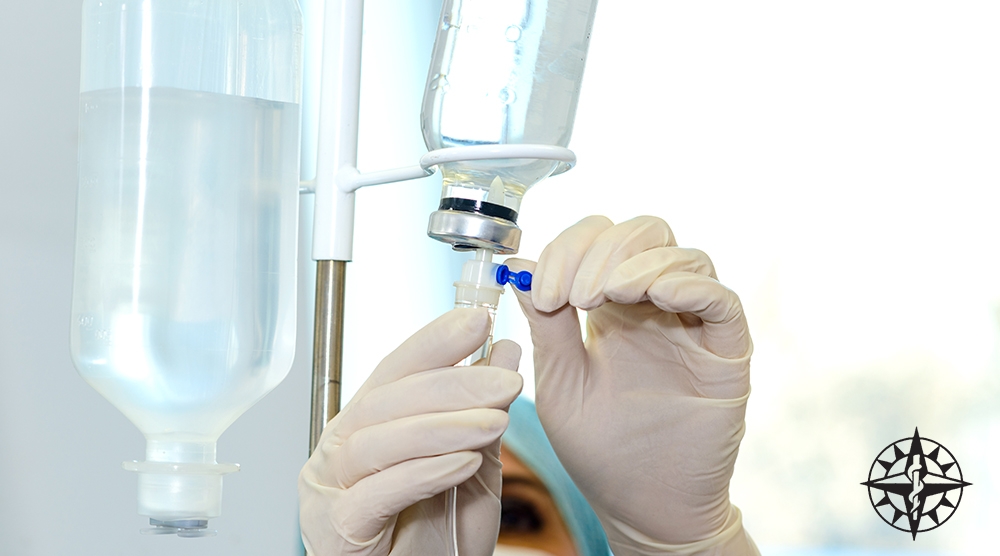
We are currently witnessing the entry of Artificial Intelligence (AI) and Machine Learning (ML) into the realm of medical infusions. This represents the cutting edge of MedTech, moving from reactive systems to predictive ones.
AI-Driven Dosage Optimization
AI tools are being developed to personalize infusion rates based on real-time physiological feedback. For example, in “Closed-Loop” infusion systems—often used in insulin delivery or anesthesia—an AI algorithm monitors a patient’s vital signs (like glucose levels or heart rate) and automatically adjusts the infusion rate. This is essentially an autopilot for medical delivery, using complex algorithms to maintain “homeostasis” without constant manual intervention.
Predictive Maintenance for Infusion Fleets
On the operational side, AI is being used for the lifecycle management of infusion hardware. Through predictive analytics, software can analyze the mechanical wear and tear on a pump’s internal motor or the degradation of its battery. Instead of waiting for a device to fail during a critical procedure, the system alerts the IT or biomedical engineering team that a specific unit requires maintenance. This “smart” asset management ensures that the hardware infrastructure remains robust and reliable.
Digital Security: Protecting the Infusion Ecosystem
As infusion pumps become more connected, they also become more vulnerable. In the world of digital security, a connected infusion pump is an “endpoint” on a network, and like any laptop or smartphone, it can be a target for cyberattacks.
Cybersecurity Vulnerabilities in Connected Devices
The healthcare sector has seen a rise in “Man-in-the-Middle” attacks and unauthorized access to IoT devices. Because infusion pumps are connected to the hospital’s Wi-Fi to receive drug library updates and EHR data, they represent a potential entry point for hackers. A compromised pump could, theoretically, have its dosage limits altered or be shut down entirely.
Tech-focused healthcare providers are now prioritizing “Cyber-Hygiene” for medical devices. This includes the use of encrypted communication protocols (such as WPA3-Enterprise) and ensuring that the firmware on every pump is signed and verified to prevent the execution of malicious code.
Implementing Zero-Trust Frameworks in MedTech
The current trend in securing medical infusions is the implementation of a “Zero-Trust” architecture. In this model, no device—regardless of whether it is inside the hospital firewall—is trusted by default. Every infusion pump must be continuously authenticated and authorized before it can access the medical network. This shift in digital security strategy is essential as hospitals transition to “Smart Hospitals,” where thousands of connected devices must coexist securely.
Wearable Tech and the Decentralization of Infusion Care
The final frontier of medical infusion technology is the transition from the hospital bedside to the patient’s pocket. The miniaturization of hardware and the rise of mobile apps are decentralizing how infusions are managed.
The Rise of Subcutaneous Wearable Injectors
New “wearable” infusion gadgets are changing the definition of a medical infusion. These small, discreet devices adhere to the skin and deliver biologics or specialized medications over several hours or days. From a tech perspective, these are marvels of micro-fluidics and low-power Bluetooth connectivity. They allow patients to receive complex infusions while going about their daily lives, with the device syncing data to their smartphone via an app.
App-Enabled Patient Monitoring at Home
The software component of home-based infusions is equally critical. Patients can now use specialized apps to track their infusion progress, receive reminders, and even use their phone’s camera to scan medication barcodes to ensure they are using the correct supply. These apps often feature a direct “uplink” to the prescribing physician, allowing for remote clinical oversight. This use of mobile technology is a cornerstone of “Tele-infusion,” reducing the need for hospital visits and leveraging digital tools to maintain a high standard of care.

Conclusion: The Integrated Tech Future of Infusion
What is a medical infusion? In today’s context, it is a sophisticated marriage of high-precision hardware, interoperable software, and rigorous digital security. As we have seen, the “tech” of infusion therapy is moving toward a future defined by AI-driven precision and decentralized, wearable delivery systems.
For technology professionals and healthcare innovators, the infusion space represents a vital area of development. The goal is no longer just to deliver a drug; it is to create an intelligent, secure, and data-rich ecosystem that ensures every drop of medicine is accounted for and every patient is protected by the latest in digital safety protocols. As smart pumps become smarter and our networks become more secure, the medical infusion will continue to serve as a benchmark for how technology can profoundly enhance human health.
aViewFromTheCave is a participant in the Amazon Services LLC Associates Program, an affiliate advertising program designed to provide a means for sites to earn advertising fees by advertising and linking to Amazon.com. Amazon, the Amazon logo, AmazonSupply, and the AmazonSupply logo are trademarks of Amazon.com, Inc. or its affiliates. As an Amazon Associate we earn affiliate commissions from qualifying purchases.