
In the rapidly evolving landscape of consumer technology, biometric data has shifted from the sterile environments of clinical laboratories to the wrists of millions of consumers. Among the myriad of metrics tracked by modern wearables—ranging from blood oxygen levels to sleep staging—Heart Rate Variability (HRV) has emerged as the gold standard for assessing physical and mental readiness. However, when a user opens their health app and sees a notification regarding a “low HRV,” the immediate reaction is often one of confusion. To understand what a low HRV signifies, one must look past the biological implications and examine the sophisticated sensors, machine learning algorithms, and data architectures that define today’s wearable tech ecosystem.
The Architecture of Biometric Data: Defining HRV in Tech Terms
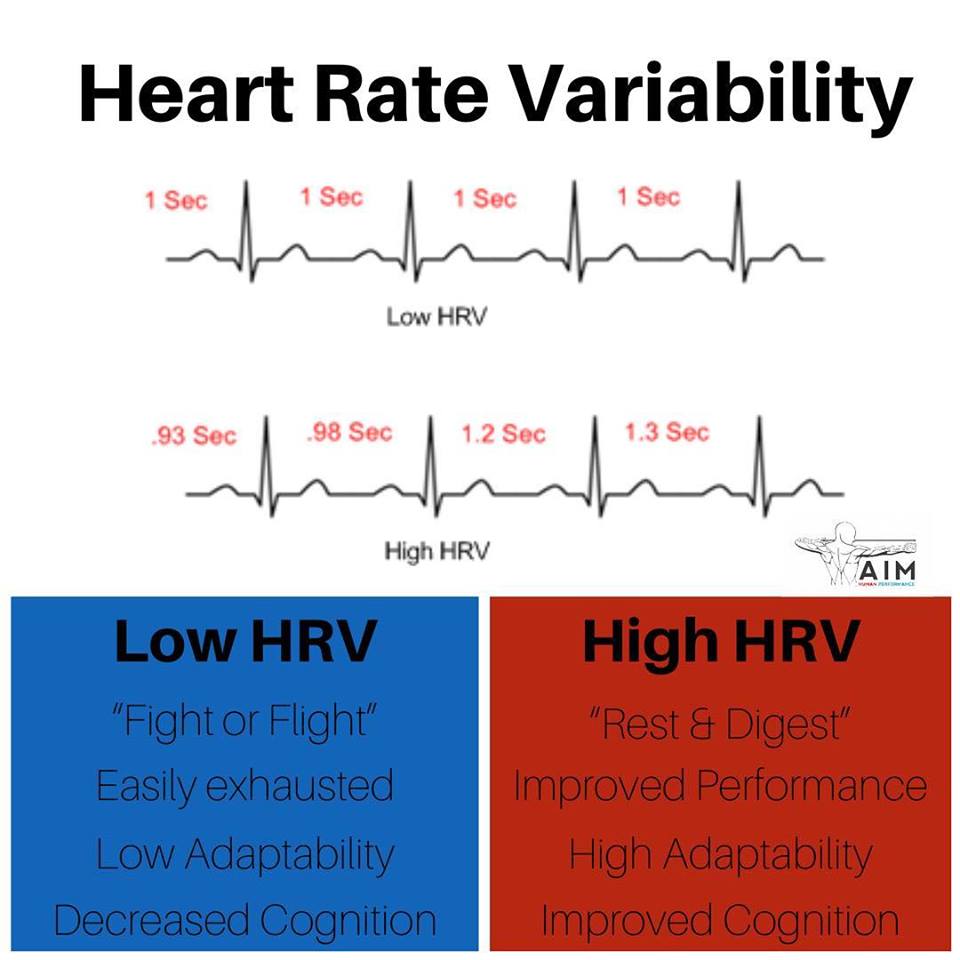
Before addressing what makes an HRV reading “low,” it is essential to define the metric from a technical perspective. Unlike heart rate, which measures the average number of beats per minute (BPM), Heart Rate Variability measures the specific time variation between each consecutive heartbeat, known as the R-R interval. These intervals are measured in milliseconds (ms).
Photoplethysmography (PPG) and Sensor Precision
The primary technology driving HRV tracking in gadgets like the Apple Watch, Oura Ring, and Whoop strap is Photoplethysmography (PPG). This involves shining green or infrared light into the skin and using photodetectors to measure the light absorption changes caused by blood flow. For a wearable to determine if an HRV is “low,” it must possess a high sampling rate—often hundreds of times per second—to capture the minute differences in millisecond intervals. Tech enthusiasts must understand that a low HRV reading is often as much a reflection of sensor fidelity as it is of physiology; lower-end hardware may lack the precision to accurately differentiate between a healthy 60ms variance and a “low” 30ms variance.
The R-R Interval and Data Processing
Once the PPG sensor captures the pulse wave, the device’s onboard processor or a paired smartphone app applies complex mathematical formulas to the raw data. The most common standard used in tech platforms is the RMSSD (Root Mean Square of Successive Differences). When an app reports a low HRV, it is essentially stating that the variance in your R-R intervals is decreasing, suggesting that the heart is beating like a metronome—very consistently—rather than with the slight irregularities associated with a responsive autonomic nervous system.
The Role of Machine Learning in Identifying “Low” Baselines
A critical misunderstanding in the tech-health space is the idea that there is a universal “good” or “bad” HRV number. Unlike a high temperature, which is objectively problematic across the human population, HRV is highly individualized. This is where machine learning (ML) and personal data baselines become vital.
Algorithmic Baselines vs. Population Norms
Modern health apps do not use a static threshold to define a low HRV. Instead, they use “rolling baselines.” During the first 14 to 30 days of wearing a device, the software uses ML models to establish what is normal for that specific user. A low HRV, in tech terms, is a statistical deviation—usually one or two standard deviations below the user’s established mean. This personalized approach prevents a 25-year-old athlete with a baseline of 100ms from being compared to a 60-year-old professional with a baseline of 30ms.
Why Your App Flags a “Low” Score
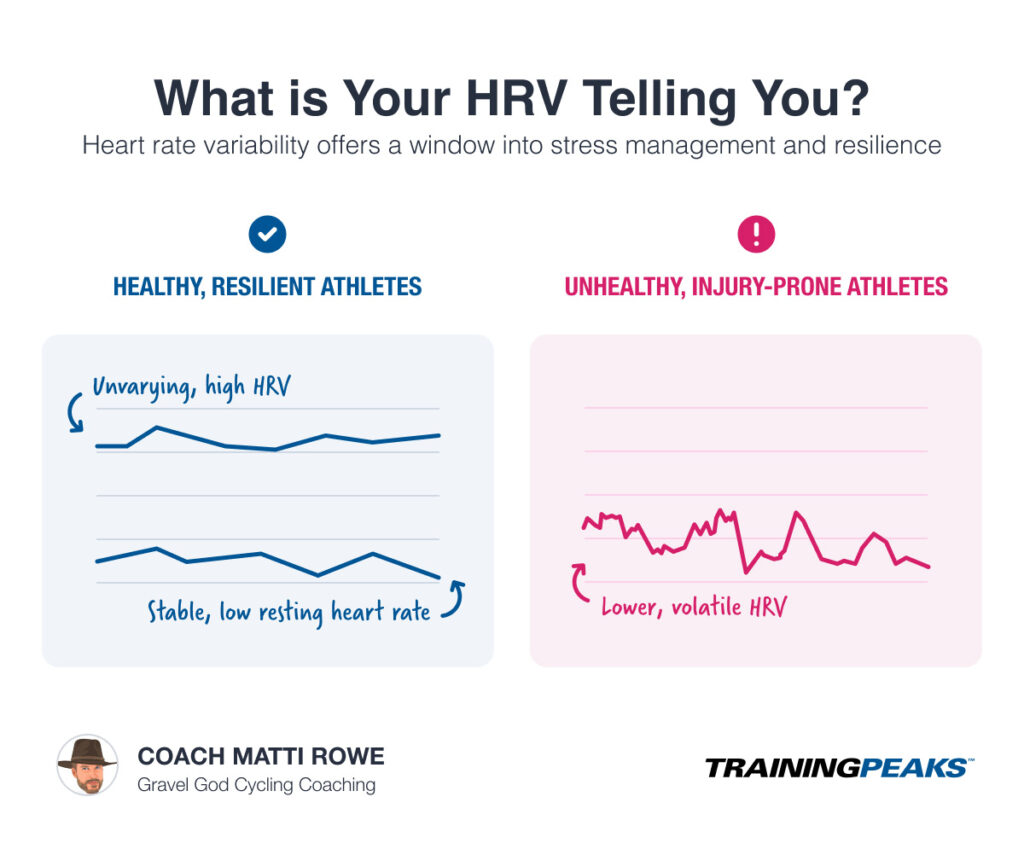
When the software identifies a low HRV, it is often acting as an early-warning system. From a data-science perspective, a low HRV indicates that the sympathetic nervous system (the “fight or flight” mechanism) is dominating the parasympathetic nervous system (the “rest and digest” mechanism). Tech platforms like Whoop or Garmin interpret this data to provide a “Recovery” or “Body Battery” score. A low HRV reading is the primary data input that triggers a software recommendation to reduce physical strain or prioritize sleep.
The Hardware Ecosystem: Comparing HRV Implementation

Not all tech is created equal when it comes to measuring and interpreting low HRV. The competition between hardware manufacturers centers on how they collect this data and the proprietary logic they use to display it.
Oura, Whoop, and Apple: Different Approaches to Data Capture
The Oura Ring utilizes infrared sensors on the finger, where the skin is thinner and the blood flow is more accessible, leading to high-fidelity HRV data during sleep. Whoop, conversely, emphasizes 24/7 monitoring and uses its proprietary algorithms to calculate a “Recovery Score” based on the previous night’s HRV. Apple takes a more conservative approach, sampling HRV sporadically throughout the day or during “Breathe” sessions, though it allows third-party apps to access the high-resolution R-R interval data via HealthKit.
Integration with Health Cloud Platforms
The value of knowing you have a low HRV is magnified when that data is integrated into a larger ecosystem. Through APIs and platforms like Google Fit or Apple HealthKit, a low HRV reading can be cross-referenced with other data points—such as a sudden increase in resting heart rate or a decrease in sleep duration—to provide a holistic view of the user’s “digital twin.” This interoperability is the backbone of the modern health-tech stack, allowing fragmented data points to become actionable insights.
Security, Privacy, and the Ethics of Biometric Signals
As HRV data becomes a more prominent feature in the tech world, the security of this highly sensitive biometric information has come under scrutiny. A low HRV reading is not just a metric of fitness; it can be an indicator of chronic stress, illness, or even underlying cardiac conditions.
Encryption of Personal Health Data
Leading tech companies employ end-to-end encryption for health data synced to the cloud. When an Apple Watch detects a low HRV, that data is encrypted on the device and only decrypted via the user’s passcode or biometric ID. For the tech-savvy consumer, understanding the “Privacy Policy” of a wearable is as important as understanding the “Sampling Rate.” The risk of biometric data being sold to insurance companies or third-party advertisers remains a significant concern in the digital health space.
The Future of Wearable Tech Interoperability
We are moving toward a future where a low HRV detected by a wearable could automatically trigger changes in a user’s environment. Imagine a smart home ecosystem where a “low HRV” notification from your watch communicates with your smart thermostat to lower the room temperature for better sleep, or adjusts your AI-driven calendar to block out “focus time” to mitigate stress. This level of automation relies on the seamless exchange of biometric data between hardware and software platforms.
The Future of HRV and Generative AI
The next frontier for HRV tracking lies in the integration of Generative AI and Large Language Models (LLMs). We are moving away from simple graphs and toward conversational AI that can explain the “why” behind a low HRV.
Predictive Health Analytics
Future versions of health apps will likely use predictive analytics to warn users before their HRV drops. By analyzing patterns in exercise, location data, and even calendar density, AI tools will be able to forecast a low HRV state, allowing for preemptive behavioral changes. This shifts the wearable from a reactive device to a proactive health consultant.
AI Coaches and the Evolution of Wearable Feedback
Instead of a cryptic notification saying “Your HRV is 20ms below your baseline,” AI-integrated apps like the latest versions of Zepp or Fitbit’s AI labs are beginning to offer context. They might say, “Your HRV is low today, likely due to the late-night meal and high-intensity workout recorded yesterday. Consider a low-impact walk instead of your planned run.” This represents the pinnacle of tech utility: transforming raw millisecond data into human-centric, actionable wisdom.
In conclusion, a “low HRV” in the context of modern technology is more than just a biological signal; it is a complex data point generated by high-precision sensors, filtered through machine learning algorithms, and protected by advanced encryption. As wearables continue to shrink in size and grow in computational power, our ability to interpret these silent signals of the autonomic nervous system will only improve, cementing HRV as a cornerstone of the digital health revolution. For the user, a low HRV is a prompt from the machine to recalibrate—a rare moment where technology encourages us to do less in a world that constantly demands more.
aViewFromTheCave is a participant in the Amazon Services LLC Associates Program, an affiliate advertising program designed to provide a means for sites to earn advertising fees by advertising and linking to Amazon.com. Amazon, the Amazon logo, AmazonSupply, and the AmazonSupply logo are trademarks of Amazon.com, Inc. or its affiliates. As an Amazon Associate we earn affiliate commissions from qualifying purchases.