
In the world of sports, few systems are as technologically sophisticated or data-dependent as the golf handicap. While a casual observer might see a “handicap” as a mere number used to level the playing field between players of different skill levels, a modern analysis reveals it to be a complex, cloud-based algorithmic framework. For the tech-savvy enthusiast, understanding what a handicap in golf means requires looking past the scorecard and into the digital infrastructure that powers the World Handicap System (WHS).
Today, a golf handicap is not just a calculation; it is a dynamic data point generated by global software networks, real-time cloud synchronization, and predictive modeling. It represents one of the earliest and most successful implementations of a universal rating system that allows for asynchronous competition across diverse geographical locations.

The Evolution of Golf Data: Moving from Paper to Digital Algorithms
The conceptual history of the golf handicap dates back centuries, but its transformation into a digital asset is a relatively recent phenomenon. To understand what a handicap means today, one must first recognize the shift from manual logbooks to high-velocity data processing.
The Shift to Cloud-Based Record Keeping
Historically, golfers calculated their handicaps using localized formulas and physical ledgers kept at individual clubhouses. This decentralized approach led to inconsistencies and “data silos,” where a golfer’s skill level was difficult to verify outside their home course. The introduction of the GHIN (Golf Handicap and Information Network) by the USGA marked the first major step toward a centralized digital ecosystem. Today, this system has evolved into a robust cloud-based architecture that processes millions of rounds of data daily, ensuring that a golfer’s “index” is accessible and verifiable from any terminal in the world.
Standardizing the Global Database
In 2020, the golf world underwent a massive “system upgrade” with the implementation of the World Handicap System (WHS). This wasn’t just a rule change; it was a global synchronization of databases. Prior to this, different regions used different algorithms (EGA in Europe, USGA in America, etc.). The WHS unified these into a single software logic, allowing for a universal language of skill assessment. This standardization is akin to moving from fragmented local servers to a unified global API, allowing for seamless data exchange between different national golf associations.
The World Handicap System (WHS): Software as a Leveler
At its core, the question “what does a golf handicap mean” is answered by the algorithm known as the Handicap Index. This is not an average of a player’s scores, but rather a calculation of their potential skill level—a distinction that is fundamental to the system’s predictive modeling.
The Calculation Engine: Best 8 of 20
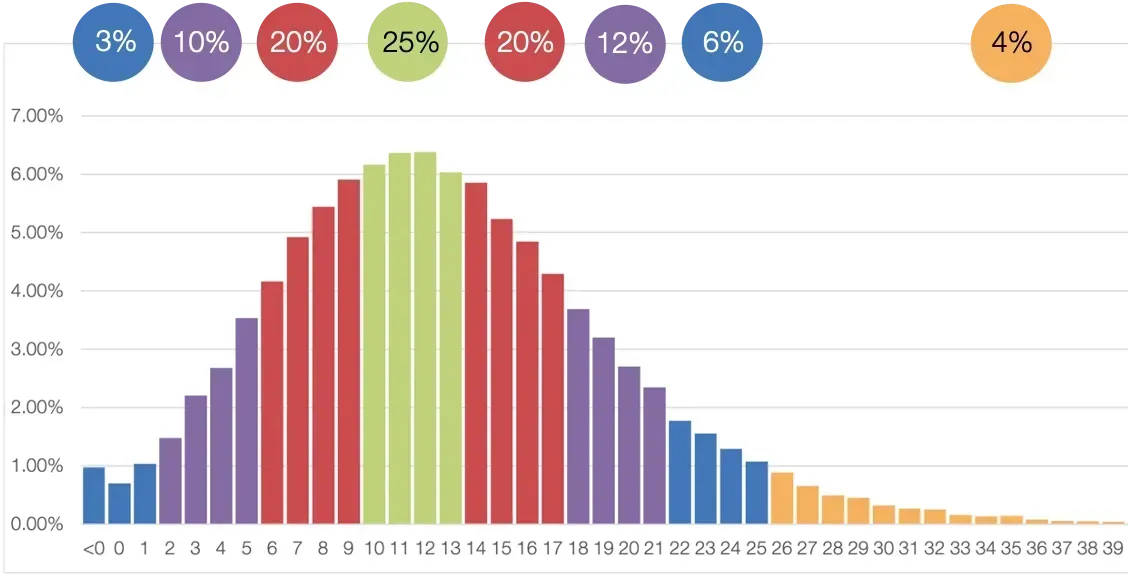
The modern handicap algorithm utilizes a specific data-filtering process. It takes the “Score Differentials” from a player’s 20 most recent rounds and selects the best eight. By focusing on the top 40% of a player’s performance, the software filters out “noise” (uncharacteristically bad rounds) to determine the player’s ceiling. This is essentially a data-cleansing exercise that ensures the resulting index reflects what the player is capable of on a good day, rather than an arithmetic mean that might be skewed by outliers.
Adjusting for Hardware: Course and Slope Ratings
A handicap index is a portable number, but it must be applied to a specific “hardware” environment—the golf course. Every course has its own data profile, defined by its Course Rating (a measure of difficulty for a scratch golfer) and Slope Rating (how the difficulty increases for a bogey golfer). When a player enters their index into a mobile app or club terminal, the software performs a real-time calculation:
(Handicap Index × Slope Rating / 113) + (Course Rating – Par) = Course Handicap.
This real-time adjustment allows the digital system to normalize performance across wildly different terrains, from the coastal winds of Scotland to the high-altitude courses of Colorado.
The Tech Stack of a Modern Golfer: Apps and Digital Trackers

The modern golfer no longer relies on a pencil and paper to track their handicap. The “quantified self” movement has hit the fairway, resulting in a sophisticated tech stack that integrates directly with handicap systems.
Integrated Mobile Ecosystems
Apps like GHIN, Grint, and Hole19 have become the primary interfaces for handicap management. These platforms do more than just record scores; they utilize GPS integration to verify that a score was actually posted from the coordinates of the golf course. This geofencing technology adds a layer of digital integrity to the handicap system, preventing “vanity handicaps” or fraudulent entries.
IoT and Wearable Data Integration
The rise of IoT (Internet of Things) in golf has further refined handicap data. Devices like Arccos Caddie use sensors attached to club grips to track every shot automatically via Bluetooth. This data is then synced with the cloud to provide “strokes gained” analytics. While the official handicap system focuses on gross scores, these third-party tech tools provide a granular look at the data behind the handicap, breaking down performance into driving, approach, and putting metrics. This is big data applied to the individual athlete.
Digital Security and Peer Review
A critical component of what a handicap means is its role as a verified social credential. In the digital age, this is maintained through peer review features within handicap apps. Much like a blockchain ledger provides transparency, modern handicap software allows members of the same “digital club” to view each other’s scoring history. If a player’s performance suddenly spikes in a tournament compared to their uploaded data, the digital audit trail provides the necessary evidence for adjustment.
Data Analytics and Performance Metrics: Beyond the Basic Number
For the technology-minded golfer, the handicap is only the beginning of the data journey. The metrics provided by modern handicap software offer deep insights into performance trends and predictive outcomes.
The “Cap” and Anti-Splaying Logic
To prevent rapid fluctuations in a player’s handicap (which could be used to manipulate betting odds or tournament brackets), the software includes “soft caps” and “hard caps.” If a player’s index starts to rise too quickly relative to their low index from the previous year, the algorithm triggers a dampening effect. This is a classic example of a feedback loop in software design, intended to maintain stability in a volatile data set.
Playing Conditions Calculation (PCC)
One of the most impressive technological feats of the WHS is the Playing Conditions Calculation (PCC). At the end of each day, the central server analyzes all scores submitted at a specific course. If the scores are significantly higher or lower than expected (due to weather or course setup), the algorithm automatically adjusts the handicap calculations for everyone who played that day. This retrospective data analysis ensures that a player isn’t penalized by a “software” error caused by external environmental variables like a rainstorm or high winds.
The Future of Handicapping: AI and Predictive Modeling
As we look forward, the meaning of a golf handicap will continue to be shaped by advancements in artificial intelligence and machine learning. We are moving away from reactive scoring and toward proactive performance forecasting.
AI-Driven Improvement Paths
Future iterations of handicap software will likely integrate machine learning to suggest specific training regimens based on a player’s handicap data. If the algorithm detects that a player’s handicap is rising specifically because of poor performance on par-3s or in high-wind conditions, the app can serve as a digital coach, providing personalized content to address those specific data weaknesses.
VR and Synthetic Handicap Environments
With the explosion of high-fidelity golf simulators (such as Trackman and Full Swing), we are seeing the emergence of “virtual handicaps.” The technology is now reaching a point where a player’s performance in a virtual environment can be mapped to their real-world handicap index. This requires sophisticated physics engines that can translate ball speed, launch angle, and spin rate into a “simulated score” that holds the same weight as a score posted on a physical course.
Conclusion: The Handicap as a Digital Identity
In conclusion, when we ask “what is a handicap in golf,” we are essentially asking for a summary of a golfer’s digital identity. It is a number, yes, but it is a number birthed from a global network of servers, refined by complex algorithms, and verified by an ecosystem of mobile apps and IoT devices.
For the modern golfer, the handicap is a testament to the power of data. It turns the subjective “feeling” of a good game into a standardized, objective metric. Whether you are a software engineer looking at the logic of the WHS or a casual player using a GPS watch, the handicap remains the ultimate example of how technology can bring order, fairness, and deep insight to one of the world’s oldest sports. It is no longer just a way to play against a friend; it is a way to interface with a global community of data-driven athletes.
aViewFromTheCave is a participant in the Amazon Services LLC Associates Program, an affiliate advertising program designed to provide a means for sites to earn advertising fees by advertising and linking to Amazon.com. Amazon, the Amazon logo, AmazonSupply, and the AmazonSupply logo are trademarks of Amazon.com, Inc. or its affiliates. As an Amazon Associate we earn affiliate commissions from qualifying purchases.