
In an era where capital moves at the speed of a fiber-optic pulse, the traditional boundaries of commerce have become increasingly porous. For investors, entrepreneurs, and financial analysts, understanding the terminology of global trade is no longer optional—it is a prerequisite for success. One term that frequently surfaces in the context of high-level business finance and global markets is “transnational.”
But what does transnational mean in a purely financial and operational sense? While it is often used interchangeably with “multinational,” the distinction carries significant weight for how a company manages its assets, navigates tax jurisdictions, and allocates capital across the globe. To be transnational is to operate beyond the constraints of a single national identity, treating the entire world as a singular, integrated marketplace.

Understanding the Transnational Model in Modern Business
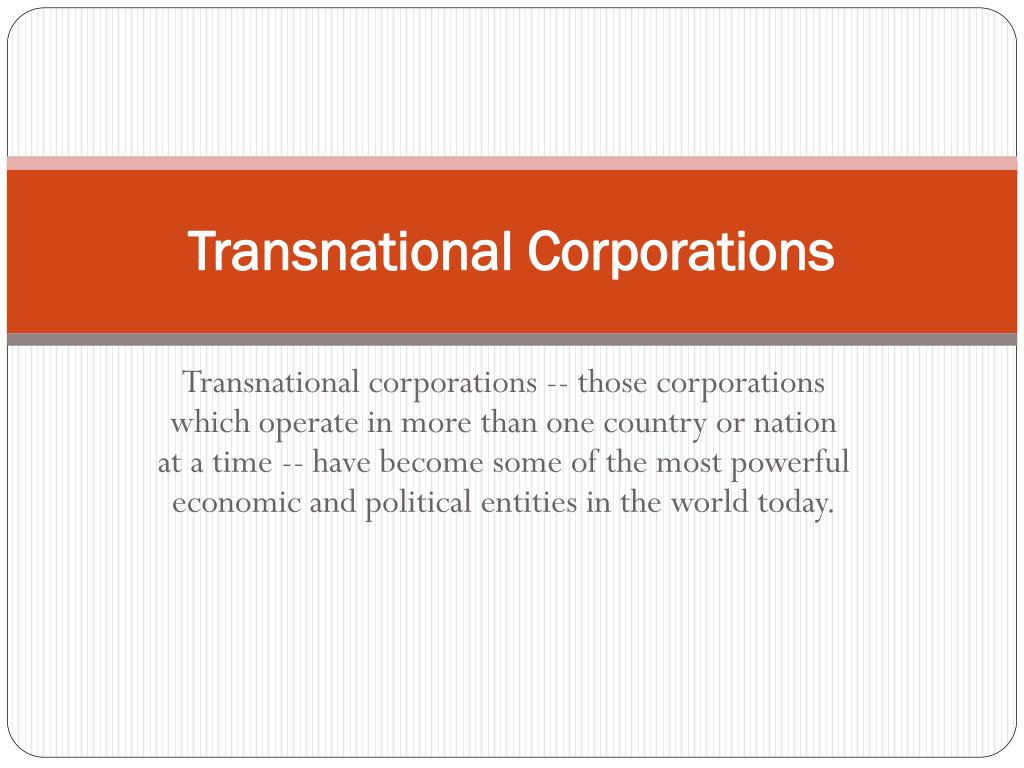
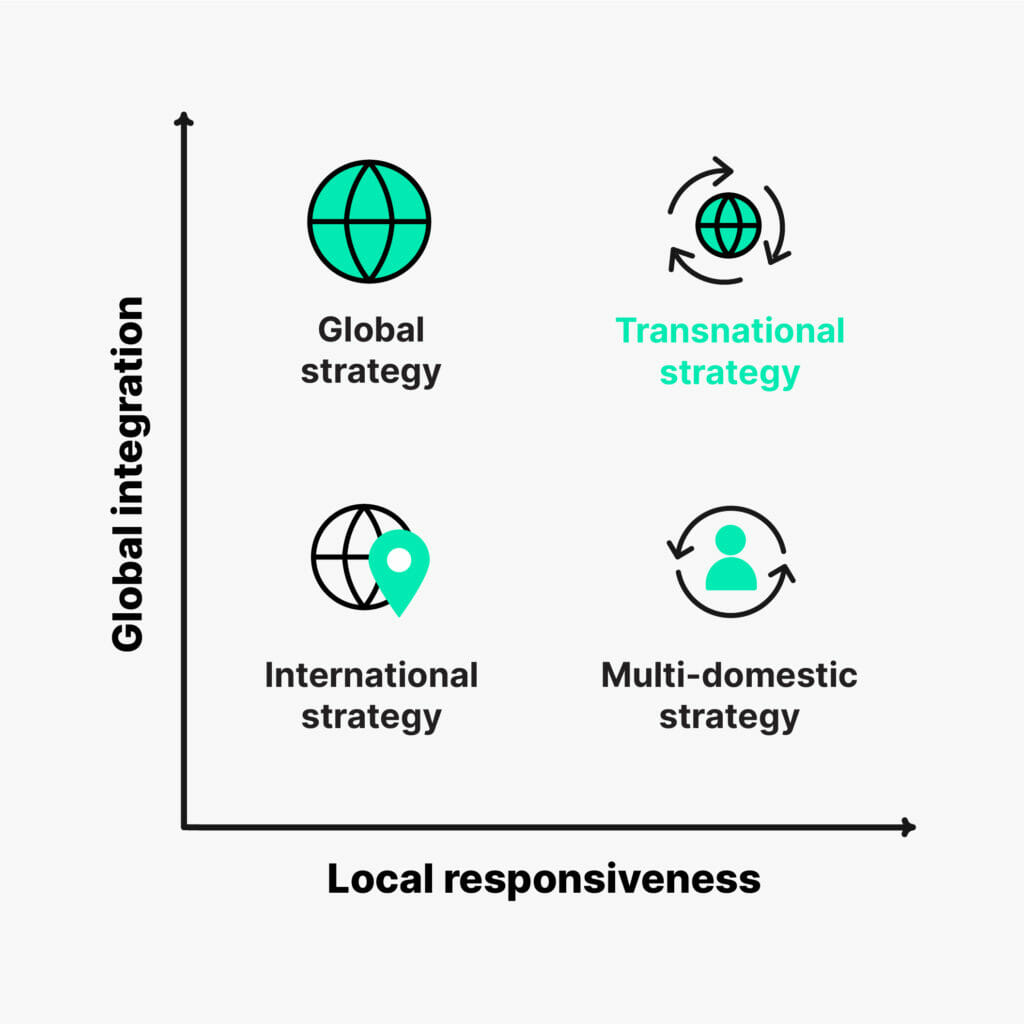
At its core, a transnational entity is a business that operates in multiple countries but does not identify with one single “home” country for its operational decision-making. Unlike traditional international firms that export products from a home base, or multinational firms that replicate their home-office structure in various foreign subsidiaries, the transnational model is built on integration and decentralization.
The Evolution from Domestic to Transnational
The journey of capital usually begins within a domestic framework. A company starts by mastering its local market, utilizing local currency, and adhering to local regulations. As it grows, it may become an international firm, exporting goods while maintaining all core financial and strategic functions at home.
The shift to a transnational model represents the final stage of global corporate evolution. In this stage, the company seeks to achieve “global efficiency” while maintaining “local responsiveness.” From a money management perspective, this means the firm creates value by leveraging global economies of scale while simultaneously adapting its financial strategies to the unique demands of local markets.
Core Characteristics of Transnational Entities
What sets a transnational company apart in the world of business finance is its “borderless” philosophy. These entities are characterized by a complex network of subsidiaries that are both highly independent and deeply interconnected.
- Distributed Assets: Unlike a multinational corporation that might keep its high-value R&D and financial headquarters in one country, a transnational firm might place its financial hub in Singapore, its R&D in Germany, and its manufacturing in Mexico.
- Shared Knowledge and Capital: Capital is not just sent from the parent to the subsidiary; it flows between subsidiaries based on where it can be most effectively deployed.
- Local Decision-Making: Financial managers in different regions have the autonomy to make significant investment decisions without waiting for approval from a distant “home office,” allowing the firm to react quickly to local economic shifts.
Transnational vs. Multinational: Navigating the Financial Nuances
To the casual observer, the difference between a multinational corporation (MNC) and a transnational corporation (TNC) might seem academic. However, to an investor or a CFO, the differences are foundational, particularly regarding how profit is repatriated and how risk is managed.
Centralized vs. Decentralized Capital Management
The multinational model typically relies on a centralized “hub-and-spoke” financial system. The parent company provides the capital, sets the budget, and collects the profits. This centralization provides clear oversight but can lead to inefficiencies, especially when navigating diverse currency environments or local credit markets.
In contrast, the transnational model utilizes a decentralized network. Each node in the network is responsible for its own profit and loss (P&L), but they all contribute to a shared global strategy. This allows for more sophisticated tax planning and capital allocation. For instance, a transnational firm can move liquidity from a high-interest environment in one country to fund a project in a low-interest environment in another, often without the friction of a centralized bureaucratic bottleneck.
Local Responsiveness and Global Efficiency
The primary financial challenge of a multinational firm is the “one size fits all” trap. They often try to force a domestic financial model onto a foreign market, which can lead to over-exposure to local inflation or regulatory changes.
Transnational firms solve this by being “glocal”—global in scale but local in execution. By empowering local financial officers, the company can hedge against local currency fluctuations more effectively and tap into regional investment incentives that a centralized headquarters might overlook. This dual focus makes transnational companies some of the most resilient assets in a global investment portfolio.
The Financial Mechanics of Transnational Operations
Operating transnationally is a high-wire act of financial engineering. When a company exists everywhere and nowhere at once, the complexities of taxation, currency, and regulation become the primary focus of the finance department.
Tax Strategy and Transfer Pricing
One of the most significant advantages—and challenges—of the transnational model is managing global tax liabilities. Because a transnational firm has operations that are deeply integrated across borders, it must navigate the “Transfer Pricing” regulations of multiple jurisdictions.
Transfer pricing refers to the prices charged between different branches of the same company for goods, services, or intellectual property. For a transnational firm, setting these prices is a vital part of business finance strategy. By strategically managing these internal costs, a firm can ensure that profits are recognized in jurisdictions with more favorable tax treatments, provided they remain compliant with the OECD’s Base Erosion and Profit Shifting (BEPS) guidelines. This level of tax optimization is a hallmark of transnational financial maturity.
Managing Currency Risk and Foreign Exchange (FX)
For any entity moving money across borders, Foreign Exchange (FX) risk is a constant threat. A transnational firm, however, deals with this on a massive scale. Because their revenue is generated in dozens of different currencies, their balance sheets are highly sensitive to fluctuations in the U.S. Dollar, Euro, Yen, and emerging market currencies.
To mitigate this, transnational firms employ sophisticated financial tools, including forward contracts, options, and natural hedging. Natural hedging occurs when a company matches its expenses in a particular currency with its revenues in that same currency. For example, if a transnational firm earns revenue in Brazilian Reais, it might choose to take out a loan or pay its suppliers in Reais as well, effectively canceling out the currency risk.
Investing in Transnational Corporations: Strategies for Growth
For the individual investor or the institutional fund manager, transnational corporations represent a unique asset class. These companies offer exposure to global growth while providing the stability of a massive, diversified balance sheet.
Identifying Transnational Potential in a Portfolio
When looking for transnational opportunities, investors should look beyond the “International” tag in a stock screener. Truly transnational companies are those that derive a majority of their revenue from outside their country of incorporation and have a geographically diverse leadership team.
Investors should analyze the “geographic revenue mix.” A company like Nestlé or Unilever is a classic example of a transnational entity; they are headquartered in Europe, but their financial health is tied to the purchasing power of consumers in Asia, Africa, and the Americas. For a portfolio, this provides a “built-in” diversification that protects against a recession in any single nation.
Risks and Diversification in Global Markets
While the transnational model offers stability through diversification, it is not without risk. Geopolitical tensions, such as trade wars or sanctions, can disrupt the integrated supply chains and financial flows that these companies rely on.
Investors must also be wary of “regulatory drift.” As nations become more protective of their data and capital, the “borderless” nature of transnational firms can become a liability. A savvy investor looks for transnational firms that have strong local partnerships and a history of navigating complex regulatory environments, as these are the firms most likely to maintain their dividend yields and growth trajectories in volatile times.
The Future of Transnational Finance: Fintech and Borderless Capital
The definition of “transnational” is currently undergoing a digital transformation. As financial technology (Fintech) matures, the ability to operate across borders is no longer reserved for the Fortune 500. Small businesses and even solo entrepreneurs are now able to adopt a transnational mindset.
The Role of Digital Infrastructure in Transnational Banking
New-age financial tools are lowering the barriers to transnational operation. Platforms that offer multi-currency business accounts and instant cross-border payments allow smaller firms to manage capital with the same sophistication as a massive conglomerate.
This democratization of transnational finance means that “side hustles” can become global businesses almost overnight. By utilizing digital payment gateways and cloud-based accounting software, a business can accept payments in fifty currencies and pay remote contractors in thirty countries, all while maintaining a lean financial footprint. This is the new frontier of transnationalism: the rise of the “micro-transnational” firm.
Regulatory Evolution in a Borderless World
As capital becomes more fluid, the world’s financial regulators are racing to catch up. We are seeing a move toward more unified global financial standards, which may eventually simplify the transnational model. However, for the time being, the most successful transnational entities will be those that view “compliance” not as a hurdle, but as a competitive advantage.
In conclusion, “transnational” means more than just having offices in different countries. It represents a sophisticated financial philosophy of integration, decentralization, and global agility. Whether you are an executive structuring a multi-billion dollar corporation or an investor looking for the next growth opportunity, understanding the mechanics of transnational finance is essential for navigating the complex, interconnected world of modern money.
aViewFromTheCave is a participant in the Amazon Services LLC Associates Program, an affiliate advertising program designed to provide a means for sites to earn advertising fees by advertising and linking to Amazon.com. Amazon, the Amazon logo, AmazonSupply, and the AmazonSupply logo are trademarks of Amazon.com, Inc. or its affiliates. As an Amazon Associate we earn affiliate commissions from qualifying purchases.