
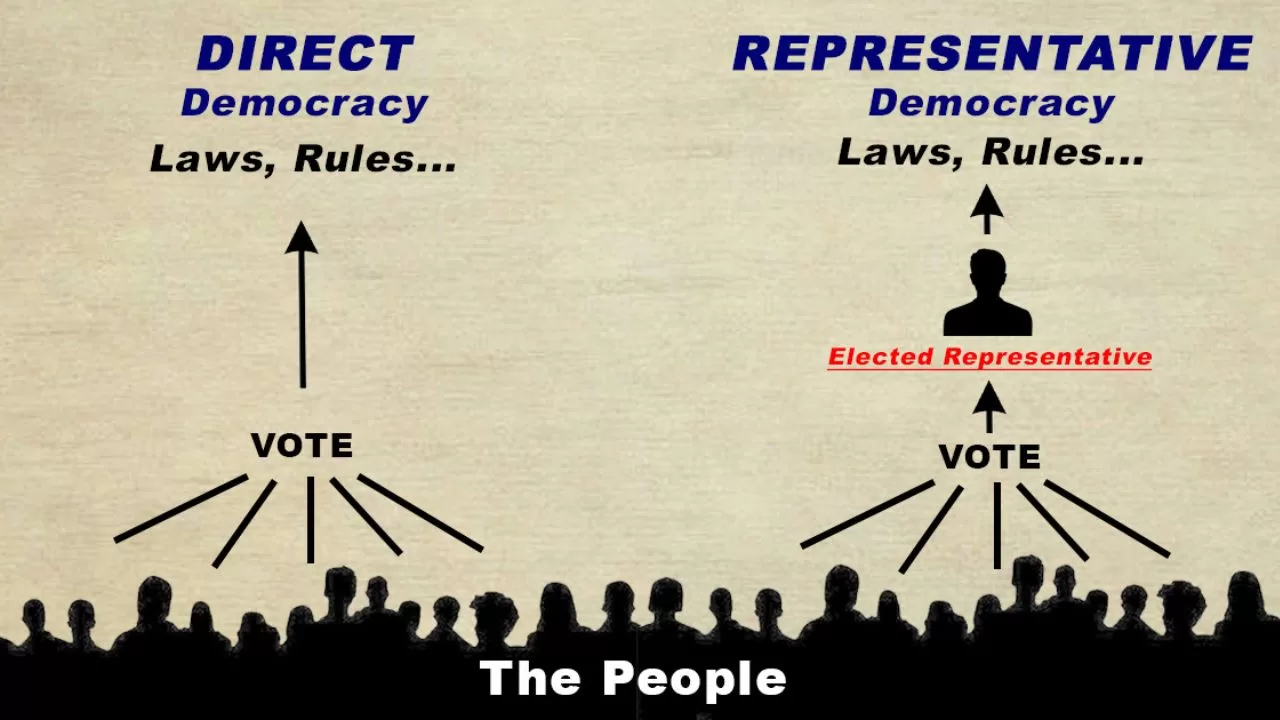
In its traditional sense, representative democracy is a system of government where citizens elect officials to make decisions and pass laws on their behalf. For centuries, this model has relied on physical infrastructure: paper ballots, town halls, geographic districts, and centralized legislative bodies. However, as we move deeper into the 21st century, the definition of “representation” is undergoing a radical technological transformation.
The intersection of software engineering, cryptography, and artificial intelligence is redefining what it means to be “represented.” We are moving away from a world of rigid, once-every-four-years interactions and toward a dynamic, tech-driven ecosystem where representation is continuous, verifiable, and programmable. In this context, representative democracy is no longer just a political philosophy; it is a complex technological challenge involving data integrity, digital security, and algorithmic transparency.

The Evolution of Governance Infrastructure: From Paper to Blockchain
The core mechanism of representative democracy is the transmission of “will” from the citizen to the representative. Historically, this has been a high-latency process. Technology is currently rewriting this infrastructure to reduce friction and increase the fidelity of that transmission.
Distributed Ledger Technology (DLT) and Immutable Voting
One of the primary critiques of traditional representative systems is the lack of transparency in how votes are counted and how representatives adhere to their mandates. Blockchain technology offers a “trustless” solution. By utilizing a distributed ledger, every vote cast for a representative can be encrypted, time-stamped, and made immutable. This ensures that the foundational act of representation—the election—is free from centralized manipulation. In a tech-centric democracy, the “meaning” of representation is anchored in the cryptographic certainty that every voice was recorded and none were altered.
Transitioning from Analog Districts to Digital Constituencies
Traditionally, representation is tied to geography. However, software-driven platforms are allowing for the rise of “intentional communities” or digital constituencies. Technology allows us to rethink representation based on shared interests or professional expertise rather than mere physical proximity. Through secure digital portals, citizens can delegate their representative power to specialists in specific fields—such as environmental science or digital privacy—effectively creating a more nuanced and technically proficient governing body.
Liquid Democracy: Real-Time Representation Through Software
The most significant technological shift in the meaning of representative democracy is the concept of “Liquid Democracy.” This is a hybrid model that sits between direct and representative democracy, enabled entirely by sophisticated software platforms.
The Mechanism of Dynamic Delegation
In a liquid democracy, software allows citizens to choose their level of involvement. A citizen can vote directly on an issue or delegate their vote to a representative. Unlike traditional systems, this delegation is not permanent. If a representative fails to act in the interest of the constituent, the software allows the citizen to revoke that “token” of representation instantly. This turns representation into a real-time feedback loop rather than a static multi-year contract.
Smart Contracts and Programmatic Accountability
The integration of smart contracts—self-executing code on a blockchain—takes representation a step further. Imagine a scenario where a representative’s voting power is tied to specific performance metrics or campaign promises. If the representative deviates from the “code” of their platform, the smart contract could automatically trigger a recall or adjust their influence within a digital assembly. Here, representative democracy means “algorithmic accountability,” where the representative is bound not just by ethics, but by the literal architecture of the governance software.
Digital Identity and the Security of Representation
For representative democracy to function in a digital environment, the technology must solve the “identity” problem. How can we ensure that the person being represented is a real human being and that their representative power hasn’t been hijacked by a bot or a malicious actor?
Biometrics and Multi-Factor Authentication (MFA)
The future of representation relies heavily on the advancement of Digital Identity (DID) systems. These systems use a combination of biometrics—such as facial recognition or fingerprint scanning—and multi-factor authentication to ensure “one person, one vote.” In this tech-driven niche, representative democracy is defined by the robustness of its security protocols. Without high-level digital security, representation is vulnerable to Sybil attacks, where a single actor creates multiple fake identities to subvert the democratic process.
Zero-Knowledge Proofs (ZKP) and Privacy
A major tension in digital democracy is the balance between transparency and privacy. Citizens need to know the system is honest, but they also need their individual choices to remain private to prevent coercion. Zero-Knowledge Proofs (ZKP) are a breakthrough in cryptography that allow a system to prove a statement is true (e.g., “This person is a valid voter”) without revealing the underlying data (the person’s identity or their specific vote). In this technological framework, representation means participating in a system that is perfectly transparent in the aggregate while remaining perfectly private at the individual level.
DAOs and the Future of Organizational Governance
The concept of representative democracy is also migrating from the halls of government into the world of software development and corporate structures via Decentralized Autonomous Organizations (DAOs).
Governance Tokens as Representation
In the world of Web3, DAOs use “governance tokens” to represent a stake in a project. Token holders can vote on proposals or elect a “council” to manage the project’s treasury and roadmap. This is a pure tech implementation of representative democracy. The “meaning” of representation here is quantified by token weight, and the “representatives” are often developers or strategists who are held accountable by the codebase itself.
The Challenge of Algorithmic Bias
While DAOs and automated systems offer efficiency, they introduce the risk of algorithmic bias. If the code governing representation is written with inherent flaws—for example, favoring those with more technical “gas” or higher capital—the democracy becomes skewed. In a tech-centric world, “representative” means ensuring the code is audited, open-source, and inclusive. The battle for democracy moves from the ballot box to the GitHub repository, where the “laws” are written in Python, Solidity, or C++.
Conclusion: The Programmable Republic
When we ask “what does representative democracy mean” through a technological lens, the answer is clear: it means the transition from a static, paper-based social contract to a dynamic, code-based governance protocol.
Technology is no longer just a tool for counting votes; it is the very fabric upon which representation is built. By leveraging blockchain for transparency, smart contracts for accountability, and advanced cryptography for security, we are creating a version of representative democracy that is more responsive, more secure, and more tailored to the complexities of the modern world. However, this shift requires us to be as vigilant about our “digital constitutions” as we were about our physical ones. In the digital age, the price of liberty is not just eternal vigilance—it is also a commitment to rigorous code audits and decentralized security.
aViewFromTheCave is a participant in the Amazon Services LLC Associates Program, an affiliate advertising program designed to provide a means for sites to earn advertising fees by advertising and linking to Amazon.com. Amazon, the Amazon logo, AmazonSupply, and the AmazonSupply logo are trademarks of Amazon.com, Inc. or its affiliates. As an Amazon Associate we earn affiliate commissions from qualifying purchases.