
In the rapidly evolving landscape of medical technology, few innovations demonstrate the bridge between mechanical engineering and human biology as profoundly as the LVAD. To answer the fundamental question: LVAD stands for Left Ventricular Assist Device. While the term may sound like simple medical jargon, it represents one of the most sophisticated pieces of hardware ever miniaturized for human implantation.
As we delve into the intersection of technology and healthcare—often referred to as MedTech—the LVAD stands out as a pinnacle of bioengineering. It is not merely a “heart pump”; it is a complex system involving advanced fluid dynamics, magnetic levitation, integrated software, and external power management. In this exploration, we will break down the technical architecture of these devices, the evolution of their internal hardware, and the future of wireless power in implantable tech.
The Engineering Architecture of the Modern LVAD
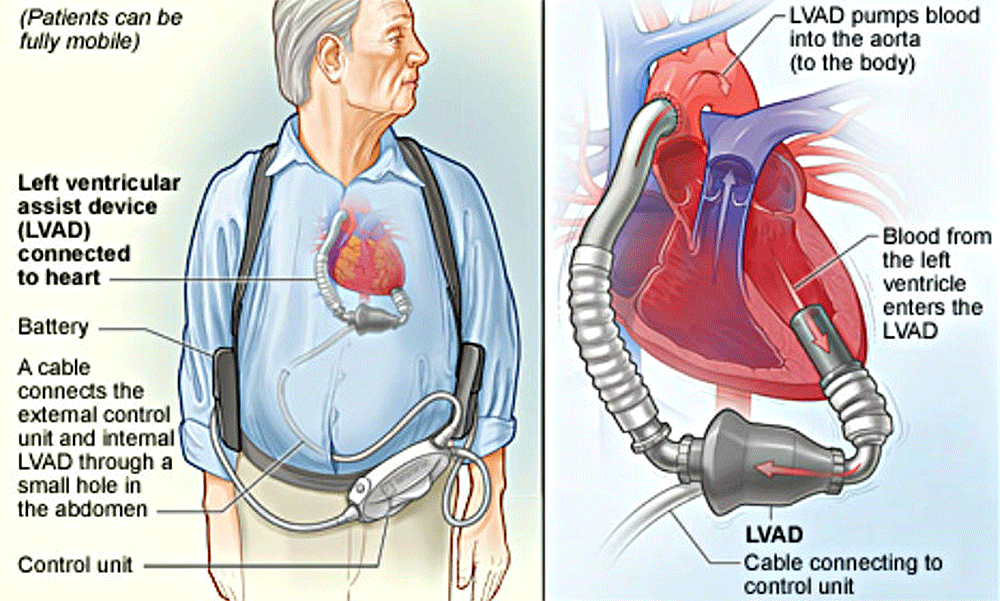
At its core, an LVAD is a mechanical circulatory support (MCS) system. It is designed to assist the heart’s left ventricle—the chamber responsible for pumping oxygenated blood to the rest of the body—when it can no longer perform its function effectively. From a technical standpoint, the LVAD does not replace the heart; it works in parallel with it.
The Mechanical Pump and Fluid Dynamics
The most critical component of the LVAD is the blood pump itself. Early iterations of this technology utilized pulsatile flow, mimicking the natural “beat” of a heart. However, modern tech has shifted toward continuous-flow pumps. These utilize an internal rotor that spins at several thousand revolutions per minute (RPM).
Engineers face a significant challenge here: “shear stress.” If the mechanical parts of the pump are too harsh, they can damage red blood cells (hemolysis) or trigger blood clots. To solve this, companies like Abbott and Medtronic utilize “Full MagLev” technology. In these systems, the rotor is suspended in a magnetic field, meaning there are no mechanical bearings and no friction. This reduces heat and mechanical wear, significantly increasing the device’s lifespan.
The Controller: The “Brain” of the System
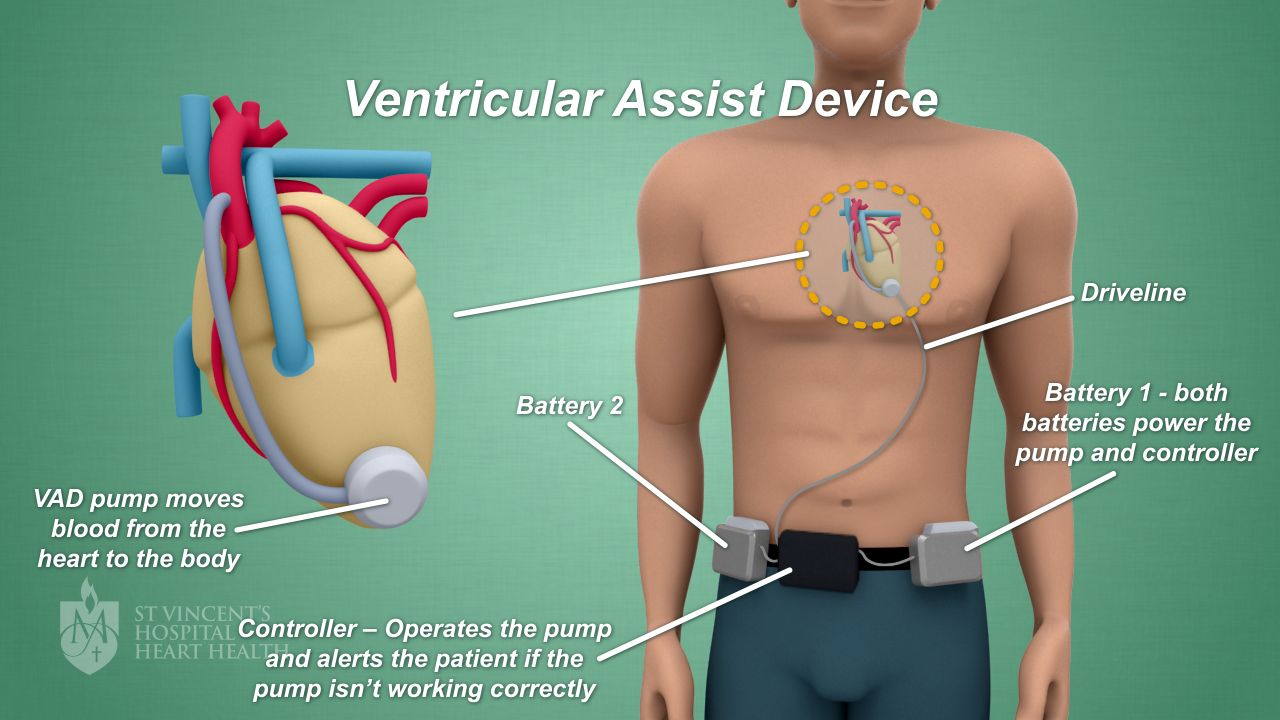
Every LVAD is managed by an external controller, a sophisticated microcomputer usually worn on the patient’s belt. This device serves several critical technical functions:
- Speed Regulation: It monitors and maintains the RPM of the internal pump.
- Data Logging: It records every minute of the pump’s performance, capturing data on flow rates and power consumption.
- Alarm Systems: It uses proprietary algorithms to detect “suction events” (when the pump is drawing more blood than is available) or power interruptions, alerting the user via haptic and auditory signals.
The Driveline and Power Source
Currently, most LVADs require a “driveline”—a physical cable that exits the body through the abdomen to connect the internal pump to the external controller and battery packs. The engineering of these cables involves high-grade biocompatible materials designed to resist infection while maintaining electrical integrity under the constant movement of a human body.
The Evolution of LVAD Technology: From Pulsatile to Centrifugal
The trajectory of LVAD technology mirrors the broader evolution of computing and hardware. We have moved from the “mainframe” era of bulky, short-lived devices to the “mobile” era of sleek, efficient, and long-lasting tech.
First Generation: Displacement Pumps
In the late 20th century, first-generation LVADs were massive. They were “volume displacement” pumps that used a pusher plate or a diaphragm to move blood. These were loud, prone to mechanical failure due to the high number of moving parts, and necessitated large surgical pockets in the abdomen. They were the “vacuum tubes” of the heart-tech world—functional but inefficient.
Second Generation: Axial Flow Pumps
The leap to the second generation involved axial flow technology. These pumps were much smaller, allowing them to be implanted directly into the chest cavity. They used a screw-like rotor to move blood continuously. While a massive improvement, the mechanical bearings still posed a risk for long-term reliability.
Third Generation: Centrifugal and MagLev Tech
The current state-of-the-art involves centrifugal flow. Instead of a screw, these pumps use a spinning disk that throws blood outward to create flow. When combined with magnetic levitation, these devices (such as the HeartMate 3) have no contact points within the pump. This has revolutionized the reliability of the tech, moving the conversation from “bridge to transplant” (using the tech to stay alive until a donor heart is found) to “destination therapy” (using the tech as a permanent solution).
The Role of AI and Data Analytics in Cardiac Monitoring
As with all modern gadgets, the LVAD is becoming “smarter.” We are currently seeing a shift where the hardware is being augmented by sophisticated software suites and cloud-based analytics.
Remote Patient Monitoring (RPM)
Modern LVAD systems are increasingly integrated with remote monitoring platforms. Through cellular or Wi-Fi-enabled controllers, the device can transmit performance data directly to a hospital’s server. If the software detects a trend—such as a slow increase in power consumption which might indicate a potential issue—it can flag this for a technician or surgeon to review before a clinical problem even arises.
Predictive Algorithms
Engineers are now deploying machine learning models to analyze the data generated by thousands of LVAD patients. By identifying patterns in pump flow and power spikes, these algorithms can predict adverse events like “pump thrombosis” (clotting) with high accuracy. This transition from reactive to proactive maintenance is a hallmark of high-end industrial tech, now applied to human life.
The User Interface (UI) Experience
The “tech” of an LVAD isn’t just internal. The external interfaces—the screens on the controllers and the charging docks—have undergone significant UI/UX overhauls. Modern controllers feature high-resolution LCD screens, intuitive icon-based menus, and simplified battery swapping mechanisms, ensuring that even non-technical users can manage their life-saving hardware with confidence.
The Future: Wireless Power and Miniaturization
The next frontier for LVAD tech is the elimination of the driveline—the one remaining physical tether that links the user to the external world. This represents the ultimate challenge in medical engineering.
Transcutaneous Energy Transfer Systems (TETS)
TETS is the “wireless charging” of the medical world. By using an internal coil implanted under the skin and an external coil worn over it, power can be transferred via induction. This would eliminate the exit site for the driveline, drastically reducing the risk of infection—the leading complication for LVAD users. While this technology has existed in labs for years, the challenge lies in managing the heat generated by the induction process, which can damage human tissue.
Fully Implantable Systems
The ultimate goal for MedTech firms is a fully implantable LVAD. This would include an internal battery capable of powering the pump for several hours, allowing the user to swim or shower without any external hardware. These systems would utilize “smart” power management to switch between the internal battery and the TETS charging system, much like how a modern smartphone manages its power cycles.
Integration with Wearables
We are also seeing a convergence between medical-grade implants and consumer-grade wearables. Future LVAD controllers may sync via Bluetooth with smartwatches or rings to provide users with real-time status updates on their wrist. This integration helps “normalize” the technology, moving it away from a clinical-feeling apparatus toward a seamless part of a tech-enabled lifestyle.
Cybersecurity in Implantable Medical Technology
As LVADs become more connected, they also become part of the Internet of Medical Things (IoMT). This introduces a new technical challenge: cybersecurity.
Protecting the Heart from Hacks
The idea of a heart pump being “hacked” sounds like science fiction, but for security researchers, it is a serious consideration. As devices gain wireless communication capabilities for remote monitoring, they must be protected by robust encryption. MedTech companies are now hiring cybersecurity experts to ensure that the communication protocols between the controller and the hospital are “unhackable.”
Firmware Updates and Longevity
Just like a laptop or a car, modern LVADs may require firmware updates. Developing a process to update the “operating system” of a pump that is currently keeping a human being alive requires a level of “five-nines” reliability (99.999% uptime) that far exceeds standard consumer tech. These updates often optimize battery life or refine the algorithms that manage blood flow during exercise versus sleep.

Conclusion: The Ultimate Tech Integration
When we ask, “What does LVAD stand for?” we are asking about more than a definition. We are looking at a masterclass in technology integration. The LVAD is a testament to how far we have come in our ability to use hardware, software, and mechanical engineering to overcome the limitations of the human body.
From the friction-free rotation of MagLev rotors to the predictive power of AI-driven analytics, the LVAD is a prime example of Tech at its most vital. As we move toward a future of wireless power and fully implantable systems, the line between “machine” and “body” continues to blur, proving that the most important technology of the 21st century isn’t just in our pockets—it’s in our chests.
aViewFromTheCave is a participant in the Amazon Services LLC Associates Program, an affiliate advertising program designed to provide a means for sites to earn advertising fees by advertising and linking to Amazon.com. Amazon, the Amazon logo, AmazonSupply, and the AmazonSupply logo are trademarks of Amazon.com, Inc. or its affiliates. As an Amazon Associate we earn affiliate commissions from qualifying purchases.