
In the realm of physics, the letter “k” is perhaps the most hardworking variable in the scientific alphabet. It does not represent a single value but rather serves as a placeholder for several fundamental constants that govern the behavior of the universe. For the technologist, the engineer, and the digital innovator, understanding what “k” equals is more than an academic exercise—it is the key to understanding the limitations and possibilities of modern hardware, communication, and software design.
From the electrostatic forces that allow a transistor to switch on and off to the thermal conductivity that prevents a high-powered GPU from melting, “k” is the silent architect of the digital age. This article explores the various identities of “k” in physics and how these values define the boundaries of the technology industry today.
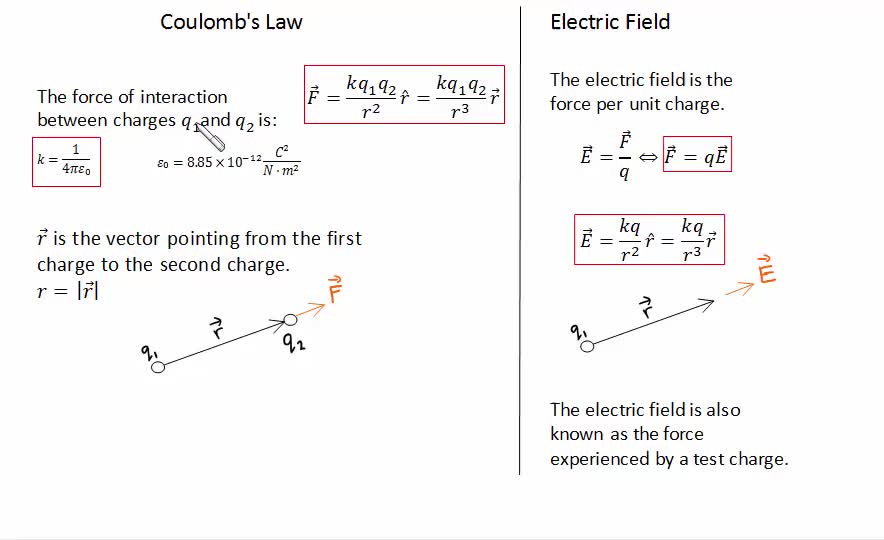
Coulomb’s Constant (k): The Foundation of Semiconductor Technology
The most prominent “k” in the study of electromagnetism is Coulomb’s constant ($k_e$). With a value of approximately $8.99 times 10^9 N cdot m^2/C^2$, this constant determines the magnitude of the force between two point charges. While it may seem rooted in high school physics, it is the foundational principle behind every microchip ever manufactured.
Electrostatics in Semiconductor Design
In the tech world, the pursuit of “smaller, faster, and more efficient” is governed by the laws of electrostatics. As transistors shrink to the 3-nanometer and 2-nanometer scale, the distance between components becomes infinitesimal. Coulomb’s constant dictates how these charges interact. Engineers must account for $k$ to manage “leakage current,” where electrons jump across gaps they aren’t supposed to cross. Without precise calculations involving Coulomb’s constant, the logic gates that drive AI and cloud computing would fail to maintain their binary states.
The Role of ‘k’ in Capacitance and Energy Storage
In hardware engineering, we also encounter the “dielectric constant,” often denoted by the Greek letter kappa ($kappa$) or simply $k$. This “high-k” or “low-k” designation is critical in capacitor design. High-k dielectrics are used in the gates of advanced transistors to increase capacitance without increasing the physical size of the component. This allows for the miniaturization of smartphones and wearables, providing more processing power in a smaller footprint while managing power consumption.
Boltzmann’s Constant (k): Thermal Noise and Information Theory
As we move from the physical structure of hardware to the transmission of data, “k” takes on a new identity: Boltzmann’s constant ($k_B$). Valued at $1.38 times 10^{-23}$ Joules per Kelvin, this “k” relates the average relative kinetic energy of particles in a gas with the thermodynamic temperature. In technology, Boltzmann’s constant is the primary metric for understanding “noise.”
Thermal Noise in High-Speed Computing
Every electronic device generates heat, and heat is essentially the random movement of atoms. Boltzmann’s constant helps engineers calculate “Johnson-Nyquist noise,” which is the electronic noise generated by the thermal agitation of charge carriers inside an electrical conductor. In the world of 5G networking and high-speed data centers, this noise is the enemy. It creates a “noise floor” that limits how sensitive a receiver can be. If the signal is too weak, Boltzmann’s constant ensures it will be lost in the thermal jitter of the atoms themselves.
Entropy and Data Compression
Boltzmann’s constant also links physics to Shannon’s Information Theory. There is a deep mathematical symmetry between thermodynamic entropy (calculated using $k$) and information entropy. Tech companies like Google and Meta rely on these principles to develop lossy and lossless compression algorithms. By understanding the “entropy” of a data set, software engineers can determine the maximum possible compression ratio for a video stream or a database, ensuring that global networks can handle the massive influx of data without collapsing under the weight of inefficiency.

The Spring Constant (k): Robotics, MEMS, and Haptic Feedback
In classical mechanics, “k” represents the spring constant in Hooke’s Law ($F = kx$). While this might seem like “low-tech” physics, it is the cornerstone of modern robotics, automotive tech, and the “Internet of Things” (IoT).
Precision Engineering in Actuators
Modern robotics relies on actuators that must move with sub-millimeter precision. Whether it is a robotic arm in a Tesla factory or a surgical robot in a hospital, the “k” value of the materials used determines the stiffness and responsiveness of the machine. In software-defined hardware, engineers must program “PID controllers” (Proportional-Integral-Derivative) that take the physical “k” constant of the mechanical system into account. If the software doesn’t account for the physical elasticity of the robot, the system will oscillate, leading to catastrophic failure or inaccuracy.
Haptic Feedback: The Physics of Feel
Every time your smartphone vibrates to simulate a button press, or a VR controller pushes back against your hand, you are interacting with the physics of “k.” Micro-Electro-Mechanical Systems (MEMS) use tiny silicon springs and structures with specific “k” values to detect motion (accelerometers) and provide tactile feedback. The “feel” of high-end tech is a result of fine-tuning the mechanical resistance constants to mimic real-world interactions, bridging the gap between digital interfaces and human sensation.
Thermal Conductivity (k): The Barrier to High-Performance AI
In the niche of thermal management and hardware cooling, “k” represents thermal conductivity. This is a measure of a material’s ability to conduct heat. As AI models like GPT-4 and LLama require thousands of H100 GPUs running in parallel, the “k” value of cooling systems has become one of the most valuable metrics in the tech industry.
Overclocking and Heat Dissipation
The bottleneck in modern computing is no longer just transistor density; it is heat dissipation. When a processor operates, it generates heat that must be moved away from the silicon die as quickly as possible. The thermal conductivity ($k$) of the “Thermal Interface Material” (TIM)—the paste or liquid metal between the chip and the cooler—determines how much power the chip can draw before it throttles. High-performance computing (HPC) environments are constantly seeking materials with higher “k” values, such as synthetic diamond or graphene, to push the limits of clock speeds.
Innovations in Liquid Cooling and Infrastructure
Data centers are currently undergoing a massive architectural shift toward liquid cooling. This is because water has a significantly better thermal profile than air. By optimizing the “k” factor of heat exchangers and coolant fluids, tech giants can reduce their PUE (Power Usage Effectiveness) scores. In an era where ESG (Environmental, Social, and Governance) goals are paramount, the physics of thermal conductivity is directly linked to corporate profitability and sustainability.
Conclusion: The Ubiquity of ‘k’ in the Digital Frontier
What does “k” equal in physics? It depends on where you look, but in the context of technology, it equals the “Limit.”
- It is the limit of how small we can make a transistor (Coulomb’s Constant).
- It is the limit of how much data we can send over a wire (Boltzmann’s Constant).
- It is the limit of how precise our robots can be (The Spring Constant).
- It is the limit of how much heat our AI servers can handle (Thermal Conductivity).
For tech professionals, these constants are not just numbers in a textbook; they are the boundary conditions of innovation. As we push toward quantum computing and 6G networks, we aren’t breaking the laws of physics—we are simply finding new, ingenious ways to work within the constants that “k” defines. Understanding these variables allows us to transition from merely using technology to fundamentally advancing it. Whether you are coding the next great app or designing the next generation of hardware, remember that your work is, at its core, a conversation with the fundamental constants of the universe.
aViewFromTheCave is a participant in the Amazon Services LLC Associates Program, an affiliate advertising program designed to provide a means for sites to earn advertising fees by advertising and linking to Amazon.com. Amazon, the Amazon logo, AmazonSupply, and the AmazonSupply logo are trademarks of Amazon.com, Inc. or its affiliates. As an Amazon Associate we earn affiliate commissions from qualifying purchases.