
In the lexicon of modern engineering and digital infrastructure, few words carry as much weight—both literal and metaphorical—as “Dreadnought.” While the term originated in the early 20th-century naval arms race, it has found a second life within the technology sector. Today, when a tech enthusiast, a hardware engineer, or a software architect asks, “What does dreadnought mean?” they are rarely looking for a history lesson on Edwardian battleships. Instead, they are searching for a definition of peak performance, disruptive innovation, and the absolute elimination of technical constraints.
In the tech industry, a “Dreadnought” represents a product or system that renders its predecessors obsolete through sheer scale and technological superiority. It is the “all-big-gun” philosophy applied to silicon, code, and cloud architecture. This article explores the multifaceted meaning of the Dreadnought in today’s tech landscape, from high-performance hardware to the massive AI models reshaping our digital world.

The Etymology of Innovation: From Naval Warfare to High-Performance Tech
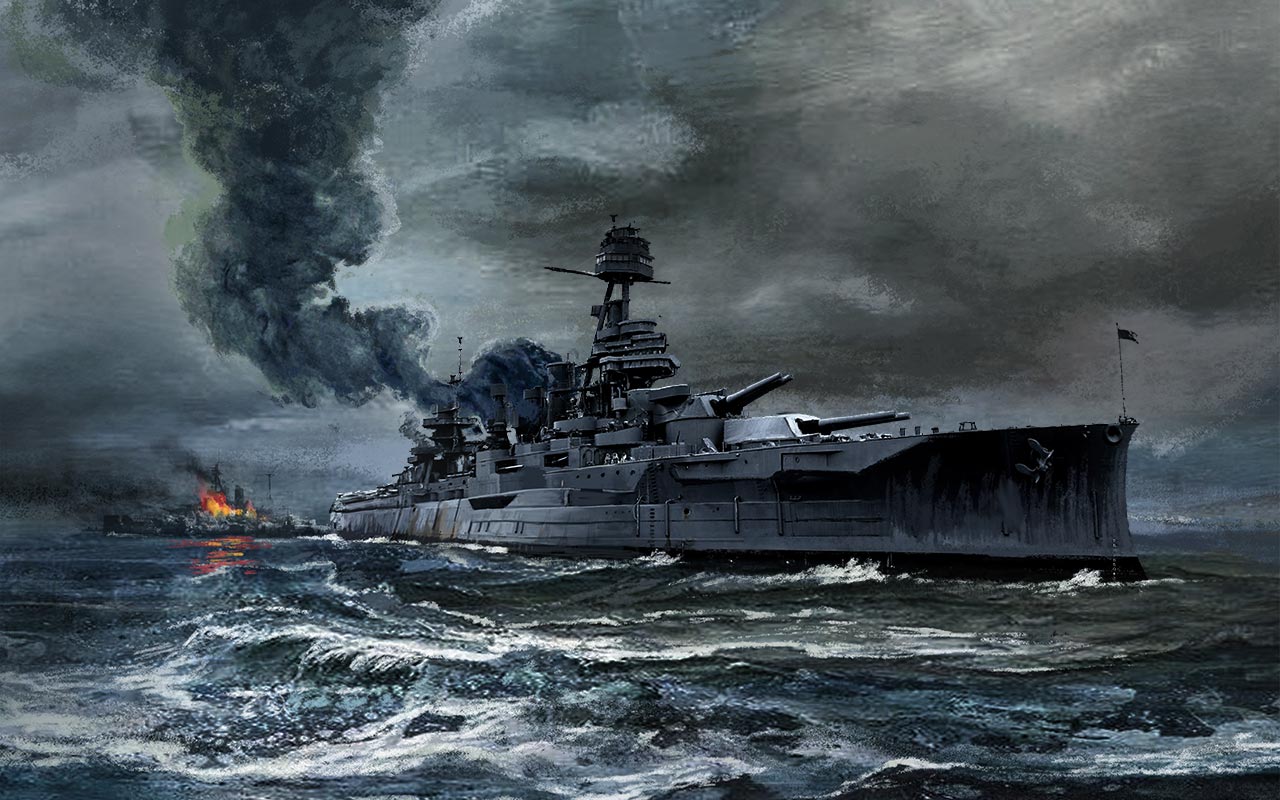
To understand the technological application of the term, one must first understand its root: “Dread nought,” or to fear nothing. When the HMS Dreadnought was launched in 1906, it didn’t just iterate on previous designs; it fundamentally changed the rules of engagement. In technology, this “Dreadnought Moment” refers to the point where a new tool or platform is so advanced that every existing competitor becomes a “pre-Dreadnought”—functional, perhaps, but fundamentally outclassed.
The “Fear Nothing” Philosophy in Engineering
In tech circles, the “Dreadnought” moniker is often applied to projects where the budget and size constraints are secondary to the goal of absolute performance. Whether it is a “no-compromise” gaming laptop or a massive supercomputing cluster, the philosophy is the same: engineering a solution that fears no workload. This mindset is what drives the top tier of the enthusiast market, pushing manufacturers to experiment with liquid cooling, exotic materials, and over-clocked components that standard consumer tech wouldn’t dare to implement.
Defining a Paradigm Shift
A true Dreadnought in technology is characterized by a paradigm shift. Just as the original ship moved from mixed-caliber guns to a uniform battery of heavy weapons, tech Dreadnoughts move from general-purpose utility to specialized, overwhelming force. For example, the transition from traditional HDDs (Hard Disk Drives) to high-speed NVMe SSDs was a Dreadnought moment for data storage. It wasn’t just faster; it changed how software was written and how operating systems managed data, rendering the old “mechanical” approach archaic.
Dreadnought-Class Computing: Engineering the Limits of Hardware
When we look at physical gadgets and professional workstations, the term “Dreadnought” is most frequently used to describe “Desktop Replacements.” These are devices that prioritize raw power and thermal headroom over portability or price.
Desktop Replacements and Over-Engineered Laptops
In the realm of mobile computing, a Dreadnought is a laptop that weighs ten pounds, features dual power bricks, and houses components usually reserved for full-tower PCs. Brands like MSI (with their Titan series), ASUS ROG, and Alienware often produce these “Dreadnought-class” machines. They are equipped with the highest-tier GPUs (like the NVIDIA RTX 4090 Mobile) and CPUs with 24 cores. The “meaning” of Dreadnought here is the refusal to compromise. These machines are designed for users who need to render 3D environments or compile millions of lines of code while on a remote set, effectively bringing the power of a data center to a briefcase.
The Role of Thermals and Power Delivery
A significant part of the Dreadnought definition in hardware is the engineering required to sustain peak performance. Most tech fails not because the chip isn’t fast enough, but because the cooling can’t keep up. Dreadnought-class hardware features vapor chambers, massive heat pipes, and sophisticated fan arrays. In this context, “Dreadnought” means a system that can run at 100% load indefinitely without “throttling.” It is about the reliability of power—ensuring that the digital “engines” never have to slow down, regardless of the intensity of the task.
Dreadnought Architectures in AI and Enterprise Infrastructure

Beyond the physical hardware we can touch, the term has become a staple in describing the “Big Tech” approach to software and artificial intelligence. In the cloud era, a Dreadnought is a system of such immense scale that its gravity pulls the entire industry toward it.
Scaling the Unscalable: Large Language Models as Digital Dreadnoughts
Today’s Large Language Models (LLMs), such as GPT-4 or Google’s Gemini, are the modern equivalents of the 1906 battleship. They require massive “fleets” of H100 GPUs, billions of dollars in investment, and energy consumption equivalent to small cities. When we call an AI model a “Dreadnought,” we are referring to its sheer parameter count and the depth of its training data. These models are so large and powerful that they create a barrier to entry; smaller firms cannot compete on the same scale, forcing them to find “asymmetric” ways to innovate, much like smaller navies had to rethink their strategies in the wake of the original Dreadnought.
Security Protocols: The Unsinkable Digital Fortress
In digital security, a “Dreadnought” architecture refers to a multi-layered, redundant defense system designed to withstand “total war” scenarios, such as state-sponsored DDoS attacks or advanced persistent threats (APTs). A Dreadnought security posture doesn’t just block unauthorized access; it uses AI-driven heuristics, zero-trust frameworks, and hardware-level encryption to ensure that even if one “compartment” of the ship is breached, the vessel remains unsinkable. In this niche, Dreadnought means resilience through redundant power.
The “Dreadnought Effect” in the Tech Marketplace
The arrival of a Dreadnought-class product often results in what economists and tech analysts call “creative destruction.” This is the “Dreadnought Effect”—the sudden obsolescence of the status quo.
Disruptive Technologies as Competitive Super-Weapons
When Apple released the M1 chip, it was a Dreadnought moment for the semiconductor industry. By integrating the CPU, GPU, and RAM into a single “System on a Chip” (SoC) with unprecedented efficiency, they rendered the existing mobile processor landscape obsolete overnight. Competitors had to completely rethink their roadmaps to compete with the performance-per-watt that Apple had achieved. In this sense, “Dreadnought” describes a product that doesn’t just compete in the market—it resets the market’s expectations.
Case Study: When Legacy Systems Face the Dreadnought
History is littered with tech companies that failed to recognize a Dreadnought on the horizon. From the decline of the traditional mainframe in the face of distributed cloud computing to the fall of physical media at the hands of high-bandwidth streaming, the Dreadnought Effect is a constant force. Understanding what Dreadnought means in a business context is vital for digital security and strategy: it is the warning sign that the old ways of doing things are no longer viable because a more powerful, more efficient “vessel” has entered the waters.
Future Outlook: The Next Generation of Tech Dreadnoughts
As we look toward the next decade, the definition of the Dreadnought will continue to evolve, moving away from pure size and toward new frontiers of physics and efficiency.
Quantum Computing: The Dreadnought of the 21st Century
If classical supercomputers are the peak of current naval architecture, Quantum Computers are the first Dreadnoughts of a new era. A functional, fault-tolerant quantum computer would render current encryption methods—the “armor” of our digital world—entirely useless. It represents a leap in processing power so vast that it cannot be measured by traditional benchmarks. When these machines become commercially viable, they will define the “Dreadnought” of the 2030s: a technology that solves in seconds what would take today’s best hardware ten thousand years.
Sustainable Power: Efficiency as the New Dominance
Interestingly, the next “Dreadnought” might not be the biggest or the hungriest machine, but the most efficient. As data centers face an energy crisis, the tech that can deliver “Dreadnought-level” intelligence while using a fraction of the power will be the ultimate winner. We are seeing a move toward “Green Dreadnoughts”—architectures that dominate through clever engineering and photonics rather than just stacking more silicon.
In conclusion, “What does dreadnought mean?” in the world of technology is a question about the limits of human ingenuity. It is a term for the biggest, the fastest, and the most disruptive tools we can build. Whether it’s a high-end workstation, a massive AI model, or a revolutionary new chip architecture, a Dreadnought is a statement of intent: a declaration that the future has arrived, and it fears nothing. For tech professionals and enthusiasts alike, identifying the next Dreadnought is the key to staying ahead in an industry that never stops evolving.
aViewFromTheCave is a participant in the Amazon Services LLC Associates Program, an affiliate advertising program designed to provide a means for sites to earn advertising fees by advertising and linking to Amazon.com. Amazon, the Amazon logo, AmazonSupply, and the AmazonSupply logo are trademarks of Amazon.com, Inc. or its affiliates. As an Amazon Associate we earn affiliate commissions from qualifying purchases.