
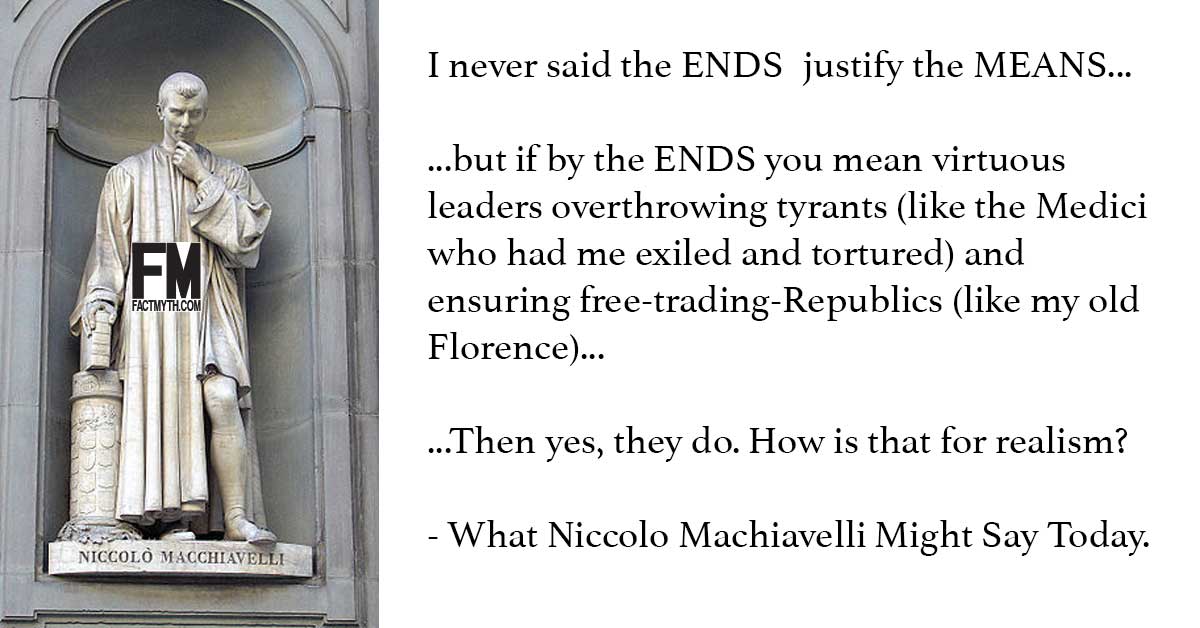
In the fast-paced world of technological advancement, a foundational philosophical question has become increasingly urgent: Do the ends justify the means? This phrase, often attributed to the political strategist Niccolò Machiavelli, suggests that if a goal is sufficiently important or morally right, any method used to achieve it—regardless of its ethical implications—is acceptable. In the context of 21st-century technology, this debate is no longer confined to philosophy classrooms. It is the silent engine driving Silicon Valley boardrooms, AI research labs, and cybersecurity protocols.
As we witness the rise of Artificial Intelligence, ubiquitous surveillance, and the “move fast and break things” culture of software development, the tension between ambitious outcomes and the methods used to reach them has reached a breaking point. To understand what “the ends justify the means” means in a tech-centric world, we must examine how modern innovation often prioritizes the ultimate product over the process of creation.
Defining the Machiavellian Dilemma in Modern Technology
To grasp the implications of this phrase, we must first understand its core logic. At its heart, “the ends justify the means” is a form of consequentialism—specifically utilitarianism—which argues that the best action is the one that results in the greatest good for the greatest number. In tech, “the ends” are often framed as global connectivity, the eradication of disease through AI, or the democratization of information. “The means,” however, can involve privacy violations, algorithmic bias, and the erosion of digital sovereignty.
The Philosophical Roots: Utilitarianism vs. Deontology
In tech ethics, two schools of thought often clash. Utilitarians argue that if a new software tool helps millions of people, a few minor privacy leaks or bugs are an acceptable price to pay. Conversely, the deontological view suggests that certain actions (like lying or invading privacy) are inherently wrong, regardless of the positive outcome. When a tech company justifies aggressive data harvesting by claiming it will result in a more personalized and “helpful” user experience, they are operating under the belief that their virtuous “end” justifies their questionable “means.”
How Tech Leaders Interpret “The Ends”
For many innovators, “the ends” are synonymous with progress. Whether it is achieving Artificial General Intelligence (AGI) or creating a seamless global payment network, these goals are viewed as inevitable and universally beneficial. When the goal is framed as “saving humanity” or “optimizing the world,” it becomes easy to view regulatory hurdles, ethical safeguards, or user consent as mere obstacles to be bypassed. This mindset creates a culture where the destination is everything, and the path taken to get there is secondary.
Artificial Intelligence and the Data Scraping Controversy
Perhaps the most prominent example of the “ends justify the means” philosophy today is the development of Large Language Models (LLMs) and generative AI. To build these sophisticated tools, developers require massive amounts of data—often billions of parameters’ worth of text, images, and code.
The Race for AGI (Artificial General Intelligence)
The “end” in this scenario is AGI—an AI that can perform any intellectual task a human can. Proponents argue that AGI will solve climate change, cure cancer, and usher in an era of post-scarcity. To reach this peak, companies have scraped the entire public internet, often ignoring copyright, “no-index” tags, and the creative rights of individual artists and writers. From their perspective, the potential benefit of a super-intelligent AI outweighs the “minor” infringement on intellectual property rights.
Privacy vs. Progress: The Intellectual Property Trade-off
This raises a critical question: Is it ethical to build a world-changing tool using “stolen” or unconsented data? If the AI can eventually help a doctor diagnose a rare disease, does it matter that it was trained on millions of private social media posts without the users’ explicit permission? For critics, the “means”—the violation of consent and the devaluation of human labor—are too high a price. For the developers, the “ends”—a technological leap for mankind—make the process justifiable.
Surveillance, Security, and the Greater Good

In the realm of digital security and national defense, the “ends justify the means” argument is used to balance individual liberty with collective safety. Governments and tech firms often find themselves at odds over whether the security of the many justifies the intrusion into the lives of the few.
National Security and Digital Backdoors
Law enforcement agencies frequently pressure tech companies to create “backdoors” in encrypted messaging apps. The “end” is clear: stopping terrorism and criminal activity. However, the “means” involve weakening the security architecture that protects billions of innocent users from hackers and authoritarian regimes. Here, the utilitarian argument is that catching one high-profile criminal justifies compromising the privacy of millions. Tech companies, however, often argue that the means (breaking encryption) inherently corrupts the end (a secure society).
Predictive Policing and Algorithmic Bias
Another area where this philosophy manifests is in predictive policing software. These tools use historical data to predict where crimes might occur. The “end” is a reduction in crime and more efficient use of police resources. However, the “means” often involve algorithms that perpetuate racial bias and over-police marginalized communities. If the system results in a 5% drop in crime but at the cost of systemic unfairness, has the end truly justified the means? In the tech sector, the obsession with “optimization” often overlooks these human costs.
Disruptive Innovation and the “Move Fast and Break Things” Mentality
For over a decade, the mantra of Silicon Valley was “move fast and break things.” This is a direct application of the “ends justify the means” logic to business growth and software deployment. The goal was rapid scaling and market dominance; the collateral damage was often the stability of existing social and economic structures.
The Silicon Valley Playbook
Companies like Uber, Airbnb, and Facebook disrupted entire industries by operating in legal gray areas. The “end” was a more convenient, app-based economy. The “means” involved bypassing labor laws, ignoring zoning regulations, and skirting taxi medallions. Investors and founders justified these actions by arguing that the old laws were obsolete and that the new “end” (a friction-free sharing economy) would ultimately benefit everyone.
Scaling at All Costs: Social Media’s Impact on Mental Health
Social media platforms were designed to “bring the world closer together.” To achieve this end, developers used psychological “means” such as infinite scroll, push notifications, and engagement-based algorithms. While the platforms did succeed in connecting billions, the means used to keep users engaged led to unintended consequences: increased anxiety, political polarization, and the spread of misinformation. When the means are addictive and manipulative, they eventually taint the “end,” transforming a tool for connection into a tool for division.
Navigating a New Ethical Framework for the Future
As technology becomes more integrated into our physical bodies and social systems, the “ends justify the means” approach is facing a reckoning. The tech industry is beginning to realize that if the process of innovation is unethical, the final product will likely be flawed or harmful.
The Rise of Ethical AI and “Privacy by Design”
A new movement is emerging that rejects Machiavellian logic. Concepts like “Privacy by Design” and “Ethical AI” suggest that the means are just as important as the ends. Instead of building a product and then trying to fix its ethical flaws, companies are being encouraged to integrate ethics into the initial code. This means respecting user data from day one, even if it slows down the development process. In this framework, a “good” end cannot be reached through “bad” means.

Why the “Means” Matter More Than Ever
In the digital age, the “means” are the “ends.” If we build a future of incredible convenience using means that require total surveillance and the loss of autonomy, then the “end” we have reached is a dystopia, regardless of how efficient it is. The tech industry must move toward a model of “principled innovation,” where the methods used—transparency, consent, and fairness—are valued as much as the final software update or hardware release.
Ultimately, “what does do the ends justify the means mean” in tech? It means recognizing that every line of code is a moral choice. As we stand on the threshold of the AI revolution, we must ensure that our quest for a smarter, faster world doesn’t sacrifice the very values that make that world worth living in. The “means” we choose today will define the “ends” we inhabit tomorrow.
aViewFromTheCave is a participant in the Amazon Services LLC Associates Program, an affiliate advertising program designed to provide a means for sites to earn advertising fees by advertising and linking to Amazon.com. Amazon, the Amazon logo, AmazonSupply, and the AmazonSupply logo are trademarks of Amazon.com, Inc. or its affiliates. As an Amazon Associate we earn affiliate commissions from qualifying purchases.