
AncestryDNA has revolutionized personal discovery, transforming what was once the domain of dusty archives and intricate family trees into an accessible, technologically-driven journey through our very DNA. As a leading player in the direct-to-consumer genetic testing market, AncestryDNA leverages advanced biotechnologies and sophisticated computational tools to reveal insights into our ethnic origins, connect us with unknown relatives, and even hint at inherited traits. For anyone curious about their genetic blueprint and its profound stories, understanding the technological underpinnings of AncestryDNA is key to appreciating the data it provides. This exploration delves into the core technological processes, the nature of the information revealed, and the critical considerations of data management that define the AncestryDNA experience.

The Technological Core: How DNA is Decoded
At its heart, AncestryDNA is a triumph of biotechnology and bioinformatics, translating a simple biological sample into a wealth of digital data. The process begins long before any results are displayed, deep within laboratories equipped with cutting-edge genetic analysis tools.
From Saliva Sample to Digital Data
The journey starts with a saliva sample provided by the user. This seemingly insignificant biological fluid contains epithelial cells, which carry a full complement of the user’s DNA. Once received at AncestryDNA’s labs, the sample undergoes a meticulous extraction process to isolate the DNA. This purified DNA is then quantified and prepared for analysis.
Unlike whole-genome sequencing, which maps out every single base pair in a person’s genome, AncestryDNA primarily uses a technique called genotyping. This method focuses on specific, pre-selected locations in the genome known to vary among individuals and populations. These variations are crucial for determining ancestry and identifying genetic relationships. The raw biological data is then converted into a digital format – a vast array of single nucleotide polymorphisms (SNPs) and other markers – ready for computational analysis. This conversion from analog biological information to digital code is the fundamental technological step that powers all subsequent insights.
The Science of Genotyping and SNP Analysis
Genotyping relies on microarrays, also known as DNA chips. These are small glass slides or silicon wafers spotted with millions of microscopic probes. Each probe is designed to bind to a specific sequence of DNA, representing a particular SNP. When the user’s fragmented DNA is applied to the microarray, it hybridizes (binds) to complementary probes. Fluorescent markers attached to the DNA fragments illuminate these binding events, allowing specialized scanners to detect which SNPs are present in the user’s genome.
SNPs are single base-pair differences in DNA sequences. For example, at a specific location, one person might have an “A” base, while another has a “G.” These seemingly minor differences accumulate across the genome and act as powerful markers for tracing genetic lineages, identifying populations, and even predicting certain traits. AncestryDNA analyzes hundreds of thousands of these SNPs, creating a unique genetic profile for each individual. The sheer volume of data generated per sample necessitates robust computational infrastructure and sophisticated algorithms to process and interpret.
The Role of Reference Panels and Algorithms
Once the raw SNP data is collected, the real bioinformatics work begins. AncestryDNA employs sophisticated algorithms to compare the user’s genetic profile against vast reference panels. These reference panels are databases of genetic information collected from individuals whose ancestral origins are well-documented and geographically diverse. By comparing shared SNP patterns, the algorithms can infer the user’s ancestral origins.
The accuracy and granularity of AncestryDNA’s ethnicity estimates depend directly on the size and diversity of its reference panels. The larger and more globally representative the panel, the more precisely the algorithms can pinpoint specific regions and populations. Machine learning models continuously refine these comparisons, allowing AncestryDNA to identify genetic signatures that correspond to particular geographic areas or historical migratory patterns. This iterative process, constantly enhanced by new data and algorithmic improvements, underpins the dynamic nature of ethnicity estimates.
Unveiling Your Ethnic Tapestry
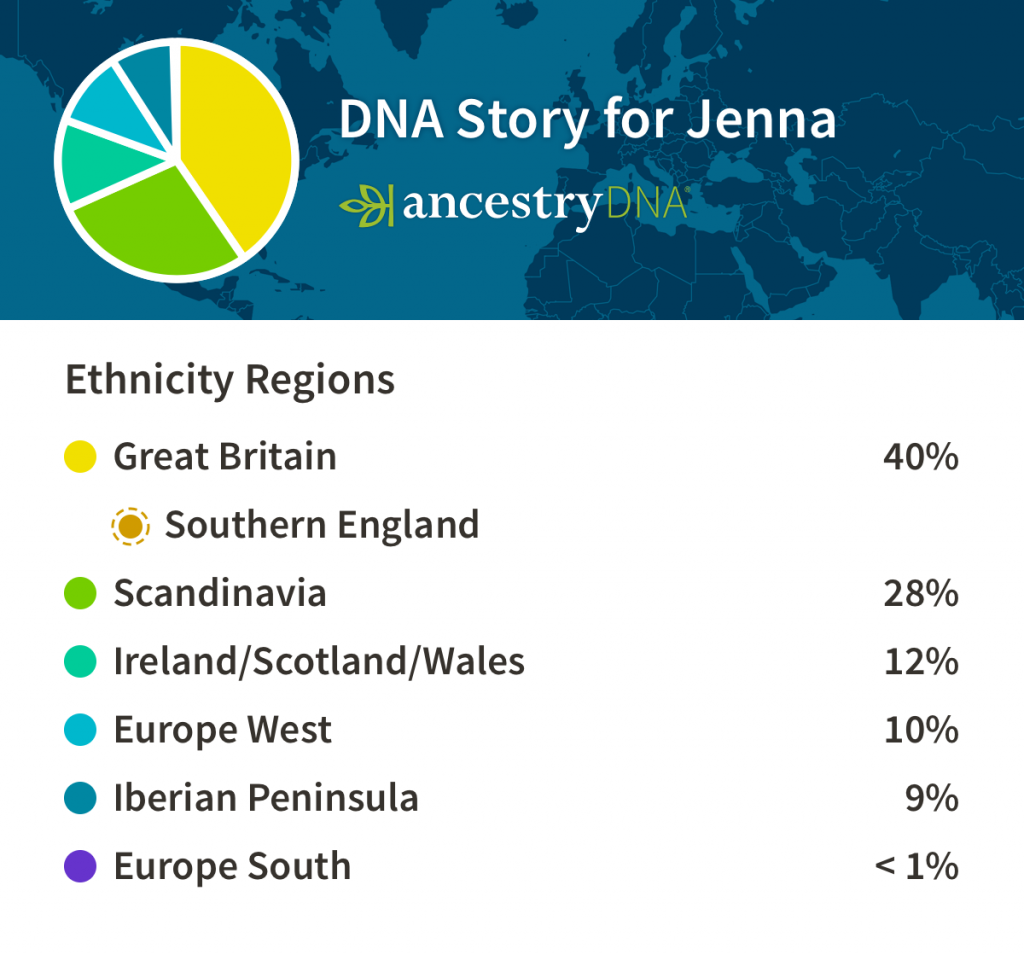
One of the most compelling pieces of information AncestryDNA tells you is about your ethnic origins, presented as an “Ethnicity Estimate.” This feature paints a picture of where your ancestors lived thousands of years ago, offering a glimpse into the diverse genetic contributions that make up your unique heritage.
The Precision and Limitations of Ethnicity Estimates
AncestryDNA’s ethnicity estimates break down your genetic makeup into percentages associated with various geographic regions and ethnic groups. These estimates are generated by comparing your DNA against AncestryDNA’s reference populations. If a segment of your DNA closely matches segments found predominantly in a specific reference population (e.g., people with deep roots in Ireland), then a percentage of your ethnicity will be assigned to that region.
It’s crucial to understand that these are estimates, not definitive historical records. The precision of these estimates can vary. For example, identifying broad continental origins (e.g., European, African, Asian) is generally more accurate than pinpointing very specific sub-regions (e.g., distinguishing between neighboring counties in a small European country). Factors influencing precision include:
- Reference Panel Size and Diversity: As mentioned, larger and more diverse reference panels lead to more refined estimates. AncestryDNA continuously expands and refines its panels.
- Genetic Admixture: Many individuals have ancestors from multiple regions, leading to “admixed” DNA. Algorithms are designed to disentangle these complex patterns, but the resolution can vary.
- Historical Migrations: Human populations have migrated extensively throughout history. Sometimes, genetic signatures might reflect ancient migrations rather than modern political borders.
- Methodology Updates: AncestryDNA frequently updates its algorithms and reference panels, which can lead to changes in ethnicity estimates over time. This is a sign of ongoing scientific refinement, not inaccuracy.
Dynamic Updates and Expanding Databases
The technological platform behind AncestryDNA is not static. A core aspect of its service is the continuous improvement of its underlying scientific methodology. AncestryDNA regularly updates its reference panels, adding new populations and refining existing ones. This iterative process means that users’ ethnicity estimates can, and often do, change over time.
When AncestryDNA announces an “Ethnicity Estimate Update,” it signifies a significant technological advancement. This could involve:
- Adding New Reference Populations: Incorporating genetic data from previously underrepresented groups allows for more granular and accurate breakdowns.
- Refining Existing Algorithms: Developing more sophisticated computational models to better differentiate between closely related populations or to better estimate proportions of genetic admixture.
- Increasing SNP Coverage: While largely based on genotyping, AncestryDNA may occasionally update the specific SNPs it analyzes to capture more informative genetic markers.
These updates underscore the dynamic nature of bioinformatics and genetic research. What AncestryDNA tells you today might be a more refined and detailed version of what it told you a few years ago, a testament to continuous technological investment and scientific progress.
Connecting Through Genetic Matches
Beyond ethnicity, one of AncestryDNA’s most powerful offerings is the ability to connect users with living relatives through DNA matches. This feature transforms genetic data into a tool for genealogical discovery, allowing individuals to find family members they might never have known existed.

The Power of Shared DNA Segments
The mechanism behind DNA matching is based on the principle of inheritance: we inherit half of our DNA from each parent, who in turn inherited it from their parents, and so on. As a result, closely related individuals will share significant segments of their DNA. AncestryDNA’s algorithms compare the SNP profiles of all users in its database. When two users share a sufficient number of identical DNA segments at specific locations, they are flagged as potential relatives.
The length and number of shared DNA segments correlate directly with the closeness of the relationship. Larger, longer shared segments indicate a more recent common ancestor, implying a closer familial tie (e.g., parent-child, siblings, first cousins). Smaller, fragmented shared segments suggest a more distant relationship. AncestryDNA translates these complex genetic comparisons into user-friendly relationship predictions (e.g., “3rd Cousin,” “4th-6th Cousin”) and also indicates the amount of shared DNA in centimorgans (cM), a unit of genetic distance. This sophisticated pattern recognition is a core technological marvel, enabling a global network of familial connections.
Tools for Genealogical Exploration
AncestryDNA doesn’t just present you with a list of names; it provides a suite of technological tools to help you explore these connections:
- Shared Matches: This feature shows you which other DNA matches you and a specific match have in common. This is incredibly powerful for triangulating relationships and identifying common ancestors. If you and your presumed 3rd cousin share matches with another specific person, it strongly suggests a common branch of the family tree.
- ThruLines®: This innovative tool integrates DNA matches with Ancestry’s vast genealogical records database and user-created family trees. ThruLines® attempts to predict common ancestors by showing potential lines of descent from those ancestors to you and your matches. It leverages algorithms to cross-reference genetic data with historical documents, creating visual pathways to shared heritage.
- Messaging System: A built-in communication platform allows users to connect directly with their DNA matches, facilitating the exchange of genealogical information and the building of new family relationships.
- Shared Surnames and Birthplaces: For closer matches, AncestryDNA often highlights common surnames in shared family trees or ancestral birth locations, providing immediate clues for further research.
These tools exemplify the integration of genetic data with traditional genealogical research, powered by intelligent algorithms and a massive digital archive of historical records.
Beyond Ancestry: Traits and Future Horizons
While AncestryDNA’s primary focus remains on ethnicity and family connections, its technological platform also offers insights into certain personal characteristics, hinting at the broader potential of genetic analysis.
Understanding Inherited Traits
AncestryDNA provides a “Traits” feature that analyzes specific SNPs associated with various physical and sensory characteristics. These might include insights into:
- Physical Traits: Such as eye color, hair type, earlobe attachment, or even specific taste preferences (e.g., cilantro aversion, sweet tooth).
- Sensorimotor Traits: Certain genetic predispositions might influence aspects like caffeine metabolism or sensitivity to certain smells.
It’s crucial to understand that these trait predictions are based on statistical associations between specific genetic markers and observed traits within large populations. They represent genetic predispositions or likelihoods, not deterministic outcomes. Environmental factors and the complex interplay of multiple genes often play a significant role. The algorithms identify known genetic variants and report the common associations, but they do not provide a complete picture of an individual’s biology or physiology. This feature is more for curiosity and personal insight than for medical diagnosis.
The Evolving Landscape of Genetic Information
The field of consumer genomics is constantly evolving, driven by advancements in sequencing technology, bioinformatics, and a growing understanding of the human genome. While AncestryDNA primarily focuses on ancestry, the technology could potentially expand to offer more types of insights in the future. However, it’s important to differentiate AncestryDNA from services like 23andMe that offer health-related genetic reports. AncestryDNA explicitly states that it does not provide medical advice or diagnostic information.
The ongoing research into human genetics means that what AncestryDNA can tell you is likely to expand over time, particularly as more genetic markers are identified and their associations with various traits and historical populations become clearer. This continuous innovation underscores the dynamic nature of the technology underpinning these services.
Navigating Data Privacy and Security in Genetic Testing
The collection and storage of highly personal genetic information raise significant questions about data privacy and security. For AncestryDNA, maintaining robust safeguards and transparent policies is not just a regulatory requirement but a fundamental aspect of user trust.
Safeguarding Sensitive Genetic Information
AncestryDNA employs multiple layers of security to protect user data. This includes:
- Encryption: Genetic data, personal information, and communication between users are encrypted both in transit and at rest. This means data is scrambled into an unreadable format, protecting it from unauthorized access.
- Access Controls: Strict internal protocols limit who within Ancestry has access to sensitive data, ensuring that only authorized personnel can view or process it for legitimate business purposes.
- Physical Security: The laboratories and data centers where samples and digital information are stored are protected by physical security measures to prevent unauthorized entry.
- Anonymization and Aggregation: For research purposes (e.g., improving ethnicity estimates), genetic data is often anonymized and aggregated, meaning it’s stripped of personally identifiable information and combined with data from many other users, so no single individual can be identified.
Despite these measures, no system is entirely foolproof. Users should be aware of the inherent risks associated with sharing any personal data online, especially something as immutable as genetic information.
User Control and Informed Consent
A cornerstone of responsible genetic testing is informed consent and user control over their data. AncestryDNA provides users with various options and policies designed to empower them:
- Opt-in for Research: Users have the choice to opt in or out of having their anonymized genetic data used for scientific research. This is a critical ethical consideration, allowing individuals to contribute to broader scientific understanding without coercion.
- Privacy Settings: Users can control the visibility of their profiles, DNA matches, and family trees. They can choose to be visible to all matches, only to close matches, or to remain private.
- Data Deletion: Users generally have the right to request the deletion of their genetic data and the destruction of their physical DNA sample from AncestryDNA’s labs, though the specifics of this process are outlined in their terms and conditions.
- Transparency: AncestryDNA publishes a detailed Privacy Statement and Terms and Conditions that clearly outline how data is collected, used, stored, and shared.
Understanding these policies is essential for any user of AncestryDNA. The company’s commitment to user control and transparent data practices is a crucial technological and ethical component of its service, ensuring that the incredible insights offered by genetic testing are balanced with strong protections for individual privacy.
AncestryDNA stands as a testament to the power of modern technology to unlock personal histories embedded within our biology. By harnessing sophisticated genotyping techniques, massive bioinformatics databases, and intelligent algorithms, it transforms a simple saliva sample into a rich narrative of ethnic origins, familial connections, and inherited traits. The insights it provides are dynamic, continuously refined by ongoing scientific advancements and the expansion of its reference data. However, as with any service dealing with highly personal information, understanding the underlying technology, its capabilities, and the robust privacy measures in place is paramount. Ultimately, AncestryDNA tells you a story – a scientifically interpreted, technologically mediated story of who you are, where you come from, and who you’re connected to, enabling a profound journey of self-discovery in the digital age.
aViewFromTheCave is a participant in the Amazon Services LLC Associates Program, an affiliate advertising program designed to provide a means for sites to earn advertising fees by advertising and linking to Amazon.com. Amazon, the Amazon logo, AmazonSupply, and the AmazonSupply logo are trademarks of Amazon.com, Inc. or its affiliates. As an Amazon Associate we earn affiliate commissions from qualifying purchases.