
In the rapidly evolving landscape of modern technology, acronyms often serve as the shorthand for complex systems that power our daily lives. Among these, “ADC” stands out as one of the most versatile and critical terms. Depending on whether you are talking to a hardware engineer, a network administrator, or a software developer, the meaning of ADC shifts significantly.
In the tech world, ADC primarily refers to two heavyweight concepts: the Analog-to-Digital Converter (hardware) and the Application Delivery Controller (networking). Understanding these two pillars is essential for anyone looking to grasp how our physical world is digitized and how our global data traffic is managed. This article provides a comprehensive deep dive into the technical definitions, functions, and future trends of ADC technology.
The Bridge Between Worlds: Analog-to-Digital Converters (ADC)
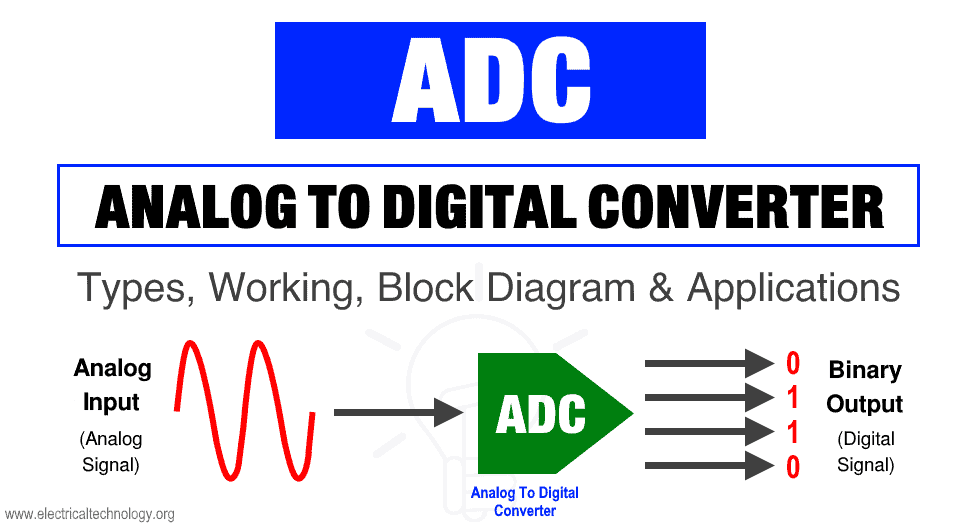
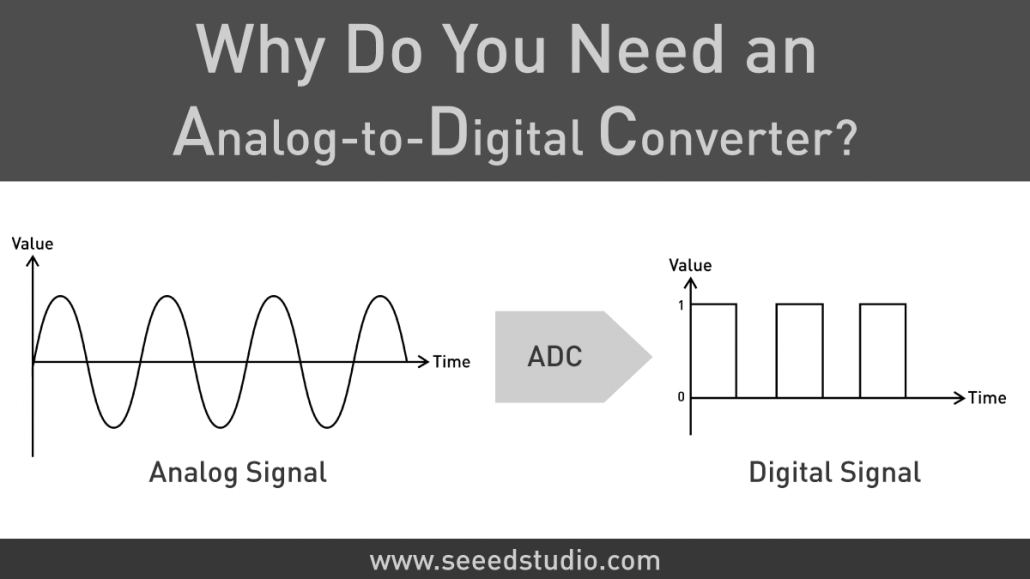
At its most fundamental level, an Analog-to-Digital Converter (ADC) is a hardware device that translates continuous physical signals into discrete digital numbers. Our physical environment is inherently analog—sound waves, light intensity, temperature, and pressure all exist as continuous fluctuations. Computers, however, operate in a binary world of 1s and 0s. The ADC is the essential translator that allows a computer to “sense” the real world.
How the Conversion Process Works
The transition from a smooth analog wave to a digital dataset involves two primary stages: sampling and quantization.
- Sampling: The ADC measures the voltage of the analog signal at specific time intervals. The frequency of these measurements is known as the sampling rate (measured in Hertz). According to the Nyquist-Shannon sampling theorem, to capture a signal accurately, the ADC must sample at least twice the frequency of the highest frequency component in the signal.
- Quantization: Once a sample is taken, it must be assigned a numerical value. Since the analog signal is infinite and the digital representation is finite, the ADC rounds the signal to the nearest available digital level. This process inevitably introduces a small amount of “quantization error,” which engineers work to minimize through higher resolution.
Key Specifications: Resolution and Sampling Rate
When evaluating ADC hardware, two metrics define its quality:
- Resolution (Bits): This determines how many discrete levels the ADC can use to represent the signal. A 12-bit ADC has 4,096 possible levels, while a 24-bit ADC (common in high-end audio) has over 16 million. Higher resolution means a more faithful reproduction of the original signal.
- Sampling Rate (SPS): Measured in Samples Per Second. For high-fidelity audio, 44.1 kHz is standard. For high-speed telecommunications or radar systems, ADCs may operate in the Giga-samples per second (GSPS) range.
Real-World Applications in Modern Tech
ADCs are everywhere. In your smartphone, an ADC converts the electrical signals from the microphone into digital data for a phone call. In digital cameras, the image sensor uses ADCs to turn light into pixels. In the medical field, ADCs are the core components of EKG and MRI machines, transforming biological signals into data that doctors can analyze on a screen. Without the ADC, the Internet of Things (IoT) would not exist, as sensors would have no way to communicate their readings to the cloud.
Optimizing the Digital Highway: Application Delivery Controllers (ADC)
While hardware engineers focus on signal conversion, network architects view ADC through a different lens: the Application Delivery Controller. In the context of data centers and cloud computing, an ADC is a sophisticated network device (or software service) used to improve the performance, security, and resiliency of applications delivered over the web.
Beyond Simple Load Balancing
In the early days of the internet, we used simple “load balancers” to distribute incoming traffic across multiple servers. Modern ADCs have evolved far beyond this. They act as a “traffic cop” for data centers, making intelligent decisions in real-time. If one server is overloaded or experiencing a technical glitch, the ADC automatically reroutes traffic to a healthy server, ensuring the end-user experiences zero downtime.
Advanced Features: Acceleration and Security
A contemporary ADC provides several “value-added” services that take the burden off the application servers:
- SSL/TLS Offloading: Encrypting and decrypting data is computationally expensive. The ADC handles this process, allowing the backend servers to focus on processing application logic.
- Compression and Caching: ADCs can compress data before sending it to the user and cache frequently requested content. This reduces latency and speeds up page load times significantly.
- Web Application Firewalls (WAF): Security is now baked into the ADC. It can inspect incoming traffic for malicious patterns, such as SQL injection or Cross-Site Scripting (XSS), blocking attacks before they ever reach the sensitive data on the server.
The Shift to Cloud-Native and Virtual ADCs
As businesses move away from physical on-premise hardware, ADCs have transitioned into the cloud. Virtual ADCs (vADCs) and “ADC-as-a-Service” allow developers to scale their networking needs dynamically. In microservices architectures, sidecar ADCs help manage communication between different parts of a software application, ensuring that even internal data traffic is optimized and secure.

The Competitive Edge: ADC in Software and Gaming Logic
In the realm of software development and competitive gaming—specifically within the Multiplayer Online Battle Arena (MOBA) genre—ADC takes on a more specialized meaning: the Attack Damage Carry. While this may seem far removed from hardware or networking, it represents a critical piece of technical design in software balancing and game theory.
The Mechanics of the “Carry” Role
In games like League of Legends or Dota 2, the ADC is a character class designed around high-sustained output. From a technical perspective, the ADC role is built on the concept of “scaling.” Developers program these characters to start the game relatively weak but to have their power increase exponentially as they acquire digital resources (gold and items).
Balancing Through Technical Constraints
The technical challenge for game designers is ensuring that the ADC is powerful but not “broken.” This is managed through specific stats:
- High Output vs. Low Durability: The ADC is a “glass cannon.” Software parameters are set so that while their damage output is high, their health and defensive stats are kept low.
- Positioning Logic: Because ADCs are vulnerable, the software mechanics require precise player input (micro-management) to stay alive. This creates a high skill ceiling, a hallmark of competitive software design.
Impact on Esports Infrastructure
The popularity of the ADC role has driven significant innovation in peripheral technology. High-performance gaming mice and keyboards are often marketed specifically to meet the high “Actions Per Minute” (APM) required by ADC players. Furthermore, the data analytics used in professional esports focus heavily on ADC performance metrics—such as Gold Per Minute (GPM) and Damage Per Minute (DPM)—to evaluate team strategies.
The Future of ADC: AI, 5G, and Beyond
As we look toward the next decade, ADC technology across all its definitions is undergoing a massive transformation driven by Artificial Intelligence and ultra-high-speed connectivity.
ADCs in the Era of 5G and 6G
In the hardware world, the rollout of 5G and the development of 6G require ADCs with unprecedented speed and efficiency. These new communication standards operate at much higher frequencies, demanding ADCs that can sample billions of times per second while consuming minimal power. We are seeing the rise of “Direct RF” ADCs, which eliminate several intermediate hardware stages, making devices smaller and more energy-efficient.
AI-Driven Traffic Management
In the networking space, Application Delivery Controllers are becoming “smarter.” Future ADCs will use machine learning to predict traffic spikes before they happen. Instead of following static rules, an AI-enhanced ADC can analyze patterns in global data traffic and automatically adjust server resources in anticipation of a viral event or a coordinated cyberattack. This proactive approach marks a shift from reactive load balancing to “predictive delivery.”
Edge Computing Integration
As computing moves to the “Edge”—processing data closer to where it is generated (like in autonomous vehicles or smart factories)—the roles of the Analog-to-Digital Converter and the Application Delivery Controller are merging. An autonomous car uses high-speed ADCs to process LIDAR and camera data instantly, while an internal ADC-like software layer manages the flow of that data to the car’s central processing unit.
Conclusion
The term “ADC” is a perfect example of the multifaceted nature of the technology industry. Whether it is the Analog-to-Digital Converter enabling our smartphones to hear our voices, the Application Delivery Controller ensuring that global websites stay online under heavy pressure, or the Attack Damage Carry defining the meta-game of modern esports, ADCs are foundational to the digital experience.
As technology continues to advance, the boundaries between these definitions will likely continue to blur. Hardware will become more software-defined, and software will become more integrated into the physical sensors of our environment. Staying informed about these essential technologies is not just for specialists; it is for anyone who wants to understand the invisible systems that keep our modern world connected, digitized, and efficient.
aViewFromTheCave is a participant in the Amazon Services LLC Associates Program, an affiliate advertising program designed to provide a means for sites to earn advertising fees by advertising and linking to Amazon.com. Amazon, the Amazon logo, AmazonSupply, and the AmazonSupply logo are trademarks of Amazon.com, Inc. or its affiliates. As an Amazon Associate we earn affiliate commissions from qualifying purchases.