
The term “V8 engine” has long been synonymous with high performance, luxury, and the golden age of automotive engineering. However, beyond the roar of the exhaust and the prestige of the badge, a V8 represents a specific and sophisticated technological achievement. In the world of mechanical engineering and modern tech trends, the V8 is more than just a component; it is a complex system of reciprocating parts, digital management, and thermodynamic precision.
To understand what a V8 engine truly means in a contemporary context, one must look past the heavy metal and delve into the physics, the software that governs it, and its evolving role in a world increasingly dominated by electric propulsion and artificial intelligence.

The Architecture of Power: Understanding the V8 Configuration
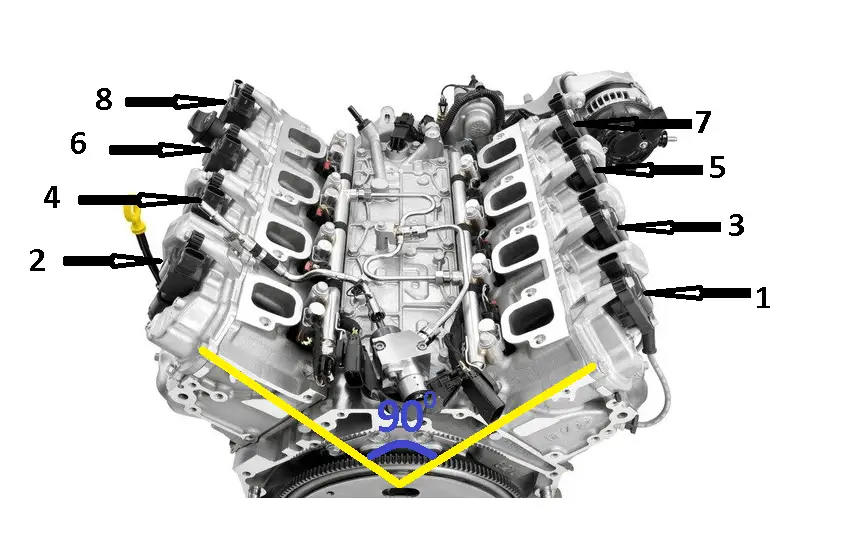
At its most fundamental level, the “V8” designation describes the physical layout of the engine. It is a configuration where eight cylinders are mounted on the crankcase in two banks of four, typically set at a 90-degree angle to each other. When viewed from the front, this arrangement forms the shape of a “V.”
The “V” and the Cylinder Count
The choice of eight cylinders is not arbitrary; it represents a “sweet spot” in engine technology. In terms of power density and packaging, eight cylinders allow for significant displacement—the total volume of all cylinders—without the engine becoming excessively long, as a straight-eight would be. By splitting the cylinders into two banks, engineers can keep the engine block compact enough to fit into a wide variety of vehicle platforms, from sports cars to heavy-duty trucks. This modularity was a massive technological leap forward in the mid-20th century and remains a benchmark for internal combustion design today.
Firing Orders and Rotational Balance
One of the primary technological advantages of the V8 is its inherent balance. In a four-cylinder engine, there are periods where no power stroke is occurring, leading to vibrations. In a V8, the firing order is timed so that a power stroke occurs every 90 degrees of crankshaft rotation. This overlap ensures a continuous delivery of torque, resulting in the smooth, linear power delivery that high-end tech enthusiasts and luxury car owners demand. Achieving this level of mechanical harmony requires precision manufacturing and a deep understanding of rotational dynamics.
Mechanical Synergy: How the V8 Generates High-Performance Energy
The V8 engine is a masterclass in converting chemical energy into mechanical work. To understand the technology, we must look at how these eight cylinders interact to create the massive levels of torque and horsepower that have defined the automotive industry for decades.
Displacement and Torque Curves
In the tech world, we often talk about “bandwidth.” In engine terms, displacement is the bandwidth. A V8 typically offers a larger displacement than four- or six-cylinder engines, meaning it can ingest more air and fuel per cycle. This results in a broader torque curve. From a technological standpoint, this means the engine doesn’t have to “work hard” or reach high RPMs to move a heavy load. This low-end grunt is essential for both performance towing and high-speed acceleration, showcasing a mechanical efficiency that smaller, turbocharged engines often struggle to replicate without significant lag.
Cross-plane vs. Flat-plane Crankshafts
Within the V8 category, there are two distinct technological paths: the cross-plane and the flat-plane crankshaft.
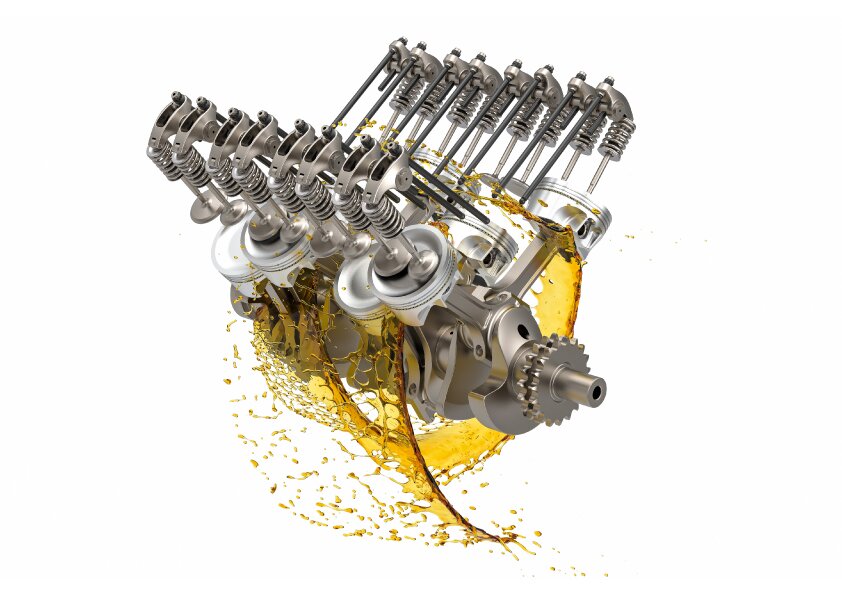
- Cross-plane: This is the traditional “American” V8 design. The crank pins are set at 90-degree intervals. This requires heavy counterweights to balance, resulting in the deep, rhythmic “burble” and high torque.
- Flat-plane: Found in high-tech European supercars like those from Ferrari, the crank pins are set at 180-degree intervals. This allows the engine to rev much higher and breathe more efficiently at the cost of increased vibration.
The choice between these two represents a fundamental engineering decision based on the intended “use case” of the technology—brute force versus high-speed precision.
The Digital Evolution: Software and Engine Management Systems
Modern V8 engines are as much about code as they are about pistons. The transition from purely mechanical systems (carburetors) to sophisticated Engine Control Units (ECUs) has redefined what the V8 is capable of, bringing it into the 21st-century tech landscape.
Precision Fuel Injection and ECU Mapping
In a modern V8, every explosion inside the cylinder is choreographed by a computer. Direct injection technology uses high-pressure sensors to spray fuel directly into the combustion chamber at the exact millisecond needed for maximum efficiency. The ECU (the engine’s brain) processes thousands of data points per second—measuring air intake, exhaust temperature, and throttle position—to adjust timing and fuel flow. This software-driven approach has allowed the V8 to remain relevant by significantly reducing emissions and increasing fuel economy compared to the “analog” engines of the past.
Variable Valve Timing (VVT) and Sensor Networks
Another pillar of V8 technology is Variable Valve Timing. By using hydraulic or electric actuators, the engine can change when its intake and exhaust valves open and close based on real-time driving conditions. At low speeds, the timing is optimized for fuel efficiency; at high speeds, it shifts to maximize airflow for power. This is essentially “adaptive hardware,” where the physical characteristics of the engine change on the fly, managed by complex algorithms and a vast network of sensors.
The Future of V8 Technology in a Green-Tech Era
As the world shifts toward sustainability, the technology of the V8 is not disappearing; rather, it is evolving. The “meaning” of a V8 is changing from a standalone power plant to a component within a larger, hybridized technological ecosystem.
Hybrid Integration: The High-Tech Compromise
Many of the world’s most advanced hypercars now pair a V8 engine with electric motors. In this scenario, the V8 handles the high-speed sustained power, while electric motors provide instant torque and fill in the gaps in the combustion power band. This “best of both worlds” approach uses the V8 as a sophisticated energy generator and high-output core, proving that internal combustion can coexist with the electric vehicle (EV) revolution through smart integration and power management software.
Synthetic Fuels and the Longevity of Combustion Tech
Technological trends are also exploring Carbon-Neutral Synthetic Fuels (e-fuels). For the V8 to survive in a zero-emission future, the tech focus is shifting toward the fuel itself. By engineering fuels that can be burned in existing V8 architectures without adding new CO2 to the atmosphere, the industry is looking at “legacy hardware” through a new, sustainable lens. This represents a massive area of research in chemical engineering and carbon capture technology.
Engineering Reviews: Why the V8 Remains a Technological Benchmark
When reviewing the V8 against modern alternatives, such as high-output turbocharged four-cylinders or pure battery-electric drivetrains, several technological strengths become clear.
Reliability Through Lower Stress
While a small engine can be “tuned” to produce high power using massive amounts of turbocharger boost, this puts extreme thermal and mechanical stress on the components. A V8, by virtue of its larger surface area and higher cylinder count, can produce the same power with less internal stress. From a longevity and reliability standpoint, “over-engineering” a V8 often results in a more durable piece of technology that can withstand hundreds of thousands of miles of operation—a metric that is still highly valued in both the consumer and commercial tech sectors.
The Sensory Experience as a Tech Metric
In the realm of high-end gadgets and tech, “user experience” (UX) is everything. For the V8, the UX includes the sound, the vibration, and the immediate response of the machine. Engineers spend thousands of hours using acoustic modeling software to tune the exhaust notes of V8 engines. This intersection of digital design and physical sound engineering is a unique niche of automotive tech, where the goal is to create an emotional connection between the user and the machine.
Conclusion
To ask “what does a V8 engine mean” is to explore a century of technological progression. It means a perfect balance of mechanical symmetry and raw power. It means a sophisticated interplay between high-pressure hardware and high-speed software. While the automotive landscape is changing, the V8 remains a pinnacle of engineering achievement—a complex, high-performance gadget that has been refined by decades of research and development. Whether as a standalone masterpiece of internal combustion or as the heart of a modern hybrid system, the V8 engine continues to be the ultimate expression of power, precision, and technological ambition.
aViewFromTheCave is a participant in the Amazon Services LLC Associates Program, an affiliate advertising program designed to provide a means for sites to earn advertising fees by advertising and linking to Amazon.com. Amazon, the Amazon logo, AmazonSupply, and the AmazonSupply logo are trademarks of Amazon.com, Inc. or its affiliates. As an Amazon Associate we earn affiliate commissions from qualifying purchases.