
In the contemporary era of automotive engineering, the vehicle in your driveway is less of a mechanical beast and more of a sophisticated, mobile data center. With the integration of Advanced Driver Assistance Systems (ADAS), infotainment screens that rival high-end tablets, and complex Electronic Control Units (ECUs) managing everything from fuel injection to cabin climate, the electrical integrity of a car is paramount. At the heart of this digital ecosystem lies a simple yet critical component: the fuse.
Understanding what a blown fuse looks like and how to diagnose it is a foundational skill for any tech-savvy car owner. A single failed fuse can disable a GPS module, silence a premium audio system, or even prevent the vehicle’s primary computer from communicating with the engine. This guide provides a technical deep dive into identifying, testing, and replacing these essential circuit protectors.
The Anatomy of Automotive Circuit Protection
Before diving into the visual cues of a failure, it is essential to understand the hardware. In the world of technology, a fuse is a sacrificial device. Its sole purpose is to protect more expensive components—like your car’s touchscreen or the central processing unit—from overcurrent.
How Fuses Function as Hardware Fail-safes
Every electrical circuit in your car is designed to handle a specific amount of current, measured in Amperes (Amps). If a circuit draws too much power due to a short circuit or a component malfunction, the wiring can overheat, potentially leading to a fire or permanent damage to sensitive microchips. The fuse contains a metal filament with a low melting point. When the current exceeds the fuse’s rated capacity, the filament heats up and melts, “blowing” the fuse and instantly breaking the circuit. This is a binary hardware solution to a complex electrical problem.
The Evolution of Fuse Design: From Glass to Blade
While vintage technology utilized cylindrical glass fuses, modern automotive tech almost exclusively uses “blade” fuses. These are color-coded plastic housings with two metal prongs. They come in several standardized sizes:
- Maxi Fuses: Used for high-amp heavy-duty applications.
- Regular (ATO/ATC) Fuses: The standard size for most interior electronics.
- Mini and Low-Profile Mini Fuses: Found in modern, space-constrained fuse boxes to accommodate the increasing number of electronic features in high-tech vehicles.
- Micro2 and Micro3: The latest iteration in miniaturization, allowing manufacturers to pack more protection into smaller power distribution centers.
Visual Identification: What Does a Blown Fuse Look Like?
When a digital component in your vehicle stops responding, the first step is a physical inspection. Identifying a blown fuse requires a keen eye for detail and an understanding of the component’s internal structure.
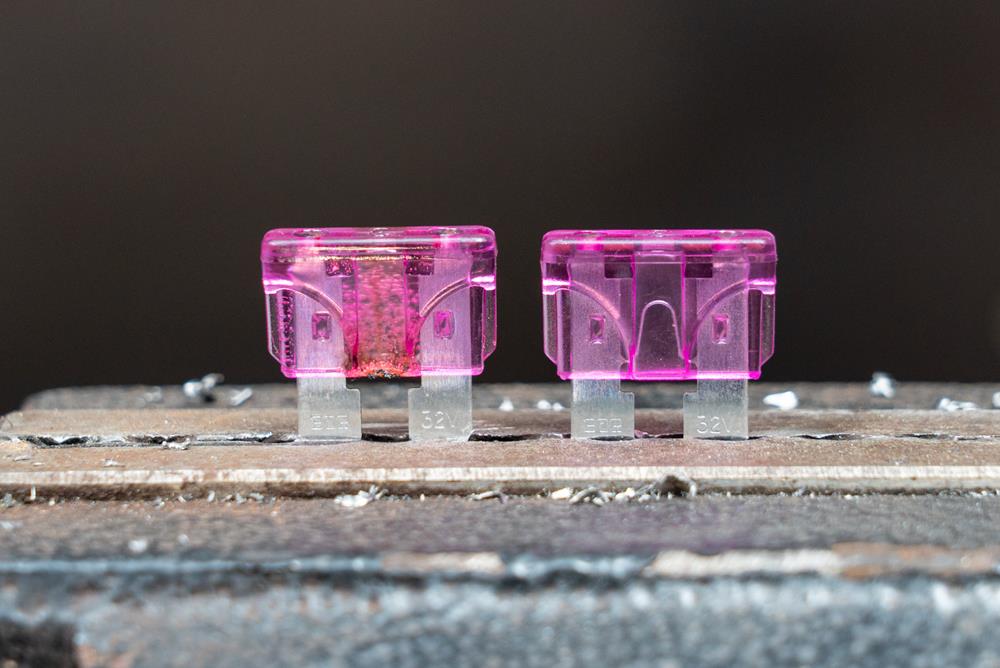
The “Broken Bridge” – Inspecting the Metal Filament
The most common indicator of a blown fuse is a visible break in the internal metal link. In a functional blade fuse, you can see a continuous “U” or “S” shaped wire through the translucent plastic casing. This acts as a bridge for electricity. When the fuse blows, this bridge is severed.
To see this clearly, you should pull the fuse out of its socket and hold it up to a strong light source. If there is a gap in the wire, or if the wire looks like it has melted away entirely, the fuse has successfully protected your circuit and must be replaced.
Discoloration and Thermal Damage
Not all fuse failures are “clean” breaks. In cases of a severe short circuit or a massive power surge, the fuse may show signs of thermal distress. Look for:
- Clouding: The clear plastic housing may appear foggy or opaque.
- Charring: Dark, brownish, or black burn marks inside or on the exterior of the plastic.
- Melted Plastic: If the overcurrent was sustained for even a fraction of a second too long, the plastic casing itself might be deformed.
If you encounter a charred or melted fuse, this is often a technical red flag. While the fuse did its job, the intensity of the heat suggests a significant electrical fault that might require further diagnostic software tools to identify.
Using Technology for Diagnostics: Multimeters and Test Lights
Sometimes, a fuse can develop a hairline fracture that is invisible to the naked eye. In the tech world, we rely on data rather than just visual confirmation. Using a digital multimeter is the professional way to verify a fuse’s status.
- Continuity Test: Set your multimeter to the continuity setting (the icon that looks like a sound wave). Touch the probes to the two small metal test points on the top of the fuse while it is still plugged in. A “beep” indicates a completed circuit. No beep means the fuse is blown.
- Resistance (Ohms): A healthy fuse should have near-zero resistance. A reading of “OL” (Open Loop) or infinite resistance confirms the fuse is dead.
Navigating the Digital Map – The Fuse Box Layout
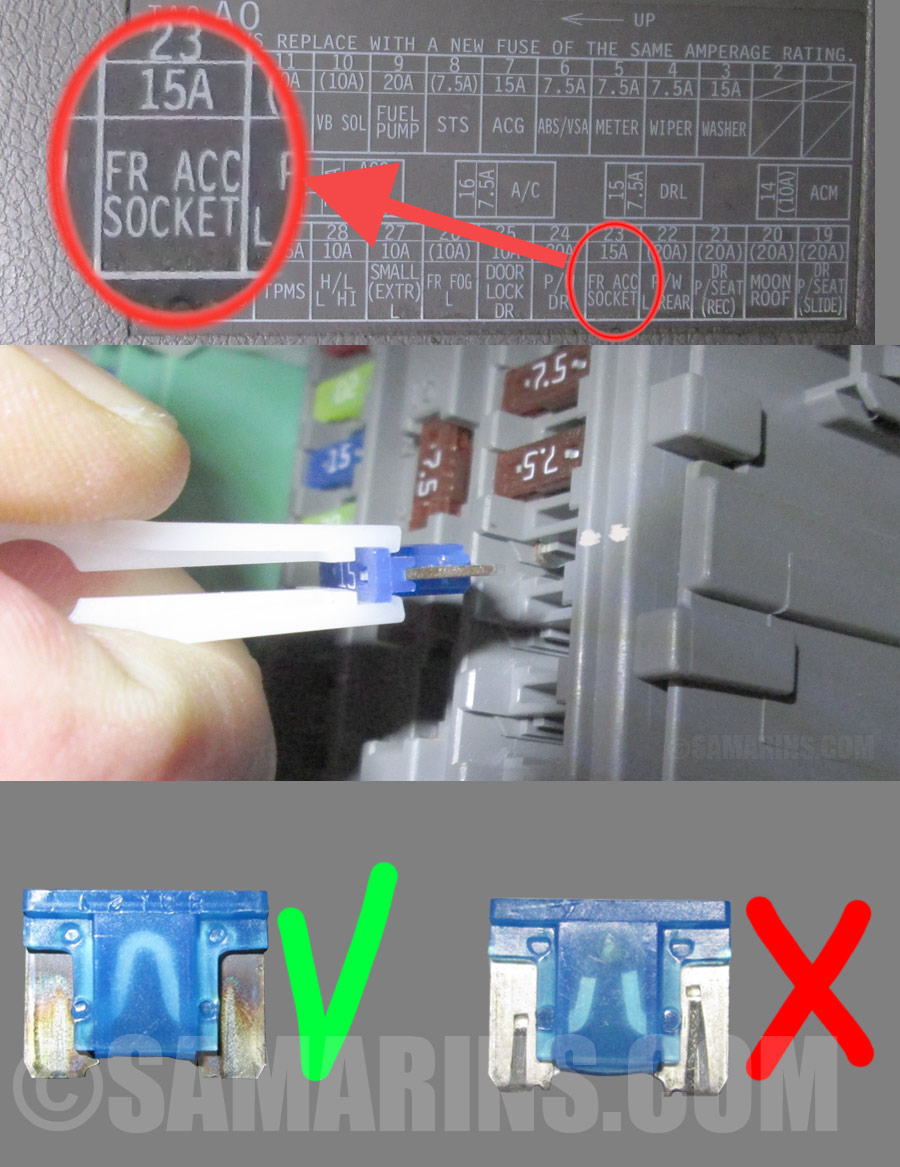
Modern vehicles often contain multiple fuse boxes, acting as decentralized hubs for power distribution. Finding the right fuse is a matter of following the technical documentation provided by the manufacturer.
Deciphering the Fuse Box Diagram
Usually located on the underside of the fuse box cover or within the owner’s digital manual, the fuse diagram is your schematic. Each fuse is assigned a number and a label, such as “ECM” (Engine Control Module), “ACC” (Accessory), or “INFO” (Infotainment).
In modern “smart” cars, these diagrams are increasingly complex. You might find fuses dedicated solely to “USB Power” or “Radar Sensor.” Understanding these labels is crucial because replacing a 10A fuse with a 20A fuse—simply because it fits—can lead to catastrophic hardware failure. The amperage rating is hard-coded into the design of the circuit; overriding it removes the hardware safety net.
The Role of the Power Distribution Center
In high-end tech-heavy vehicles, the fuse box is part of a larger Power Distribution Center (PDC). Some PDCs utilize “smart” relays and solid-state circuit breakers alongside traditional fuses. If you find that a fuse is intact but the component still lacks power, the issue may lie further upstream in the PDC’s logic board or a faulty relay.
Why Fuses Blow: Understanding Electrical Overload in the Tech Era
A fuse rarely blows without a reason. Identifying the root cause is essential to ensure the new fuse doesn’t suffer the same fate immediately.
Short Circuits and Grounding Issues
A “short to ground” occurs when electricity finds a shorter, unintended path back to the vehicle’s frame. This usually happens due to frayed wiring or a failed internal component. In the context of automotive tech, this often occurs in “high-flex” areas, such as the wiring harnesses that go into doors (power windows/mirrors) or the trunk.
The Impact of Aftermarket Tech Installations
The most frequent cause of blown fuses in the enthusiast community is the addition of aftermarket gadgets. Dash cams, high-fidelity audio amplifiers, and LED lighting kits can easily overwhelm a factory circuit if not tapped into the power grid correctly. If you have recently installed a new tech accessory and a fuse blows, it is a clear sign that the accessory is drawing more current than the circuit was designed to handle, necessitating a dedicated, fused power line directly from the battery.
Best Practices for Component Replacement
Replacing a fuse is the simplest hardware “repair” you can perform on a car, but it must be done with precision.
Matching Amperage Ratings
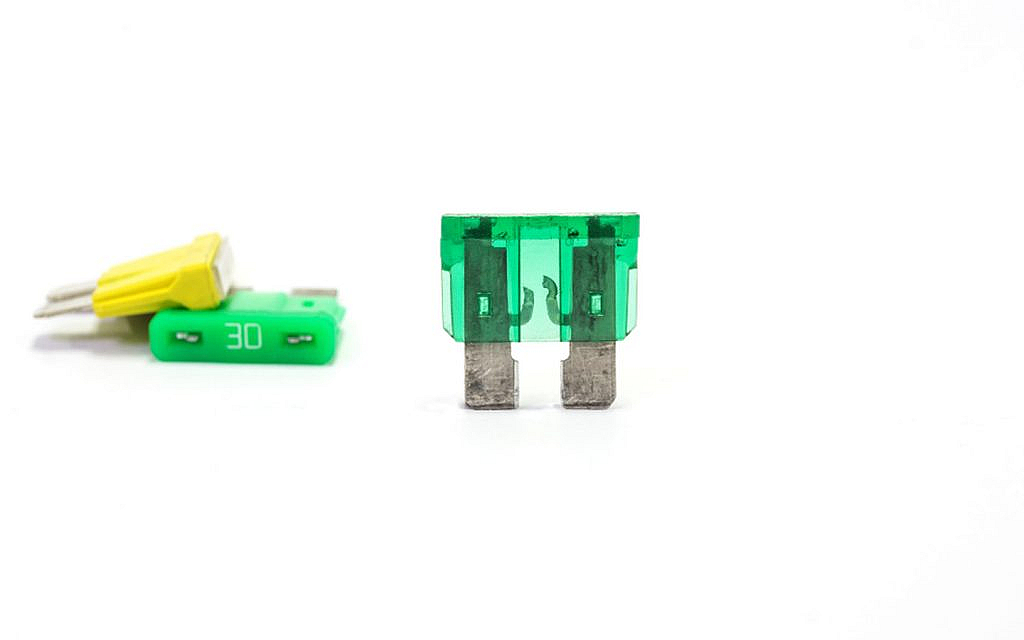
Fuses are color-coded by industry standard:
- Red: 10 Amps
- Blue: 15 Amps
- Yellow: 20 Amps
- Clear/White: 25 Amps
- Green: 30 Amps
Always replace a blown fuse with one of the exact same color and numerical rating. Using a lower-rated fuse will result in a “nuisance blow,” where the fuse fails under normal load. Using a higher-rated fuse is a dangerous technical error that can result in the wiring melting before the fuse ever breaks.
When a Blown Fuse Signals a Deeper System Failure
If you replace a fuse and it blows again instantly, stop troubleshooting the fuse and start troubleshooting the hardware. A recurring failure indicates a “hard short.” In modern vehicles, this might require an OBD-II (On-Board Diagnostics) scanner to pull “B” (Body) or “U” (Network) codes. These codes can pinpoint which module is malfunctioning and sending a surge through the system.
In conclusion, the humble fuse remains the most vital line of defense in our increasingly digital vehicles. By knowing how to visually inspect the filament, use diagnostic tools like multimeters, and interpret fuse schematics, you can maintain the sophisticated technological infrastructure of your car. Treat the fuse box as the “control panel” of your vehicle’s health, and you will be well-equipped to handle the electrical challenges of the modern road.
aViewFromTheCave is a participant in the Amazon Services LLC Associates Program, an affiliate advertising program designed to provide a means for sites to earn advertising fees by advertising and linking to Amazon.com. Amazon, the Amazon logo, AmazonSupply, and the AmazonSupply logo are trademarks of Amazon.com, Inc. or its affiliates. As an Amazon Associate we earn affiliate commissions from qualifying purchases.