
In an increasingly globalized economy, the ability to prove one’s identity and citizenship is more than just a legal requirement; it is a fundamental pillar of financial security. Whether you are opening a high-yield savings account, applying for a mortgage, or diversifying your investment portfolio into international markets, your citizenship documentation serves as the “master key” to the global financial system.
Financial institutions are bound by stringent regulatory frameworks designed to prevent fraud, money laundering, and the financing of illicit activities. Central to these frameworks is the “Know Your Customer” (KYC) protocol, which mandates that banks and financial service providers verify the identity and citizenship status of every client. Understanding which documents serve as valid proof of citizenship is essential for any individual looking to navigate the complexities of personal finance, wealth management, and cross-border investing.

The Role of Citizenship Documentation in Modern Finance
The intersection of legal identity and financial access has never been more critical. In the modern era, “money” is largely digital, moving through ledgers and servers that require absolute certainty regarding the participants’ identities. This certainty is established through government-issued documentation that confirms citizenship.
KYC (Know Your Customer) Compliance
Financial institutions use KYC protocols to verify the identity of their clients. This is not merely a bureaucratic hurdle but a legal mandate under various international and domestic laws, such as the Bank Secrecy Act and the USA PATRIOT Act. When you present proof of citizenship, you are allowing the institution to perform due diligence. For the consumer, having the correct documentation ready ensures that financial transactions—from simple wire transfers to complex stock purchases—are processed without delays or freezes.
Anti-Money Laundering (AML) Regulations
Proof of citizenship is a primary tool in the global fight against money laundering. By verifying citizenship, financial regulators can track the flow of capital and ensure that funds are not being moved to evade taxes or support criminal enterprises. For the individual, maintaining updated proof of citizenship is a defensive financial strategy. It protects your assets from being flagged by automated security systems that monitor for suspicious, unverified activity.
Economic Mobility and Credit Access
Your citizenship status often dictates your access to specific credit markets. For instance, certain government-backed loans or specialized investment vehicles may only be available to citizens of a particular nation. Proving citizenship is the first step in unlocking these localized financial benefits, which can significantly lower the cost of borrowing and increase the long-term ROI on major purchases like real estate.
Primary Documents Used as Proof of Citizenship
While various forms of identification exist, only a select few are recognized by financial institutions and government agencies as “primary” proof of citizenship. These documents carry the highest level of authority and are generally accepted across all financial sectors.
The Power of the Passport
The passport is the “gold standard” of identity and citizenship documentation. It is a globally recognized document that serves two purposes: it facilitates international travel and provides a definitive statement of the bearer’s nationality. From a financial perspective, a valid passport is often the only document required to open an international brokerage account or an offshore bank account. Because it includes biometric data and advanced security features, it offers the highest level of assurance to financial institutions.
Birth Certificates and Naturalization Certificates
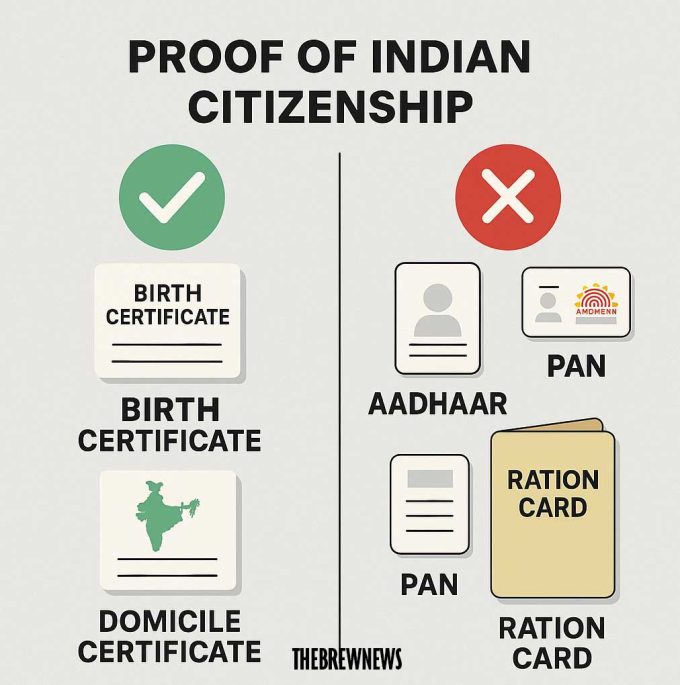
For those who do not possess a passport, the combination of a government-issued birth certificate and a photo ID often suffices for domestic financial transactions. The birth certificate proves citizenship by birthright (jus soli), establishing a legal tie to the nation’s economic protections.
Conversely, for those who acquired citizenship later in life, a Certificate of Naturalization is the definitive proof. In the world of business finance, this document is vital for entrepreneurs seeking to register companies or apply for small business grants that are restricted to citizens.
Consular Reports of Birth Abroad (CRBA)
For citizens born outside their home country to citizen parents, the Consular Report of Birth Abroad (CRBA) is an essential financial document. It acts as the equivalent of a birth certificate for the purposes of establishing citizenship. Without this document, individuals may find themselves in a “financial limbo,” unable to access domestic banking services or claim social security benefits in their country of citizenship.
Financial Milestones Requiring Citizenship Verification

Throughout an individual’s financial life, there are several key milestones where proof of citizenship is non-negotiable. Being prepared with the right documentation can be the difference between capturing a market opportunity and missing out due to administrative friction.
Opening Domestic and International Bank Accounts
The most common interaction with citizenship documentation occurs at the bank. To open a basic checking account, banks require a Social Security number (in the U.S.) or a National Insurance number (in the U.K.), both of which are tied to citizenship or legal residency. However, for high-net-worth individuals looking to open accounts in “tier-one” financial hubs like Switzerland, Singapore, or the Cayman Islands, a certified copy of a citizenship document is a standard entry requirement.
Mortgages, Loans, and Credit Lines
Lenders are in the business of risk management. One way they mitigate risk is by verifying the citizenship status of the borrower. Citizenship often provides a level of “permanence” that lenders find favorable. For example, certain FHA loans or government-subsidized interest rates are reserved exclusively for citizens. Proving your status ensures you are eligible for the most competitive rates, potentially saving you hundreds of thousands of dollars over the life of a mortgage.
Investment Portfolios and Brokerage Accounts
In the world of investing, your citizenship determines which assets you can legally own. Some countries restrict foreign ownership of land or certain classes of domestic stocks. Furthermore, brokerage firms must report dividends and capital gains to the relevant tax authorities based on the investor’s citizenship. Providing accurate proof of citizenship ensures that your tax withholdings are calculated correctly, preventing overpayment and avoiding the complications of double taxation.
Digital Identity and the Future of Financial Documentation
The way we prove citizenship is undergoing a technological revolution. As the financial world moves toward “FinTech” and decentralized finance (DeFi), the traditional paper-based proof of citizenship is being augmented—and in some cases replaced—by digital equivalents.
Biometric Verification and E-Passports
Many modern passports now include RFID chips containing biometric data, such as fingerprints and iris scans. Financial apps are increasingly leveraging this technology, allowing users to verify their citizenship by simply tapping their e-passport against their smartphone. This “digital onboarding” reduces the time it takes to open an investment account from days to minutes, allowing for more agile movement of capital.
Secure Storage for Critical Documents
In the digital age, the loss of citizenship documents can lead to “financial paralysis.” If you cannot prove who you are, you cannot access your money. Therefore, digital security is a crucial component of financial planning. Wealth managers now recommend storing high-resolution, encrypted scans of citizenship documents in secure “digital vaults.” This ensures that even in the event of a natural disaster or theft, an individual can quickly provide the necessary proof to regain access to their financial assets.
Blockchain and Self-Sovereign Identity (SSI)
The future of proof of citizenship may lie in blockchain technology. The concept of “Self-Sovereign Identity” allows individuals to hold their citizenship credentials in a digital wallet, sharing only the necessary data with financial institutions without revealing unnecessary personal information. This increases privacy and security, reducing the risk of identity theft, which is a major threat to personal wealth.
Strategic Financial Planning and Secondary Citizenship
For the savvy investor, citizenship is not just a legal status; it is a financial asset. In the realm of “Money,” the documents that prove citizenship are the tools used to execute complex tax and estate planning strategies.
The Concept of Citizenship by Investment (CBI)
Many high-net-worth individuals participate in Citizenship by Investment (CBI) programs. By making a significant financial contribution to a country’s economy—often through real estate or government bonds—individuals can obtain a second citizenship. The resulting documentation (a second passport) provides a “Plan B” for financial or political instability, offers better visa-free travel for business opportunities, and can be a cornerstone of a global tax optimization strategy.
Tax Implications and Reporting Requirements
It is a common misconception that citizenship is only about where you live; for many, it is about where you owe. For example, the United States practices citizenship-based taxation. This means that a U.S. citizen living abroad must still report their global income to the IRS. In this context, proof of citizenship is a critical document for tax compliance. Failure to properly document and report based on your citizenship status can lead to heavy fines, frozen assets, and legal challenges that can devastate a person’s net worth.
Estate Planning and Generational Wealth
Proof of citizenship plays a vital role in the transfer of wealth. When an individual passes away, their citizenship determines the probate laws and inheritance taxes that apply to their estate. For families with dual citizenship or assets held in multiple countries, having clear, accessible proof of citizenship for all heirs is essential to ensure that wealth is transferred efficiently and with minimal tax leakage.
In conclusion, the documents that serve as proof of citizenship are the foundation of your financial identity. From the humble birth certificate to the high-tech e-passport, these documents empower you to participate in the global economy, protect your assets, and plan for a secure financial future. In a world where capital knows no borders, your proof of citizenship remains your most valuable credential.
aViewFromTheCave is a participant in the Amazon Services LLC Associates Program, an affiliate advertising program designed to provide a means for sites to earn advertising fees by advertising and linking to Amazon.com. Amazon, the Amazon logo, AmazonSupply, and the AmazonSupply logo are trademarks of Amazon.com, Inc. or its affiliates. As an Amazon Associate we earn affiliate commissions from qualifying purchases.