
The biblical narrative of Joseph, found primarily in the book of Genesis, is far more than a tale of family drama and divine providence. It is, at its core, an astonishingly detailed account of strategic financial planning, astute economic management, and masterful crisis intervention that saved an entire nation from collapse. For those seeking insights into personal finance, business strategy, or even national economic policy, Joseph’s journey from a slave to Egypt’s chief administrator offers a timeless blueprint for navigating abundance, surviving scarcity, and building enduring wealth and stability. His actions laid the groundwork for a sophisticated economic system that not only averted catastrophe but also consolidated power and ensured the future prosperity of a major ancient civilization.

Joseph’s story is an economic saga, a testament to the power of foresight, meticulous planning, and unwavering execution in the face of existential threats. It speaks to the principles of saving, investing, resource management, and strategic financial decision-making that remain profoundly relevant in our complex modern world.
The Genesis of Strategic Financial Planning: Interpreting Market Signals
Joseph’s ascendancy to economic power began not in a boardroom, but in a prison, through an unusual skill: dream interpretation. When Pharaoh was troubled by vivid dreams, Joseph was called upon, and his interpretation set the stage for an unprecedented economic strategy. Pharaoh’s dreams of seven fat cows followed by seven lean cows, and seven full ears of grain followed by seven withered ones, were, in Joseph’s eyes, an unmistakable economic forecast. This was not mere superstition; it was the ultimate market signal, a stark warning of an impending boom-and-bust cycle.
From Dreams to Data: Foresight as the Ultimate Financial Tool
Joseph’s brilliance lay in translating a seemingly mystical phenomenon into actionable economic intelligence. He didn’t just interpret the dreams; he provided a comprehensive strategic plan to address the predicted cycles. He understood that the “seven years of plenty” represented a period of unprecedented economic growth and agricultural surplus, while the “seven years of famine” signaled an equally severe economic downturn and resource scarcity.
This act highlights the paramount importance of foresight in financial planning. In modern terms, it’s akin to having perfect market intelligence – knowing precisely when a recession will hit or when a bull market will peak. While we don’t have prophetic dreams, Joseph’s approach underscores the need for businesses, individuals, and governments to:
- Analyze trends: Continually assess economic indicators, market cycles, and environmental factors.
- Anticipate risks: Proactively identify potential threats (e.g., recessions, supply chain disruptions, climate change impacts) and opportunities (e.g., emerging markets, technological advancements).
- Plan for contingencies: Develop robust strategies for both prosperous and adverse conditions, rather than reacting only when a crisis hits.
Joseph’s ability to read the signs and understand their implications for national survival was the foundational step in his economic masterplan, emphasizing that the most valuable financial tool is often the clarity of vision.
Building the Foundation: The 20% Rule of Abundance
Following his interpretation, Joseph immediately proposed a radical but essential strategy: during the seven years of abundance, collect one-fifth (20%) of all produce and store it. This wasn’t merely a suggestion; it was the blueprint for establishing a national sovereign wealth fund and an emergency reserve on an unprecedented scale.
The “20% rule” during times of plenty is a profound lesson in financial discipline:
- Strategic Savings Rate: Joseph advocated for a substantial savings rate during the boom years. For individuals, this translates to maximizing savings and investments when income is high. For businesses, it means reinvesting profits and building cash reserves. For nations, it implies creating fiscal surpluses and establishing strategic reserves.
- Compounding for Future Security: By systematically collecting and storing grain, Joseph was essentially “investing” in the future. The stored grain would not only retain its value but would become infinitely more valuable when scarcity hit, providing a literal lifeline. This mirrors the principle of compounding in financial investments, where small, consistent contributions over time yield significant returns, especially when invested wisely.
- Discipline Against Profligacy: The years of plenty often lead to extravagance and a lack of caution. Joseph’s plan forced a disciplined approach, preventing the nation from squandering its temporary wealth and ensuring resources were allocated for long-term survival. This is a critical lesson against lifestyle inflation and short-sighted spending during economic upturns.
This foundational step of strategic saving during prosperity was the lynchpin of Joseph’s entire economic recovery plan, demonstrating that true financial security is built during the good times, not just reacted to in the bad.
Famine Management: A Blueprint for National Economic Resilience
With the years of plenty behind them and the reserves carefully amassed, Joseph’s true genius in crisis management came to the fore during the severe famine. He executed a multi-phased economic strategy that not only prevented mass starvation but also fundamentally reshaped the economic landscape of Egypt.
Centralized Resource Management and Supply Chain Mastery
Joseph’s initial phase of famine management was the controlled release of the stored grain. He “opened all the storehouses and sold to the Egyptians” (Genesis 41:56). This was an immense logistical undertaking, requiring a centralized distribution system that could feed an entire nation and even neighboring populations.
Key aspects of his supply chain mastery included:
- Centralized Control: All grain was under Pharaoh’s (and thus Joseph’s) direct control, preventing hoarding, price gouging, and localized shortages. This ensured equitable, if controlled, access.
- Efficient Logistics: The sheer volume of grain collected and distributed implies a sophisticated system of inventory management, transportation, and rationing. This foresight in establishing infrastructure during the years of plenty proved crucial.
- Preventing Panic: By having visible and accessible reserves, Joseph likely mitigated widespread panic, which can often exacerbate a crisis beyond its actual physical impact.
In a modern context, Joseph’s actions resonate with government interventions during national emergencies, the management of strategic petroleum reserves, or the complex global supply chains that distribute essential goods. His model demonstrates the necessity of robust infrastructure and centralized command in managing critical resources during a systemic shock.
Crisis Commodity Trading and Equitable Distribution
As the famine intensified, Joseph’s strategy evolved, moving beyond mere distribution to a more sophisticated system of exchange. Initially, people bought grain with money. When their money ran out, they exchanged their livestock. Finally, in desperation, they offered their land and even themselves into servitude in exchange for food.
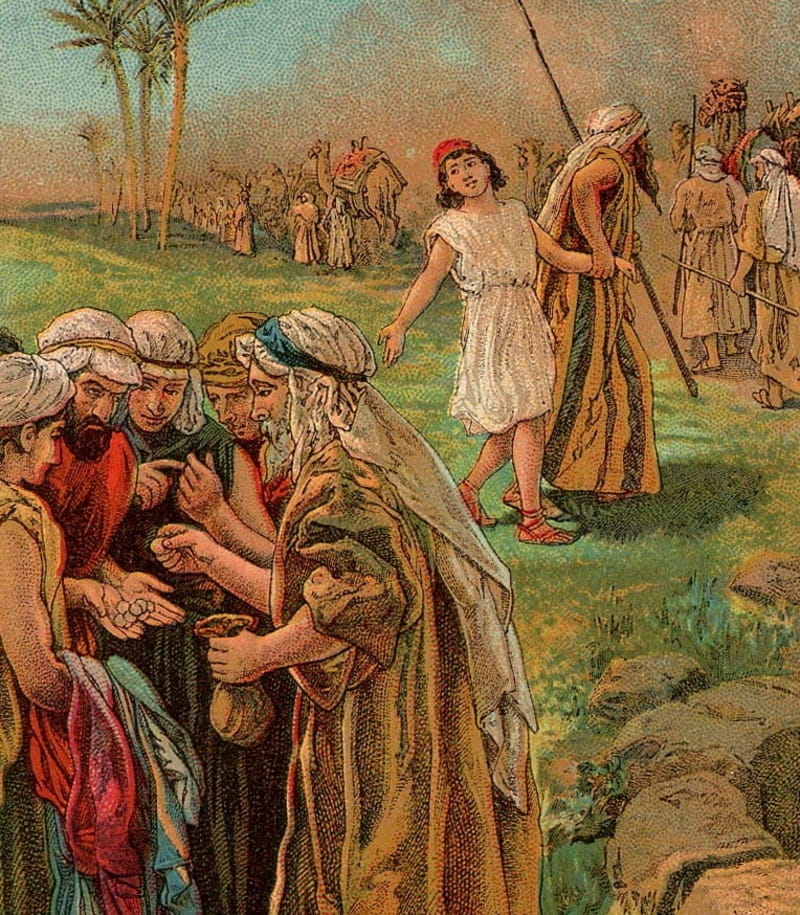
This progression reveals a shrewd understanding of commodity markets and an adaptable financial strategy:
- Phased Exchange: Joseph managed the depletion of different asset classes, ensuring that the supply of food lasted as long as possible while systematically acquiring assets for the crown.
- Stabilizing the Economy (and Power): By being the sole provider of a life-sustaining commodity, Joseph effectively nationalized the economy. This wasn’t merely about profit; it was about ensuring national survival and consolidating the power necessary to implement such a widespread solution. The people willingly surrendered assets for survival, recognizing the alternative was death.
- Fair, Yet Firm Terms: While the terms became progressively harsher, they were consistently applied and ultimately provided a solution where none other existed. Joseph’s system prevented total societal collapse and anarchy, ensuring basic needs were met, albeit at a significant cost to individual autonomy and wealth.
This phase of the famine highlights the complex interplay between economic policy, social welfare, and political power during times of extreme crisis. It demonstrates how a single, critical resource can be leveraged to reshape an entire economic order.
Wealth Preservation and the Consolidation of National Assets
The culmination of Joseph’s famine management strategy was a profound transformation of Egypt’s economic structure, ensuring long-term stability and consolidating Pharaoh’s authority and wealth.
From Land Ownership to Nationalized Agriculture
The most significant shift occurred when the people, having exhausted their money and livestock, offered their land and themselves to Pharaoh in exchange for grain. Joseph accepted, effectively nationalizing most of Egypt’s agricultural land. He then redistributed it to the people, not as owners, but as tenants, requiring them to give one-fifth of their harvest back to Pharaoh each year.
This radical restructuring had several lasting impacts:
- Elimination of Private Land Holdings: Joseph’s policy centralized land ownership under Pharaoh, creating a vast state-owned agricultural system. This allowed for centralized planning, efficient resource allocation, and consistent agricultural output without the fragmentation of private ownership.
- Establishment of a Permanent Tax Base: The “fifth part to Pharaoh” (20% annual tax on produce) became a sustainable and permanent revenue stream, ensuring the stability and wealth of the crown for generations. This was a direct legacy of the famine and a stroke of long-term financial genius.
- Socio-Economic Reorganization: While some might view this as a form of feudalism, it was presented as a survival mechanism. The people retained their ability to farm and feed themselves, but their labor and a significant portion of their output were tied to the state. This created a highly controlled, yet functional, agricultural economy.
Joseph essentially engineered a massive land reform program and established a permanent fiscal policy that would underpin Egypt’s economy for centuries, demonstrating an unparalleled understanding of macroeconomics and state finance.
Lessons in Sovereign Investment and Economic Control
Joseph’s actions transformed Egypt’s potential downfall into an opportunity for economic and political consolidation. He managed the nation’s entire wealth, turning a crisis into a strategic advantage for the state.
This phase offers critical lessons for modern sovereign investment and economic control:
- Crisis as Opportunity: Joseph demonstrated that periods of extreme crisis, while devastating, can also be opportunities for strategic restructuring and long-term gains if managed with foresight and decisive action.
- Role of Government in the Economy: His story illustrates the profound impact a centralized government can have in managing critical resources, stabilizing markets, and enacting comprehensive economic policies during severe downturns. It underscores the debate on the appropriate level of state intervention in the economy.
- Building Long-Term Fiscal Health: By securing a permanent revenue stream and centralizing assets, Joseph ensured Egypt’s ongoing financial stability and capacity for future development. This is a timeless goal for any nation’s economic planners.
Joseph’s economic engineering during the famine years was a testament to his ability to not only survive a crisis but to emerge from it with a stronger, more centralized, and more resilient national economy.
Joseph’s Legacy: Investing in Future Generations and Economic Stability
The story of Joseph is an enduring testament to the power of strategic financial planning, not just for immediate survival, but for securing the prosperity of future generations. His economic policies extended far beyond the immediate famine, shaping the very structure of Egyptian society and economy for centuries.
A Paradigm of Long-Term Financial Vision
What truly distinguishes Joseph’s approach is his multi-decade strategic foresight. He didn’t just plan for the current crisis; he laid the groundwork for enduring economic stability. His vision encompassed:
- Intergenerational Wealth Transfer: By establishing a permanent tax and centralizing land, he ensured that the economic gains from his policies would benefit future Pharaohs and the Egyptian state, not just his contemporaries.
- Resilience Against Future Shocks: The system he put in place made Egypt inherently more resilient to future environmental or economic shocks, as the central government had both the resources and the authority to respond.
- Beyond Immediate Gains: Unlike many who might seek short-term profits or political expediency, Joseph’s focus was on the long-term health and survival of the nation. This contrasts sharply with short-sighted economic policies that often prioritize immediate gratification over sustainable growth.
Joseph’s legacy highlights the importance of thinking generations ahead in financial and economic planning, ensuring that current decisions contribute to a robust and stable future.

The Ethical Dimension of Economic Power
While Joseph wielded immense economic power, consolidating vast wealth and control under Pharaoh, his actions were driven by a profound ethical imperative: to save lives. He used his financial acumen and authority not for personal enrichment, but for the welfare of the nation.
This raises critical questions about the ethical responsibilities of those who hold significant economic power:
- Stewardship vs. Exploitation: Joseph was a steward of Egypt’s resources, using his position to prevent mass suffering rather than exploiting the vulnerable for personal gain.
- The Greater Good: His policies, while imposing hardship on individuals (giving up land and freedom), served the greater good of national survival. This underscores the difficult moral calculus often faced by economic leaders during crises.
- Integrity in Leadership: Joseph’s consistent character throughout his trials and his commitment to fair, albeit stern, governance inspired trust and compliance, crucial elements for implementing such a sweeping economic program.
Joseph’s story, therefore, is not just a lesson in financial mechanics, but also in the ethical exercise of economic power, emphasizing that true leadership in finance extends beyond profit margins to include the well-being and future of society.
In conclusion, Joseph’s narrative in the Bible stands as an extraordinary historical account of economic genius. His ability to forecast, save, manage, and restructure an entire national economy through a devastating crisis provides an invaluable framework for understanding personal finance, business strategy, and national economic policy. From interpreting market signals and establishing emergency funds to implementing centralized resource management and securing long-term fiscal stability, Joseph’s actions offer timeless lessons on how to navigate the inevitable cycles of abundance and scarcity, ensuring not just survival, but enduring prosperity for generations to come. His story remains a profound reminder that foresight, discipline, and ethical leadership are the cornerstones of true financial resilience.
aViewFromTheCave is a participant in the Amazon Services LLC Associates Program, an affiliate advertising program designed to provide a means for sites to earn advertising fees by advertising and linking to Amazon.com. Amazon, the Amazon logo, AmazonSupply, and the AmazonSupply logo are trademarks of Amazon.com, Inc. or its affiliates. As an Amazon Associate we earn affiliate commissions from qualifying purchases.