
The question “What celebrity do I look like?” has transitioned from a casual dinner-party conversation to a complex technological challenge solved by sophisticated algorithms. What appears to be a simple, free online tool is actually the result of decades of progress in computer vision, machine learning, and neural network architecture. As users upload photos to these platforms, they are engaging with some of the most advanced iterations of Artificial Intelligence (AI) currently available to the public. To understand how these tools function, one must look beneath the user interface and into the data structures that make “celebrity look-alike” matching possible.
The Underlying Technology: Understanding Computer Vision and Deep Learning
At the heart of any “celebrity look-alike” tool lies the field of computer vision. This branch of AI enables computers to interpret and understand the visual world. Unlike a human, who perceives a face as a familiar arrangement of features, a computer views an image as a grid of pixels, each with a numerical value representing color and intensity.
Convolutional Neural Networks (CNNs)
The primary engine behind image recognition is the Convolutional Neural Network (CNN). CNNs are designed to mimic the human visual cortex, processing data through multiple layers to identify increasingly complex patterns. In the first layer, the AI might identify simple edges or gradients. As the data moves deeper into the network, the system begins to recognize shapes, then specific facial components like the curve of an eyebrow or the bridge of a nose.
When you upload a photo to a celebrity matching site, a pre-trained CNN analyzes your image against a massive database of celebrity faces. These networks have often been “trained” on millions of images, learning to distinguish the subtle nuances that make a face unique.
Feature Extraction and Biometric Mapping
Once the CNN has processed the image, it performs what is known as feature extraction. The AI identifies specific “facial landmarks”—usually between 68 and 128 points on the face. These points include the corners of the eyes, the tip of the nose, the contours of the lips, and the structure of the jawline.
By measuring the distances and angles between these landmarks, the tool creates a “faceprint”—a mathematical representation of your facial geometry. This digital signature is then compared against the faceprints of thousands of celebrities stored in a vector database. The tool calculates the “Euclidean distance” between your faceprint and the celebrity prints; the smaller the distance, the higher the perceived similarity.
Comparing Popular Celebrity Look-Alike Platforms
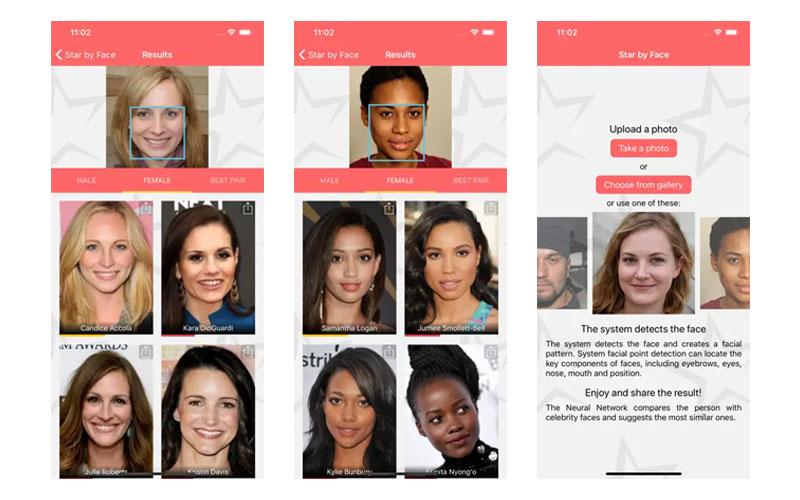
While the core logic of facial recognition remains consistent, the delivery methods and technical efficiencies vary significantly between web-based platforms and mobile applications. Each ecosystem offers different advantages in terms of processing power and user experience.
Web-Based AI Tools
Web-based tools are often the most accessible way for users to “upload a photo online for free.” These platforms typically rely on cloud-based processing. When a user uploads a photo, the image is sent to a remote server where a powerful GPU (Graphics Processing Unit) handles the heavy lifting of the facial analysis.
The advantage of web-based tools is their ability to leverage massive, high-end server clusters that can run more complex models than a standard smartphone. Furthermore, these platforms can frequently update their celebrity databases and algorithmic models without requiring the user to download an update. From a tech perspective, these tools often utilize APIs (Application Programming Interfaces) like Amazon Rekognition or Google Cloud Vision to perform high-accuracy matching.
Mobile Application Ecosystems
Mobile apps, such as those found on iOS and Android, have revolutionized the look-alike niche by utilizing “on-device” processing. Modern smartphones are equipped with specialized hardware, such as Apple’s Neural Engine or Qualcomm’s AI Engine, which are optimized for machine learning tasks.
Mobile apps often provide a more seamless UI/UX, allowing for real-time analysis through the camera feed rather than a static upload. By performing the calculations locally, these apps can offer lower latency and, in some cases, better privacy, as the biometric data does not necessarily need to leave the device. However, the trade-off is often a smaller celebrity database compared to cloud-heavy web tools.
The Role of Generative AI and Large Vision Models
The “celebrity look-alike” industry is currently undergoing a paradigm shift, moving away from simple matching and toward generative transformation. This shift is driven by the rise of Generative Adversarial Networks (GANs) and Large Vision Models (LVMs).
From Static Matching to Dynamic Transformation
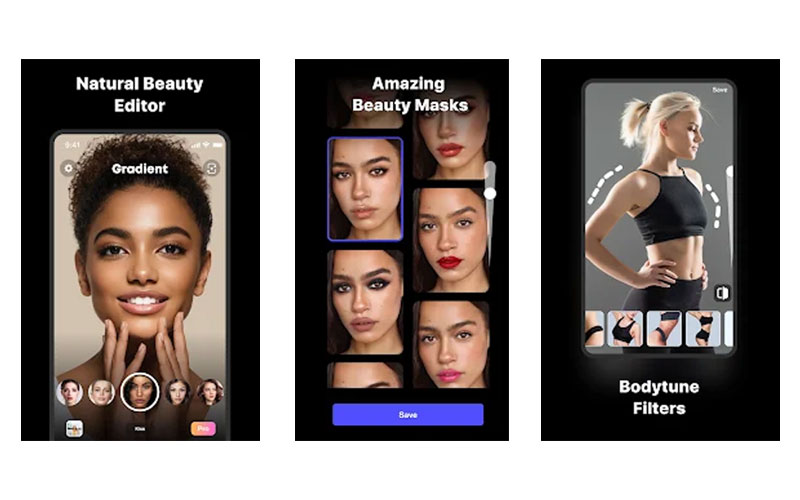
Traditional tools simply tell you who you look like. Modern AI tools, however, can now “blend” your features with a celebrity’s or show you how you would look as a specific actor in a famous movie scene. This is made possible by GANs, which consist of two neural networks: a generator that creates images and a discriminator that evaluates them.
When you upload a photo, the AI doesn’t just find a match; it understands the “latent space” of your facial features. It can then manipulate your image to align with the stylistic or structural characteristics of a celebrity, creating a high-fidelity “deepfake” or a stylized avatar.
Real-time Processing and Latency
One of the biggest technological hurdles in this space is latency. Users expect near-instantaneous results. To achieve this, developers use a process called “model quantization,” which shrinks the size of the AI model so it runs faster without significantly sacrificing accuracy. By optimizing the code and using efficient file formats like TensorFlow Lite or ONNX (Open Neural Network Exchange), developers can provide free, high-speed matching that feels instantaneous to the user.
Digital Security and Ethical Considerations in Facial Analysis
As with any technology involving biometric data, “free” celebrity look-alike tools raise significant questions regarding digital security and data ethics. When a user uploads a high-resolution image of their face, they are providing a piece of highly sensitive personal data.
Data Privacy and Storage Concerns
A critical technical concern is how these platforms handle the uploaded images. Professional-grade platforms should ideally use “transient processing,” where the image is analyzed in memory and then immediately deleted. However, less reputable “free” services may store these images to further train their AI models or, in worst-case scenarios, sell the metadata to third-party advertisers.
Users should look for platforms that clearly state their data retention policies. From a technical standpoint, the implementation of end-to-end encryption and the anonymization of biometric vectors are the gold standards for protecting user privacy in this niche.
Algorithmic Bias in Facial Recognition
Another technical challenge is the presence of algorithmic bias. AI models are only as good as the data they are trained on. Historically, many facial recognition datasets have been skewed toward specific demographics, leading to higher accuracy for some ethnicities and lower accuracy for others.
Developers in the tech space are actively working to mitigate this by using more diverse training sets and implementing “fairness constraints” within their neural networks. When using a celebrity look-alike tool, the accuracy of the “match” is often a reflection of how well-represented your facial structure is in the model’s training data.
Future Horizons: Beyond Entertainment
While “What celebrity do I look like?” is currently viewed as a form of digital entertainment, the technology powering these searches has broad implications for the future of human-computer interaction and commercial technology.
Commercial Applications of Similarity Algorithms
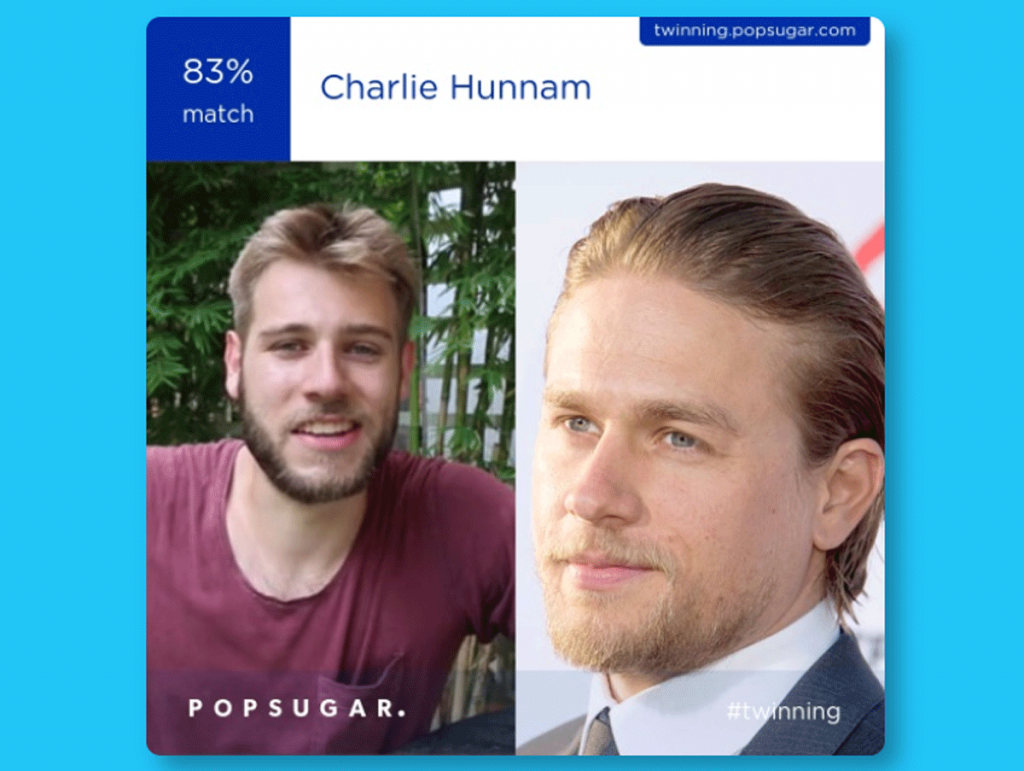
The same similarity algorithms used to find your celebrity doppelgänger are being repurposed for retail and security. For example, high-end fashion brands use similar “visual search” technology to allow customers to upload a photo of a garment and find similar items in their catalog. In the medical field, facial analysis AI is being researched as a tool to help identify genetic disorders that manifest in specific facial structures.
Integration with Augmented Reality (AR)
The next step for look-alike technology is deep integration with Augmented Reality (AR) and the “Metaverse.” Imagine wearing AR glasses that can instantly provide “look-alike” data or overlay celebrity-inspired filters onto people in real-time. This requires immense computational power and sophisticated spatial mapping. As 5G and 6G networks become more prevalent, the ability to offload these heavy AI calculations to the “edge” (closer to the user) will make these futuristic applications a reality.
In conclusion, the simple act of uploading a photo to see a celebrity match is a gateway into a world of complex AI architecture. From the layers of a Convolutional Neural Network to the ethical frameworks of biometric data, this technology represents a significant milestone in how machines perceive and categorize human identity. As AI continues to evolve, these tools will become even more accurate, immersive, and integrated into our daily digital lives.
aViewFromTheCave is a participant in the Amazon Services LLC Associates Program, an affiliate advertising program designed to provide a means for sites to earn advertising fees by advertising and linking to Amazon.com. Amazon, the Amazon logo, AmazonSupply, and the AmazonSupply logo are trademarks of Amazon.com, Inc. or its affiliates. As an Amazon Associate we earn affiliate commissions from qualifying purchases.