
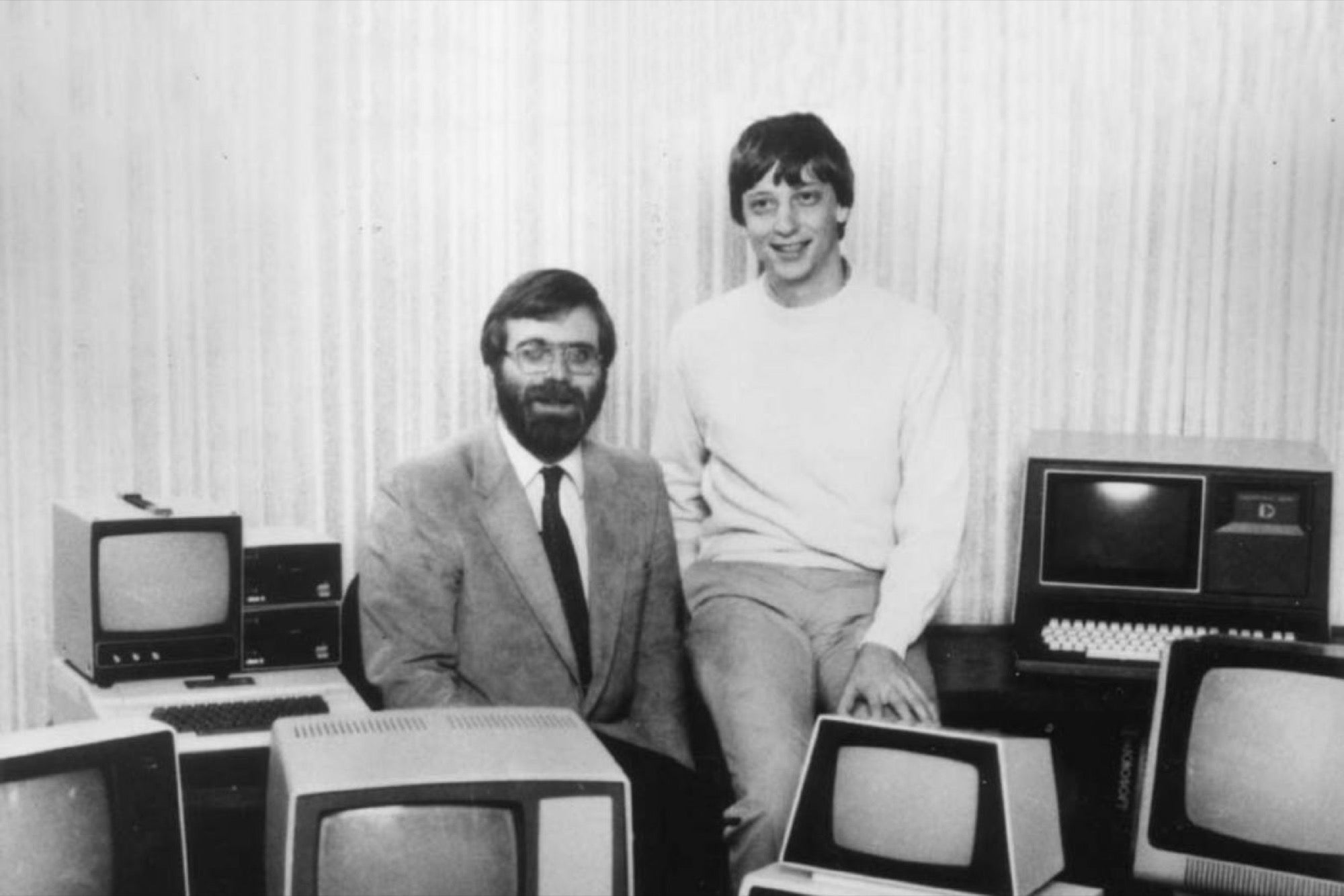
The history of personal computing is often divided into two eras: before and after the founding of Microsoft. While the name “Microsoft” is now synonymous with global enterprise, cloud infrastructure, and artificial intelligence, its origins trace back to a specific technical breakthrough by two childhood friends who saw the potential of software at a time when the world was obsessed with hardware. To understand who invented Microsoft is to understand the technical vision of Bill Gates and Paul Allen, and how their mastery of software architecture set the stage for the digital revolution.

The Genesis of Software: Gates, Allen, and the Altair 8800
The invention of Microsoft was not the result of a single physical device but rather a realization about the future of computer logic. In 1975, the computing landscape was dominated by massive mainframes accessible only to large corporations and universities. However, the release of the MITS Altair 8800, a hobbyist microcomputer kit, changed everything. Paul Allen and Bill Gates recognized that while the Altair was a breakthrough in hardware, it lacked the necessary software to make it useful for anything other than blinking lights.
Developing the First Microcomputer Language
The technical foundation of Microsoft began with the development of a version of BASIC (Beginners’ All-purpose Symbolic Instruction Code) for the Altair 8800. Gates and Allen did not just write a program; they engineered a way for a low-power microprocessor (the Intel 8080) to understand a high-level programming language. This required incredible technical efficiency, as the Altair had extremely limited memory. By successfully porting BASIC to the microcomputer, they bridged the gap between raw hardware and human-readable logic, effectively creating the first “software-first” company.
The Founding of Micro-Soft
On April 4, 1975, Microsoft (originally hyphenated as Micro-Soft) was officially formed in Albuquerque, New Mexico. The invention of the company was predicated on the belief that software would eventually become more valuable than the machines it ran on. While other companies were focused on building better circuits and motherboards, Allen and Gates focused on the “soul of the machine.” Their early work centered on creating interpreters and compilers for various systems, establishing a technical standard that allowed different hardware manufacturers to run the same types of programs.
From MS-DOS to the Graphical Era: Defining the User Experience
The most significant turning point in Microsoft’s technical history occurred in the early 1980s. When IBM decided to enter the personal computer market, they needed an operating system. Microsoft did not originally have one of its own, but their technical intuition led them to acquire QDOS (Quick and Dirty Operating System) from Seattle Computer Products, which they refined and rebranded as MS-DOS.
The Strategic Evolution of MS-DOS
MS-DOS (Microsoft Disk Operating System) became the backbone of the IBM PC. Technically, it was a command-line interface that managed the computer’s resources and provided a platform for applications to run. Its invention was a masterclass in modularity. By keeping the operating system separate from the hardware, Microsoft ensured that their software could be licensed to other manufacturers. This created the “PC clone” market, effectively standardizing the x86 architecture that dominates the industry to this day.
The Windows Paradigm Shift
As computing power grew, the limitations of text-based commands became apparent. Microsoft’s next major invention was Windows. Initially released as a graphical shell for MS-DOS, Windows introduced the concept of the Graphical User Interface (GUI) to the mass market. This shift required a fundamental rewrite of how software interacted with video drivers and input devices like the mouse. With the release of Windows 3.1 and later Windows 95, Microsoft successfully integrated the kernel (the core of the OS) with a user-friendly visual layer, setting the technical standard for how humans interact with machines.
Building the Productivity Ecosystem: Office and Enterprise Software

Beyond the operating system, the invention of Microsoft’s productivity suite redefined the technical workflows of the global workforce. Microsoft Office was not merely a collection of tools; it was an integrated ecosystem where data could flow seamlessly between applications.
The Integration of Office Suites
In the early days of software, word processors and spreadsheets were siloed applications. Microsoft’s technical innovation was OLE (Object Linking and Embedding), which allowed a user to embed an Excel spreadsheet directly into a Word document. This level of interoperability was a massive technical undertaking that required a unified file format and shared code libraries. It transformed the computer from a specialized calculation tool into a versatile workstation capable of handling complex data visualization and document processing.
Server and Network Infrastructure
As the internet began to take shape, Microsoft expanded its technical footprint into the server room. The development of Windows NT (New Technology) was a pivotal moment in software engineering. Unlike previous versions of Windows, NT was designed from the ground up to be a 32-bit, multi-processor, multi-user operating system. It introduced a more stable file system (NTFS) and robust networking protocols. This allowed Microsoft to dominate the enterprise market, providing the technical infrastructure for local area networks (LANs) and corporate databases.
The Cloud Transformation: Azure and Distributed Computing
In the 21st century, the definition of what Microsoft “invented” shifted from local software to distributed systems. Under the leadership of technical visionaries like Satya Nadella, the company pivoted toward the “Intelligent Cloud and Intelligent Edge.” This represented a departure from the traditional model of selling boxed software to providing computing power as a utility.
The Architecture of Microsoft Azure
Microsoft Azure is perhaps the most complex technical achievement in the company’s history. It is a global network of data centers that utilizes virtualization technology to provide infrastructure-as-a-service (IaaS), platform-as-a-service (PaaS), and software-as-a-service (SaaS). Technically, Azure relies on hypervisors—layers of software that allow multiple virtual machines to run on a single physical server. This allows for massive scalability, enabling companies to deploy applications globally in minutes.
Virtualization and the Hybrid Cloud
The invention of the modern Microsoft Cloud also involved embracing open-source technologies, a major technical shift for the company. Today, Microsoft is one of the largest contributors to the Linux kernel. This technical pragmatism has allowed Azure to become a “hyperscale” provider, managing petabytes of data and providing the backend for everything from Xbox Live to global banking systems. The shift to the cloud essentially moved the “operating system” from the individual PC to the global network.
The Future of Microsoft Technology: AI and Quantum Computing
The inventors of Microsoft always looked toward the next frontier of logic. Today, that frontier is defined by artificial intelligence and the physics of quantum mechanics. Microsoft is no longer just a software company; it is a pioneer in the fundamental research that will define the next century of technology.
Generative AI and the OpenAI Partnership
Microsoft’s integration of Large Language Models (LLMs) into its tech stack represents the next evolution of the user interface. By partnering with OpenAI and developing the “Copilot” ecosystem, Microsoft is moving toward “Natural Language as a UI.” Technically, this involves deploying massive GPU clusters in Azure to train and run models with billions of parameters. This integration allows the software to understand context, generate code, and automate complex technical tasks, effectively making the computer an active collaborator rather than a passive tool.
Investing in the Next Frontier: Quantum and Edge
Looking further ahead, Microsoft is investing heavily in topological quantum computing. Unlike classical bits that represent either a 0 or a 1, qubits can represent both simultaneously through superposition. Microsoft’s technical approach focuses on creating stable, fault-tolerant qubits that can solve problems currently impossible for classical computers, such as simulating complex molecular structures for medicine. Simultaneously, “Edge Computing” is pushing processing power out of the data center and into IoT devices, creating a seamless mesh of intelligence.
From a simple BASIC interpreter for a hobbyist kit to a global infrastructure powered by AI and quantum research, the invention of Microsoft was never about a single product. It was about a persistent technical philosophy: that software is the ultimate lever for human potential. Bill Gates and Paul Allen did more than just start a company; they engineered the digital framework of the modern world.
aViewFromTheCave is a participant in the Amazon Services LLC Associates Program, an affiliate advertising program designed to provide a means for sites to earn advertising fees by advertising and linking to Amazon.com. Amazon, the Amazon logo, AmazonSupply, and the AmazonSupply logo are trademarks of Amazon.com, Inc. or its affiliates. As an Amazon Associate we earn affiliate commissions from qualifying purchases.