
For decades, the boundary of space was the exclusive domain of highly trained government astronauts—individuals with PhDs in astrophysics or thousands of hours of experience as experimental test pilots. However, the last few years have signaled a seismic shift in this paradigm. The transition from government-led exploration to the “NewSpace” era has been driven by a suite of disruptive technologies, turning the dream of civilian spaceflight into a tangible reality.
When we ask which celebrities have gone to space, we are not just listing names like William Shatner or Michael Strahan; we are cataloging the successful test cases of some of the most advanced engineering projects in human history. This article explores the technology trends, software innovations, and aerospace hardware that have lowered the barrier to entry, allowing civilians to cross the Kármán line.
The Engineering of Reusability: How Tech Lowered the Barrier
The primary reason celebrities are now able to reach the stars is the radical reduction in the “cost per kilogram” to orbit. Historically, space travel was a “one-and-done” endeavor; rockets were discarded in the ocean after a single use. The emergence of reusable launch vehicle (RLV) technology has fundamentally changed the economics and accessibility of the cosmos.
Vertical Takeoff and Landing (VTOL) Systems
The most visible technological leap in the celebrity space race is the perfection of Vertical Takeoff and Landing (VTOL) systems, pioneered most notably by Blue Origin’s New Shepard and SpaceX’s Falcon 9. When William Shatner flew aboard the New Shepard NS-18 mission, he was riding atop a pressurized crew capsule propelled by a BE-3 engine.
The core tech here involves complex “throttleable” liquid hydrogen engines and landing legs that deploy with millisecond precision. The software required to flip a rocket traveling at supersonic speeds and guide it back to a pinpoint landing on a concrete pad is a masterclass in real-time edge computing. Without this ability to reuse the booster, the “celebrity flight” would remain a multi-billion dollar government expense rather than a commercial service.
Autonomous Navigation and Flight Software
Unlike the Apollo missions, which required manual intervention and constant communication with Mission Control, modern civilian spacecraft are almost entirely autonomous. The celebrities who have ventured into the thermosphere are not “piloting” the craft in the traditional sense.
The software architecture powering these flights utilizes “closed-loop” guidance systems. These systems ingest data from thousands of sensors—measuring everything from fuel tank pressure to atmospheric density—and make micro-adjustments to the flight path in real-time. This level of automation reduces the “human error” variable, allowing companies like Blue Origin to fly “all-civilian” crews without a professional pilot on board.
The Space Tourism Vehicles: A Breakdown of the Tech
Not all “space” flights are created equal. The technology used to transport celebrities varies significantly depending on whether the goal is suborbital (touching the edge of space) or orbital (staying in space for days).
Blue Origin’s New Shepard: The Pressurized Capsule Innovation
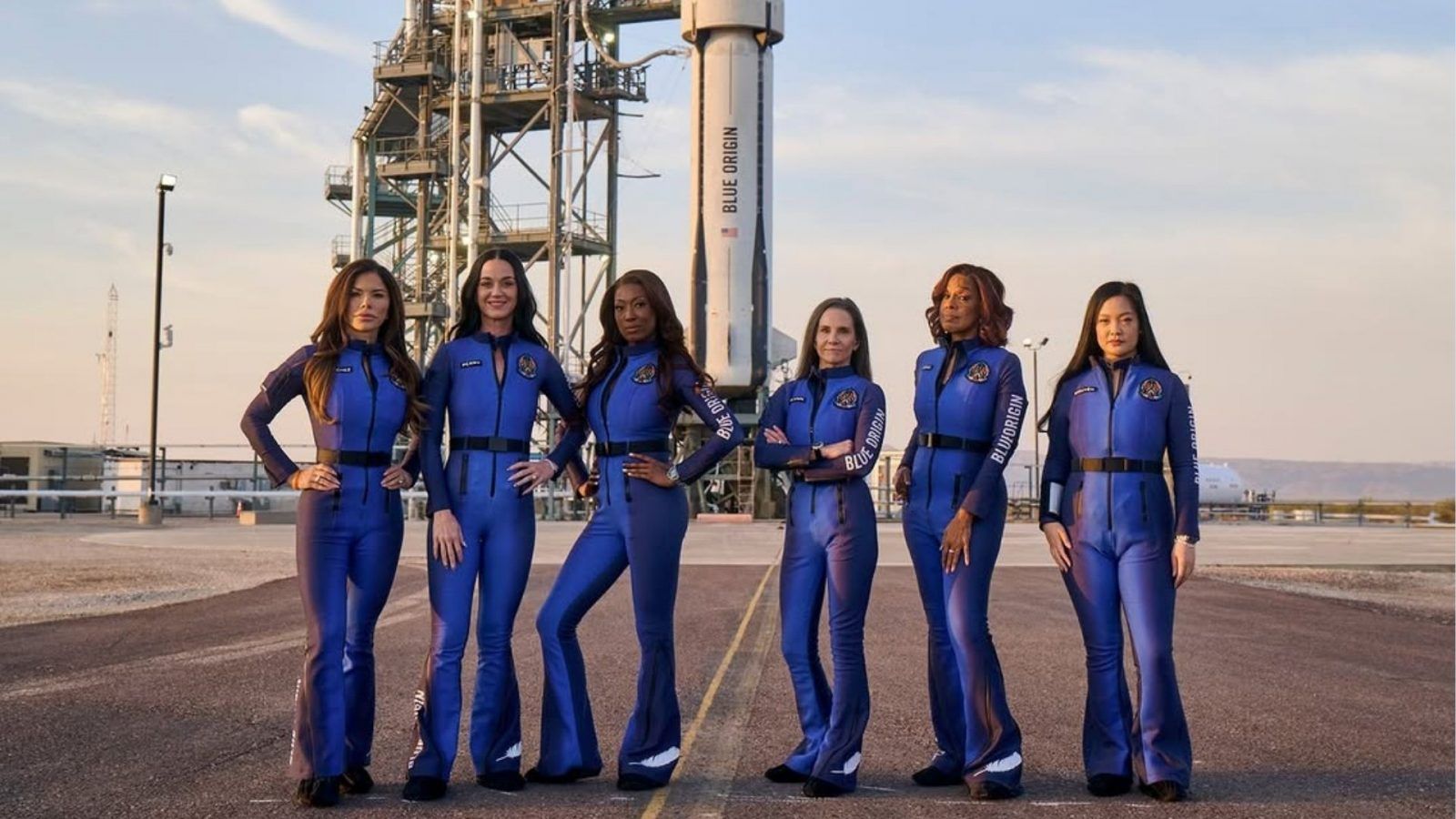
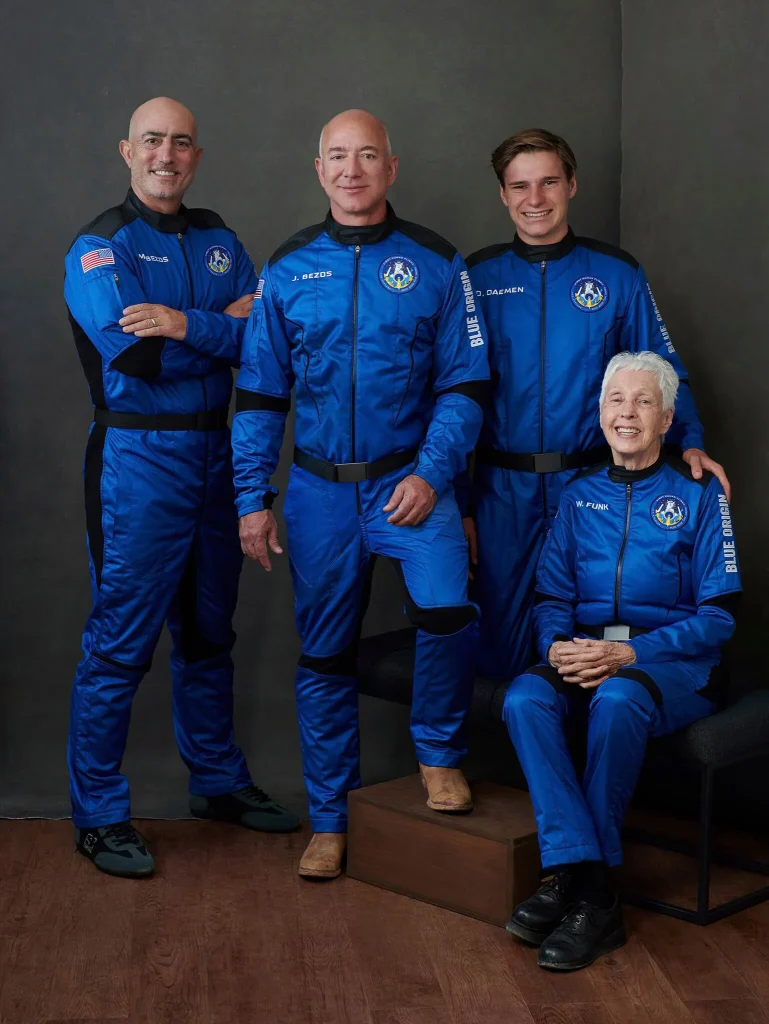
Blue Origin has become the most prominent “celebrity shuttle,” having transported the likes of Michael Strahan, Jeff Bezos, and Laura Shepard Churchley (daughter of the first American in space). The tech focus of the New Shepard is the crew capsule itself.
The capsule features the largest windows ever flown in space, made of multiple layers of toughened glass and polycarbonate to withstand the pressure differentials. From a tech standpoint, the “escape motor” is a critical piece of hardware. It is a solid rocket motor located in the center of the capsule that can fire at any moment during the launch to push the celebrities away from a failing booster. This safety-first tech stack is what makes the platform viable for high-profile civilians.
Virgin Galactic’s VSS Unity: The Air-Launch Paradigm
Sir Richard Branson and a team of specialists inaugurated Virgin Galactic’s commercial service using a very different technological approach: the air-launch system. Rather than a vertical rocket, the VSS Unity (a SpaceShipTwo-class vehicle) is carried to an altitude of 50,000 feet by a massive twin-fuselage carrier aircraft called WhiteKnightTwo.
The engineering marvel here is the “feathering” system. To re-enter the atmosphere safely, the spaceship’s tail booms rotate upward 60 degrees. This aerodynamic configuration creates high drag, allowing the craft to descend like a shuttlecock. This mechanical “software” (relying on physics rather than just computer code) ensures the craft doesn’t overheat during re-entry, providing a smooth glide back to a runway landing.

SpaceX Dragon: Commercial Orbital Transportation
While Blue Origin and Virgin Galactic focus on suborbital hops, SpaceX’s Crew Dragon provides a full orbital experience. This was demonstrated during the Inspiration4 mission, which, while not composed of A-list Hollywood stars, represented the first “all-civilian” orbital mission.
The Crew Dragon is a masterpiece of modern UI/UX design. Gone are the thousands of switches and dials of the Space Shuttle; they have been replaced by three large, redundant touchscreen panels. The software interface allows the crew to monitor life support, orbital mechanics, and thermal controls with the same ease one might use a high-end tablet. The craft also features a 360-degree glass “cupola,” a bespoke piece of engineering that replaced the docking adapter for civilian missions, offering a panoramic view of the Earth.
Safety and Life Support Systems in the Civilian Era
The primary concern when sending a celebrity into space is risk mitigation. The technology surrounding life support and safety has undergone a digital revolution to accommodate people who haven’t spent years in G-force simulators.
Redundant Avionics and Fail-Safe Mechanisms
In high-tech aerospace, redundancy is the gold standard. Most modern civilian spacecraft utilize a “triple-modular redundancy” (TMR) system for their flight computers. Three identical computers run the same software and “vote” on every command. If one computer experiences a hardware failure or a “bit-flip” caused by cosmic radiation, the other two override it. This tech ensures that the celebrities on board remain safe even in the harsh electromagnetic environment of the upper atmosphere.
Biometric Monitoring and Real-time Data Analytics
Before and during the flight, celebrities are equipped with wearable tech that monitors their vitals. These aren’t standard smartwatches; they are medical-grade biometric sensors that stream heart rate, blood oxygen levels, and respiratory data back to ground control via high-bandwidth telemetry links.
This data is processed using AI-driven analytics to predict the onset of space motion sickness or G-force-related stress. By monitoring how a 90-year-old (like William Shatner) reacts to 4Gs of pressure in real-time, engineers can fine-tune the flight profiles of future missions to ensure civilian safety.
The Future of Consumer Space Tech: Beyond the Suborbital Flight
The recent influx of celebrities in space is merely a Beta test for a much larger technology trend: the “democratization of the stars.” The tech being developed today will soon move beyond 10-minute joyrides into long-term orbital habitation.
The Integration of Starlink and Orbital Connectivity
One of the biggest tech hurdles for space travelers is staying connected. Historically, communication was limited by the availability of the TDRS (Tracking and Data Relay Satellite) network. However, the integration of Starlink’s laser-linked satellite constellation is changing the game.
Future celebrity missions will likely feature “always-on” gigabit internet. This isn’t just for posting to social media; it’s a critical safety feature. High-speed connectivity allows for high-definition video consultations with medical staff on Earth and the real-time upload of massive diagnostic datasets from the spacecraft’s onboard systems.
The Next Frontier: Commercial Space Stations
As the International Space Station (ISS) nears the end of its lifecycle, private tech companies like Axiom Space and Blue Origin (with their Orbital Reef project) are designing “space hotels.” These modules are being built using advanced soft-goods technology—inflatable habitats made of Vectran (a material stronger than Kevlar).
These stations will feature automated hydroponic systems for food, closed-loop water recycling that achieves 98% efficiency, and 3D printers capable of manufacturing replacement parts in zero-G. When the next generation of celebrities heads to space, they won’t just be visiting for a few minutes; they will be staying in high-tech, modular habitats that function as autonomous cities in the sky.
Conclusion
The list of celebrities who have gone to space is a testament to the maturation of aerospace technology. From the reusable rocket boosters of SpaceX to the feathering re-entry systems of Virgin Galactic, we are witnessing a transition from experimental science to reliable consumer technology.
As software becomes more autonomous and hardware more resilient, the “celebrity astronaut” will cease to be a novelty and become a standard feature of the new digital and physical frontier. The tech that currently serves the elite is rapidly scaling, paving the way for a future where the edge of the atmosphere is just another destination for the tech-savvy traveler.
aViewFromTheCave is a participant in the Amazon Services LLC Associates Program, an affiliate advertising program designed to provide a means for sites to earn advertising fees by advertising and linking to Amazon.com. Amazon, the Amazon logo, AmazonSupply, and the AmazonSupply logo are trademarks of Amazon.com, Inc. or its affiliates. As an Amazon Associate we earn affiliate commissions from qualifying purchases.