
The concept of potential energy, often first encountered in the realm of physics, refers to stored energy that an object possesses due to its position or state, and which has the capacity to do work. While traditionally associated with gravity or springs, its relevance extends far into the modern technological landscape, albeit sometimes in more abstract or metaphorical forms. In the world of technology, understanding “units for potential energy” is crucial, not just for quantifying the power stored in a gadget’s battery, but also for evaluating the latent capabilities of data, the processing power of an AI, or the untapped capacity of a network.
This article delves into the multifaceted interpretations of potential energy within the tech sphere. We will explore how physical units define the stored power of devices, and how, in the digital realm, “units” evolve into metrics that quantify latent value, computational capacity, and the transformative power of emerging technologies. By dissecting these various forms of potential energy and their associated units, we gain a clearer understanding of how innovation is fueled, value is created, and the future of technology is shaped.
The Physical Manifestation: Stored Energy in Tech Devices
In the most direct and literal sense, potential energy in technology refers to the stored capacity that powers our devices and infrastructure. This is where the classical understanding of potential energy directly intersects with cutting-edge engineering.
Batteries and Power Sources: The Lifeline of Gadgets
The ubiquitous battery is perhaps the most tangible example of potential energy in action within technology. Batteries store chemical potential energy, which is then converted into electrical energy to power everything from smartphones and laptops to wearable devices and smart home gadgets. Understanding the units associated with this stored energy is fundamental for assessing device longevity, performance, and portability.
The primary units for quantifying a battery’s potential energy are:
- Watt-hours (Wh): This unit represents the amount of energy a battery can deliver over a specific time. It’s calculated by multiplying voltage (volts) by current (amperes) by time (hours). A higher Watt-hour rating indicates a greater total energy capacity, meaning the device can operate for longer or deliver more power. For instance, a laptop battery might be rated at 60 Wh, while a power bank could be 100 Wh or more.
- Milliampere-hours (mAh): Often seen on smaller devices like smartphones and smartwatches, mAh is a measure of electrical charge capacity. It indicates how much current a battery can supply for one hour. While related to Watt-hours, mAh doesn’t directly tell you the energy content without knowing the battery’s voltage. For example, a 3000 mAh phone battery at 3.7V is roughly 11.1 Wh. It’s a convenient unit for comparing batteries of similar voltage.
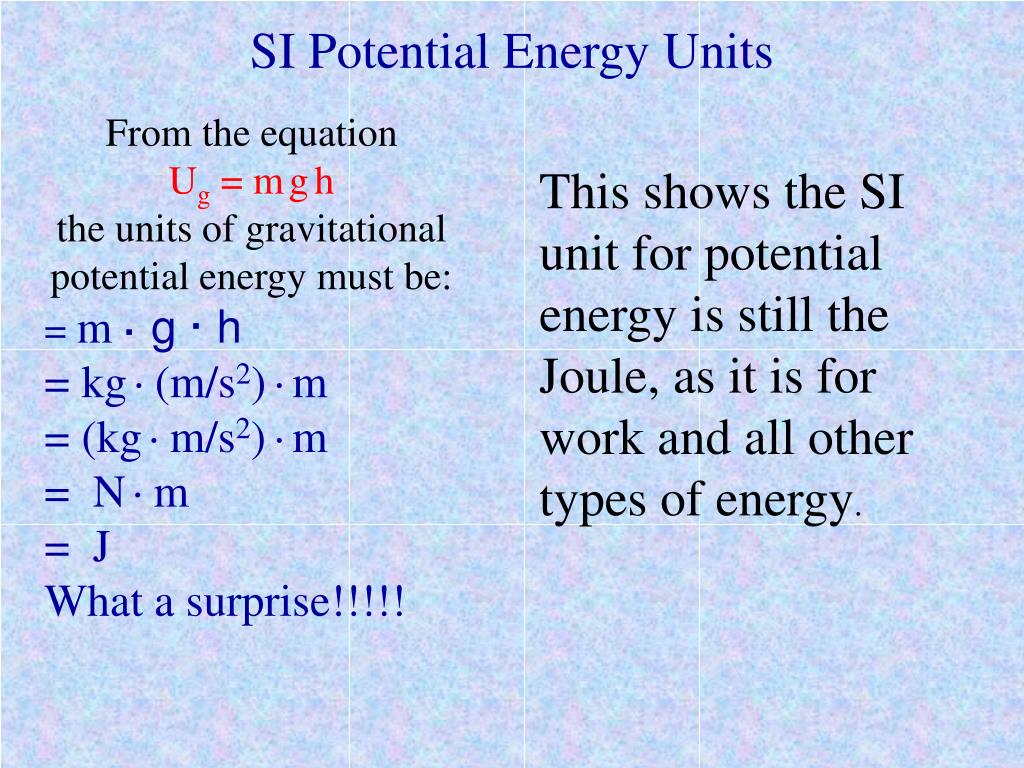
- Joules (J): The standard international (SI) unit for energy, a Joule is equivalent to one Watt-second. While less commonly used in consumer battery specifications, it’s the fundamental unit that underpins Wh and mAh, especially in more scientific or engineering contexts. One Watt-hour is equivalent to 3600 Joules.
These units allow consumers and engineers to compare devices, predict usage times, and design more efficient power management systems. The constant push for higher Wh and mAh ratings within smaller form factors drives innovation in battery chemistry and design, directly impacting the functionality and appeal of new gadgets.
Renewable Energy Storage: Powering Sustainable Tech Infrastructures
Beyond individual devices, the concept of stored potential energy scales up significantly in the context of renewable energy and large-scale tech infrastructures, such as data centers. As the world transitions towards sustainable energy, the ability to store energy generated from intermittent sources like solar and wind becomes paramount.
Here, the units expand to reflect the massive scale:
- Kilowatt-hours (kWh): A common unit for measuring electricity consumption and generation, kWh is simply 1,000 Watt-hours. It’s used to quantify the capacity of home battery storage systems (like Tesla Powerwall) or the daily energy output of solar panels.
- Megawatt-hours (MWh) and Gigawatt-hours (GWh): These units (1 million Wh and 1 billion Wh, respectively) are used for large-scale grid storage solutions, such as utility-scale battery banks or pumped-hydro storage systems. These colossal reserves of potential energy are critical for stabilizing power grids, ensuring continuous power supply for cities, industries, and, crucially, the energy-intensive operations of hyperscale data centers.
The development of efficient and cost-effective large-scale energy storage solutions directly impacts the sustainability of our technological future. These units, therefore, are not just measures of physical capacity but indicators of our collective progress towards a greener, more resilient tech ecosystem.
The Digital Realm: Latent Potential in Data and Computation
Moving beyond the physical, the concept of potential energy takes on a more abstract yet equally critical form in the digital realm. Here, potential energy refers to the latent capacity and untapped value residing within data, algorithms, and computational resources. These forms of “potential” do not adhere to traditional energy units but are quantified by specialized metrics that reflect their unique characteristics and impact.
Data as Stored Potential Energy: The Unmined Gold
In the age of Big Data, data itself can be conceptualized as a form of potential energy. Raw data, whether it’s user interactions, sensor readings, financial transactions, or scientific observations, holds immense, untapped value. This value is dormant until it is processed, analyzed, and transformed into actionable insights, decisions, or automated actions. The “units” for data’s potential energy are not physical measures but metrics that describe its volume, velocity, variety, and inherent worth.
Key “units” or metrics for Data Potential include:
- Volume (Terabytes, Petabytes, Exabytes): These are traditional storage units, but they also serve as a direct indicator of the potential amount of information available for analysis. A massive dataset in the petabyte range represents a vast reservoir of potential insights waiting to be extracted by AI and machine learning algorithms.
- Velocity (Data Ingestion Rates, Real-time Processing Capabilities): While not strictly a unit of “stored” potential, velocity describes the rate at which new data potential is being generated and the speed at which it can be activated. Metrics like events per second or transactions per minute indicate the continuous inflow of potential that needs immediate processing to unlock its value.
- Variety (Number of Data Sources, Types of Data): The diversity of data — structured, unstructured, semi-structured; text, images, video, sensor data — signifies the breadth and depth of potential insights. A wider variety often means more complex, but potentially more profound, discoveries.
- Value and Veracity (Quality Metrics, Economic Impact): These are more abstract but critical “units” that determine the actual utility and reliability of data’s potential. High-quality, accurate, and relevant data has higher potential energy to drive valuable outcomes, measured in terms of improved ROI, enhanced decision-making, or reduced risk.
The ability to collect, store, and, crucially, activate this data potential is at the heart of modern data analytics, machine learning, and AI. Companies that effectively harness their data’s potential energy gain significant competitive advantages.
Computational Potential and Processing Power: The Engine of Innovation

The latent capacity of hardware and software to perform operations, solve complex problems, or run sophisticated algorithms also represents a form of technological potential energy. This computational potential is the engine that transforms data’s raw potential into actionable intelligence. Its “units” are designed to quantify the sheer processing capability available.
“Units” for Computational Potential include:
- Processing Speed (Gigahertz – GHz): For CPUs, clock speed in Gigahertz (billions of cycles per second) indicates how many operations a processor can perform per second. A higher GHz rating generally implies greater potential for faster general-purpose computation.
- Throughput (FLOPS – Floating Point Operations Per Second): Especially relevant for GPUs and AI accelerators, FLOPS (TeraFLOPS, PetaFLOPS, ExaFLOPS) measure the number of floating-point calculations a processor can perform per second. This is a critical metric for high-performance computing, scientific simulations, and the intensive mathematical operations required for training large AI models. A higher FLOPS rating signifies greater potential for parallel processing and complex calculations.
- Bandwidth (Mbps, Gbps): While primarily a measure of network capacity, bandwidth (Megabits per second, Gigabits per second) also reflects the potential for data transfer, which is essential for activating data’s potential. A high-bandwidth connection means more data can be moved quickly to computational units, unlocking its potential faster.
- Memory/RAM (Gigabytes – GB): The amount of Random Access Memory in Gigabytes determines how much data and how many active processes a system can handle concurrently. More RAM equates to greater potential for multitasking and processing larger datasets directly in memory, which speeds up operations significantly.
These computational units represent the raw power available to tech systems. The continuous increase in these metrics, driven by advancements in chip design and parallel computing architectures, is what enables the development of increasingly complex software, sophisticated AI, and rapid data processing capabilities that define our technological progress.
Measuring the Transformation: Activating Potential Energy into Value
Understanding the units of potential energy is only half the battle; the true measure of technological prowess lies in how efficiently and effectively this stored potential is converted into tangible value. This involves not just recognizing the energy units, but also measuring the efficiency of conversion and the ultimate impact generated.
Energy Efficiency and Optimization: Sustainable Conversion
In the physical realm, the focus is on converting stored physical energy into useful work with minimal loss. This is a critical aspect of sustainable technology.
- Performance per Watt: This metric is crucial for devices and data centers. It measures how much computational work (e.g., FLOPS) or how many operations can be performed for each Watt of power consumed. High performance per Watt indicates efficient energy conversion, reducing waste heat and operational costs. It’s a key driver for green computing initiatives.
- Battery Life Optimization: Software and hardware innovations that extend device uptime from a given battery capacity (Wh/mAh) effectively maximize the “work done” per unit of stored energy. This involves optimizing power management, sleep modes, and component efficiency.
These efficiency units directly impact the environmental footprint and economic viability of technology, turning potential energy into useful work without excessive waste.
ROI and Impact Metrics for Digital Potential: Quantifying the Unleashed Value
When it comes to digital potential – the data and computational resources – the “work done” isn’t a physical output but rather an outcome measured in business terms, user experience, or scientific discovery. Here, the ‘units’ are performance indicators and financial metrics.
- User Engagement Metrics: For consumer tech, the transformation of data and computational potential into an engaging user experience can be measured by metrics like daily active users, session duration, click-through rates, or conversion rates. These units quantify the value created for the end-user.
- Revenue Generated/Cost Savings: In enterprise applications, activating data and computational potential often translates directly into financial outcomes. Units here include increased sales, reduced operational expenses, improved profit margins, or optimized resource allocation. For example, an AI model trained on petabytes of data (data potential) using exaFLOPS of computation (computational potential) might identify supply chain inefficiencies that save millions of dollars (monetary unit of value).
- Accuracy and Precision (for AI/ML): For AI models, the “work done” often relates to their ability to perform tasks with high accuracy. Metrics like precision, recall, F1-score, or mean average error (MAE) serve as units of effective transformation of potential into reliable output.
- Time Savings/Operational Efficiency: In many tech contexts, the value derived from potential energy is measured in time saved or processes streamlined. Units might be hours saved per employee, faster product development cycles, or reduced downtime for critical systems.
These impact metrics demonstrate that the “units” of potential energy in the digital realm eventually translate into tangible, measurable benefits that drive innovation and competitive advantage.
The Future Landscape: Maximizing Potential Energy in Tech
The pursuit of understanding and harnessing potential energy in tech is continuous. As technology evolves, so too do the forms of potential energy and the methods of quantifying them.
Emerging Storage Technologies: New Horizons for Physical Potential
The future promises revolutionary advancements in physical energy storage. Solid-state batteries, for example, hold the potential for significantly higher energy density (more Wh in a smaller, lighter package) and faster charging cycles. Quantum storage, though nascent, could radically alter how information is stored and accessed, pushing the boundaries of data potential. As these technologies mature, existing units like Wh will remain relevant, but new efficiency metrics and safety standards will also emerge, further refining our understanding of physical potential.
AI and Quantum Computing’s Untapped Potential: The Next Frontier
The “potential energy” of future technologies like advanced AI and quantum computing is perhaps the most intriguing. Large Language Models (LLMs) and other advanced AI systems demonstrate an immense, often unpredictable, potential to revolutionize industries. Quantifying this “potential” is a challenge. While we can measure parameters (billions of parameters for an LLM) and training FLOPs, the true impact – the emergent properties and groundbreaking applications – is harder to predict or measure with conventional units.
Quantum computing, too, presents a new paradigm of computational potential. Units like qubits and quantum volume are attempts to quantify this unique processing capability, but the full scope of its “potential energy” to solve currently intractable problems remains largely theoretical. The future will require innovative frameworks and “units” to describe and evaluate these new forms of potential, moving beyond traditional metrics to capture their transformative power.

Conclusion
The question “what are the units for potential energy” in technology is far more nuanced than a simple answer from a physics textbook. It encompasses a spectrum from the literal, physical units like Watt-hours that power our devices, to the complex, abstract metrics of data volume, computational throughput, and business impact that define the digital age.
Understanding these diverse “units” is not merely an academic exercise; it is fundamental to driving innovation, ensuring sustainability, and unlocking value in the ever-evolving tech landscape. Whether we’re measuring the capacity of a battery, the value latent in a petabyte of data, or the processing power of a supercomputer, recognizing and quantifying these forms of potential energy allows us to build a more efficient, intelligent, and impactful technological future. As technology continues its relentless march forward, our ability to measure and harness its multifaceted potential energy will remain a cornerstone of progress.
aViewFromTheCave is a participant in the Amazon Services LLC Associates Program, an affiliate advertising program designed to provide a means for sites to earn advertising fees by advertising and linking to Amazon.com. Amazon, the Amazon logo, AmazonSupply, and the AmazonSupply logo are trademarks of Amazon.com, Inc. or its affiliates. As an Amazon Associate we earn affiliate commissions from qualifying purchases.