
Gravity, the omnipresent force that anchors us to Earth and shapes the cosmos, is often understood conceptually but rarely dissected for its fundamental units. Yet, for engineers, software developers, and scientists pushing the boundaries of technology, a precise understanding of “what are the units for gravity” isn’t merely academic; it’s an absolute technological imperative. Every satellite launched, every autonomous vehicle navigating a city, and every simulation modeling a new device relies on an accurate comprehension and application of these foundational measurements.
This article will not just define the units for gravity but will illuminate why these units are so vital to technological advancement across diverse sectors. From the colossal scale of space exploration to the micro-precision of modern sensors, the language of gravity – expressed through its units – is the bedrock upon which much of our technological future is being built.
The Foundational Units of Gravity: Deconstructing the Force for Tech Application
To leverage gravity in technology, we must first speak its language. This involves understanding not one, but several key units, each providing a different lens through which this universal force is quantified and applied. The distinction between these units is crucial for precision engineering and software development.
Defining Gravitational Acceleration (g): The Local Tech Metric
When we speak of “gravity” in everyday terms, we often refer to the acceleration experienced by objects near the Earth’s surface. This is commonly denoted by ‘g’. The units for this gravitational acceleration are meters per second squared (m/s²) or, equivalently, Newtons per kilogram (N/kg). On Earth’s surface, the standard value for ‘g’ is approximately 9.80665 m/s².
From a technological standpoint, ‘g’ is an incredibly practical unit. It directly informs the design of anything that operates within Earth’s gravitational field:
- Structural Engineering: Calculating the load-bearing capacity of buildings, bridges, and infrastructure requires precise knowledge of how much force a given mass will exert due to gravity. The unit N/kg directly translates mass into weight (force) for these calculations.
- Aerospace Design: The initial thrust required for rockets to overcome Earth’s pull is calculated using ‘g’. Aircraft design considers lift versus gravitational force, directly relying on this acceleration unit to ensure stability and maneuverability.
- Consumer Electronics: Accelerometers in smartphones, fitness trackers, and gaming devices measure acceleration in m/s². These sensors detect changes in motion relative to ‘g’, enabling features like screen rotation, step counting, and impact detection.
Understanding ‘g’ allows engineers to quantify the very force their creations must either resist, leverage, or simulate, making it a cornerstone unit for terrestrial technological innovation.
Newton’s Universal Law and the Gravitational Constant (G): The Cosmic Constant
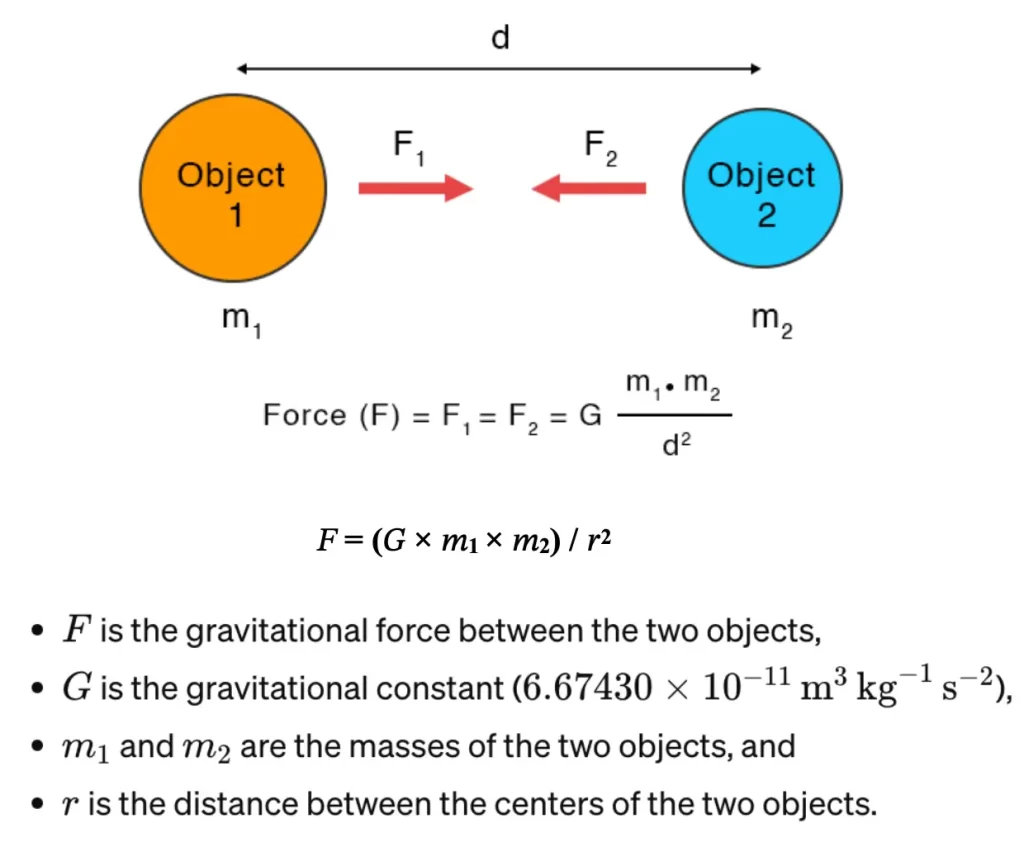
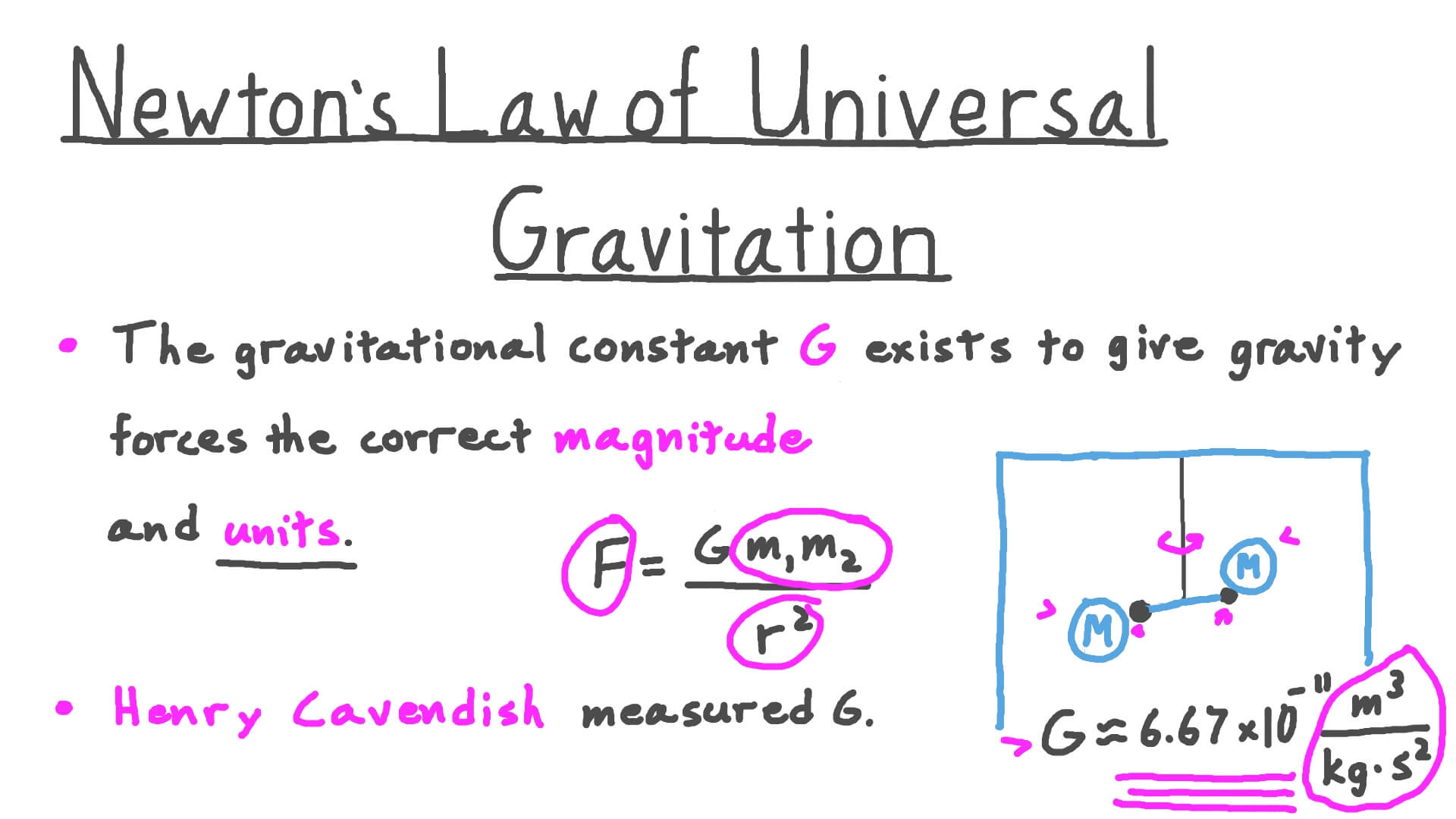
While ‘g’ describes gravity locally, Sir Isaac Newton’s Universal Law of Gravitation describes the force of attraction between any two objects with mass. This law introduces a more fundamental constant: the Universal Gravitational Constant, denoted by ‘G’. Its units are Newton meters squared per kilogram squared (N⋅m²/kg²), or in base SI units, meters cubed per kilogram per second squared (m³/(kg⋅s²)). The approximate value of G is 6.674 × 10⁻¹¹ N⋅m²/kg².
This ‘G’ is a constant of nature, distinct from the Earth-specific ‘g’. Its units are critical for:
- Orbital Mechanics: Calculating the trajectories of satellites, spacecraft, and celestial bodies relies entirely on G. The equations governing orbits use G to determine gravitational pull between a planet and a satellite, directly impacting propulsion system design, fuel efficiency, and mission longevity.
- Astrodynamics Software: Advanced simulation software used by space agencies like NASA and SpaceX incorporates G to model complex gravitational interactions between multiple bodies, crucial for planning deep-space missions and asteroid deflection strategies.
- Precision Manufacturing: While seemingly distant, G is used in highly sensitive gravimeters for quality control in manufacturing processes where minute variations in mass distribution can affect product performance, such as in gyroscope production for navigation systems.
The units of ‘G’ allow technologists to transcend Earth’s surface, designing systems that operate within the broader gravitational tapestry of the universe.
Other Contextual Units: Specialised Tech Applications
Beyond ‘g’ and ‘G’, other units emerge in specific technological contexts:
- Gal (cm/s²): Used primarily in geophysics, where gravimeters measure minute variations in Earth’s gravitational field. A Gal (named after Galileo) is 1 centimeter per second squared, and gravimetry often deals in milligals or microgals, crucial for detecting geological structures, mineral deposits, and even monitoring volcanic activity. These measurements feed into advanced seismic imaging and resource mapping technologies.
- Gravitational Potential Energy (J/kg): When considering the energy required to lift an object against gravity or the energy released as it falls, units like Joules per kilogram become relevant. This is critical in designing energy storage systems, understanding hydropower potential, and optimizing robotic movements where energy efficiency is paramount.
- Specific Force (m/s² or g): In aviation and human factors engineering, “g-forces” are commonly cited. While technically an acceleration (m/s²), it’s often expressed as multiples of Earth’s standard gravity ‘g’. This unit is vital for designing high-performance aircraft, space capsules, and safety systems, ensuring they can withstand extreme accelerations without compromising structural integrity or human occupants.
These specialized units underscore the diverse ways gravity’s quantification impacts niche technological fields, each requiring precise measurements to achieve specific engineering goals.
Gravity’s Units in Modern Engineering and Aerospace Tech
The translation of abstract physical units into tangible technological solutions is most apparent in engineering and aerospace. Here, the units of gravity are not just numbers but the very language of design, safety, and operational success.
Precision Navigation and Satellite Systems
The marvel of modern navigation, exemplified by GPS (Global Positioning System) and other GNSS (Global Navigation Satellite Systems), is an extraordinary testament to the application of gravity’s units.
- Orbital Mechanics: Satellites constantly fall around Earth, their orbits precisely calculated using Newton’s law of universal gravitation, incorporating G. Even minuscule variations in Earth’s gravitational field (due to its uneven mass distribution) can perturb satellite orbits. Engineers use sophisticated computational models, where G’s units are central, to predict these perturbations and plan corrective maneuvers, ensuring satellites remain in their designated paths.
- Relativistic Effects: Einstein’s theory of general relativity shows that gravity affects time. Clocks on GPS satellites run slightly faster than those on Earth. Engineers must account for these time dilations, which are directly related to the gravitational potential (a measure of gravity’s influence), using highly precise algorithms to ensure the accuracy of position data. Without this, GPS errors would accumulate by miles per day.
- Deep-Space Probes: Missions to other planets require even more complex gravitational calculations. The units of G allow engineers to design trajectories that use “gravity assists” – slingshot maneuvers around planets – to gain speed and save fuel, enabling ambitious journeys to the outer solar system and beyond.
Structural Engineering and Material Science
On Earth, the units of gravitational acceleration (‘g’) are fundamental to building things that stand tall and withstand the test of time.
- Load-Bearing Design: Every beam, column, and foundation in a skyscraper, bridge, or dam is designed to support a specific load, which is primarily the force exerted by gravity on its mass and the mass of everything it supports. Engineers calculate these forces using mass multiplied by ‘g’, ensuring structural integrity.
- Material Stress and Strain: Understanding how materials respond to gravitational forces is crucial. Finite Element Analysis (FEA) software, a cornerstone of modern engineering design, simulates how stresses (force per unit area) and strains (deformation) are distributed throughout a structure under gravitational load. These simulations directly utilize the m/s² units of gravity to ensure component safety and longevity.
- Seismic Resilience: While earthquakes involve dynamic forces, structural designs must still account for the combined effects of seismic activity and gravity. The dead load of a building due to gravity influences how it responds to lateral earthquake forces, requiring engineers to use sophisticated models that integrate ‘g’ into complex dynamic simulations.
Gravity Sensing Technologies and Their Applications
Perhaps nowhere is the direct application of gravity’s units more evident than in the development and deployment of gravity sensing technologies. These devices translate gravitational effects into measurable signals, forming the backbone of countless technological innovations.
Accelerometers and Inertial Measurement Units (IMUs)
Accelerometers are ubiquitous micro-electromechanical systems (MEMS) that measure acceleration, often expressing readings in m/s² or multiples of ‘g’. When combined with gyroscopes and magnetometers, they form IMUs, critical components in:
- Consumer Electronics: Smartphones use accelerometers for screen orientation, gaming motion controls, and step counting. These devices effectively measure their own acceleration relative to Earth’s ‘g’, allowing software to interpret movement.
- Drones and Robotics: IMUs provide crucial data for flight stability, navigation, and attitude control in drones and autonomous robots. They constantly sense changes in velocity and orientation, differentiating between movement and the static pull of gravity, allowing sophisticated algorithms to maintain balance and execute complex maneuvers.
- Automotive Safety: Modern cars use accelerometers for airbag deployment (detecting rapid deceleration due to impact) and for stability control systems, which sense vehicle attitude and G-forces during turns to prevent skidding.
Gravimeters and Geophysical Exploration
Gravimeters are highly sensitive instruments designed to measure minute variations in gravitational acceleration. Their precision, often down to microgals (10⁻⁸ m/s²), makes them invaluable for:
- Resource Exploration: Gravimeters are employed in oil, gas, and mineral exploration. Denser subsurface rock formations, often indicative of valuable resources, create slightly stronger localized gravity fields. By mapping these subtle variations, geophysicists can pinpoint potential drilling or mining sites. This requires extremely precise measurement of ‘g’ and its localized anomalies.
- Geological Mapping: Gravimetry helps in understanding the Earth’s crustal structure, locating fault lines, and mapping underground cavities or water bodies. This data is critical for urban planning, infrastructure development, and understanding seismic risks.
- Volcano Monitoring: Changes in magma movement beneath volcanoes can alter local gravitational fields. Monitoring these changes with gravimeters can provide early warnings of volcanic activity, a crucial application in hazard mitigation technology.
Advanced Gravity Wave Detectors: Probing the Cosmos
At the pinnacle of gravity sensing technology are detectors like LIGO (Laser Interferometer Gravitational-Wave Observatory). These colossal instruments are designed to detect gravitational waves – ripples in spacetime predicted by Einstein, generated by cataclysmic cosmic events like merging black holes.
- Unfathomable Sensitivity: LIGO’s ability to detect these waves involves measuring minute changes in length, equivalent to a fraction of the width of a proton. While not directly measuring ‘g’ or ‘G’ in the traditional sense, their operation confirms fundamental predictions of gravity and pushes the boundaries of precision measurement and signal processing technology.
- Astrophysical Insights: Detecting gravitational waves opens a new window onto the universe, complementing traditional electromagnetic astronomy. This breakthrough technology provides unparalleled insights into the most extreme phenomena in the cosmos, driving new theories and understanding of fundamental physics.
The Future of Tech: Leveraging Gravity’s Units for Innovation
The fundamental units of gravity are not just important for existing technologies; they are the bedrock for future innovations that will redefine human civilization. As we push into new frontiers, the precision with which we understand and apply these units will be paramount.
Space Colonization and Terraforming
Humanity’s ambition to colonize other planets and moons heavily relies on a profound understanding of gravity’s units:
- Artificial Gravity: For long-duration space travel and extraterrestrial habitats, engineers are exploring artificial gravity solutions, often through rotation. The design of these systems requires precise calculations of centrifugal force, which must counteract or simulate a desired ‘g’ force, to mitigate the health effects of microgravity.
- Propulsion Systems: Advanced propulsion concepts, such as those that might eventually manipulate spacetime or harness gravitational forces, are purely theoretical now but rooted in the units of G. Future breakthroughs here could revolutionize interstellar travel.
- Planetary Engineering: Should terraforming (transforming a planet to make it Earth-like) become feasible, understanding the target planet’s gravitational characteristics, derived from its mass and G, will inform every aspect of atmospheric retention, hydrological cycles, and biological integration.
Advanced Simulation and AI Development
The digital realm is increasingly reliant on accurate physical models, with gravity being a core component.
- Realistic Physics Engines: From video games to industrial design software, physics engines simulate how objects interact in a virtual environment. Accurate gravitational models, incorporating ‘g’ and its variations, are essential for creating realistic simulations for training autonomous systems, testing engineering designs, and developing virtual reality experiences.
- AI for Robotic Autonomy: Robots operating in dynamic environments need to understand gravity’s influence on their own movements and on the objects they manipulate. AI algorithms for robotic grasping, walking, and flying are trained on data that explicitly accounts for gravitational acceleration, allowing for more robust and adaptable autonomous systems.
- Digital Twin Technology: Creating digital twins of physical assets (e.g., a factory, a city, or even a human body) for predictive maintenance or performance optimization requires real-time data integration and physics-based modeling. Gravity’s units underpin the simulation of environmental forces acting on these digital representations.
Quantum Gravity and Next-Gen Computing
Looking further into the future, the quest to reconcile gravity with quantum mechanics—a theory of quantum gravity—might yield unexpected technological dividends.
- Fundamental Physics and Computing: While speculative, a deeper understanding of gravity at the quantum level could unlock entirely new principles of information processing, potentially leading to breakthroughs in quantum computing or even beyond, tapping into the very fabric of spacetime for computational power.
- Gravitational Field Manipulation: If we ever gain the ability to manipulate gravitational fields (currently science fiction), it would revolutionize everything from energy generation to transportation, creating technologies that operate on principles currently unimagined. The units of gravity would be the blueprints for such control.

Conclusion
The seemingly simple question “what are the units for gravity” unlocks a universe of technological innovation. From the meticulous design of a bridge to the audacious journey of a spacecraft, from the precision of a smartphone’s accelerometer to the profound insights from a gravitational wave detector, the various units of gravity are not mere academic curiosities. They are the essential toolkit for engineers, developers, and scientists who are continually pushing the boundaries of what is possible. As technology advances, the demand for ever more precise measurement and understanding of these fundamental units will only intensify, cementing their role as an enduring technological imperative.
aViewFromTheCave is a participant in the Amazon Services LLC Associates Program, an affiliate advertising program designed to provide a means for sites to earn advertising fees by advertising and linking to Amazon.com. Amazon, the Amazon logo, AmazonSupply, and the AmazonSupply logo are trademarks of Amazon.com, Inc. or its affiliates. As an Amazon Associate we earn affiliate commissions from qualifying purchases.