
In the rapidly evolving landscape of technology, the abstract concepts of physics often become the tangible constraints of engineering. As we push the boundaries of artificial intelligence, high-performance computing, and mobile connectivity, understanding the fundamental metrics that govern these systems is paramount. At the heart of every technological advancement—from the smallest transistor to the largest hyperscale data center—lies energy.
To measure energy accurately and universally, the global scientific and technical communities rely on the International System of Units (SI). While the question “what are the SI units of energy” might seem like a simple inquiry for a physics textbook, its answer is the cornerstone of modern hardware design, software optimization, and sustainable tech development.
Foundations of Energy Measurement in Computing
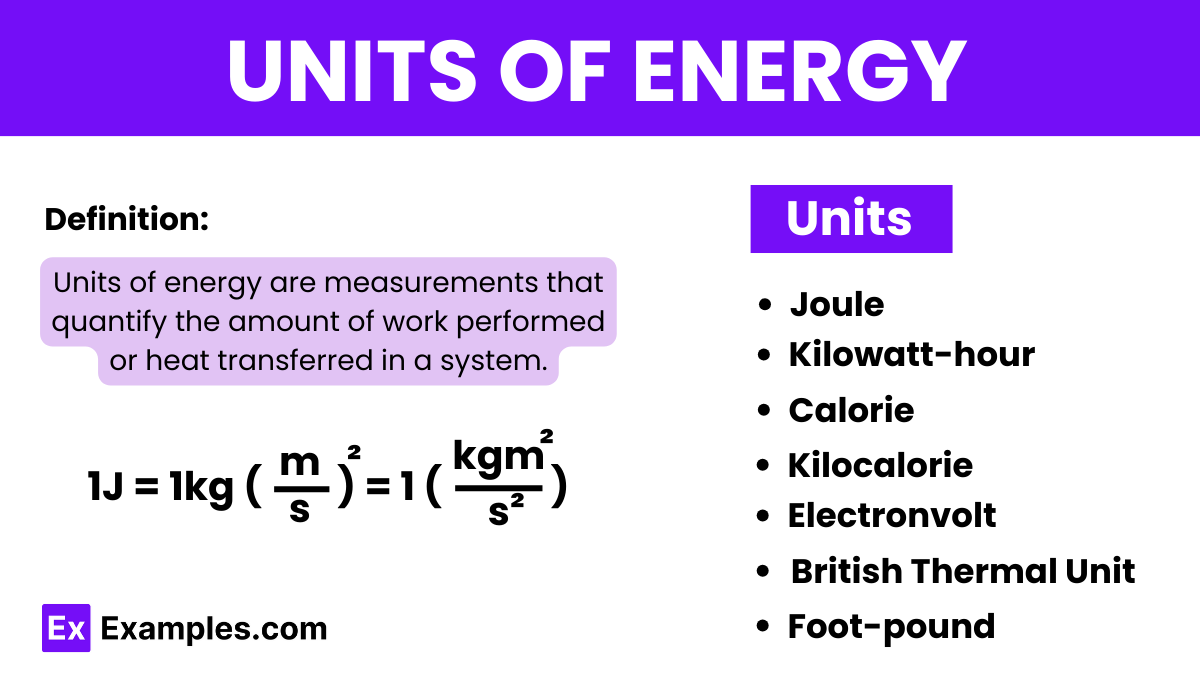
In the realm of technology, energy is the capacity to perform work—whether that work is moving a physical mechanical arm in a factory or switching the state of a logic gate in a microprocessor. The primary SI unit for energy is the Joule (J).
Defining the Joule (J) in Hardware Engineering
The Joule is a derived unit named after James Prescott Joule. In technical terms, one Joule is defined as the amount of energy transferred to an object when a force of one Newton is applied over a distance of one meter. In the context of electronics and computing, a Joule is equivalent to the energy dissipated as heat when an electric current of one ampere passes through a resistance of one ohm for one second.
For hardware engineers, the Joule is the most precise way to measure the “cost” of a computation. Every bit flip in a CPU requires a specific amount of energy, measured in nano-Joules (nJ) or even pico-Joules (pJ). As we shrink transistors through advanced lithography (such as 3nm and 2nm processes), the goal is consistently to reduce the Joules required per operation, allowing for faster processing without catastrophic heat buildup.
The Relationship Between Energy and Performance Metrics
Technological performance is often mistaken for speed alone, but in the modern era, performance is inextricably linked to energy efficiency. This is where the SI unit for energy intersects with time to create power. While the Joule measures the total energy, the Watt (W)—which is one Joule per second—measures the rate of energy consumption.
In tech reviews and enterprise hardware specifications, we often see performance-per-watt metrics. This ratio is critical because it determines the viability of a technology. If a new AI chip is twice as fast as its predecessor but requires four times the Joules to complete the same task, it may be technically superior in speed but a failure in practical technology deployment due to energy costs and cooling requirements.
Beyond the Joule: Power Consumption and Operational Efficiency
While the Joule is the base SI unit, the tech industry frequently utilizes derivative units and related metrics to describe energy use at scale. Understanding how these units interact is essential for digital security, software architecture, and hardware benchmarking.
Watts vs. Joules: Understanding Power Density in AI Hardware
The surge in Artificial Intelligence (AI) has brought energy units to the forefront of tech news. Training large language models (LLMs) requires astronomical amounts of energy. Here, the distinction between power (Watts) and energy (Joules) becomes vital for infrastructure planning.
An AI accelerator, such as an NVIDIA H100 GPU, has a maximum Thermal Design Power (TDP). If a chip draws 700 Watts, it is consuming 700 Joules every single second. When training a model for months, engineers must calculate the total energy in Megajoules (MJ) or Gigajoules (GJ) to understand the operational overhead and the carbon footprint of the software. This transition from “instantaneous power” to “total energy” is what dictates the design of the power delivery systems in modern AI clusters.
Thermal Design Power (TDP) and Energy Conservation
TDP is a common specification in the world of PC hardware and server gadgets. It represents the maximum amount of heat a cooling system must dissipate under a workload. Since the first law of thermodynamics states that energy cannot be destroyed, almost all the Joules consumed by a processor are eventually converted into heat energy.
In mobile tech and laptops, managing the “energy envelope” is the primary challenge. Modern software tutorials often focus on “energy-saving modes.” These modes work by capping the Wattage (Joules per second) used by the processor, thereby extending the time it takes to deplete the energy stored in the device’s battery.
Energy Units in Mobile Technology and Battery Evolution
When we look at our smartphones and wearables, the conversation about SI units of energy takes a slightly more specialized turn. While the Joule remains the standard, the industry often uses practical units that bridge the gap between physics and consumer usability.
Milliampere-hours (mAh) vs. Watt-hours (Wh)
If you look at the specs of a new smartphone, you will see the battery capacity listed in milliampere-hours (mAh). However, mAh is technically a measure of electric charge, not energy. To find the actual energy capacity in SI-related units, one must look at the Watt-hour (Wh).

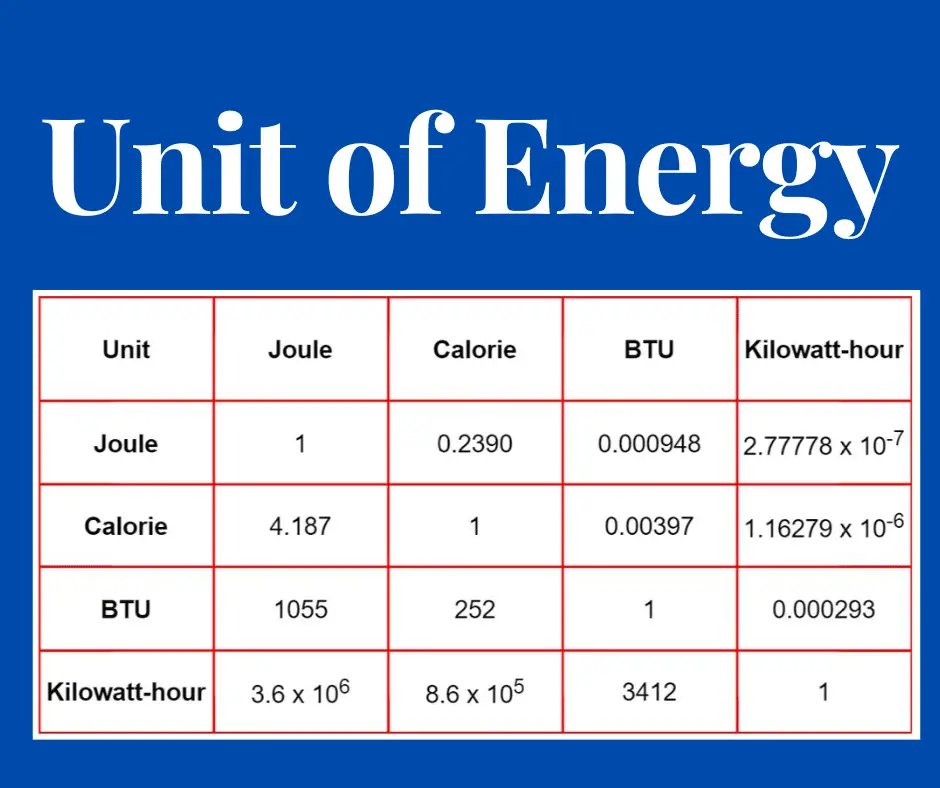
One Watt-hour is equivalent to 3,600 Joules. Tech experts prefer Watt-hours because they account for voltage, providing a more accurate representation of how much “work” a battery can perform. For example, a 5,000 mAh battery at 3.7V holds significantly less energy than a 5,000 mAh battery at 7.4V. By standardizing on the Watt-hour (a non-SI unit accepted for use with SI), the tech industry can compare the battery life of a small drone, a smartphone, and a high-end laptop on an even playing field.
The Role of SI Units in Battery Life Optimization
Software developers are increasingly focused on “energy-aware” programming. By using specialized AI tools and profilers, developers can measure exactly how many Joules a specific app consumes during a standard user session.
Digital security apps, for instance, are notorious for high energy consumption because they constantly run background processes and encrypt data. Optimization in this context means reducing the Joules-per-process. This ensures that the security features do not diminish the user experience by draining the battery, highlighting how the SI units of energy serve as a KPI (Key Performance Indicator) for app quality and software engineering.
Data Centers and the Global Energy Grid
As we move from individual gadgets to the infrastructure that powers the internet, the scale of energy measurement shifts from Joules to Kilowatt-hours (kWh) and Megawatt-hours (MWh).
Kilowatt-hours (kWh) and Megawatt-hours (MWh) in Infrastructure
In the world of cloud computing and data centers, energy is the single largest operational expense. A Kilowatt-hour is the amount of energy equivalent to using 1,000 Watts for one hour, which equals 3.6 million Joules (3.6 MJ).
Large-scale tech companies like Google, Amazon, and Microsoft track their energy usage in Megawatt-hours. This measurement is crucial for purchasing energy from the grid and for designing the massive cooling systems required to keep servers operational. When these companies announce “carbon-neutral” initiatives, they are essentially promising to offset the millions of Joules consumed by their hardware with renewable energy sources.
Measuring Power Usage Effectiveness (PUE) with SI Metrics
The tech industry uses a specific ratio called Power Usage Effectiveness (PUE) to measure the efficiency of a data center. PUE is calculated by dividing the total energy entering the facility by the energy used by the IT equipment.
Both sides of this equation are measured in Joules (or kWh). A PUE of 1.0 would mean every Joule of energy is going directly to computing, with zero energy wasted on cooling or lighting. Modern “green” data centers strive for a PUE of 1.1 or lower. Without the standardization provided by SI units, it would be impossible to benchmark these facilities or hold tech giants accountable for their environmental impact.
The Future of Energy Management in Green Tech and AI
As we look toward the future of technology, the focus is shifting from “how much can we compute?” to “how much can we compute per Joule?” This shift is driving innovation in two major areas: Green Tech and AI optimization.
Energy-Efficient AI Models and the Quest for Lower Joules per Operation
The next frontier of AI is not just about larger models, but about “leaner” models. Quantization, pruning, and knowledge distillation are software techniques designed to reduce the computational complexity of AI. In practical terms, these techniques aim to reduce the Joules per Inference.
When an AI tool processes a prompt, it triggers millions of mathematical operations. By minimizing the precision of these operations (from 32-bit to 8-bit or even 4-bit), engineers can significantly lower the energy consumed per query. This is essential for bringing AI “to the edge”—meaning running complex AI directly on your smartphone or local gadget rather than in a distant, energy-hungry data center.
Sustainable Computing: Standardizing Units for Global Tech Responsibility
The push for Digital Security and Corporate Responsibility has led to a demand for transparent energy reporting. Stakeholders want to know the “energy cost” of a digital transaction or a blockchain mining operation. By adhering to the SI units of energy, the tech industry provides a universal language for these discussions.
Standardization allows for the development of “Energy Stars” and other certifications for gadgets and software. It enables consumers to make informed choices based on the Joules required to power their digital lives. As we move toward a future of decentralized energy and smart grids, the ability to measure energy in Joules and Watts with absolute precision will be the foundation of a sustainable technological ecosystem.
Conclusion
The question “what are the SI units of energy” transcends the classroom and enters the boardroom and the laboratory. The Joule is more than just a unit of measurement; it is the currency of the digital age. From the microscopic movements of electrons in a silicon chip to the massive power requirements of global data networks, energy units provide the framework for innovation, efficiency, and sustainability.
As technology continues to integrate more deeply into our daily lives, our reliance on these metrics will only grow. By understanding the Joule, the Watt, and their derivatives, we gain a clearer insight into the pulse of modern technology and the energy-intensive future we are building. Whether you are a developer optimizing an app, an engineer designing a new gadget, or a consumer concerned about your digital carbon footprint, the SI units of energy are the essential tools for navigating the high-tech landscape.
aViewFromTheCave is a participant in the Amazon Services LLC Associates Program, an affiliate advertising program designed to provide a means for sites to earn advertising fees by advertising and linking to Amazon.com. Amazon, the Amazon logo, AmazonSupply, and the AmazonSupply logo are trademarks of Amazon.com, Inc. or its affiliates. As an Amazon Associate we earn affiliate commissions from qualifying purchases.