
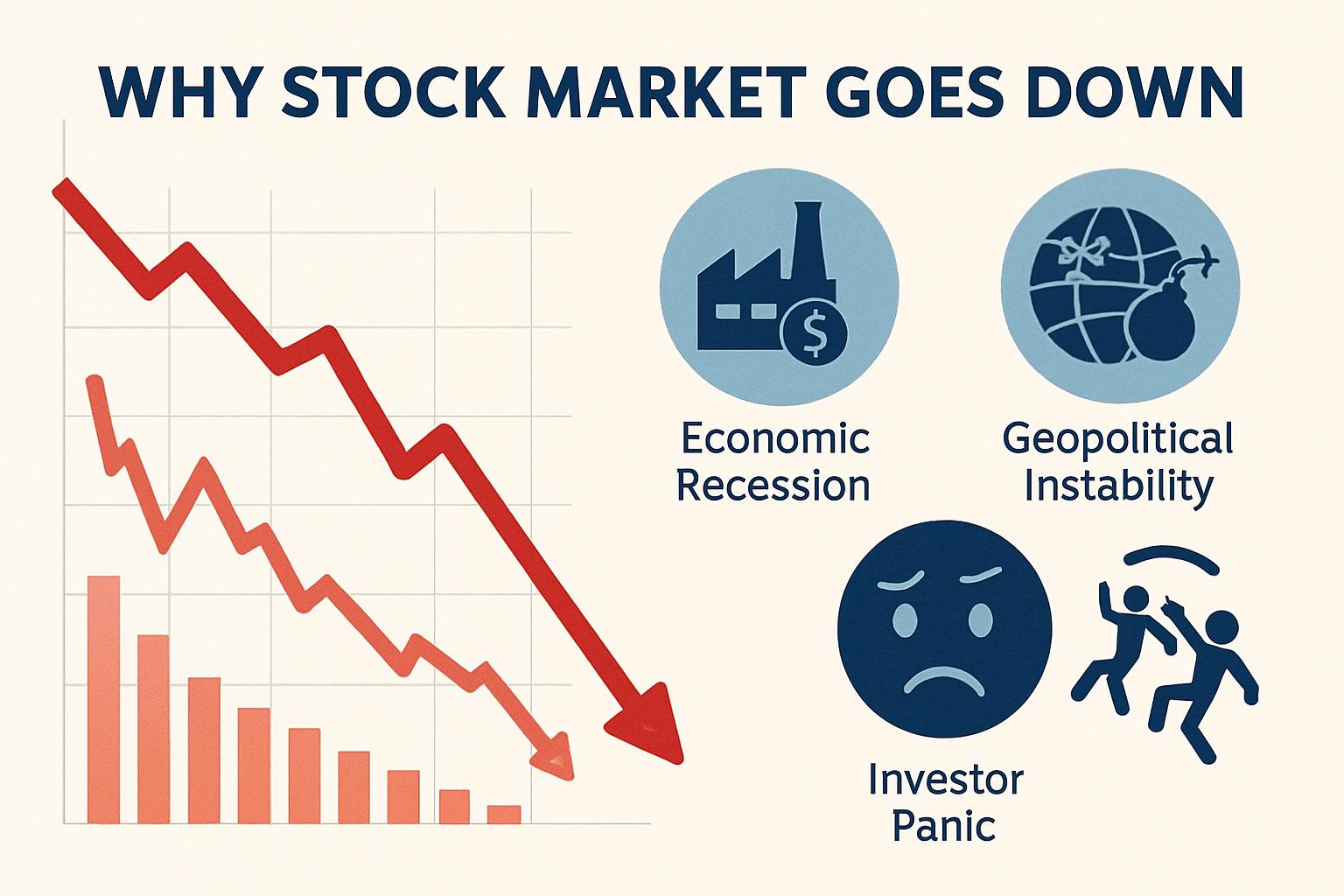
For many investors, the Nasdaq Composite is the primary barometer for the health of the modern economy. As a tech-heavy index, it captures the pulse of innovation, digital transformation, and the high-growth companies that define the 21st century. However, this high-growth nature also makes it particularly susceptible to sharp declines. When you see the Nasdaq in the red, it is rarely due to a single isolated event; rather, it is usually a confluence of macroeconomic shifts, corporate performance metrics, and global sentiment.
Understanding why the Nasdaq is down on any given day requires a deep dive into the mechanics of finance, the psychology of the market, and the shifting landscape of global economics. This article explores the primary drivers that pull the index lower and what these movements mean for your investment strategy.
The Macroeconomic Landscape: Interest Rates and Inflation
The most frequent culprit behind a Nasdaq downturn is the shifting macroeconomic environment, specifically regarding the Federal Reserve and interest rate expectations. Because the Nasdaq is heavily weighted toward growth stocks—companies expected to generate the bulk of their profits in the future—it is uniquely sensitive to the “cost of money.”
The Federal Reserve’s “Higher for Longer” Stance
In the world of finance, the Federal Reserve (the Fed) acts as the ultimate arbiter of liquidity. When inflation rises above the 2% target, the Fed typically raises the federal funds rate to cool the economy. For the Nasdaq, higher interest rates are a double-edged sword. First, they increase the borrowing costs for companies that rely on debt to fund research, development, and expansion. Second, and perhaps more importantly, they change how analysts value a company’s future earnings. Using the Discounted Cash Flow (DCF) model, future profits are worth less in today’s dollars when the discount rate (linked to interest rates) is higher. When the Fed signals a “higher for longer” approach, growth-oriented tech stocks are often the first to be sold off.
Treasury Yields and Their Inverse Relationship with Tech
There is a long-standing, often inverse relationship between the 10-year Treasury yield and the Nasdaq 100. When yields on government bonds rise, they offer a safer, more attractive alternative to risky equities. Investors who were previously “forced” into the stock market to find yield may rotate their capital out of high-valuation tech stocks and into the relative safety of bonds. A sudden spike in the 10-year yield can trigger an immediate “de-risking” event, leading to a sea of red across the Nasdaq.
Inflationary Pressures and Consumer Spending
While tech companies are often seen as lean and efficient, they are not immune to inflation. Rising costs for hardware components, logistics, and skilled labor can compress profit margins. Furthermore, if persistent inflation erodes the purchasing power of the average consumer, demand for high-end gadgets, streaming services, and software subscriptions may wane. When data suggests that inflation is “stickier” than expected, the Nasdaq often reacts negatively as investors price in both higher costs and lower demand.
Earnings Season and Corporate Guidance
Beyond the macro environment, the Nasdaq’s daily performance is heavily dictated by the fundamental health of its constituent companies. Because the index is market-cap weighted, a handful of giants—often referred to as the “Magnificent Seven”—have an outsized impact on the index’s direction.
The Weight of the “Magnificent Seven”
Companies like Apple, Microsoft, Alphabet, Amazon, Nvidia, Meta, and Tesla represent a massive percentage of the Nasdaq’s total value. On days when the index is down, it is frequently because one or more of these titans has released a disappointing earnings report or lowered its forward-looking guidance. If a dominant player like Nvidia warns of a slowdown in AI chip demand, or if Apple reports a slump in iPhone sales, the entire index can be dragged down, regardless of how hundreds of smaller companies are performing.
Growth Expectations vs. Actual Performance
The Nasdaq is a “forward-looking” mechanism. Investors do not just buy these stocks for what they are doing today; they buy them for what they are expected to do in five years. This means that a company can report record-breaking profits and still see its stock price tumble if those profits didn’t beat analyst expectations by a wide enough margin. This “expectation gap” is a common reason for intraday volatility. If the market has priced in a 20% growth rate and a company only delivers 18%, the resulting sell-off can be swift and brutal.
Profit Taking and “Sell the News” Dynamics
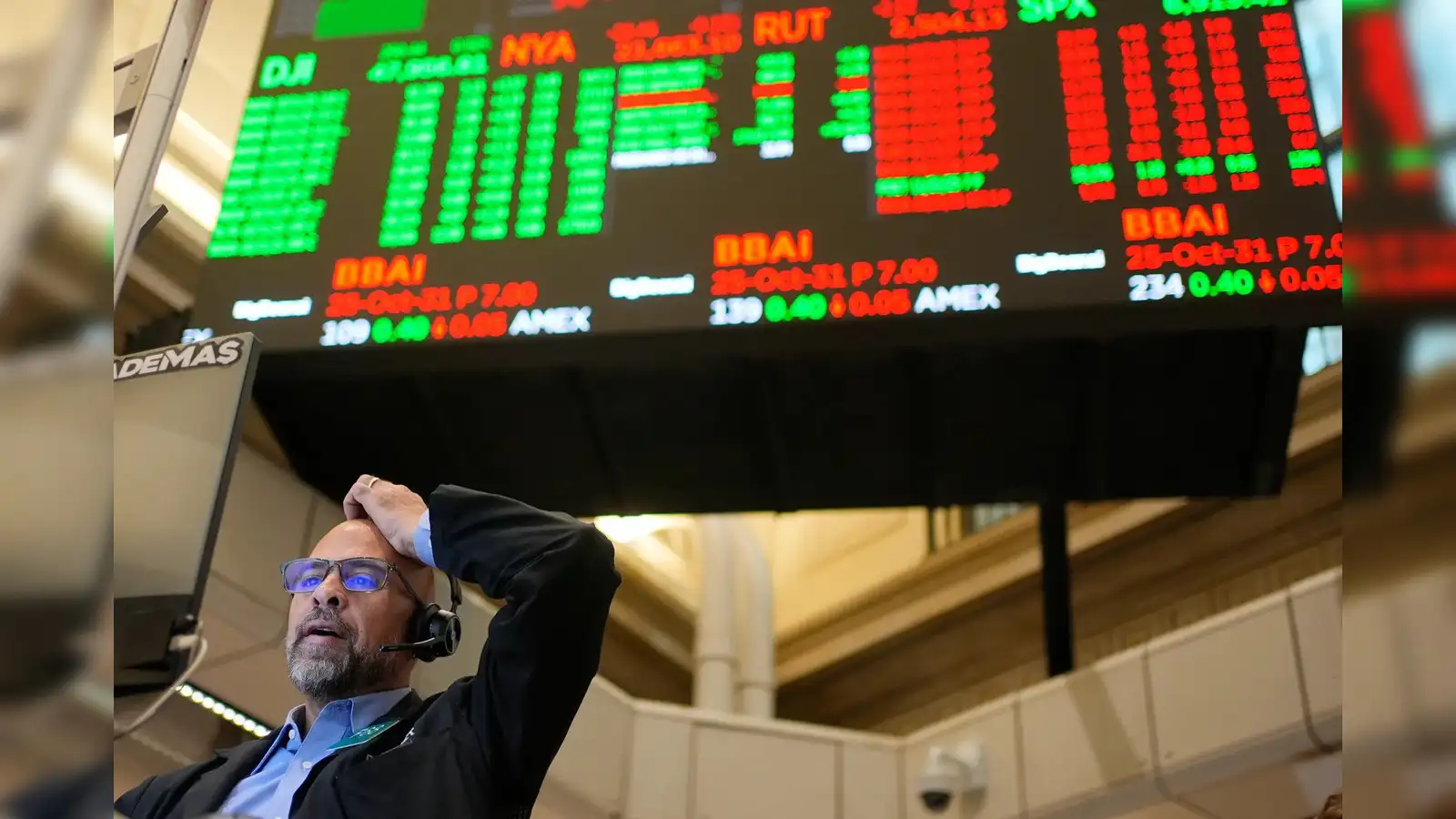
Markets often move in cycles of hype and reality. After a prolonged rally—perhaps driven by excitement over Artificial Intelligence or a breakthrough in cloud computing—the Nasdaq may experience a “pullback” simply because investors are locking in their gains. This is often referred to as “profit-taking.” Additionally, the market frequently experiences “sell the news” events, where a positive development (like a long-awaited product launch) was already “priced in,” leading investors to sell once the event actually occurs.
Geopolitical Risks and Global Market Sentiment
The financial markets do not exist in a vacuum. They are deeply interconnected with global politics, trade relations, and the general level of uncertainty in the world. As an index that includes many multinational corporations, the Nasdaq is particularly sensitive to international disruptions.
International Instability and Supply Chain Disruption
Many Nasdaq companies rely on complex, global supply chains. Political instability in regions critical for semiconductor manufacturing or energy production can send shockwaves through the tech sector. For example, tensions in Eastern Europe or the Taiwan Strait can lead to fears of hardware shortages or increased regulatory hurdles. When geopolitical risk rises, investors often move into “risk-off” mode, exiting volatile tech positions in favor of defensive assets like gold or utility stocks.
The Impact of Legislative and Regulatory Scrutiny
Tech giants are increasingly under the microscope of regulators in the US, the EU, and China. News regarding antitrust lawsuits, new data privacy laws, or restrictions on AI development can cause immediate downward pressure on the Nasdaq. If a major tech firm is facing a multi-billion dollar fine or a forced restructuring of its business model, the uncertainty alone is enough to drive the index lower as the market struggles to quantify the long-term impact on profitability.
Algorithmic Trading and Technical Sell Signals
In the modern era, a significant portion of trading volume is driven by high-frequency algorithms. These “bots” are programmed to sell when certain technical levels are breached. If the Nasdaq falls below a key support level—such as its 50-day or 200-day moving average—it can trigger a cascade of automated sell orders. This technical selling can turn a minor dip into a significant intraday rout, often happening with a speed that human traders cannot match.
Investor Psychology and Portfolio Resilience
To navigate a day when the Nasdaq is down, one must understand the psychological factors at play. Market sentiment can shift from “Greed” to “Fear” in a matter of hours, often exacerbated by the 24-hour news cycle and social media.
Distinguishing Between a Correction and a Bear Market
It is important for investors to distinguish between a healthy market “correction” (a drop of 10% from recent highs) and a “bear market” (a sustained drop of 20% or more). Occasional red days are a natural part of the market cycle; they wash out “weak hands” and allow valuations to return to more sustainable levels. In fact, many long-term investors view Nasdaq down-days as an opportunity to “buy the dip,” acquiring shares of high-quality companies at a discount.
The Importance of Diversification in a Tech-Heavy Portfolio
The volatility of the Nasdaq serves as a constant reminder of the importance of diversification. Because the index is so concentrated in technology and communication services, it lacks the stability provided by sectors like healthcare, consumer staples, or energy. Investors who are overly exposed to the Nasdaq may find their portfolios swinging wildly. A balanced approach—incorporating value stocks, international equities, and fixed income—can help dampen the blow when the tech sector faces a downturn.

Rebalancing Strategies for Volatile Periods
Active management during a Nasdaq downturn involves more than just watching the ticker. It requires a disciplined approach to rebalancing. When the Nasdaq is down significantly, it might mean that your portfolio’s allocation to tech has shrunk below your target. Conversely, during a massive rally, it might have grown too large. Using “down days” to strategically rebalance ensures that you are adhering to your long-term financial plan rather than reacting emotionally to short-term market noise.
The Nasdaq’s decline on any given day is a complex puzzle with pieces ranging from Federal Reserve policy and Treasury yields to corporate earnings and geopolitical tensions. While seeing red on your screen can be unsettling, it is an inherent part of investing in the world’s most innovative and growth-oriented companies. By understanding the underlying drivers—the “why” behind the move—investors can move past the noise and make informed, rational decisions for their financial future.
aViewFromTheCave is a participant in the Amazon Services LLC Associates Program, an affiliate advertising program designed to provide a means for sites to earn advertising fees by advertising and linking to Amazon.com. Amazon, the Amazon logo, AmazonSupply, and the AmazonSupply logo are trademarks of Amazon.com, Inc. or its affiliates. As an Amazon Associate we earn affiliate commissions from qualifying purchases.