
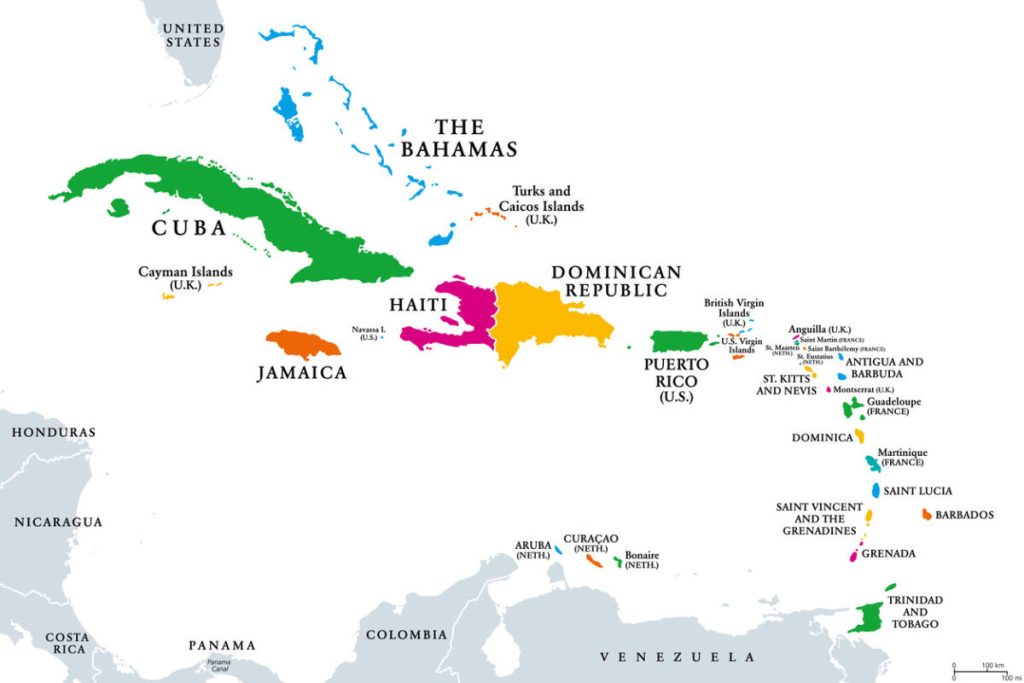
The question “what country is the Caribbean” is a common starting point for many, but from a financial and investment perspective, the answer is far more complex than a simple geographical correction. The Caribbean is not a single country; it is a sprawling archipelago of over 700 islands, 13 sovereign nations, and numerous overseas territories. For the sophisticated investor, the Caribbean represents a diverse economic ecosystem ranging from high-growth emerging markets to established global financial hubs.
Understanding the “money” behind the Caribbean requires looking past the postcard imagery of turquoise waters and white sands to analyze the regulatory frameworks, tax structures, and burgeoning sectors that define the region’s fiscal identity. Whether you are looking for wealth preservation, real estate appreciation, or the unique advantages of Caribbean citizenship, navigating this region requires a granular understanding of its individual players.

The Caribbean Economic Identity: Beyond a Single Entity
To understand the Caribbean from a monetary perspective, one must first dismantle the idea of a monolithic economy. The region is characterized by varying levels of development, currency stability, and industrial focus.
Understanding the CARICOM Framework
The Caribbean Community (CARICOM) is the primary economic engine of the region. Established to promote economic integration and cooperation among its members, CARICOM functions similarly to the European Union, albeit on a smaller scale. For investors, CARICOM provides a framework for the movement of capital and labor. Understanding the Revised Treaty of Chaguaramas is essential for businesses looking to scale across borders within the region, as it governs trade agreements and rights of establishment that can significantly lower the cost of doing business between member states.
The Dual Economy: Tourism and Financial Services
Most Caribbean economies operate on a “dual-pillar” system. The first pillar is tourism, which traditionally accounts for a significant portion of the GDP. However, the second pillar—financial services—is where the high-value activity occurs. Countries like the Cayman Islands, Bermuda, and the British Virgin Islands (BVI) have positioned themselves as global leaders in offshore banking, insurance, and hedge fund administration. This sector provides a level of economic resilience that separates the “high-income” Caribbean nations from those still reliant on agricultural exports or basic manufacturing.
Strategic Investing: Which Caribbean Country Offers the Best ROI?
When asking which “country” in the Caribbean is right for your portfolio, the answer depends entirely on your risk appetite and asset preference. The investment landscape is currently undergoing a shift from traditional hospitality plays to more diversified opportunities.
Real Estate Markets in the Bahamas and Cayman Islands
For those focused on wealth preservation and capital appreciation, the Bahamas and the Cayman Islands represent the “blue chip” stocks of Caribbean real estate. These jurisdictions offer tax neutrality, meaning there are no capital gains taxes, inheritance taxes, or income taxes for residents.
- The Cayman Islands: Specifically Grand Cayman, has seen a consistent rise in property values driven by a sophisticated legal system based on English Common Law and a booming professional services sector.
- The Bahamas: With its proximity to the United States, the Bahamas remains a top choice for luxury residential investment, particularly in gated communities like Albany or Lyford Cay, which attract ultra-high-net-worth individuals and offer robust secondary market liquidity.
Emerging Opportunities in Guyana and the Dominican Republic
For investors seeking aggressive growth, the “what country” question often leads to the southern and western edges of the region.
- Guyana: Currently the fastest-growing economy in the world due to massive offshore oil discoveries, Guyana is a frontier market undergoing a total structural transformation. The demand for infrastructure, commercial real estate, and logistics services is unprecedented.
- The Dominican Republic: Unlike many of its smaller neighbors, the DR has a diversified economy including mining, manufacturing, and a massive telecommunications sector. It offers a larger internal market and a government that is increasingly aggressive in courting foreign direct investment (FDI) through tax incentives in “Free Zones.”
Citizenship by Investment (CBI): Buying into the Region
One of the most unique financial products the Caribbean offers is Citizenship by Investment. For many global entrepreneurs, “what country is the Caribbean” is a question of which passport offers the best global mobility and fiscal residency benefits.
St. Kitts and Nevis: The Pioneer of Platinum Standards
St. Kitts and Nevis established the world’s first CBI program in 1984. From a financial planning perspective, a St. Kitts passport is more than a travel document; it is a tool for tax optimization and asset protection. The country has recently overhauled its regulations to maintain a “Platinum Standard,” focusing on high-integrity applicants. This makes it a preferred choice for those looking for long-term stability in their secondary citizenship.
Grenada and Dominica: Accessible Entry Points
Other nations have optimized their programs for different investor profiles.
- Grenada: Often chosen because its citizens are eligible for the E-2 Investor Visa in the United States, providing a backdoor for business owners looking to operate in the U.S. market.
- Dominica: Known for having one of the most cost-effective entry points for citizenship, Dominica uses its CBI funds to invest heavily in climate-resilient infrastructure, making it an ethical choice for ESG-conscious (Environmental, Social, and Governance) investors.
Digital Finance and the Future of Caribbean Money
While much of the world is still debating the utility of digital assets, the Caribbean has become a global laboratory for financial technology and digital currency.
The Rise of the “Sand Dollar” and CBDCs
The Bahamas made history by launching the “Sand Dollar,” the world’s first fully functional Central Bank Digital Currency (CBDC). This was not a move driven by trend-following, but by a practical need to provide financial services to remote islands where traditional brick-and-mortar banking is not viable. For fintech investors, the Caribbean offers a rare glimpse into a “cashless” future, providing data and use cases that are being studied by the IMF and the World Bank.
Fintech Innovation and Regulatory Sandboxes
Countries like Bermuda and Barbados have established “Regulatory Sandboxes.” These are frameworks that allow fintech companies to test new products—from blockchain-based insurance to cross-border payment systems—in a controlled environment with government oversight. This has attracted a wave of digital nomads and tech entrepreneurs who are moving their intellectual property and capital to the region, creating a new “Silicon Island” dynamic that is independent of traditional tourism cycles.
Risk Management and Wealth Preservation
Investing in the Caribbean is not without its challenges. To truly understand the region’s money, one must understand how to protect it from both local and global pressures.
Tax Neutrality and Offshore Banking Structures
The Caribbean’s reputation as a “tax haven” is evolving into a reputation for “tax neutrality.” The distinction is vital for compliance. Modern offshore centers in the Caribbean are now highly regulated and compliant with international standards like the Common Reporting Standard (CRS) and the Foreign Account Tax Compliance Act (FATCA). Using a Caribbean trust or an International Business Company (IBC) is a legitimate strategy for estate planning and asset protection, provided the investor maintains transparency with their home jurisdiction.
Mitigating Climate Risk in a High-Value Portfolio
No discussion of Caribbean finance is complete without addressing climate risk. For the real estate or infrastructure investor, “what country” also means “what elevation.” Smart money in the region is currently flowing into “climate-resilient” developments. This includes buildings constructed with advanced hurricane-rated materials and decentralized renewable energy grids. Insurance-linked securities (ILS), particularly in Bermuda, have become a sophisticated way for institutional investors to gain exposure to the region while hedging against natural disasters.

Conclusion: The Caribbean as a Strategic Financial Asset
The Caribbean is not a single country, but a multifaceted financial frontier. For the person asking “what country is the Caribbean,” the answer lies in the specific goals of their capital. If the goal is rapid, resource-driven growth, the answer might be Guyana. If the goal is sophisticated wealth management and tax neutrality, the answer is the Cayman Islands. For those seeking global mobility and a “Plan B,” the answer lies in the CBI programs of the Eastern Caribbean.
By viewing the region through the lens of money—ROI, tax efficiency, and digital innovation—it becomes clear that the Caribbean is one of the most dynamic areas for global investment in the 21st century. It is no longer just a place to spend money on a vacation; it is a place to put money to work.
aViewFromTheCave is a participant in the Amazon Services LLC Associates Program, an affiliate advertising program designed to provide a means for sites to earn advertising fees by advertising and linking to Amazon.com. Amazon, the Amazon logo, AmazonSupply, and the AmazonSupply logo are trademarks of Amazon.com, Inc. or its affiliates. As an Amazon Associate we earn affiliate commissions from qualifying purchases.