
In an age dominated by dazzling gadgets, ubiquitous software, and increasingly intelligent AI, it’s easy to view technology as a series of magical innovations. Yet, beneath every circuit board, every line of code, and every revolutionary algorithm lies a bedrock of fundamental truths: scientific principles. These aren’t just abstract academic concepts; they are the guiding laws and theories that dictate how the universe operates, and, by extension, how we can manipulate it to create the tools and systems that define our modern technological landscape. Understanding what scientific principles are is not merely an intellectual exercise; it’s essential to comprehending the very essence of technological development, its past, present, and future trajectory. Without a firm grasp of these principles, our understanding of technology remains superficial, missing the profound insights into why certain innovations succeed, why others fail, and how genuinely groundbreaking advancements are made.
The Bedrock of Understanding: Defining Scientific Principles
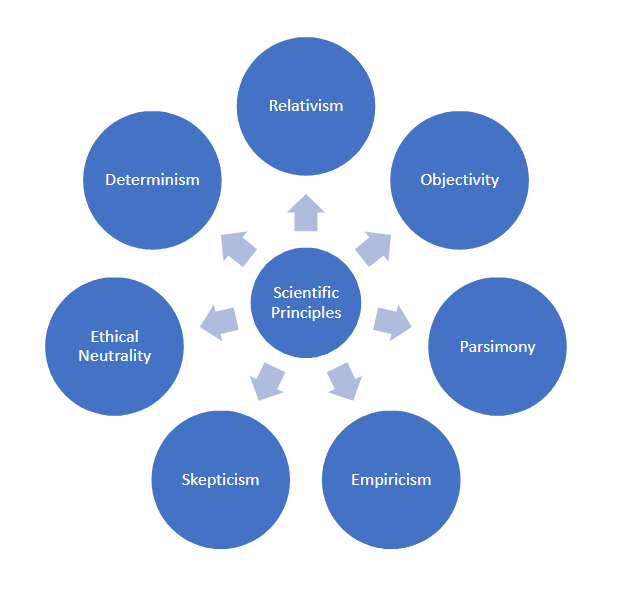
Scientific principles represent the most fundamental and universally accepted truths within various fields of science. They are the established rules governing natural phenomena, derived from rigorous observation, experimentation, and peer validation. Unlike mere hypotheses or theories that are still under extensive scrutiny, principles have withstood the test of time and countless attempts at refutation, earning their status as foundational knowledge.
Universal Truths and Empirical Evidence
At their core, scientific principles are statements of fact that describe how nature behaves under specific conditions, often expressed mathematically. These truths are not subjective opinions but objective realities, validated by empirical evidence. Whether it’s the Law of Conservation of Energy, the principles of electromagnetism, or the basic tenets of quantum mechanics, each principle has been repeatedly demonstrated through experiments and observations across diverse settings. This empirical foundation means that their validity doesn’t depend on belief or dogma but on repeatable, verifiable outcomes. For instance, the principles governing the flow of electricity, such as Ohm’s Law, are not debated; they are applied consistently to design every electronic circuit, from the simplest light bulb to the most complex supercomputer. This reliance on tangible, observable data makes scientific principles incredibly robust and a reliable basis for engineering and technological design.
Characteristics of Scientific Principles
Several key characteristics define scientific principles, distinguishing them from other forms of knowledge. Firstly, they possess universality, meaning they apply consistently across different contexts and locations within the universe. The laws of physics, for example, are expected to hold true whether on Earth or in distant galaxies. Secondly, they are inherently falsifiable – while highly robust, a true scientific principle must, in theory, be capable of being disproven by new, contradictory evidence, even if such evidence is extraordinarily rare. This openness to challenge is a hallmark of scientific rigor. Thirdly, they exhibit reproducibility; experiments designed to demonstrate a principle should yield similar results when conducted by different researchers under the same conditions. Finally, scientific principles offer powerful predictive capabilities, allowing scientists and engineers to forecast outcomes and design systems with a high degree of certainty. This predictive power is what makes them so invaluable in technology, enabling engineers to predict how a new material will behave or how a software algorithm will process data.
Evolution vs. Dogma
While highly stable, scientific principles are not immutable dogma. The scientific process is one of continuous refinement and, occasionally, revolutionary paradigm shifts. Newtonian mechanics, for instance, perfectly describes motion and gravity for everyday scales and speeds. However, with the advent of extreme conditions – very high speeds or strong gravitational fields – Einstein’s theories of relativity provided a more comprehensive and accurate description, expanding upon rather than entirely negating Newton’s work. This demonstrates that principles can evolve, becoming more refined or integrated into broader, more encompassing frameworks as our understanding of the universe deepens. This dynamic nature ensures that science remains a living, adapting body of knowledge, constantly seeking more accurate and complete descriptions of reality, which in turn fuels new technological possibilities.
From Abstract Concepts to Tangible Tech: The Application Pipeline
The leap from abstract scientific principles to tangible technological innovations is where theory meets practical application. Every piece of technology we interact with, from smartphones to medical devices, is a direct manifestation of one or more underlying scientific principles. Engineers and developers act as translators, interpreting these fundamental laws of nature into functional systems.
Physics: The Mechanics of the Digital World
Physics is arguably the most fundamental science underpinning modern technology. Principles of electricity and magnetism, discovered and codified over centuries, are the very foundation of electronics. Maxwell’s equations, for example, describe the behavior of electric and magnetic fields, explaining phenomena like radio waves, light, and the operation of motors and generators. Without these principles, semiconductors wouldn’t exist, microprocessors couldn’t compute, and data wouldn’t travel across networks. Similarly, principles of thermodynamics guide the design of cooling systems for data centers, energy efficiency in devices, and power generation. More recently, quantum mechanics – a field once considered purely theoretical – is now the basis for quantum computing, quantum cryptography, and advanced materials science, promising a revolution in computational power and secure communication beyond our current capabilities. The precise manipulation of quantum states allows for entirely new forms of information processing, directly translating complex physical phenomena into unprecedented technological potential.
Chemistry and Materials Science: Building Blocks of Innovation
Beyond physics, the principles of chemistry and materials science are equally critical. Understanding chemical bonding, reaction kinetics, and material properties allows for the creation of innovative components. From the lithium-ion batteries powering our mobile devices to the liquid crystal displays and OLED screens that bring our digital content to life, chemical principles are at play. Advances in materials science, driven by a deep understanding of molecular structures and their interactions, lead to stronger, lighter, more conductive, or more energy-efficient materials. This includes developing novel semiconductors, creating advanced composites for aerospace, or even designing biocompatible materials for medical implants. The continuous pursuit of new materials with specific properties, guided by chemical and physical principles, directly expands the frontiers of what technology can achieve in terms of performance, durability, and sustainability.
Biology and Life Sciences: Bio-Inspired Computing and AI
While perhaps less direct than physics or chemistry, principles from biology and life sciences are increasingly influencing technological development, particularly in artificial intelligence and robotics. The study of the human brain, for instance, and its underlying biological principles, has inspired the architecture of neural networks and the development of deep learning algorithms that power much of today’s AI. Evolutionary algorithms, another branch of AI, mimic principles of natural selection to optimize solutions to complex problems. Beyond AI, principles of biological design inform the creation of bio-inspired robots that can navigate complex terrains or perform delicate tasks. Biomedical engineering, of course, directly applies biological and physiological principles to develop diagnostic tools, prosthetic limbs, and drug delivery systems, bridging the gap between life sciences and advanced tech solutions for human health.
Driving Innovation and Problem-Solving in Technology
Scientific principles are not just descriptive; they are prescriptive, offering a powerful framework for driving innovation and solving complex technical challenges. They transform guesswork into informed design and trial-and-error into systematic progress.
Systematic Design and Engineering
For engineers, scientific principles provide the fundamental rules for designing and building new technologies. Instead of randomly combining components, engineers leverage principles of mechanics, electromagnetism, and thermodynamics to predict how a system will behave, optimize its performance, and ensure its reliability. For example, designing a bridge or a skyscraper relies heavily on principles of structural engineering and material science to ensure safety and stability. Similarly, in software development, principles of computer science, such as algorithm efficiency and data structures, guide the creation of robust, scalable, and high-performance applications. This systematic approach, grounded in established scientific truths, significantly reduces development time and resources, leading to more efficient and effective technological solutions.

Predictive Power and Risk Mitigation
One of the most valuable aspects of scientific principles is their predictive power. By understanding the underlying principles, engineers can anticipate how a system will react under different conditions, identify potential failure points, and mitigate risks before they materialize. In aerospace engineering, for instance, principles of aerodynamics and fluid dynamics allow designers to predict an aircraft’s lift and drag, ensuring its safe and efficient flight. In cybersecurity, understanding cryptographic principles enables the design of secure communication protocols that are resistant to attack. This ability to foresee outcomes is crucial for developing technologies that are not only innovative but also reliable, safe, and robust, preventing costly failures and protecting users from harm. The entire process of testing and validation in tech is predicated on verifying that a product adheres to the scientific principles it’s supposed to embody.
The Iterative Cycle of Discovery and Application
Technology and science are locked in a symbiotic, iterative cycle. New scientific discoveries, often enabled by previous technological advancements, open up entirely new avenues for technological application. For instance, the invention of the electron microscope (a technological feat) allowed scientists to observe materials at a nanoscale, leading to new discoveries in materials science that, in turn, fueled the development of nanotechnology. Conversely, the demands of technology often push the boundaries of scientific inquiry. The quest for faster processors drives research into new physics, such as superconductivity or quantum effects. This continuous feedback loop ensures that both fields perpetually enrich each other, accelerating human progress and driving an endless cycle of innovation.
The Ethics and Responsibility of Principle-Driven Tech
As technology becomes increasingly powerful and pervasive, the ethical implications of its development and deployment grow. A deep understanding of scientific principles is not just about building better tech; it’s also about building responsible tech, ensuring that innovation serves humanity without unintended negative consequences.
Ensuring Reliability and Safety
Adherence to scientific principles is paramount for ensuring the reliability and safety of technological products. From the structural integrity of autonomous vehicles to the accuracy of medical diagnostic tools, every critical system must be designed and tested according to established scientific laws. Deviating from these principles, whether through oversight or intentional shortcut, can have catastrophic consequences. Ethical engineering mandates rigorous testing and validation, ensuring that technologies perform as expected and do not pose undue risks to users or society. This commitment to principle-driven design fosters trust and prevents harm, underscoring the profound responsibility that comes with technological power.
Navigating Emerging Technologies
New technologies, such as advanced AI, genetic engineering, and quantum computing, present complex ethical dilemmas that demand careful consideration. Understanding the underlying scientific principles of these fields is crucial for assessing their potential impacts – both beneficial and harmful. For example, a grasp of the principles of machine learning helps in understanding biases in AI algorithms and developing strategies for fairness and transparency. Knowledge of genetic principles is essential for ethical discussions around CRISPR technology and its implications for human life. Without this foundational understanding, public discourse and policy-making around emerging tech risk being ill-informed, leading to decisions that are either overly cautious or dangerously permissive.
Fostering Critical Thinking in a Post-Truth Era
In an era saturated with misinformation and pseudo-science, particularly amplified through digital platforms, the ability to think critically, grounded in scientific principles, is more important than ever. Understanding how science works – the reliance on evidence, reproducibility, and falsifiability – equips individuals to discern credible information from unsubstantiated claims. This is vital in evaluating technological advancements, understanding their limitations, and making informed decisions as consumers, citizens, and policymakers. Promoting a culture of scientific literacy helps in resisting technological hype and ensuring that conversations about tech are based on facts rather than fear or sensationalism.
The Future: Unlocking New Frontiers with Foundational Knowledge
The ongoing exploration and application of scientific principles will continue to unlock new frontiers in technology, addressing humanity’s most pressing challenges and creating unprecedented opportunities. The future of tech is not about abandoning these fundamentals but about deepening our understanding and finding novel ways to apply them.
Pushing Boundaries in AI and Machine Learning
The next generation of AI and machine learning will rely heavily on a deeper integration of principles from cognitive science, neuroscience, and advanced statistics. Moving beyond brute-force data processing, future AI will incorporate more nuanced understandings of causality, common sense, and human-like reasoning, drawing insights from biological and psychological principles of intelligence. This will lead to more robust, explainable, and truly intelligent AI systems that can adapt and learn in complex, real-world environments with greater autonomy and precision.
Quantum Computing and Beyond
Quantum computing, built upon the enigmatic principles of quantum mechanics, is still in its infancy but promises to revolutionize fields from medicine and materials science to cryptography and financial modeling. As researchers develop more stable qubits and powerful quantum algorithms, the ability to solve problems intractable for classical computers will open up possibilities previously confined to science fiction. Beyond quantum, exploring principles from fields like theoretical physics or exotic materials could lead to entirely new paradigms of computation and energy.
Sustainable Tech and Climate Solutions
Facing global climate change and resource scarcity, future technology must be fundamentally sustainable. This will involve applying principles of thermodynamics, ecology, and materials science to design truly circular economies, develop advanced renewable energy systems, and create technologies that minimize environmental impact. From carbon capture technologies to highly efficient energy storage and novel approaches to waste management, scientific principles will be the blueprint for a greener, more sustainable technological future, ensuring that progress benefits both humanity and the planet.

Conclusion
Scientific principles are the invisible architects of our technological world. They are not merely academic curiosities but the fundamental rules that govern how everything works, providing the indispensable framework for innovation, problem-solving, and responsible development in the tech sector. From the intricate circuits of a microchip to the vast algorithms of artificial intelligence, every technological marvel owes its existence to a deep understanding and rigorous application of these foundational truths. As we continue to push the boundaries of what’s possible, a continued reverence for, and mastery of, scientific principles will remain the most critical ingredient for unlocking the next generation of technological breakthroughs, ensuring that our advancements are not just impressive, but also reliable, ethical, and truly transformative.
aViewFromTheCave is a participant in the Amazon Services LLC Associates Program, an affiliate advertising program designed to provide a means for sites to earn advertising fees by advertising and linking to Amazon.com. Amazon, the Amazon logo, AmazonSupply, and the AmazonSupply logo are trademarks of Amazon.com, Inc. or its affiliates. As an Amazon Associate we earn affiliate commissions from qualifying purchases.