
In the intricate world of professional baseball, statistics are more than just numbers; they are the language through which player value, team performance, and ultimately, significant financial decisions are communicated. Among the pantheon of offensive metrics, the “Runs Batted In” (RBI) stands out as a deceptively simple yet profoundly influential figure. While initially appearing to be a purely sporting concept, understanding RBI is crucial for anyone delving into the economics of baseball, from player contracts and team valuations to the burgeoning industries of sports betting and fantasy leagues. This article will unravel the definition of RBI and then meticulously explore its multifaceted financial implications within the massive ecosystem of professional sports.

The Foundation: Understanding Runs Batted In (RBI)
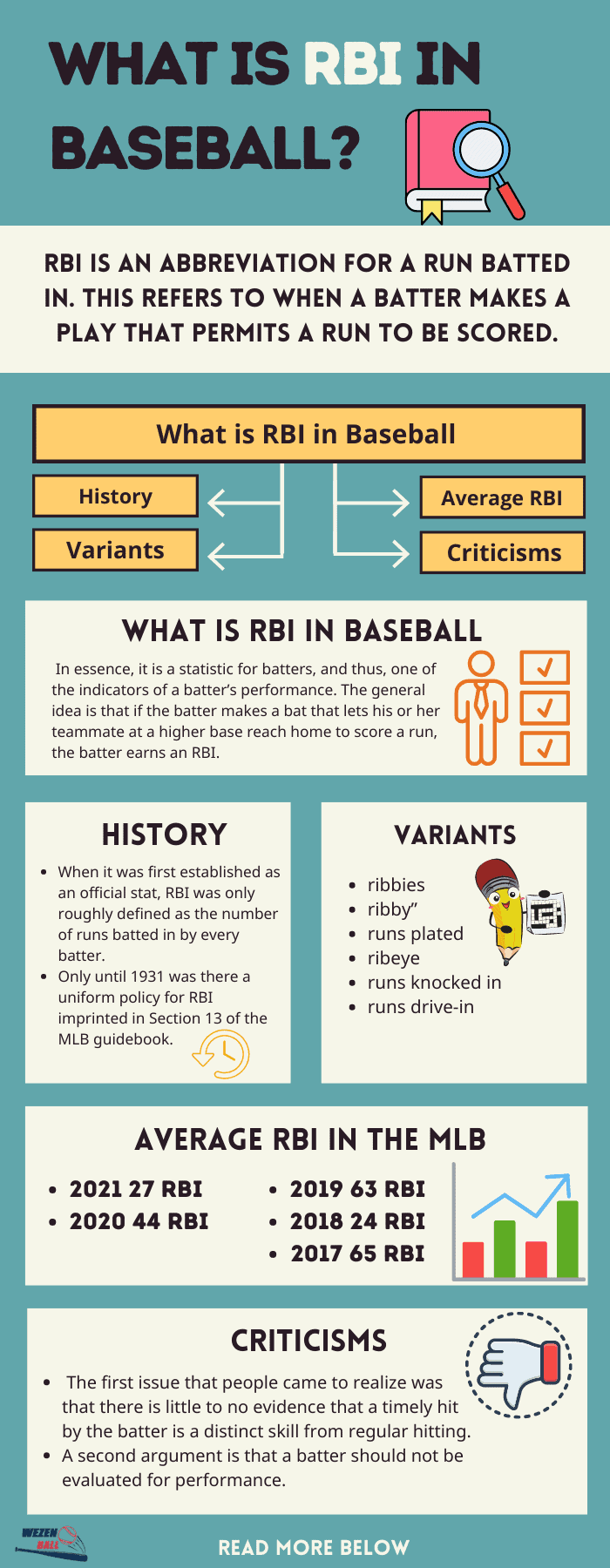
To grasp the financial gravity of RBI, one must first understand its core meaning and how it is tabulated. It represents a player’s ability to drive in runs for their team, a direct measure of their offensive contribution to scoring.
Defining Runs Batted In
At its most basic, a Run Batted In (RBI) is credited to a batter when their action results in a runner on base scoring a run. This typically happens through a base hit (single, double, triple, home run), but can also occur via a sacrifice fly, a bases-loaded walk, a bases-loaded hit-by-pitch, or sometimes even an error if the official scorer determines the run would have scored anyway. The essence of an RBI is that the batter directly facilitates their team adding a point to the scoreboard. It’s a key indicator of a player’s clutch performance and their capacity to contribute meaningfully to the team’s primary objective: scoring more runs than the opponent.
How RBIs are Credited and Why They Matter
The official scoring rules dictate precisely when an RBI is awarded. For instance, a batter receives an RBI for a home run hit with runners on base, as they drove in themselves and all preceding runners. If a player hits a single that brings home a runner from second base, they get an RBI. However, if a runner scores due to a double play where the batter hits into the double play, no RBI is credited, as the batter’s action was not solely responsible for the run. This nuance highlights that an RBI is meant to measure offensive productivity and the ability to convert opportunities into runs.
For decades, RBIs have been a cornerstone statistic, often cited alongside batting average and home runs as the “triple crown” of offensive achievement. While modern analytics have introduced more sophisticated metrics, RBI retains significant weight due to its direct correlation with team success and its intuitive appeal to fans, media, and, crucially, financial decision-makers within the sport.
RBI as a Cornerstone of Player Valuation and Contracts
In the high-stakes world of professional baseball, a player’s financial worth is meticulously calculated, and RBI figures play a pivotal role in these assessments, directly influencing multi-million dollar contracts and career trajectories.
Salary Negotiations and Arbitration
For players in their pre-free agency years, particularly those eligible for salary arbitration, RBI numbers are a formidable bargaining chip. Arbitration panels often weigh traditional statistics heavily, and a player consistently putting up high RBI totals can command a significantly higher salary than peers with similar batting averages but fewer RBIs. This is because RBIs are seen as a direct measure of impact; a player who reliably drives in runs is undeniably valuable to a team’s win-loss record. Agents leverage these figures to argue for substantial raises, highlighting their client’s indispensable contribution to the team’s offensive output and, by extension, its financial performance through ticket sales and fan engagement.
Free Agency Market Dynamics
When players reach free agency, their RBI statistics become a cornerstone of their market value. Teams looking to invest hundreds of millions in a marquee hitter will scrutinize their RBI consistency and ceiling. A proven RBI producer, especially one who can hit in the heart of the order, is a commodity that commands premium prices. Teams are essentially “investing” in a player’s future run production, and a track record of high RBIs signals a lower-risk investment with a higher potential return in terms of on-field success and subsequent revenue generation for the franchise. The bidding wars for elite RBI hitters are a clear testament to their perceived financial value.
Performance Bonuses and Incentives
Beyond base salaries, many player contracts include performance incentives directly tied to statistical achievements, with RBI milestones frequently appearing as benchmarks. For example, a player might earn an additional bonus for reaching 90, 100, or 110 RBIs in a season. These clauses incentivize performance and offer players additional income streams, while also aligning their personal financial goals with the team’s objective of scoring runs. From a financial management perspective, these bonuses represent a form of “pay-for-performance” model, ensuring that significant payouts are linked to tangible on-field contributions.
Beyond the Contract: RBI’s Influence on Endorsements and Personal Wealth
The financial impact of a player’s RBI count extends well beyond their base salary and performance bonuses, affecting their personal brand and opportunities for generating additional income.

Marketability and Sponsorship Deals
High RBI totals contribute significantly to a player’s public profile and marketability. Players who consistently drive in runs are often perceived as “clutch,” reliable, and integral to their team’s success. This positive image makes them attractive to corporate sponsors seeking endorsers. Brands want to align themselves with winners and impactful performers, and a player leading their league in RBIs, or consistently among the top, is an ideal candidate. Endorsement deals for sporting goods, apparel, food and beverage, and other consumer products can add millions to a player’s annual income, sometimes surpassing their baseball salary. In essence, RBIs contribute to building a powerful personal brand that can be monetized.
The Halo Effect on Merchandise Sales
Star players with impressive RBI numbers also drive merchandise sales. Fans want to wear the jerseys of players who make a difference, who deliver in crucial situations. A player known for hitting game-winning home runs and driving in clutch runs will see their jersey, apparel, and memorabilia fly off the shelves. While a portion of these sales benefits the team, a player’s individual financial portfolio often benefits indirectly through increased fame and subsequent endorsement opportunities, appearance fees, and other income-generating ventures tied to their popularity.
Career Longevity and Post-Playing Earnings
A reputation built on consistent RBI production can extend a player’s career, even into their later years. Teams are more willing to sign an aging veteran who can still reliably drive in runs, valuing their experience and proven ability. A longer career means more accumulated salary and more time to build a robust financial foundation. Furthermore, players with illustrious careers marked by high RBI totals are more likely to transition into lucrative post-playing careers in broadcasting, coaching, or executive roles, leveraging their established reputation and recognition for continued financial success.
The Business of Baseball: How RBIs Influence Team Finances
RBI production isn’t just about individual player wealth; it’s a critical factor in the financial health and valuation of the entire baseball franchise, impacting everything from attendance to league-wide economic activity.
Impact on Attendance and Fan Engagement
Winning teams attract more fans, and scoring runs is fundamental to winning. Teams with potent offenses, featuring players known for driving in runs, generate more excitement and draw larger crowds. Increased attendance translates directly into higher ticket sales, concession revenue, merchandise sales, and parking fees. A team that struggles to score runs, regardless of other attributes, will often see declining attendance and a corresponding drop in revenue. Investing in high-RBI players is therefore a strategic financial decision for team ownership, aiming to maximize game-day revenue and cultivate a loyal, engaged fan base.
Franchise Valuation and Investment Potential
For potential investors or owners looking to assess the value of a baseball franchise, the team’s ability to consistently put a winning product on the field – heavily influenced by its offensive capabilities and RBI production – is a significant factor. A team with a strong core of RBI producers is more likely to be competitive, generate higher revenues, and appreciate in value over time. Understanding the offensive engine of a team, where RBIs are a key metric, helps in evaluating the long-term financial viability and return on investment (ROI) of owning a professional baseball club. High RBI numbers signal a productive asset that contributes to sustained success and financial growth.
Sports Betting and Fantasy Sports Economics
The rise of legal sports betting and fantasy sports has added another layer of financial significance to RBI statistics. For sports bettors, a player’s projected RBI count or their historical performance in RBI situations can directly influence betting lines and individual player prop bets. In fantasy baseball, RBIs are a core category, and drafting players with high RBI potential is crucial for success. These industries collectively represent billions of dollars, and the statistical performance of players, particularly in categories like RBI, directly fuels their economic engine, creating value for platforms, bettors, and participants alike.
Strategic Financial Planning for Players and Teams
Recognizing the monetary weight of RBIs, both players and teams engage in strategic financial planning to maximize their returns and mitigate risks.
Maximizing Player Return on Investment (ROI)
From a player’s perspective, strategically enhancing their RBI opportunities and performance is a direct path to greater earnings. This might involve refining their plate approach, focusing on situational hitting, or even seeking a move to a team where they are more likely to hit in a run-producing lineup spot. For teams, the “return on investment” (ROI) of a high-salaried player is often measured by their ability to generate wins, which is inextricably linked to their RBI output. Teams invest heavily in scouting and analytics to identify players who can consistently produce RBIs, viewing them as valuable assets.
Mitigating Risk with Performance-Based Contracts
Both sides use RBIs in contract structuring to mitigate financial risk. Teams might offer contracts with lower guaranteed money but substantial RBI-based incentives to protect themselves if a player underperforms, while still rewarding exceptional production. For players recovering from injury or looking to prove their value, a performance-based deal with RBI milestones can offer a pathway to significant earnings if they perform well, reducing the risk for the team and providing a high-upside opportunity for the player.
Long-term Financial Health and Team Building
Ultimately, a team’s long-term financial health is intertwined with its ability to consistently build competitive rosters. A core of reliable RBI producers is fundamental to this strategy. By developing or acquiring players who can drive in runs, teams secure their on-field success, which in turn fuels their revenue streams, enhances franchise value, and allows for sustained investment in talent. For players, understanding the financial impact of their RBI performance empowers them to make informed career decisions, from contract negotiations to building their personal brand, ensuring their skills translate into lasting financial prosperity.
In conclusion, “Runs Batted In” in baseball transcends its statistical definition to become a powerful financial indicator. It is a metric that profoundly influences player salaries, endorsement opportunities, team revenues, and the broader economic landscape of professional sports. For those navigating the intersection of sports and finance, understanding RBI is not merely about appreciating the game; it’s about comprehending a critical driver of value in a multi-billion dollar industry.
aViewFromTheCave is a participant in the Amazon Services LLC Associates Program, an affiliate advertising program designed to provide a means for sites to earn advertising fees by advertising and linking to Amazon.com. Amazon, the Amazon logo, AmazonSupply, and the AmazonSupply logo are trademarks of Amazon.com, Inc. or its affiliates. As an Amazon Associate we earn affiliate commissions from qualifying purchases.