
In an era increasingly defined by innovation, automation, and digital advancement, it’s easy to get lost in the dazzling display of finished products: sophisticated AI, intuitive apps, seamless gadgets, and robust digital security systems. Yet, behind every complex piece of technology lies a universal language, a foundational discipline that underpins its very existence: mathematics. And at the heart of mathematics, driving its utility and power, are formulas. But what exactly are math formulas? Far from being mere abstract symbols confined to textbooks, they are concise expressions of relationships, rules, and principles that dictate how systems behave, how data transforms, and how logic unfolds. They are the invisible engines powering the technological world, making sense of vast amounts of information, enabling predictive capabilities, and ensuring the reliability of our digital infrastructure. Understanding them isn’t just an academic exercise; it’s a deep dive into the foundational logic that engineers, developers, and data scientists leverage daily to build the future. This article will explore the nature of math formulas and illuminate their indispensable role across the diverse landscape of technology.
The Core Anatomy of a Math Formula
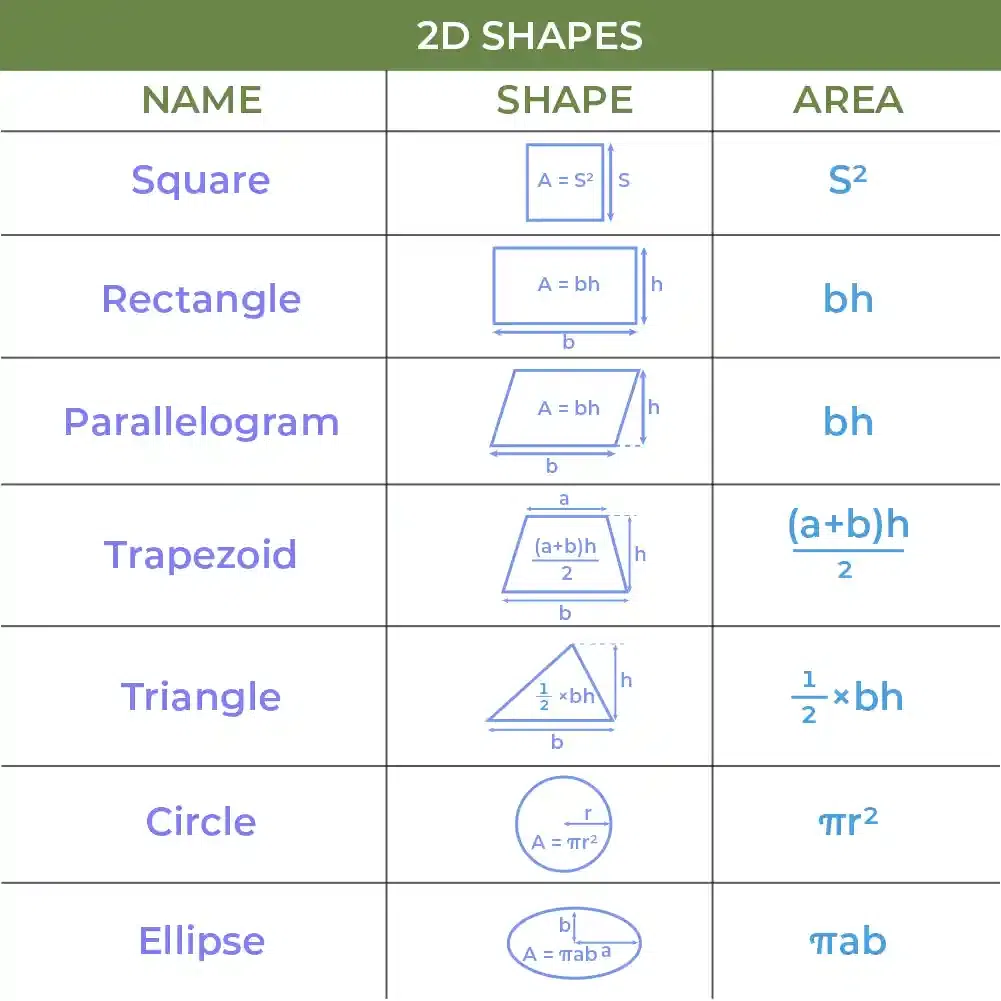
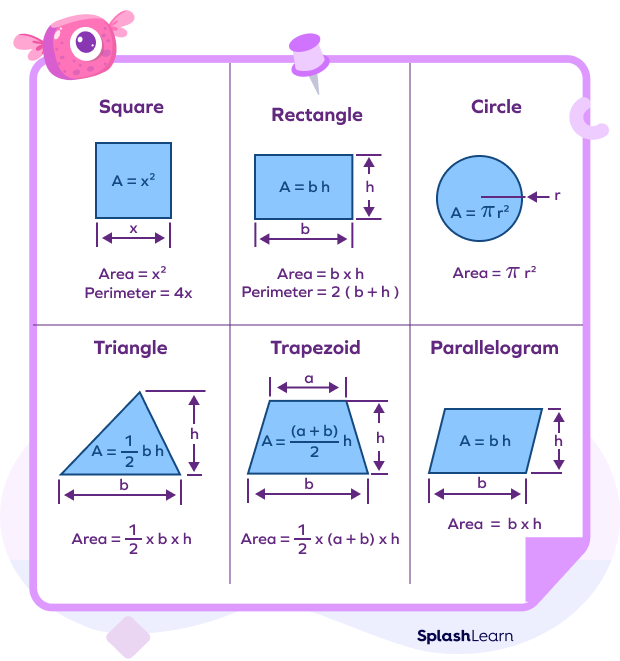
At its most fundamental level, a math formula is a concise way to express a relationship or to calculate a value using symbols and operators. Think of it as a set of instructions that, when followed, always yield a predictable result. This predictability is precisely why they are so vital in technology, where consistency and accuracy are paramount.
Variables, Constants, and Operators
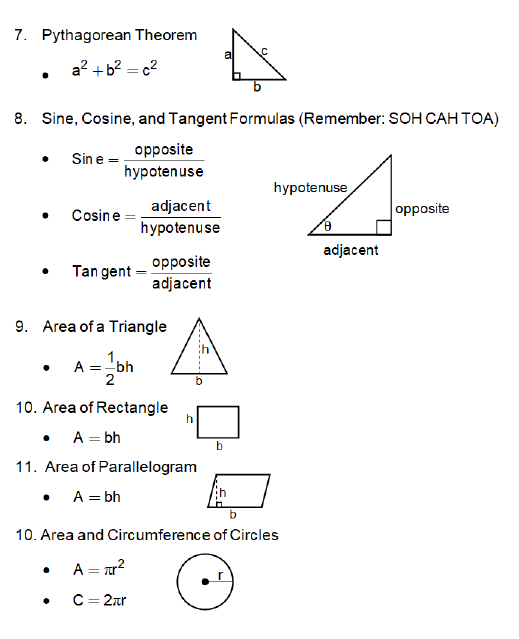
Every formula is constructed from a few key components. Variables are symbolic placeholders, typically letters like ‘x’, ‘y’, or ‘t’, that represent quantities that can change or are unknown. For instance, in a formula calculating projectile motion, ‘t’ might represent time, which continuously changes. Constants, conversely, are fixed values that do not change, such as pi (π ≈ 3.14159) in geometry or the speed of light (c) in physics. These provide stability and known parameters within calculations. Finally, operators are the verbs of a formula – they dictate the actions to be performed. Common operators include addition (+), subtraction (-), multiplication (*), division (/), exponents (^), and more complex functions like logarithms or trigonometric functions (sin, cos, tan). Together, these elements form a powerful and universally understood language that transcends spoken barriers.
Expressing Relationships and Logic
Beyond mere calculation, formulas serve as elegant expressions of underlying relationships and logical structures. Consider Ohm’s Law (V = I * R), which relates voltage (V), current (I), and resistance (R) in an electrical circuit. This single formula encapsulates a fundamental principle of electronics. In technology, formulas are used to define how inputs map to outputs, how data structures are organized, or how algorithms make decisions. They are the blueprints for logical processes, allowing engineers to design systems that behave predictably under varying conditions. From the simple algebraic formulas used in basic programming loops to the differential equations modeling complex physical phenomena in simulations, each formula provides a precise, unambiguous statement of reality or a desired outcome.
From Abstract to Concrete Solutions
While mathematical formulas can appear abstract, their true power lies in their ability to translate theoretical concepts into concrete, actionable solutions. A formula for calculating cryptographic hashes might seem intimidatingly complex on paper, but it directly translates into the secure transmission of data across the internet. An equation describing the decay rate of a neural network’s learning rate directly impacts how effectively an AI system learns from data. This bridge from the abstract world of mathematics to the tangible world of functional technology is where formulas truly shine, enabling the creation of software, hardware, and algorithms that shape our daily lives.
Formulas as the Language of Software and Algorithms
The digital world, at its core, is a symphony of mathematical logic and processes. Every line of code, every function executed, and every algorithm performed relies heavily on mathematical formulas to define its behavior, ensure its efficiency, and achieve its intended purpose.
Building Blocks of Code and Logic
Programming languages, while appearing as human-readable text, compile down into instructions that are fundamentally mathematical. Simple arithmetic operations (+, -, *, /) are direct implementations of basic formulas. Conditional statements (if-then-else) are based on Boolean logic, a system of mathematical logic that uses true/false values. Loops (for, while) iterate through sequences based on mathematical bounds or conditions. More complex programming constructs, like object-oriented programming principles, leverage underlying mathematical concepts of set theory and relations. Developers routinely use formulas to manipulate data, perform calculations, and control program flow, making them indispensable building blocks for any software application.
Efficiency and Optimization in Programming
Beyond just functionality, math formulas are crucial for optimizing software performance. When an algorithm is designed, its efficiency (how fast it runs and how much memory it uses) is often described using mathematical notation, such as Big O notation (e.g., O(n log n)). This notation, rooted in mathematical functions, allows developers to predict how an algorithm will scale with increasing data input. Choosing the right algorithm for a task often means selecting the one whose mathematical formula for efficiency offers the best performance profile. From sorting algorithms to search functions, the mathematical underpinnings guide the design of faster, more resource-efficient code.
Data Structures and Algorithmic Complexity
Data structures, such as arrays, linked lists, trees, and graphs, are fundamental to organizing information in software. The operations performed on these structures (insertion, deletion, search) are often governed by formulas that define their complexity and behavior. For example, the balanced structure of a binary search tree relies on mathematical properties to ensure efficient lookups. Network routing algorithms use graph theory, a branch of mathematics, to find the shortest path between two points. Understanding the mathematical formulas behind these structures and algorithms allows programmers to design robust, scalable, and high-performing systems that can handle the massive amounts of data processed by modern applications.
Powering Artificial Intelligence and Machine Learning
Perhaps nowhere is the omnipresence of math formulas more evident and impactful than in the burgeoning fields of Artificial Intelligence (AI) and Machine Learning (ML). These technologies are not just inspired by mathematics; they are constructed entirely from intricate mathematical models and algorithms expressed through formulas.
Linear Algebra for Data Representation
At the heart of most AI systems, particularly those dealing with large datasets, lies linear algebra. Data, whether it’s images, text, or numerical sensor readings, is often represented as vectors and matrices – mathematical structures that linear algebra provides the tools to manipulate. Formulas from linear algebra allow AI models to perform operations like scaling, rotation, and transformation of data, which are crucial for tasks like image recognition, natural language processing, and recommendation systems. Understanding dot products, matrix multiplication, and eigenvalue decomposition isn’t just academic; it’s essential for comprehending how deep learning models process and learn from information.
Calculus for Optimization and Learning
Machine learning models learn by adjusting their internal parameters to minimize errors and improve accuracy. This process of optimization is fundamentally driven by calculus. Formulas for derivatives and gradients are used to calculate how a model’s error changes with respect to its parameters. Algorithms like gradient descent, a cornerstone of neural network training, rely entirely on these calculus-based formulas to iteratively tweak the model’s weights and biases, guiding it towards the optimal solution. Without calculus, the ability of AI to learn from data and adapt its behavior would be severely limited, if not impossible.
Probability and Statistics for Predictive Models
Predictive analytics, a key component of AI, heavily leans on probability theory and statistics. Formulas for probability distributions (e.g., Gaussian distribution), statistical significance, regression analysis, and Bayesian inference are used to build models that can forecast future events, classify data, or make informed decisions under uncertainty. From spam detection to medical diagnosis and financial forecasting, AI systems utilize these mathematical formulas to quantify uncertainty, identify patterns in noisy data, and generate predictions with measurable confidence levels. These formulas allow AI to not only process information but also to infer, generalize, and make probabilistic judgments about the world.
Formulas in Digital Security and Data Encryption
In an age where data breaches are rampant and digital privacy is paramount, the security of our information relies on sophisticated mechanisms built upon robust mathematical principles. Math formulas are the secret sauce behind the strong cryptographic algorithms that protect our communications, transactions, and personal data.
Cryptographic Algorithms and Number Theory
Digital security hinges on the difficulty of reversing certain mathematical operations, a concept primarily rooted in number theory. Formulas derived from prime numbers, modular arithmetic, and elliptic curves form the backbone of modern encryption techniques like RSA, AES, and ECC. These cryptographic algorithms use intricate mathematical formulas to transform plaintext into ciphertext, making it virtually impossible for unauthorized parties to decipher without the correct key. The strength of this security lies in the computational complexity of solving these mathematical problems, ensuring that breaking the encryption would take an impractically long time even for supercomputers.
Hashing Functions and Data Integrity
Beyond encryption, math formulas are vital for ensuring data integrity and authentication through hashing functions. A hash function takes an input (data of any size) and, using a specific mathematical formula, produces a fixed-size string of characters, known as a hash value or digest. This process is one-way – it’s computationally infeasible to reconstruct the original data from its hash. Formulas for hashing algorithms like SHA-256 are designed so that even a tiny change in the input data results in a drastically different hash value. This property makes them essential for verifying data integrity, digital signatures, and password storage, providing a mathematical guarantee that data has not been tampered with.
Protecting Information in the Digital Age
The continuous evolution of digital threats necessitates a constant arms race in cryptographic research, which is fundamentally a mathematical pursuit. New security protocols, secure communication channels, and identity verification systems are all developed and validated using advanced mathematical formulas. Whether it’s securing online banking transactions, protecting sensitive government data, or ensuring the privacy of our messages, mathematical formulas provide the theoretical framework and practical tools to build resilient digital security architectures that safeguard information in an increasingly interconnected and vulnerable world.
From Data Analysis to Scientific Computing
The utility of math formulas extends far beyond the core pillars of software and AI, permeating every aspect of technology where data is processed, understood, and used to drive innovation.
Statistical Formulas for Insight Generation
In the age of big data, extracting meaningful insights from vast datasets is crucial for businesses, scientific research, and policy-making. Statistical formulas are the primary tools for this endeavor. From calculating averages, standard deviations, and correlations to performing complex regression analyses, statistical formulas allow data scientists and analysts to identify trends, make inferences, and build predictive models. These insights, derived from mathematical formulas, inform strategic decisions in everything from marketing campaigns and product development to urban planning and climate modeling.
Simulation and Modeling in Engineering
Engineers across various disciplines rely on mathematical formulas to create sophisticated simulations and models. Whether designing a new aircraft, optimizing a power grid, or predicting the behavior of materials under stress, differential equations, finite element analysis, and other mathematical techniques are used to build virtual representations of physical systems. These formulas allow engineers to test designs, identify potential flaws, and refine performance without the need for expensive and time-consuming physical prototypes, significantly accelerating the pace of innovation in fields like aerospace, automotive, and civil engineering.
Driving Innovation Across Industries
The applications of math formulas are truly ubiquitous. In finance, formulas drive algorithmic trading, risk assessment, and derivatives pricing. In healthcare, they power medical imaging, drug discovery simulations, and epidemiological models. In telecommunications, they optimize network routing and signal processing. Even in areas like computer graphics and animation, complex mathematical formulas are used to render realistic textures, lighting, and character movements. Across every industry leveraging technology, mathematical formulas are the fundamental instruments enabling analysis, prediction, optimization, and the creation of entirely new capabilities.
Conclusion
Math formulas are far more than intimidating equations; they are the concise, powerful expressions of logic and relationships that form the very bedrock of modern technology. From the fundamental operations of software algorithms to the complex learning processes of artificial intelligence, from the impenetrable security of encrypted communications to the insightful analytics driving data-driven decisions, formulas are the unseen architects of our digital world. They translate abstract concepts into functional realities, allowing engineers, developers, and scientists to build, innovate, and secure the technologies that define our present and shape our future. To truly understand technology, one must appreciate the elegant, indispensable language of math formulas that makes it all possible. Their pervasiveness is a testament to their universal utility and enduring power, making them the silent, yet profoundly impactful, heroes of the technological revolution.
aViewFromTheCave is a participant in the Amazon Services LLC Associates Program, an affiliate advertising program designed to provide a means for sites to earn advertising fees by advertising and linking to Amazon.com. Amazon, the Amazon logo, AmazonSupply, and the AmazonSupply logo are trademarks of Amazon.com, Inc. or its affiliates. As an Amazon Associate we earn affiliate commissions from qualifying purchases.