
In the intricate world of business finance and human resource management, precision in measurement is paramount. Among the many metrics organizations track, the Full-Time Equivalent (FTE) stands out as a fundamental concept, serving as a critical cornerstone for strategic planning, budgeting, and operational efficiency. Far more than a simple headcount, FTEs provide a standardized way to quantify employee workload and resource allocation, enabling businesses to make informed decisions that impact their bottom line and long-term sustainability.
Understanding what an FTE is, how it’s calculated, and its diverse applications is essential for anyone involved in managing a business, from nascent startups to multinational corporations. This comprehensive guide will demystify the concept of FTEs, explore their profound significance in financial management and workforce planning, delve into their practical applications across various industries, and highlight best practices for leveraging this powerful metric effectively. For businesses aiming for fiscal prudence and optimized resource deployment, mastering FTEs is not just an advantage—it’s a necessity.
The Core Concept of FTEs: Definition and Calculation
At its heart, a Full-Time Equivalent (FTE) is a unit of measure that expresses the workload or employment status of an individual or group as if they were full-time employees. It normalizes diverse work schedules, from full-time to part-time, seasonal, and contractual roles, into a single, comparable metric. This standardization is crucial because simply counting “heads” can be misleading when assessing labor costs, productivity, or regulatory compliance.
Defining a Full-Time Equivalent
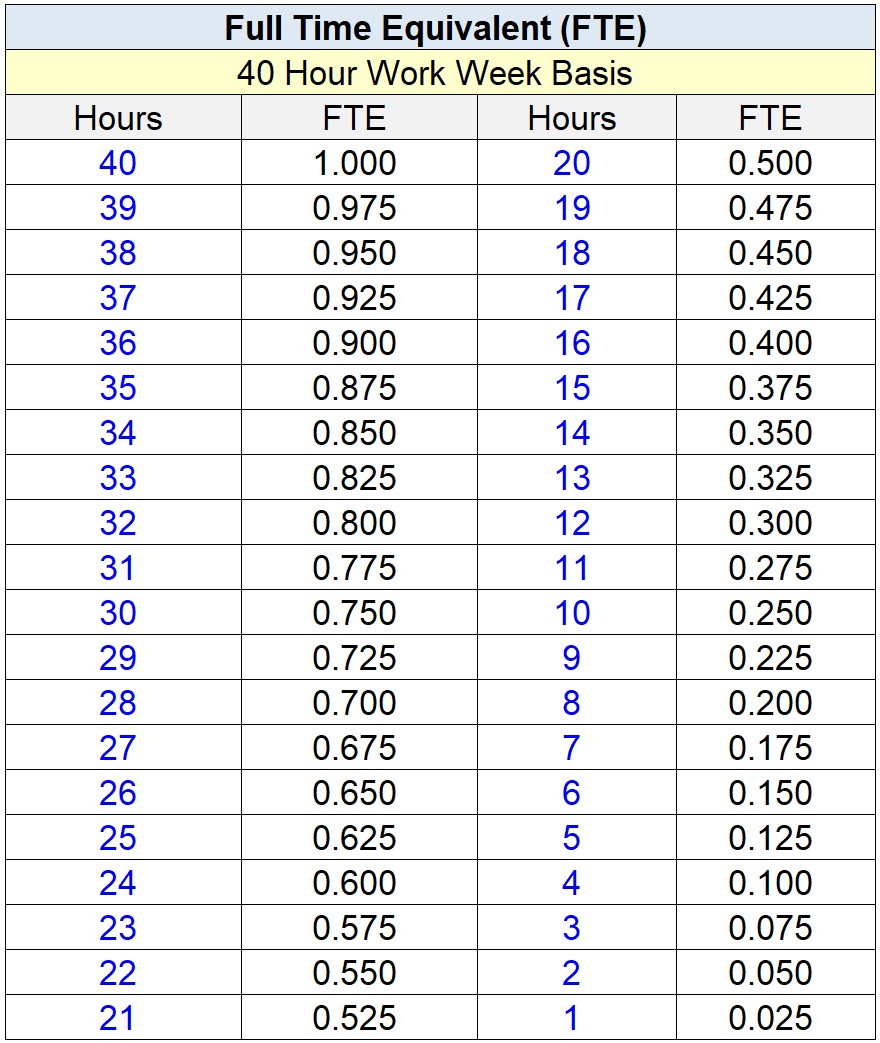
Typically, one FTE represents one employee working a standard full-time schedule for a specified period, often a year. While the precise definition of “full-time” can vary by country, industry, or even company policy, it commonly refers to an employee working 40 hours per week. Therefore, an employee working 40 hours per week for a full year would equate to 1.0 FTE.
The concept becomes particularly powerful when dealing with part-time staff. An employee working 20 hours per week would be 0.5 FTE (20/40), and someone working 30 hours per week would be 0.75 FTE (30/40). This allows businesses to aggregate the total “full-time equivalent” staffing level, irrespective of how many individual people contribute to that total.
Simple Calculation Methods
Calculating FTEs is generally straightforward once the standard full-time workweek is established. The most common method involves dividing the total number of hours worked by part-time employees by the number of hours in a standard full-time workweek.
Basic Formula:
FTE = (Total Hours Worked by All Employees in a Period) / (Total Hours in a Standard Full-Time Work Period)
- Example 1 (Individual): If a company defines full-time as 40 hours per week, and an employee works 20 hours per week, their FTE is 20 / 40 = 0.5.
- Example 2 (Group): If a team has two full-time employees (40 hours each) and two part-time employees (20 hours each) in a 40-hour workweek standard:
- Full-time employees: 2 * 1.0 FTE = 2.0 FTE
- Part-time employees: 2 * (20/40) FTE = 2 * 0.5 FTE = 1.0 FTE
- Total Team FTE: 2.0 + 1.0 = 3.0 FTE
This simple calculation reveals that while the team has four individuals, their collective workload is equivalent to three full-time employees.
Accounting for Variations (Part-Time, Seasonal, and Contractors)
The simplicity of FTE calculation is its strength, allowing for consistent application across various employment types:
- Part-Time Employees: As demonstrated, part-timers contribute a fractional FTE value proportionate to their hours relative to a full-time schedule.
- Seasonal Employees: For seasonal workers, the calculation considers the total hours worked over the period they are employed. If a seasonal worker works 40 hours/week for 6 months (26 weeks), and the standard full-time year is 52 weeks, their FTE for that year would be (40 * 26) / (40 * 52) = 0.5 FTE. Alternatively, if analyzing FTEs for a specific quarter, their contribution would be 1.0 FTE for that quarter.
- Contractors and Freelancers: While often not considered “employees” in a legal sense, their hours can be converted to FTEs for project budgeting and resource planning purposes, especially if their engagement mirrors a consistent work schedule. This helps project managers understand the total “labor capacity” allocated to a project, regardless of employment status. The key is to be consistent in how these are included or excluded from official FTE counts depending on the specific financial or regulatory context.
Why FTEs Matter in Business Finance and Operations
FTEs are more than just an HR metric; they are a powerful financial tool that underpins strategic decision-making across numerous facets of a business. Their consistent application provides a clear, comparable picture of labor utilization and cost, which is vital for financial health and operational efficiency.
Budgeting and Cost Control
One of the most critical applications of FTEs is in budgeting and forecasting labor costs. Employee salaries, benefits, taxes, and overheads often constitute the largest expense for many organizations. By using FTEs, finance departments can:
- Accurately Project Payroll: Instead of merely estimating based on headcount, FTEs allow for precise calculations of total salary and wage expenses, factoring in the varying hours of part-time staff.
- Allocate Resources Efficiently: When developing departmental budgets, managers can allocate funds based on the required FTE count to achieve specific objectives, ensuring optimal staffing levels without overspending.
- Analyze Labor Cost Per Unit: Businesses can divide total labor costs (derived from FTEs) by units produced or services rendered to understand the efficiency and cost-effectiveness of their workforce.
- Identify Cost-Saving Opportunities: A high FTE count relative to output might signal inefficiencies, prompting a review of staffing models, automation possibilities, or workflow optimization.
Workforce Planning and Management
Strategic workforce planning hinges on understanding current and future staffing needs. FTEs provide the framework for this:
- Capacity Planning: Businesses can assess their current workforce capacity in FTEs and compare it against projected demand to identify gaps or surpluses. This helps in planning for hiring, training, or potential layoffs.
- Staffing Level Optimization: FTE analysis helps ensure that each department or project has the right amount of labor capacity, preventing both understaffing (leading to burnout and missed deadlines) and overstaffing (leading to unnecessary costs).
- Organizational Restructuring: During mergers, acquisitions, or internal reorganizations, FTEs offer a consistent way to evaluate the combined or restructured workforce, identifying redundancies or critical skill gaps.
Compliance and Reporting Requirements
Many regulatory and reporting requirements rely on accurate FTE counts. Non-compliance can lead to significant financial penalties.
- Affordable Care Act (ACA) in the U.S.: Employers in the U.S. use FTEs to determine if they are an “Applicable Large Employer” (ALE) and thus subject to the ACA’s employer shared responsibility provisions. An ALE is generally an employer with 50 or more FTEs.
- Government Grants and Subsidies: Many grants, especially those for small businesses or research initiatives, require detailed reporting on FTEs to justify funding or demonstrate compliance with employment creation goals.
- Tax Credits and Incentives: Certain tax credits, such as the R&D tax credit, may require FTE calculations to determine eligibility or the amount of the credit.
Project Management and Resource Allocation
In project-based environments, FTEs are indispensable for resource allocation and tracking.
- Project Budgeting: Project managers can accurately budget for labor by calculating the required FTEs for each phase of a project and multiplying that by the average cost per FTE.
- Resource Balancing: FTEs help in distributing work across teams, ensuring no single employee or department is overloaded while others are underutilized.
- Performance Measurement: By comparing actual FTEs utilized against planned FTEs, project managers can assess efficiency and identify deviations from the original plan.
Practical Applications Across Industries
The versatility of FTEs means they are not confined to a single industry but are rather a universal tool for financial and operational management.
Small and Medium-Sized Businesses (SMBs)
For SMBs, where resources are often tight, accurate FTE management is crucial for survival and growth.

- Lean Operations: SMBs can use FTEs to run lean operations, ensuring every labor hour contributes directly to value, avoiding the financial drain of excess staff.
- Growth Planning: As an SMB scales, FTEs help project future hiring needs and associated costs, allowing for proactive financial planning rather than reactive hiring.
- Loan and Investment Applications: Lenders and investors often review an SMB’s FTE count to assess its operational scale, stability, and growth potential.
Large Corporations and Enterprise Planning
In larger organizations, FTEs are vital for strategic, long-term planning and complex resource management across diverse departments and global operations.
- Global Workforce Analysis: FTEs allow for a standardized comparison of labor utilization and costs across different countries and regions, despite varying local labor laws and workweeks.
- Scenario Planning: Large enterprises use FTE models to simulate the impact of various strategic decisions (e.g., entering new markets, divesting a division) on their global workforce and associated costs.
- Mergers & Acquisitions: During M&A activities, FTE analysis is critical for assessing the combined workforce, identifying redundancies, and planning for integration or restructuring.
Non-Profit Organizations and Grants
Non-profits rely heavily on FTEs for grant applications, financial transparency, and demonstrating impact.
- Grant Reporting: Many grant funders require detailed FTE breakdowns to ensure funds are being used appropriately and to track the number of individuals supported or employed by the grant.
- Program Costing: Non-profits use FTEs to calculate the true cost of delivering specific programs or services, aiding in fundraising efforts and demonstrating accountability.
- Volunteer Impact: While not paid, the equivalent full-time hours contributed by volunteers can sometimes be converted to FTEs to illustrate the scale of support and leverage provided to the organization.
Healthcare and Education Sectors
These sectors have unique staffing challenges that FTEs help address.
- Healthcare: Hospitals and clinics use FTEs to manage staffing levels for nurses, doctors, and support staff across shifts, ensuring adequate patient care while managing tight budgets. It helps in calculating patient-to-staff ratios, a key quality metric.
- Education: Schools and universities use FTEs to measure student enrollment (e.g., full-time equivalent students or FTES) for funding purposes, and to manage faculty and administrative staff levels based on class sizes and program needs.
Common Pitfalls and Best Practices in Using FTEs
While a powerful tool, FTEs must be used judiciously to avoid misinterpretations and ensure their maximum benefit.
Misinterpreting Data and Over-simplification
One common pitfall is treating FTEs as a direct measure of productivity or individual performance. FTEs measure capacity or workload, not output or efficiency. A department with 10 FTEs might be less productive than another with 8 FTEs if the former is poorly managed or under-equipped.
- Best Practice: Combine FTE analysis with other performance metrics (e.g., revenue per FTE, units produced per FTE, client satisfaction scores) to gain a holistic understanding of efficiency and effectiveness.
The Importance of Granular Data
Aggregating all hours into a single FTE number without understanding the underlying components can obscure critical details. For instance, knowing you have 10 FTEs doesn’t tell you if those are 10 full-time employees, or 20 part-time employees. The latter might incur higher administrative costs (e.g., benefits management for more individuals).
- Best Practice: Maintain detailed records of individual employee hours, roles, and employment types. Segment FTE analysis by department, project, skill set, and employment status to gain deeper insights.
Integrating FTEs with Other HR and Financial Metrics
FTEs are most powerful when integrated into a broader analytical framework. Looking at FTEs in isolation can lead to suboptimal decisions.
- Best Practice: Regularly cross-reference FTE data with payroll expenses, benefits costs, hiring pipeline, turnover rates, and strategic business goals. This integrated view allows for more informed decisions regarding compensation structures, retention strategies, and talent acquisition.
Leveraging Technology for FTE Management
Manually calculating and tracking FTEs, especially in larger organizations, can be prone to errors and consume significant administrative time.
- Best Practice: Utilize Human Capital Management (HCM) software, Enterprise Resource Planning (ERP) systems, or specialized financial planning tools. These platforms can automate FTE calculations, integrate with payroll and time-tracking systems, and provide dynamic reporting dashboards, leading to greater accuracy and efficiency.
FTEs and the Future of Work
The landscape of work is continuously evolving, with trends like remote work, the gig economy, and automation reshaping traditional employment models. FTEs, as a fundamental metric, must adapt and continue to provide value in this dynamic environment.
Remote Work and Gig Economy Impact
The rise of remote work and the increasing reliance on freelancers and contractors challenges the traditional 40-hour workweek standard. While the core FTE concept remains, its application needs careful consideration.
- Flexible FTE Definitions: Organizations might need to define FTEs based on project completion or output rather than solely on hours worked, particularly for roles where flexible schedules are the norm.
- Contractor FTEs: Integrating “contractor FTEs” into planning helps companies understand their total human capital investment, even if these individuals are not on the payroll. This is crucial for financial transparency and capacity planning for critical projects.
Automation and AI’s Role in Workforce Metrics
As automation and artificial intelligence take over routine tasks, the composition of the workforce will shift, impacting FTE requirements.
- Reskilling and Upskilling: FTE analysis can help identify roles that are likely to be automated, allowing organizations to plan for reskilling existing employees or strategically hiring for new, higher-value roles.
- Hybrid Workforce Planning: Future FTE planning will increasingly involve a hybrid approach, factoring in the capacity provided by both human workers and automated systems, and optimizing the balance between the two.

Strategic Workforce Planning Evolution
FTEs will remain central to strategic workforce planning, but the focus will broaden to encompass skills-based planning and agility.
- Skills-Based FTEs: Beyond just counting capacity, future FTE analysis will increasingly integrate skill sets, allowing organizations to assess not just how many full-time equivalents they have, but what specific capabilities those FTEs bring to the table.
- Agile FTE Allocation: In fast-paced environments, the ability to quickly reallocate FTEs across projects or initiatives will be a key competitive advantage, moving away from rigid, departmental FTE budgets to more dynamic resource pools.
In conclusion, Full-Time Equivalents are an indispensable tool in the financial arsenal of any organization. By providing a standardized, comparable measure of labor capacity, FTEs empower businesses to make informed decisions regarding budgeting, staffing, compliance, and strategic growth. As the world of work continues to transform, a nuanced understanding and intelligent application of FTEs will be more crucial than ever for maintaining financial health and operational agility. Mastering this metric is not just about counting people; it’s about strategically managing the human capital that drives organizational success.
aViewFromTheCave is a participant in the Amazon Services LLC Associates Program, an affiliate advertising program designed to provide a means for sites to earn advertising fees by advertising and linking to Amazon.com. Amazon, the Amazon logo, AmazonSupply, and the AmazonSupply logo are trademarks of Amazon.com, Inc. or its affiliates. As an Amazon Associate we earn affiliate commissions from qualifying purchases.