
Humanity’s relentless drive to conquer the impossible, to build bigger, faster, and more efficient machines, finds one of its most awe-inspiring expressions on the high seas. For centuries, ships have been not merely vessels but colossal statements of engineering prowess, economic ambition, and technological innovation. The quest for “the longest ship” encapsulates this very spirit, representing a pinnacle of naval architecture, materials science, and complex operational technology. It’s a question that delves beyond mere dimensions, inviting an exploration into the cutting-edge design, propulsion systems, navigation technology, and the sheer logistical mastery required to birth and operate such a maritime leviathan.

This article will journey into the realm of these floating titans, dissecting the technological marvels that define the world’s longest ships – past and present – and peering into the future of oceanic engineering. We’ll explore not just which ship holds the record, but how such a vessel is conceived, constructed, and controlled, cementing its place as a testament to human ingenuity in the technological age.
The Reigning Monarch of the Seas: A Technological Marvel
The title of the “longest ship ever built” belongs to a vessel whose legend continues to inspire awe decades after its construction. Its story is a saga of ambition, engineering challenges, and the relentless pursuit of scale in an era defined by global trade and energy demands.
The Enigma of Length: Seawise Giant (Knock Nevis/Jahre Viking/Mont)
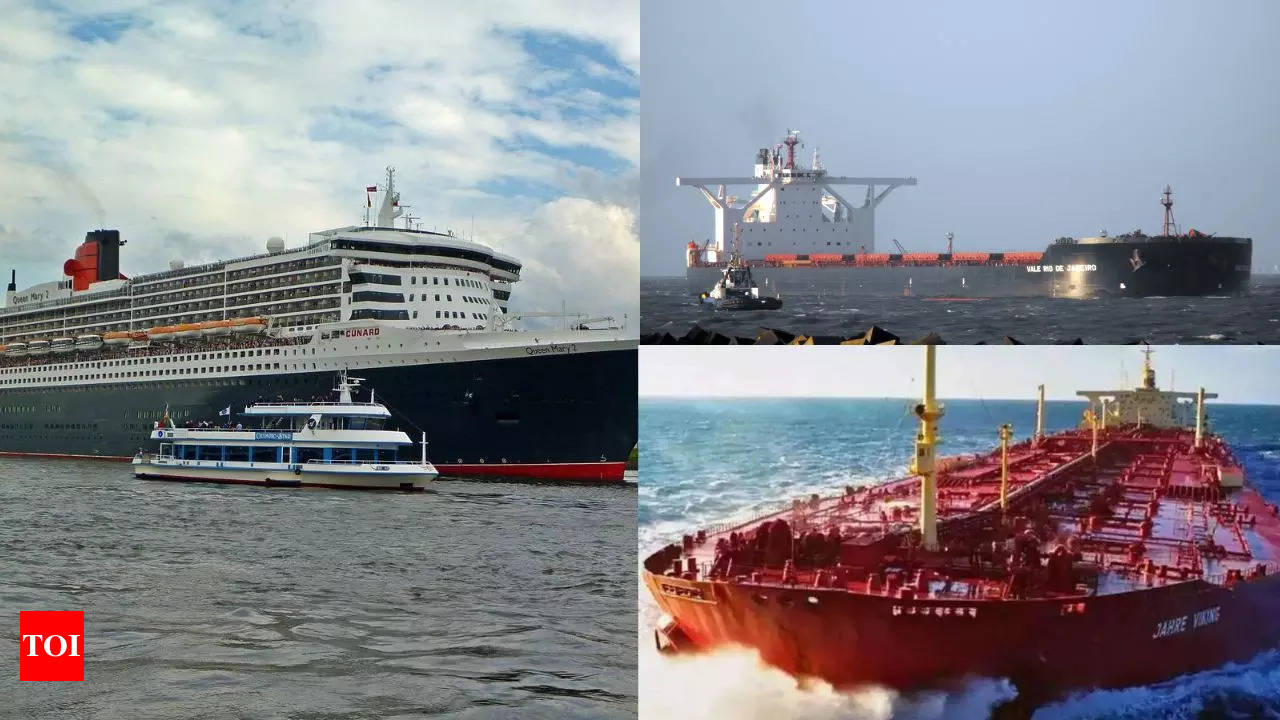
The undisputed champion in terms of sheer length was the tanker Seawise Giant. Launched in 1979 and initially christened Seawise Giant, this Ultra Large Crude Carrier (ULCC) underwent several name changes throughout its operational life, including Happy Giant, Jahre Viking, and finally Mont before its eventual scrapping. Its dimensions were staggering: a colossal length of 458.45 meters (1,504 feet), a beam of 68.86 meters (226 feet), and a fully laden draft of 24.6 meters (81 feet). With a deadweight tonnage (DWT) exceeding 564,763 metric tons, it was designed to transport an unfathomable volume of crude oil, equivalent to over 4.2 million barrels.
The very concept of a ship of this magnitude presented unparalleled engineering challenges. Its construction pushed the limits of shipbuilding technology of the late 20th century. Japanese shipbuilders at Sumitomo Heavy Industries’ Oppama shipyard employed advanced welding techniques, precision steel fabrication, and complex modular construction methods to assemble its immense hull. The scale demanded innovations in stress distribution analysis across such an expansive structure, ensuring integrity against the dynamic forces of the open ocean. While its service life saw it damaged during the Iran-Iraq War and subsequently resurrected through extensive refitting, its legacy as the longest ship ever constructed remains unchallenged, a testament to the era’s ambition in crude oil transport. Though no longer operational, having been deliberately run aground and dismantled in 2010, the Seawise Giant represents a benchmark in maritime engineering that continues to fascinate.
Why Build Such Giants? The Economic and Engineering Imperative
The genesis of vessels like the Seawise Giant was rooted in the economic realities and energy crises of the 1970s. The primary driver was the economy of scale for crude oil transportation. Post-Suez Canal closures and the increasing global demand for oil from distant producers in the Middle East necessitated routes around Africa. Larger ships meant lower per-barrel shipping costs, fewer voyages, and thus increased profitability for oil companies. This direct correlation between size and cost-efficiency fueled the ULCC era.
However, constructing and operating such colossal vessels introduced a new set of engineering imperatives and operational considerations. Extreme length, while offering vast cargo capacity, presented significant challenges in terms of structural integrity. The ship’s immense length meant it could potentially experience significant “hogging” (midship sag) and “sagging” (midship arching) stresses caused by wave action and uneven cargo distribution. This necessitated sophisticated hull designs, robust internal compartmentalization, and advanced material selection to prevent catastrophic failure.
Maneuverability was another critical challenge. With a turning circle spanning kilometers and a stopping distance requiring miles, these behemoths were restricted to specific deep-water ports and specialized offshore terminals. Their sheer size precluded passage through major waterways like the Suez Canal (when fully laden) or the Panama Canal, dictating longer, dedicated routes. The engineering of their steering mechanisms, incorporating massive rudders and powerful thrusters (though thrusters were less common on original ULCCs for primary maneuvering), was an undertaking of precision, demanding advanced hydraulic and control systems to provide captains with any semblance of responsive command. The creation of such ships was not just about making them big, but about making them functional and safe within the demanding parameters of global shipping.
Engineering the Behemoth: Pushing the Boundaries of Naval Architecture
Building a ship of the Seawise Giant‘s proportions, or even today’s longest container vessels, requires the pinnacle of contemporary engineering, pushing the envelope in materials science, propulsion, and intricate control systems.
Materials Science and Hull Integrity
The fundamental challenge in constructing any large vessel lies in selecting and deploying materials that can withstand immense, dynamic stresses over decades. For ships of extreme length, this becomes even more critical. The primary material used is high-tensile steel, specifically engineered to offer an optimal balance of strength, ductility, and corrosion resistance. The hull of a supertanker or mega-container ship isn’t a single monolithic slab; it’s a complex network of plates, frames, and girders, meticulously designed through finite element analysis (FEA) to distribute forces and resist bending, torsion, and shear stresses.
Advanced welding techniques are paramount. Thousands of kilometers of welds hold these structures together, and the integrity of each joint is critical. Automated welding robots, coupled with rigorous non-destructive testing (NDT) methods like ultrasonic and X-ray inspections, ensure that welds meet stringent classification society standards. Furthermore, protective coatings and cathodic protection systems are applied to combat the corrosive saltwater environment, extending the vessel’s operational life and maintaining its structural integrity against fatigue and environmental degradation. The entire hull is a finely tuned engineering system, a testament to the sophistication of modern materials science and manufacturing.
Propulsion and Maneuverability Challenges
Driving a vessel the size of the Seawise Giant or a modern mega-container ship through water requires immense power and highly specialized propulsion systems. Early ULCCs relied on massive steam turbine engines, which, despite their size and thirst for fuel, could generate the tens of thousands of horsepower needed to propel such a displacement. Modern equivalents, particularly the longest container ships, now employ highly efficient two-stroke diesel engines—often the largest reciprocating engines ever built. These engines are technological marvels, capable of generating over 100,000 horsepower, designed for long-duration, high-efficiency operation at sea.
The propeller design is equally critical. These are often fixed-pitch, massive screws (up to 10 meters in diameter) crafted from specialized bronze alloys, optimized for slow-speed, high-thrust efficiency. The challenge lies in converting engine power into propulsive force with minimal cavitation and vibration, which could otherwise damage the stern structure.
Maneuverability remains a perpetual challenge. Steering is accomplished by a rudder, which on these ships can be as large as a small apartment building. Sophisticated electro-hydraulic steering gear systems are required to move these massive rudders, often requiring multiple pumps and redundant systems for safety. In confined waters, some larger vessels employ bow and stern thrusters – transverse propellers that provide lateral thrust, aiding in docking and slow-speed maneuvering without relying solely on the main rudder. The integration of advanced automation and control systems allows bridge officers to manage these complex propulsion and steering mechanisms with precision, though the sheer inertia of these vessels still demands considerable foresight and planning.
Safety, Navigation, and Environmental Technology
Operating the longest ships in the world necessitates the most advanced safety, navigation, and environmental protection technologies. Modern mega-vessels are equipped with integrated bridge systems (IBS), which consolidate all navigational data – radar, GPS, Electronic Chart Display and Information System (ECDIS), automatic identification system (AIS), and weather information – onto multi-function displays. This holistic view enhances situational awareness and reduces human error. Satellite communication systems (VSAT, Inmarsat) provide constant connectivity for remote monitoring, emergency communication, and real-time data exchange with shore operations.

Safety protocols are deeply embedded, from redundant power systems and advanced fire suppression technologies (e.g., CO2 or water mist systems in engine rooms, inert gas systems in cargo tanks) to sophisticated damage stability software that can predict the consequences of flooding. Evacuation systems, including free-fall lifeboats, are strategically placed.
In response to increasing global environmental concerns, these ships are at the forefront of adopting environmental technologies. This includes ballast water treatment systems to prevent the spread of invasive species, exhaust gas cleaning systems (scrubbers) or selective catalytic reduction (SCR) systems to reduce SOx and NOx emissions, and advanced waste management and oily water separator technologies. Many new builds are also designed with ship energy efficiency management plans (SEEMP) and optimized hull forms and propeller designs to minimize fuel consumption and, consequently, carbon emissions. These technological integrations underscore a commitment to both operational safety and ecological responsibility.
The Modern Giants: Container Ships and LNG Carriers
While the Seawise Giant holds the historical record for length, the current generation of operational “longest ships” predominantly comprises colossal container vessels and, to a lesser extent, large LNG carriers. These modern titans embody a different kind of technological marvel, driven by hyper-efficiency, specialized cargo, and increasingly stringent environmental regulations.
The Post-ULCC Era: Focus on Efficiency and Specialized Cargo
The era of the colossal ULCCs, designed exclusively for crude oil transport, largely waned due to geopolitical shifts, changing oil distribution patterns, and the inherent operational limitations of such enormous vessels. The new frontier for maritime giants shifted towards containerization, a revolution in global logistics that demanded ever-larger ships to carry standardized cargo units.
Today, the title for the longest operational ships is consistently held by Ultra Large Container Vessels (ULCVs). Ships like the Maersk Triple-E class (at around 400 meters long, though surpassed by newer vessels) initially set new benchmarks, emphasizing efficiency and capacity. Subsequent generations, such as the Ever Ace class (e.g., Ever Ace, Ever Alot) and similar vessels from shipping lines like MSC, OOCL, and CMA CGM, have since claimed the top spot, pushing lengths to around 400 meters (1,312 feet) or slightly beyond, and capacities exceeding 24,000 TEU (twenty-foot equivalent units). These ships are designed to optimize cargo density, maximize fuel efficiency, and operate on specific high-volume trade routes, particularly between Asia and Europe. Their design reflects a sophisticated balance between structural strength, propulsion efficiency, and the intricate choreography of loading and unloading tens of thousands of containers.
Alongside container ships, Q-Max class LNG carriers also represent some of the longest specialized vessels, reaching lengths of up to 345 meters (1,132 feet). While shorter than the longest container ships, their immense volume and highly specialized cargo (liquefied natural gas maintained at cryogenic temperatures) involve equally complex and cutting-edge engineering solutions for containment, regasification, and safety.
The Technological Edge of Modern Cargo Vessels
The current generation of mega-ships leverages an array of advanced technologies to achieve unparalleled efficiency, safety, and environmental compliance. Smart cargo management systems are crucial for container ships. These systems utilize sophisticated software to plan optimal container stowage, ensuring stability, accessibility, and efficient loading/unloading sequences that can involve dozens of cranes simultaneously. Digital twins of the cargo arrangement allow for real-time monitoring of weight distribution and stress on the hull.
Propulsion technology has seen significant advancements. Many new mega-container ships feature dual-fuel engines capable of running on conventional heavy fuel oil (HFO) or cleaner alternatives like liquefied natural gas (LNG). This provides operational flexibility, reduces emissions (SOx, NOx, particulates), and helps meet evolving environmental regulations. The switch to LNG requires specialized cryogenic fuel tanks, complex gas handling systems, and advanced combustion technologies. Some vessels also incorporate waste heat recovery systems to convert exhaust heat into electricity, further boosting efficiency.
Integrated bridge systems are standard, but they are increasingly complemented by remote monitoring and diagnostics capabilities. Sensors distributed throughout the ship collect data on engine performance, hull stresses, fuel consumption, and environmental parameters. This data is transmitted to shore-based operation centers, enabling predictive maintenance, route optimization based on weather data, and real-time operational adjustments. The concept of the “smart ship” is rapidly evolving, with degrees of automation and data-driven decision-making becoming integral to the operation of these complex, high-value assets.
The Future of Maritime Megastructures: What’s Next?
The evolution of the longest ships in the world is a continuous narrative of technological ambition. As global trade intensifies and environmental pressures mount, the next generation of maritime giants will likely be defined by intelligence, sustainability, and even greater operational autonomy.
Autonomous Shipping and AI in Naval Operations
Perhaps the most transformative technological frontier in shipping is the development of autonomous vessels. While fully crewless operation of mega-ships is still some way off, significant strides are being made towards increasing levels of autonomy. Artificial Intelligence (AI) and machine learning are poised to revolutionize naval operations, particularly for ultra-large ships. AI can be deployed for highly optimized route planning, dynamically adjusting to real-time weather, currents, and traffic to minimize fuel consumption and transit times. AI-powered vision systems, integrated with radar and LiDAR, can provide superior situational awareness, enhancing collision avoidance capabilities even in complex environments.
Furthermore, AI will drive predictive maintenance for future giants. By analyzing vast datasets from thousands of sensors, AI algorithms can predict equipment failures long before they occur, scheduling maintenance proactively and dramatically reducing downtime. The challenges are substantial, encompassing regulatory frameworks, cybersecurity, and the ethical implications of autonomous decision-making, but the drive for greater efficiency and safety will undoubtedly push this technology forward. Future longest ships might not only be physically massive but also intellectually formidable, making decisions with unprecedented speed and accuracy.
Sustainable Design and Alternative Energy Sources
The environmental footprint of global shipping is a major concern, driving intense research into sustainable design and alternative energy sources for future mega-ships. The current focus on dual-fuel LNG engines is a stepping stone. The next generation of longest ships may incorporate wind-assisted propulsion, utilizing massive sails or rotor systems (Flettner rotors) to harness wind energy, reducing reliance on fossil fuels. Nuclear power could re-emerge as a viable, zero-emission option for ultra-large vessels, offering virtually unlimited range and power, though public perception and regulatory hurdles remain significant.
More immediate and actively researched alternatives include ammonia and hydrogen fuel cells. These carbon-free fuels represent a significant leap towards decarbonization, though they present immense technological challenges related to storage (cryogenic for hydrogen, toxic for ammonia), bunkering infrastructure, and combustion efficiency. Future ship designs will likely feature innovative hull forms optimized for minimal drag, lightweight composite materials, and advanced waste heat recovery systems that contribute to a near-zero emission profile. Modular construction techniques, already prevalent, will become even more sophisticated, allowing for easier upgrades and adaptation to new technologies and fuels throughout a ship’s long lifecycle.
The Economic and Infrastructural Limits
While technological advancement continuously pushes the boundaries of what’s possible, the physical and economic realities of global infrastructure impose practical limits on ship size. Port depths and capacities are a primary constraint; only a finite number of deep-water ports can accommodate the largest vessels. Major maritime choke points like the Suez Canal and Panama Canal also dictate maximum beam, draft, and in some cases, air draft (height above water). While the Suez Canal has been widened and deepened, and the New Panamax locks expanded, there are still physical limits to what can transit. These infrastructural bottlenecks force naval architects to optimize dimensions within strict parameters, balancing maximum capacity against operational flexibility.
The economic viability of ever-larger ships also comes under scrutiny. While economies of scale are powerful, there’s a point of diminishing returns. The capital expenditure for ultra-large vessels is immense, and their limited operational flexibility (fewer ports, specialized tugs, longer transit times around landmasses) can sometimes outweigh the per-unit cost savings. Future “longest ships” might not necessarily mean longer than the Seawise Giant (which faced these operational limits in its time) but rather a new breed of highly intelligent, supremely efficient, and environmentally sustainable vessels that push the technological envelope in every aspect of their design and operation, perhaps even exploring multi-hull designs or entirely new shipping paradigms to overcome current limitations.
The quest for the longest ship is, at its heart, a quest for the most advanced ship. It’s a perpetual challenge to engineers, designers, and innovators to push beyond current limitations, harnessing the latest in materials science, digital technology, and sustainable energy to create vessels that not only dominate the seas but also define the future of global connectivity and commerce.
aViewFromTheCave is a participant in the Amazon Services LLC Associates Program, an affiliate advertising program designed to provide a means for sites to earn advertising fees by advertising and linking to Amazon.com. Amazon, the Amazon logo, AmazonSupply, and the AmazonSupply logo are trademarks of Amazon.com, Inc. or its affiliates. As an Amazon Associate we earn affiliate commissions from qualifying purchases.