
Minecraft, a cultural touchstone in the gaming world, continues its remarkable evolution with its latest major update, promising a wave of innovation that transcends mere content additions. Far from being just new blocks and creatures, this update delves deep into the game’s underlying technology, showcasing Mojang’s commitment to pushing the boundaries of what’s possible within its iconic block-based universe. For technology enthusiasts and software developers alike, this release offers a fascinating case study in sustained development, engine optimization, and user experience refinement on an unprecedented scale. We’re not just getting new features; we’re witnessing a significant technical overhaul designed to enhance performance, expand creative possibilities, and future-proof one of the world’s most popular digital playgrounds. This deep dive will explore the architectural changes, algorithmic advancements, and user-centric designs that define this pivotal moment in Minecraft’s ongoing journey.
Unpacking the Core Technical Enhancements
Every major software update presents an opportunity for developers to address technical debt, optimize existing systems, and lay groundwork for future innovations. This Minecraft update is no exception, bringing a suite of fundamental improvements that significantly impact the game’s stability, scalability, and overall performance. These aren’t the flashy elements players immediately notice but are crucial for a smooth, expansive, and enduring gameplay experience.
Performance Optimizations and Engine Refinements
At the heart of this update lies a series of extensive performance optimizations targeting the game’s core engine. Mojang engineers have meticulously refactored several legacy systems, transitioning away from older, less efficient algorithms to more modern, multi-threaded solutions. This includes significant improvements to chunk loading and rendering, allowing for faster world generation and reducing the notorious “stuttering” often experienced when traversing vast landscapes. The game’s memory management has also seen substantial enhancements, particularly beneficial for players running complex builds or large-scale multiplayer servers. By minimizing memory footprint and optimizing data structures, the update aims to provide a more stable experience across a wider range of hardware configurations, from high-end gaming PCs to more modest setups, and especially on console and mobile platforms where resources are often more constrained. This focus on optimization underscores a strategic decision to make Minecraft more accessible and performant for its diverse global audience, ensuring that technological barriers don’t hinder the creative flow.
Enhanced Rendering and Visual Fidelity
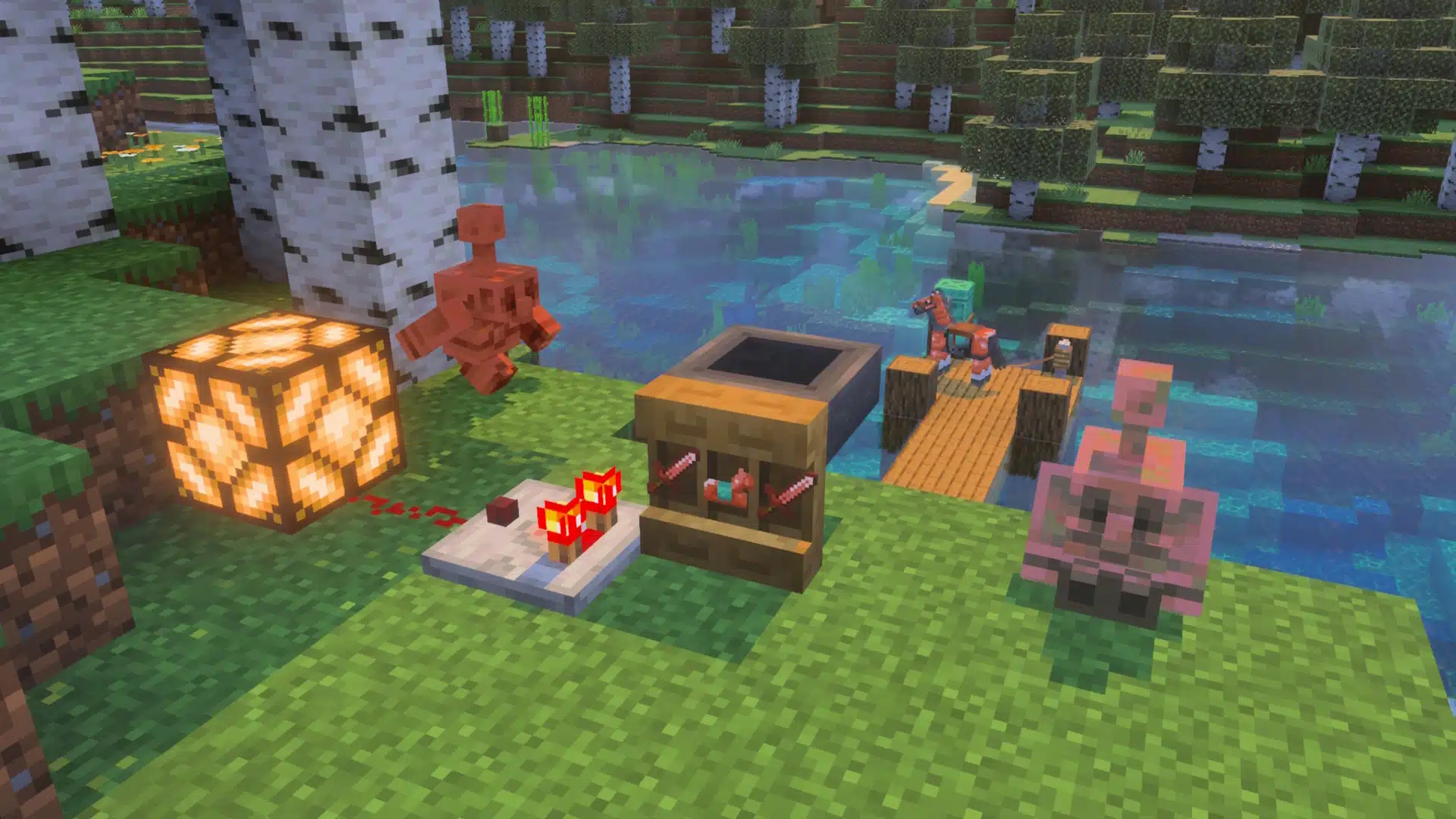
Beyond raw performance, the update introduces notable advancements in rendering technology, pushing the visual boundaries within Minecraft’s distinctive aesthetic. While remaining true to its pixelated roots, the game now leverages more sophisticated lighting models, including improved global illumination techniques that create more realistic light bounces and dynamic shadows. This isn’t ray tracing in the traditional sense, but an intelligent approximation that significantly enhances environmental immersion without demanding prohibitive computational resources. Furthermore, new shader capabilities allow for more nuanced textures and material properties, such as reflective surfaces and improved water rendering with realistic refractions and caustics. The introduction of adaptive level-of-detail (LOD) systems also means distant objects can be rendered with greater efficiency while maintaining visual coherence, reducing pop-in and creating a more seamless vista. These graphical upgrades are meticulously integrated to complement, rather than detract from, Minecraft’s signature style, proving that visual fidelity can evolve within established artistic constraints.
Backend Infrastructure for Seamless Multiplayer
Minecraft’s strength lies not only in solo exploration but also in its vibrant multiplayer communities. Recognizing this, the update dedicates significant resources to bolstering the backend infrastructure. New server-side optimizations aim to reduce latency and improve synchronization across vast numbers of concurrent players. This involves advanced netcode revisions, employing predictive interpolation and more robust error correction algorithms to minimize desynchronization issues. Furthermore, the introduction of modular server architecture allows for greater scalability and easier deployment of dedicated servers, empowering community server hosts with more robust tools for managing player load and custom content. Cross-platform play, a continuous priority, receives further refinements, ensuring a smoother and more consistent experience whether players are connecting from PC, console, or mobile devices. This robust backend work is critical for maintaining Minecraft’s position as a social hub, enabling millions of players worldwide to collaborate and create without technical friction.
Introducing Innovative Gameplay Mechanics and Content
While core technical enhancements improve the foundation, the true excitement for players often comes from new gameplay mechanics and content. This update cleverly integrates new features with sophisticated underlying technology, demonstrating how design decisions are often powered by novel software solutions. These additions aren’t just cosmetic; they represent significant algorithmic achievements that expand the game’s interactive possibilities.
Advanced Mob AI and Behavioral Systems
A standout feature of this update is the overhaul of mob AI. Building upon years of iterative improvements, Mojang has introduced a more sophisticated behavioral tree system, allowing for emergent and less predictable mob interactions. New pathfinding algorithms are more efficient and intelligent, enabling mobs to navigate complex terrain with greater realism and avoiding previously common glitches like getting stuck. Critically, some new mobs exhibit adaptive learning behaviors, responding to player tactics and environmental changes over time. This is achieved through simplified machine learning models, where mob decision-making parameters are dynamically adjusted based on in-game observations. For instance, hostile mobs might learn to avoid areas where they consistently take damage or prioritize attacking players based on their current inventory. This advanced AI elevates the challenge and immersion, transforming encounters from predictable routines into dynamic, engaging puzzles, and setting a new benchmark for procedural NPC intelligence in open-world games.
New Biome Generation Algorithms
Minecraft’s infinite worlds are a testament to procedural generation, and this update introduces a paradigm shift in how biomes are created. The new generation algorithms leverage Perlin noise and Simplex noise functions with significantly increased complexity and multi-fractal layering, resulting in biomes that feel more organic, interconnected, and diverse. Previously distinct biomes now blend more smoothly, featuring gradual transitions in topography, vegetation, and climate, which creates a more cohesive and believable world. The introduction of “micro-biomes” within larger biomes, dictated by local elevation and humidity parameters, adds a layer of intricate detail, preventing the repetitive feel that sometimes plagued older generations. This algorithmic advancement not only makes exploration more visually stimulating but also presents new challenges and opportunities for resource discovery, as geographical features are now more logically distributed and environmentally informed. From a technical perspective, it showcases sophisticated spatial partitioning and resource distribution logic, making each newly generated world truly unique.
Interactive Block Physics and Redstone Innovations
The Redstone system, Minecraft’s foundational logic gate network, receives substantial upgrades that expand its practical applications and introduce new realms of complex automation. The update includes new Redstone components that simulate advanced electrical engineering principles, such as frequency modulation, signal amplification with variable gain, and data multiplexing. These additions empower players to create more compact, efficient, and sophisticated contraptions, moving beyond simple on/off switches to truly programmable logic units. Furthermore, a novel “soft physics” system has been implemented for certain blocks, allowing for dynamic interactions that were previously impossible. This includes blocks that can react to impact forces, gradually deform, or even exhibit rudimentary fluid dynamics when combined with Redstone signals. This new system, while not fully simulating real-world physics, introduces a layer of interactive environmental dynamism that encourages inventive engineering solutions and pushes the boundaries of player-created machines and automated systems.
The Future of Modding and API Integration
Minecraft’s longevity is inseparable from its vibrant modding community. Recognizing this, Mojang has made significant strides in this update to support and streamline mod development, moving towards a more robust and officially supported API. This is a critical strategic move, aiming to foster a more stable ecosystem for user-generated content and reduce the friction developers often face with each new game version.
Developer Tooling and Community Empowerment

A cornerstone of this update for the modding community is the release of enhanced developer tools and documentation. This includes an official Software Development Kit (SDK) that provides standardized libraries, example code, and clear guidelines for creating add-ons and modifications. The SDK integrates seamlessly with popular development environments, offering debugging tools and performance profiling capabilities previously unavailable or rudimentary. Mojang is also providing an updated asset pipeline, making it easier for modders to import custom models, textures, and sounds into the game. This commitment to tooling significantly lowers the barrier to entry for aspiring mod developers and empowers experienced creators to build more complex and stable modifications, fostering a truly collaborative digital ecosystem. The idea is to shift from reverse-engineering the game to building upon a stable, well-documented foundation.
Standardizing Cross-Platform Modding
One of the long-standing challenges in Minecraft modding has been the fragmentation across different versions (Java Edition vs. Bedrock Edition) and platforms. This update takes a crucial step towards standardizing modding interfaces, particularly for Bedrock Edition. While a full unification is a monumental task, the introduction of a more robust, version-agnostic API aims to allow mods to be developed once and deployed across multiple platforms with minimal adaptation. This is achieved through a sandboxed plugin architecture that isolates mod code from the core game engine, enhancing stability and security. The long-term vision is to create a marketplace and distribution system that can seamlessly deliver user-created content across the entire Minecraft ecosystem, reducing compatibility headaches and expanding the reach of modders’ creations. This strategic move aligns with modern software development principles, promoting modularity and interoperability.
Security Implications of Open API
With greater openness comes increased responsibility, particularly concerning digital security. Mojang has implemented several layers of security protocols within the new API to mitigate risks associated with user-generated content. All official mod distribution channels will incorporate rigorous validation and scanning processes to detect malicious code or performance-hindering bugs. The sandboxed execution environment ensures that mods have limited access to the core system, preventing them from corrupting game files or accessing sensitive user data. Furthermore, new permission models for mods will require explicit user consent for certain actions, giving players greater control over what external code can do within their game environment. This proactive approach to security is crucial for maintaining trust within the modding community and safeguarding the integrity of the Minecraft platform as it becomes more open and programmable.
User Experience and Accessibility Innovations
Beyond technical foundations and new content, a truly impactful software update focuses on the end-user. This Minecraft release pays significant attention to improving the overall user experience (UX) and enhancing accessibility, ensuring that the game remains enjoyable and navigable for its incredibly diverse player base. These improvements reflect a modern approach to software design, prioritizing intuitive interaction and inclusivity.
Streamlined UI/UX for Intuitive Interaction
The user interface (UI) and user experience (UX) have received a comprehensive overhaul, moving towards a more streamlined and intuitive design. The inventory management system, a core part of Minecraft gameplay, has been redesigned with enhanced sorting options, quick-access slots, and a more visually organized display that reduces cognitive load. Crafting recipes are now more intelligently suggested based on available resources, and the tutorial system has been expanded to better guide new players through the initial complexities of the game without feeling overwhelming. Furthermore, context-sensitive menus and dynamic tooltips provide relevant information at the right time, minimizing the need to constantly consult external wikis. These UI/UX improvements are not just aesthetic; they are designed based on extensive user research and interaction design principles, aiming to make the game’s myriad systems more approachable and less cumbersome, thereby enhancing player engagement and reducing frustration.
Accessibility Features for Diverse Players
Mojang’s commitment to inclusivity shines through in the extensive new accessibility features. The update introduces customizable colorblind modes, allowing players to adjust palettes for better visibility of specific in-game elements. Text-to-speech and speech-to-text functionalities are greatly enhanced, providing robust communication options for players with varying auditory or speech abilities. Control remapping has been expanded to offer unparalleled customization, accommodating a wider range of input devices and motor skill levels. Furthermore, new visual cues for auditory events (e.g., subtle on-screen indicators for approaching mobs) and haptic feedback options for specific interactions cater to sensory impairments. These features go beyond mere compliance; they are deeply integrated into the game’s design, ensuring that Minecraft remains a welcoming and playable experience for individuals with diverse needs and abilities, solidifying its reputation as a truly universal game.
Cross-Platform Play and Ecosystem Unification
The dream of a fully unified Minecraft ecosystem, where players can seamlessly connect and share content regardless of their platform, takes a significant leap forward. While cross-play has existed, this update refines the underlying synchronization and account management systems, making the experience more robust and reliable. Cloud save functionalities are enhanced, ensuring progress and inventory are consistent across devices. The unification extends to the marketplace, allowing purchased content to be accessible across different platforms more smoothly. This continuous effort towards ecosystem unification is a complex technological undertaking, requiring robust backend APIs, secure data transfer protocols, and intricate platform-specific adaptations, but it ultimately provides a more cohesive and friction-free experience for the end-user, regardless of their chosen device.
The Broader Impact on Game Development and Community
This Minecraft update is more than just a patch; it’s a statement about the game’s future and its role as an innovator in the industry. The technical advancements and design philosophies embedded within this release have wider implications for game development as a whole, particularly concerning procedural generation, community engagement, and long-term software sustainability.
Setting New Benchmarks for Procedural Generation
The advancements in biome generation, mob AI, and interactive physics within this update are not just incremental improvements; they represent new benchmarks for procedural content generation in games. By demonstrating sophisticated algorithms that create organic, believable, and dynamic worlds on the fly, Minecraft continues to push the envelope for what’s achievable with generative systems. These techniques offer valuable lessons for other developers looking to create vast, unique, and engaging environments without hand-crafting every detail. The ability to generate intricate landscapes with logical geological formations, diverse ecosystems, and intelligent inhabitants, all with improved performance, sets a high bar for the industry and showcases the power of algorithmic creativity when combined with robust engine architecture.
Fostering a Robust Creator Economy
Mojang’s strategic investment in a more open and standardized modding API, coupled with enhanced developer tools, is a clear signal of its commitment to fostering a thriving creator economy. By empowering modders and content creators with better tools and pathways for distribution, Minecraft is solidifying its position as a platform for digital entrepreneurship. The potential for content creators to monetize their creations through official channels, with clear guidelines and technical support, transforms modding from a hobby into a viable professional endeavor. This approach not only enriches the game with an endless stream of innovative content but also serves as a model for how established game titles can evolve into dynamic platforms that support and reward their most passionate communities.

Addressing Technical Debt and Future-Proofing
Perhaps one of the most insightful aspects of this update, from a technical perspective, is its proactive approach to addressing technical debt. The extensive engine optimizations, refactored codebases, and move towards a modular architecture are not just about immediate performance gains; they are about future-proofing the game. By modernizing core systems, Mojang ensures that Minecraft can continue to evolve, integrate new technologies (like enhanced rendering techniques or more complex physics), and remain relevant for years, if not decades, to come. This commitment to long-term software health is crucial for a live-service game of Minecraft’s scale and serves as an excellent example of sustainable development practices in the fast-paced world of gaming technology. It’s a testament to the belief that even a game with a decade of history can remain at the cutting edge of innovation.
aViewFromTheCave is a participant in the Amazon Services LLC Associates Program, an affiliate advertising program designed to provide a means for sites to earn advertising fees by advertising and linking to Amazon.com. Amazon, the Amazon logo, AmazonSupply, and the AmazonSupply logo are trademarks of Amazon.com, Inc. or its affiliates. As an Amazon Associate we earn affiliate commissions from qualifying purchases.