
In the landscape of science fiction, few franchises have captured the collective imagination of the technology sector quite like Halo. While many approach the series as a cornerstone of gaming history, its true depth lies in its meticulously crafted timeline—a vision of the future that spans centuries of human expansion, conflict, and unprecedented technological evolution. To answer the central question: the core events of the Halo trilogy take place in the year 2552. However, the narrative arc of the universe stretches from the mid-21st century into the late 26th century and beyond.
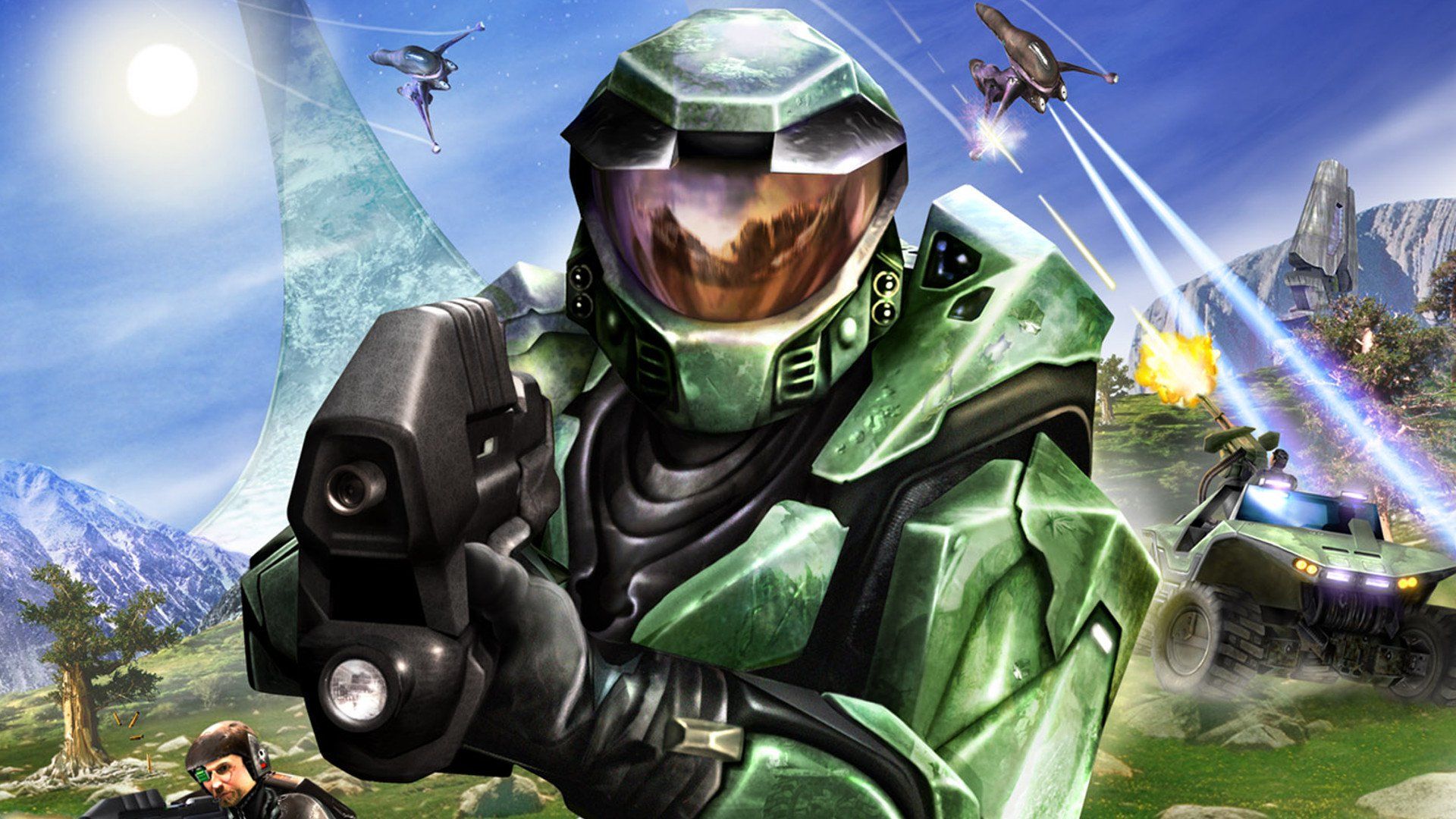
Understanding the year Halo takes place is not merely an exercise in trivia; it is an exploration of speculative technology. From the mastery of faster-than-light travel to the ethical dilemmas of sentient artificial intelligence, the Halo timeline serves as a roadmap for the potential trajectory of human innovation.
Mapping the 26th Century: The Timeline of the Human-Covenant War
The year 2552 serves as the “present day” for the original Halo: Combat Evolved, but the technological context of that era was forged in the centuries preceding it. The 26th century represents a period where humanity, under the United Nations Space Command (UNSC), has transitioned from a planetary species to an interstellar empire.
The Golden Age of Colonization (2300s–2400s)
By the 24th century, Earth had reached its ecological and logistical limits. This necessitated the development of the Shaw-Fujikawa Translight Engine, the breakthrough that allowed humanity to exit the solar system. By the mid-25th century, over 800 worlds had been colonized. This era was defined by “Infrastructure Tech”—the massive logistical software and autonomous terraforming tools required to make distant rocks habitable.
2525: The First Contact and Technological Shock
The timeline shifts dramatically in 2525 when humanity encounters the Covenant at Harvest. This year marks a pivotal moment in “Adversarial Tech Development.” For the first time, human engineers realized they were centuries behind. The Covenant utilized plasma-based weaponry and superior energy shielding, forcing the UNSC into a desperate cycle of “Reverse Engineering” and rapid iterative design that would define the next 27 years.
2552: The Convergence of Crisis and Breakthrough
The year 2552 is the most significant in the franchise’s history. It encompasses the Fall of Reach, the discovery of Alpha Halo, and the beginning of the end for the Human-Covenant War. Technologically, this year represents the pinnacle of human ingenuity under pressure. It is the year where the MJOLNIR armor, Smart AI integration, and experimental Slipspace maneuvers converged to prevent human extinction.
Advanced Propulsion and the Mastery of Slipspace
In the Halo universe, the year 2552 is synonymous with the mastery of “Slipstream Space.” Without this technological leap, the human empire would have collapsed under the weight of its own distance.
The Shaw-Fujikawa Translight Engine
The cornerstone of 26th-century transit is the Shaw-Fujikawa Translight Engine. This device works by generating a rupture in the space-time continuum, allowing a vessel to enter “Slipspace”—a non-intuitive dimension where the laws of physics differ, effectively shortening the distance between stars. From a modern tech perspective, this is an extrapolation of quantum tunneling and string theory. In the timeline of Halo, the efficiency of these engines evolved from slow, month-long voyages to the highly precise jumps seen by the end of the war.
Comparative Analysis: Real-world Theoretical Physics vs. Halo’s FTL
While we currently lack the energy requirements to warp space-time (the Alcubierre drive theory), Halo’s tech timeline suggests that the 23rd century will be the era of “High-Energy Physics.” The transition from chemical rockets to fusion-based propulsion, and eventually to vacuum energy manipulation, reflects a logical (if highly accelerated) progression of energy density mastery.
Navigation and AI-Assisted Charting
Navigating Slipspace in 2552 is not a manual task. It requires the processing power of sophisticated AI to calculate “reconciliation”—the correction of temporal and spatial anomalies. This highlights a recurring theme in the Halo tech stack: hardware is useless without the software (AI) to manage the complexity of higher-dimensional physics.

Artificial Intelligence and Human Integration
Perhaps the most prescient aspect of the Halo timeline is its depiction of Artificial Intelligence. In the year 2552, AI is categorized into two distinct technological tiers: “Dumb” AI and “Smart” AI.
Smart AI vs. Dumb AI: A Framework for Future Machine Learning
“Dumb” AIs, despite the name, are far more advanced than our current Large Language Models. They are specialized expert systems capable of managing entire city infrastructures or starship point-defense systems. They do not possess intuition or self-awareness.
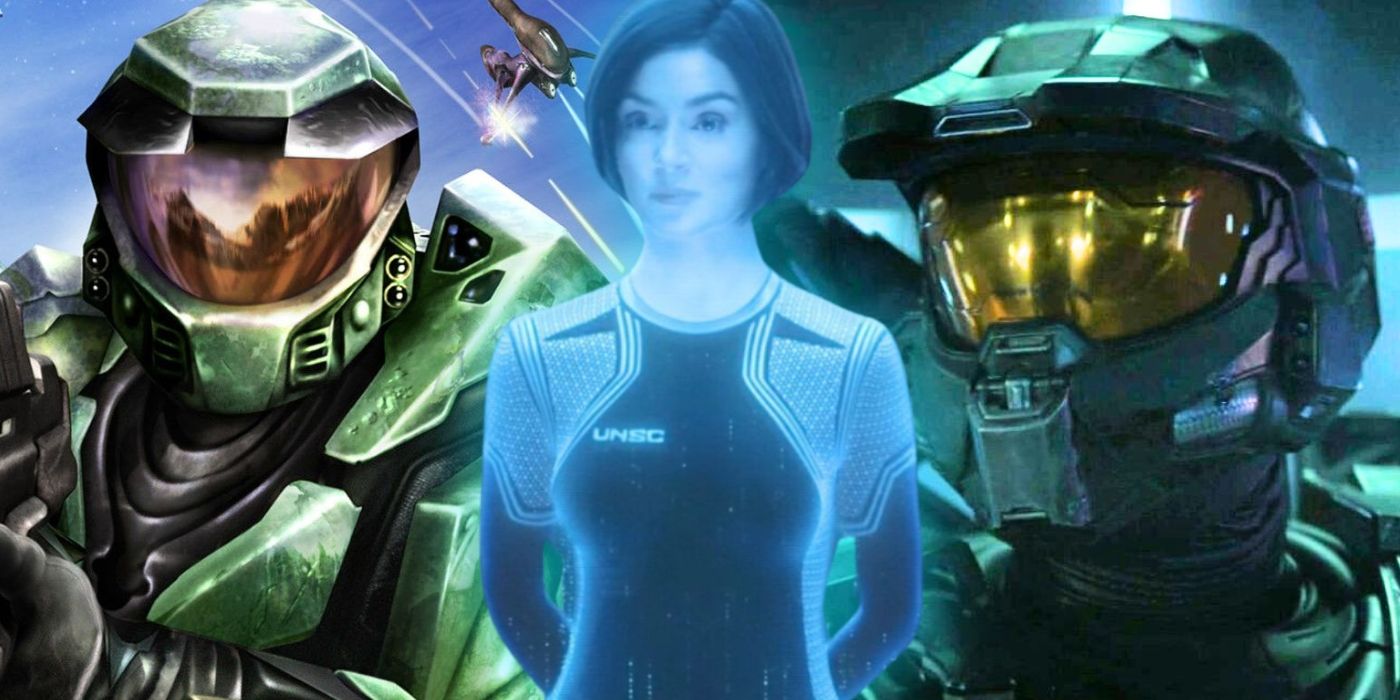
“Smart” AIs, such as Cortana, are created through a process called Cognitive Neural Mapping. This involves scanning the neural pathways of a human brain (a process that destroys the original tissue). By 2552, these AIs are the backbone of human strategy. They possess lateral thinking, emotional intelligence, and the ability to process quintillions of operations per second. This mirrors modern discussions regarding “Artificial General Intelligence” (AGI), though Halo adds a fascinating technical constraint: the seven-year lifespan, after which an AI enters “rampancy,” essentially thinking itself to death.
Neural Interfaces and the Master Chief
The technological leap of 2552 isn’t just in the machines, but in the interface between man and machine. The Spartan-II soldiers utilize a “Neural Link”—a hardware implant at the base of the skull. This allows an AI to reside within the soldier’s armor, interfacing directly with their motor cortex. This represents the ultimate evolution of “Wearable Tech” and “Augmented Reality,” where the lag between thought and action is reduced to zero.
Military Hardware and Materials Science
By 2552, the UNSC’s technological philosophy was built on “Ruggedization” and “Kinetic Efficiency.” While the Covenant used elegant energy weapons, humanity perfected the science of metallurgy and ballistics.
MJOLNIR Powered Assault Armor: The Pinnacle of Exoskeletons
The MJOLNIR Mark V and VI systems, debuted in 2552, are the most advanced pieces of mobile hardware ever devised in the series. The armor features a multilayered alloy, a liquid metal hydrostatic buffer, and a revolutionary reactive shielding system reverse-engineered from Covenant tech. From a robotics standpoint, the suit’s ability to enhance a user’s strength and reaction time by a factor of ten requires a power source—a miniature fusion reactor—that remains the “holy grail” of modern energy research.
MAC Guns and Directed Energy Weapons
The Magnetic Accelerator Cannon (MAC) is a masterclass in 26th-century engineering. Using electromagnetism to fire massive tungsten slugs at a fraction of the speed of light, it represents the peak of kinetic weaponry. However, the timeline of 2552 shows a shift toward “Directed Energy.” As the war progressed, human tech began incorporating laser-based point defense and experimental railguns, showcasing the transition from chemical-propellant systems to purely electronic warfare.
The Legacy of Halo’s Tech Vision
As we look at the year 2552 through the lens of modern technology, we see a vision of the future that is increasingly relevant. Halo does not just tell a story of a specific year; it predicts the convergence of several tech sectors.
Impact on Modern UI/UX Design
The “Heads-Up Display” (HUD) popularized by Halo in the early 2000s has directly influenced real-world military and medical AR (Augmented Reality) interfaces. The idea of “Information Layering”—where critical data like biometrics, ammunition counts, and spatial mapping are projected into the user’s field of vision—is now a standard goal for companies developing smart glasses and tactical helmets.
Speculative Evolution: Are We on Track for 2552?
While we are still centuries away from the year 2552, our current trajectory in AI, fusion energy, and materials science suggests that the “Tech Pillars” of Halo are based on sound, albeit futuristic, logic. The transition from narrow AI to AGI, the development of solid-state batteries, and the rise of private space exploration are the first steps on the timeline that leads to the UNSC.
In conclusion, the year 2552 in the Halo universe is more than just a setting; it is a meticulously constructed peak of a technological mountain. It represents a future where humanity’s survival depends on its ability to innovate, integrate with AI, and master the fundamental forces of the universe. Whether we are discussing the physics of Slipspace or the ethics of neural interfaces, Halo remains a premier case study in how we envision the next five hundred years of technological progress.
aViewFromTheCave is a participant in the Amazon Services LLC Associates Program, an affiliate advertising program designed to provide a means for sites to earn advertising fees by advertising and linking to Amazon.com. Amazon, the Amazon logo, AmazonSupply, and the AmazonSupply logo are trademarks of Amazon.com, Inc. or its affiliates. As an Amazon Associate we earn affiliate commissions from qualifying purchases.