
Ancient Egypt, a civilization born of the Nile, understood that time was not merely a linear progression but a cyclical dance dictated by its lifeblood river. Far from being a mere meteorological observation, the seasons in ancient Egypt were the very scaffolding upon which its entire economy and financial well-being were constructed. Unlike modern calendars that often emphasize astronomical events, the Egyptian seasons were intrinsically linked to the Nile’s inundation, the subsequent agricultural cycle, and the ensuing economic prosperity or hardship. To truly grasp “what were the seasons in ancient Egypt” is to delve into a sophisticated, albeit ancient, system of financial planning, resource management, and state-controlled economics that profoundly shaped the lives of millions.

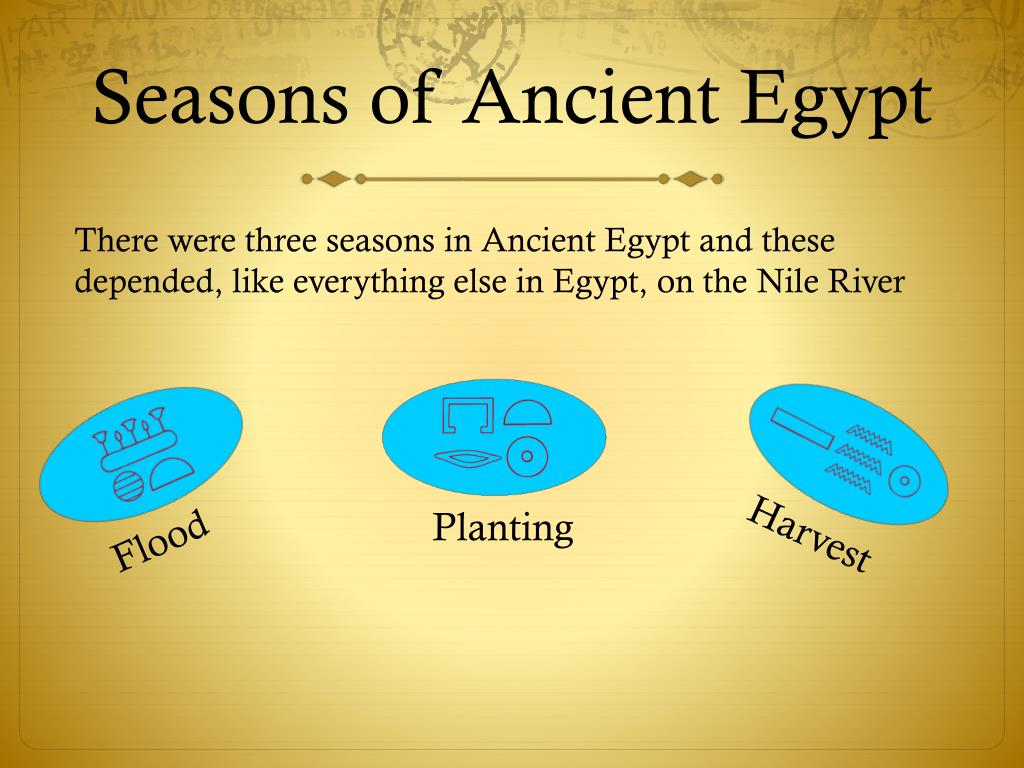
The Egyptians divided their year into three distinct seasons, each approximately four months long: Akhet (Inundation), Peret (Growth), and Shemu (Harvest/Scarcity). These weren’t just names on a calendar; they represented an annual financial cycle that dictated everything from individual household budgeting to national taxation and monumental state projects. Understanding these seasons is to understand the foundational “money” of ancient Egypt – its agricultural output, its labor, and its meticulous management of both.
The Rhythmic Economy: Ancient Egypt’s Seasonal Financial Framework
The annual flooding of the Nile was not just a natural phenomenon; it was the most critical economic event of the year, a divinely ordained “investment” that determined the nation’s financial health. The entire framework of ancient Egyptian finance was built around anticipating, managing, and capitalizing on this rhythmic cycle.
The Nile’s Unpredictable Investment: Managing the Annual Inundation (Akhet)
Akhet, the season of inundation, typically ran from mid-July to mid-November. This was the period when the Nile overflowed its banks, depositing fertile silt across the agricultural lands. From a financial perspective, Akhet represented the annual, and often unpredictable, capital injection into the Egyptian economy. The height and duration of the flood were critical determinants of the ensuing year’s agricultural yield, and consequently, the nation’s wealth.
For individual farmers, Akhet was a period of both hope and anxiety. A good flood meant fertile land, promising a bountiful harvest and thus, personal financial stability for the family. A poor flood, however, spelt economic disaster: reduced yields, food shortages, and increased hardship. This inherent uncertainty meant that risk management was an unconscious but pervasive element of ancient Egyptian personal finance. Households would save surplus grain from good years, acting as their own form of savings account or emergency fund against future poor floods.
The state, however, played the most crucial role in managing this “investment.” The Nilometer, a simple but ingenious technological tool, was not just for measuring water levels; it was a fundamental financial instrument. The readings from the Nilometer directly influenced tax assessments. Scribes would calculate expected yields based on the flood levels, determining how much grain or produce each district and farmer owed to the state treasury. This centralized financial planning ensured that even in years of fluctuating floods, the state could attempt to balance its budget, allocate resources for major projects, and maintain social order by managing food distribution. The success of the pharaoh, and thus the stability of the entire financial system, was intrinsically linked to his perceived ability to manage the Nile’s “investment.”
Cultivating Capital: Peret, the Season of Growth and Labor Investment
Following Akhet came Peret, the season of growth, from mid-November to mid-March. As the floodwaters receded, leaving behind nutrient-rich black soil, this became the period of intense agricultural activity – plowing, sowing, and tending to the burgeoning crops. Financially, Peret was the season of “labor investment.” The efforts put in during these months directly correlated with the “return on investment” (ROI) that would be reaped during the harvest.
Farmers invested their most valuable asset – their labor and time – along with precious seeds. This was a direct expenditure of resources with the expectation of future gain. For wealthier landowners or the state, there was also significant capital investment in tools, irrigation systems (canals and shadoofs), and the supervision of vast fields. The careful management of water, ensuring that all fields received adequate irrigation, was a constant challenge and a critical infrastructure investment by the state, protecting its primary source of income.
During Peret, the economy was vibrant with activity. While agriculture dominated, other sectors also thrived. Artisans, craftsmen, and traders often found steady work during this more stable period, preparing goods for potential trade or for the storage and transportation of the upcoming harvest. Labor was organized, sometimes on a grand scale for royal or temple estates, reflecting a sophisticated “business finance” model where resources (land, labor, seed) were pooled and managed for maximum output. The concept of “wages” in ancient Egypt, often paid in grain or other commodities, was directly tied to this labor investment, forming the basis of personal income for many.
From Harvest to Treasury: Shemu, the Season of Wealth Accumulation and Taxation

The final season, Shemu, spanning from mid-March to mid-July, was the season of harvest. This was the culmination of the year’s efforts, the moment when the “investment” made in Akhet and Peret was realized. Financially, Shemu was the period of wealth accumulation, both for individual households and for the state, but also a time of significant tax collection and potential scarcity as the year’s stores dwindled.
Harvesting the Kingdom’s Riches: The Financial Peak
Shemu was a period of intense activity, involving the reaping, threshing, and winnowing of crops, primarily wheat and barley. For farming families, a successful harvest meant immediate sustenance and the accumulation of surplus, which was their personal savings and primary form of wealth. The surplus grain could be used for barter, traded for other goods and services, or stored for future consumption and re-seeding. Storage was not merely a logistical challenge; it was a critical financial strategy, acting as a buffer against future crop failures and ensuring long-term household stability.
On a national scale, the harvest was the lifeblood of the entire kingdom. Granaries, meticulously managed by state officials, functioned as a kind of national bank or treasury. The grain stored within them represented the nation’s wealth, its capacity to feed its population, support its armies, fund its monumental construction projects (pyramids, temples), and engage in international trade. The value of goods and services throughout Egypt was often benchmarked against units of grain, making it the de facto “currency” of the era, even though actual coinage was introduced much later. This “commodity money” system meant that managing grain reserves was paramount to maintaining economic stability.
The State’s Share: Taxation and Economic Control
The harvest season was also the primary period for tax collection. After the farmers had set aside their share for personal consumption and future seeding, scribes and tax collectors, often accompanied by guards, would arrive to claim the state’s portion. Taxes were typically levied in kind – primarily grain, but also livestock, linen, or other produce. This direct appropriation of a portion of the harvest was the core mechanism by which the state financed its operations.
This taxation system was a sophisticated form of wealth redistribution and economic control. The collected grain fueled the pharaoh’s palace, supported the priests in temples, fed the laborers working on state projects, and supplied the military. It was a robust system for funding public services and infrastructure without a modern monetary economy. However, it also represented a significant financial burden on the individual farmer, whose personal wealth was directly reduced by the state’s demands. Economic disparity was evident, with those owning larger, more fertile lands, or those in state administrative roles, accumulating greater wealth compared to subsistence farmers whose financial lives were perpetually at the mercy of the Nile and the taxman. The meticulous records kept by scribes were essential “financial statements,” tracking output, collection, and distribution across the vast kingdom.
Ancient Financial Prudence: Lessons from Egypt’s Seasonal Economy
The ancient Egyptian seasonal economy, though vastly different from today’s globalized, digital financial systems, offers timeless lessons in financial prudence, risk management, and the fundamental principles of wealth creation and preservation.
Diversification and Resource Management: Beyond the Harvest
While agriculture was undoubtedly the primary economic driver, ancient Egyptians implicitly understood the concept of diversification, albeit in a rudimentary form. To mitigate the inherent risks of a single-crop economy tied to an unpredictable river, households and the state engaged in various complementary economic activities. Fishing and hunting provided alternative food sources and commodities for trade. Craft production (pottery, textiles, tools) not only supported agricultural needs but also created valuable goods for local exchange and even long-distance trade, diversifying income streams beyond direct farming.
Resource management was paramount. Beyond just grain, the careful management of water resources through an extensive network of canals was perhaps the largest and most critical infrastructure investment. These canals were maintained by communal labor, representing a shared investment in ensuring collective financial prosperity. The concept of “return on investment” in ancient Egypt wasn’t just about the immediate harvest; it was about the long-term health of the land and its ability to continually produce, sustained by careful management. The value placed on skilled labor, whether in farming, crafts, or administration, also highlights an understanding of human capital as a key economic resource.
Long-Term Financial Planning: Cycles of Prosperity and Scarcity
The cyclical nature of the Egyptian seasons ingrained a profound understanding of long-term financial planning and the concept of “saving for a rainy day” – or rather, saving for a lean flood. Both individuals and the state practiced a form of strategic reserves management. Grain from abundant years was carefully stored in granaries, acting as a national savings account to buffer against inevitable periods of scarcity. This foresight prevented widespread famine and maintained social and economic stability, a testament to their macro-economic planning capabilities.
This ancient model of financial resilience, built on understanding and adapting to natural cycles, contrasts sharply with some modern tendencies towards short-term gains. It underscores the importance of a sustainable economic foundation, resource conservation, and building robust reserves. For a civilization dependent entirely on an annual natural event, recognizing and planning for cycles of prosperity and potential hardship was not merely good practice; it was the bedrock of their financial survival and enduring civilization. The seasons in ancient Egypt, therefore, were not just a calendar; they were a complex, living financial ledger that charted the rise and fall of fortunes, shaping an entire civilization’s economic destiny for millennia.
aViewFromTheCave is a participant in the Amazon Services LLC Associates Program, an affiliate advertising program designed to provide a means for sites to earn advertising fees by advertising and linking to Amazon.com. Amazon, the Amazon logo, AmazonSupply, and the AmazonSupply logo are trademarks of Amazon.com, Inc. or its affiliates. As an Amazon Associate we earn affiliate commissions from qualifying purchases.