
In the intricate dance of an interview, few questions are as universally dreaded, yet strategically significant, as “What are your greatest weaknesses?” For many, this question feels like a trap, an invitation to self-sabotage. However, from the lens of personal branding, it’s an unparalleled opportunity. It’s not about confessing flaws, but about strategically demonstrating self-awareness, growth potential, and a mature understanding of your professional identity. Handled deftly, your response to this question can significantly elevate your personal brand, setting you apart as a thoughtful, authentic, and high-potential candidate.

The modern professional landscape demands more than just a list of skills; it requires a compelling personal brand that resonates with potential employers. Your brand is your professional narrative – how you are perceived, what you stand for, and the unique value you bring. Disclosing a weakness in an interview, when approached correctly, becomes a powerful testament to your integrity, your commitment to self-improvement, and ultimately, the strength and depth of your personal brand.
The Strategic Imperative of Vulnerability in Personal Branding
Interviewers aren’t looking for a perfect robot; they’re seeking a human who can contribute meaningfully to their team and organization. Your ability to articulate a weakness is a nuanced display of emotional intelligence and self-perception, vital attributes that bolster your personal brand.
Beyond a Trick Question: Why Weaknesses Matter to Your Brand
Consider this question not as a hurdle, but as a mirror reflecting your professional maturity. Recruiters use it to gauge several critical aspects of your character and professional development. Firstly, it tests your self-awareness. A strong personal brand is built on a clear understanding of one’s strengths and areas for development. Someone who cannot identify a weakness suggests either a lack of introspection or an unwillingness to be honest, both of which erode trust – a cornerstone of any robust brand. Secondly, it assesses your problem-solving capabilities. Do you merely identify a weakness, or do you actively seek solutions and implement strategies for improvement? This demonstrates initiative, resilience, and a growth mindset – qualities that employers highly value. Lastly, it offers insight into your humility. Overconfidence or an inability to admit to imperfections can be off-putting. A balanced view, however, showcases an authentic and relatable professional brand.
Authenticity as a Brand Asset: Building Trust and Relatability
In an era saturated with curated online personas, authenticity has emerged as a priceless brand asset. Interviewers are skilled at detecting insincerity. Providing a canned, generic, or obviously fake weakness (e.g., “I’m a perfectionist”) often backfires, making you seem disingenuous. Instead, a well-chosen, genuine weakness, paired with a clear action plan for improvement, fosters relatability and trust. It signals that you are comfortable in your own skin, aware of your developmental journey, and committed to evolving. This level of honesty builds a stronger rapport with the interviewer, creating a more memorable and positive impression of your personal brand. It tells them you’re human, accountable, and driven to be better – traits that inspire confidence.
The Power of Self-Awareness: A Cornerstone of Strong Personal Brands
Self-awareness is the bedrock of any powerful personal brand. It’s the ability to understand your emotions, strengths, weaknesses, drives, and goals, and to recognize their impact on others. When you articulate a weakness, you are showcasing this critical skill. You demonstrate that you have reflected on your performance, understand where you might fall short, and are proactive in addressing those areas. This isn’t just about identifying a problem; it’s about owning your narrative and shaping it towards growth. A candidate who displays such self-awareness signals maturity and a capacity for continuous learning, enhancing their professional brand as someone who is thoughtful, accountable, and consistently striving for excellence.
Identifying Your ‘Interview-Ready’ Weaknesses
Not all weaknesses are created equal in the context of an interview. The key is strategic selection – choosing a weakness that is authentic, manageable, and can be framed as an opportunity for growth, rather than a fundamental flaw.
Differentiating Between Weaknesses and Deal-Breakers
The first rule of selecting a weakness is to avoid anything that is a core requirement for the job, or that would raise serious red flags about your character or professional competence. For instance, if the role demands meticulous attention to detail, admitting that you often overlook small errors would be a deal-breaker. Similarly, avoid weaknesses related to integrity, teamwork, or fundamental work ethic (e.g., “I sometimes miss deadlines,” “I struggle with authority”). These types of weaknesses undermine the core values an employer seeks and can irreparably damage your personal brand. Instead, focus on areas that are genuinely challenging for you but are not critical to immediate job success, or which can be framed as a natural part of a developmental journey.
From Flaw to Opportunity: Framing for Growth and Development
The magic of a successful weakness response lies in its framing. The goal is to transform a perceived flaw into an opportunity for growth and development. This means moving beyond merely stating the weakness to explaining what you are actively doing to overcome it. For example, instead of saying, “I’m not great at public speaking,” you might say, “I’ve recognized that my presentation skills, while competent, could be more impactful. To address this, I recently joined a Toastmasters club and have been actively seeking opportunities to present in team meetings, focusing on improving my delivery and engagement with the audience.” This demonstrates initiative, a proactive approach to self-improvement, and a commitment to evolving your professional brand. The weakness becomes a catalyst for positive change, rather than a static impediment.
Alignment with Brand Values: Choosing Weaknesses That Reflect Positively
Believe it or not, some weaknesses can subtly reinforce positive aspects of your personal brand. For example, a candidate for a highly collaborative role might admit, “I sometimes find it challenging to delegate tasks effectively, as I prefer to have full oversight to ensure quality.” While a weakness, it also subtly communicates a strong sense of responsibility and commitment to high standards. The crucial follow-up would then explain steps taken to improve delegation skills, such as actively training team members or trusting their capabilities more. The trick is to select a weakness that, even in its challenging state, doesn’t contradict the core positive attributes you want your personal brand to embody, and most importantly, can be shown as a work in progress.
Crafting Your Narrative: The STAR Method for Weaknesses
The STAR method (Situation, Task, Action, Result) is a powerful storytelling framework often used for behavioral questions. Adapting it for the “weakness” question allows you to present a structured, compelling narrative that showcases self-awareness and growth.

The Situation & Task: Setting the Context for Your Growth Story
Begin by briefly setting the stage. Describe a specific situation or context where your weakness became apparent or posed a challenge. Keep this concise; the focus should quickly shift to your actions. For instance, “In my previous role, I realized that I sometimes struggled with managing multiple high-priority projects simultaneously, especially when they had competing deadlines.” This establishes a concrete, relatable scenario without dwelling on the negative. It provides the necessary backdrop for your journey of improvement, making your personal brand narrative clear and grounded.
The Action: What You Did to Address Your Weakness
This is the most critical part of your response. Detail the specific, proactive steps you have taken (or are actively taking) to address and mitigate your weakness. Be concrete and action-oriented. Continuing the example: “To tackle this, I researched various project management methodologies, implemented a more rigorous task prioritization system using [specific tool], and started scheduling dedicated ‘deep work’ blocks to focus on complex tasks without interruption.” These actions demonstrate initiative, resourcefulness, and a genuine commitment to personal and professional development, reinforcing your brand as a problem-solver.
The Result: Demonstrating Growth and Positive Brand Evolution
Conclude by explaining the positive outcomes of your actions. How has your weakness improved? What have you learned? What has been the tangible result? “As a result, I’ve seen a significant improvement in my ability to meet all deadlines and manage stakeholder expectations more effectively. I’ve also learned valuable lessons about time management and the importance of clear communication when potential conflicts arise. This experience has not only strengthened my project management skills but also my resilience under pressure, contributing positively to my overall effectiveness and the team’s output.” This demonstrates that you don’t just identify problems; you actively work towards solutions, learn from experiences, and evolve your professional capabilities, thereby enriching your personal brand.
Common Pitfalls and How to Avoid Them
Even with the best intentions, it’s easy to stumble when discussing weaknesses. Awareness of these common missteps is crucial for maintaining the integrity of your personal brand during the interview.
The ‘Fake Strength’ Trap: Why It Undermines Your Brand
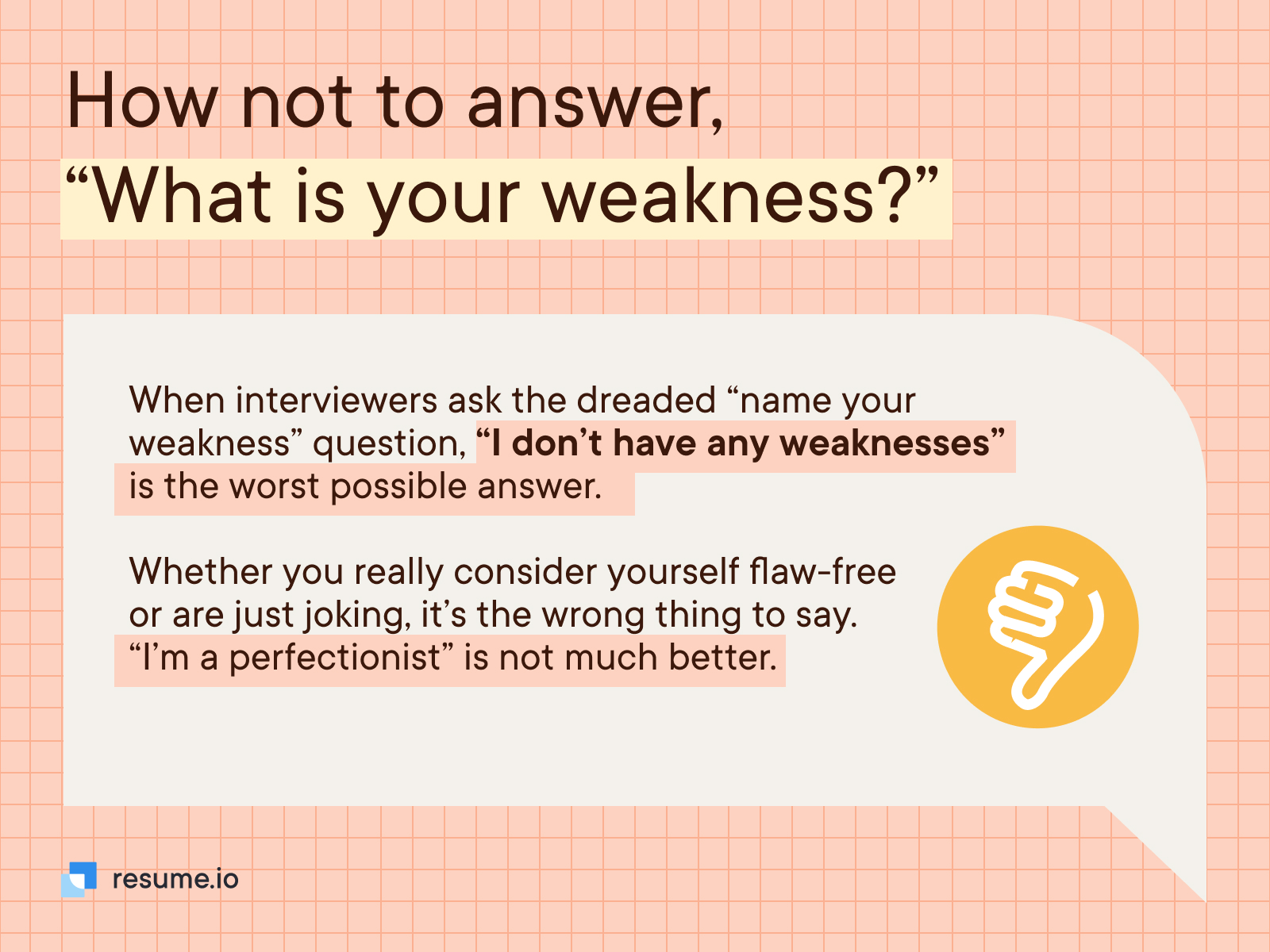
The most common mistake is presenting a weakness that is thinly veiled as a strength, such as “I’m too much of a perfectionist” or “I work too hard.” This approach is transparent and often interpreted negatively. It implies a lack of genuine self-awareness or an unwillingness to be truly vulnerable, both of which can damage your authenticity and credibility. Interviewers see through this immediately, and it can leave them questioning your honesty and depth, ultimately detracting from the strength of your personal brand. Your brand should convey integrity; avoid responses that suggest otherwise.
Over-Sharing vs. Strategic Disclosure: Finding the Balance
While authenticity is key, it’s equally important not to over-share or disclose deeply personal weaknesses that are irrelevant to a professional setting. The interview is not a therapy session. The goal is strategic vulnerability – revealing enough to show self-awareness and a commitment to growth, but not so much that you create unnecessary concerns. Focus on professional weaknesses that you have made progress on, or are actively working to improve, and always bring it back to how your efforts benefit your professional output. Balance transparency with professionalism to maintain a strong, focused personal brand.
The ‘No Weakness’ Delusion: A Brand Killer
Stating that you have no weaknesses is perhaps the most damaging response of all. It comes across as arrogant, delusional, and completely lacking in self-awareness. Every professional, regardless of experience or success, has areas for growth. Claiming otherwise indicates an inability to learn, adapt, or accept feedback, which are critical traits for any employee. This response will almost certainly kill your chances and significantly tarnish your personal brand as someone who is difficult to coach or integrate into a team. Always be prepared with a genuine, professionally relevant weakness and a clear plan for improvement.
Reinforcing Your Professional Brand Post-Interview
The interview doesn’t end when you walk out the door. The way you follow up and continue to live your professional values solidifies the brand you’ve presented.
Consistency is Key: Living Your Brand Beyond the Interview Room
The personal brand you present in the interview must be consistent with your actual behavior and performance if you are hired. If you spoke about actively working on a weakness, such as improving project management skills, you must continue to demonstrate that commitment in your day-to-day work. Inconsistency between your stated brand and your lived brand will quickly erode trust and credibility. Your ongoing actions and improvements are the ultimate proof of your growth mindset, reinforcing the positive impression you made during the interview.
Leveraging Feedback for Continuous Brand Refinement
A powerful aspect of managing weaknesses is the ability to seek and integrate feedback. Post-interview, if you receive feedback (even if it’s not directly related to your stated weakness), use it as an opportunity for continuous personal brand refinement. Reflect on the feedback, consider how it aligns with your self-perception, and identify actionable steps. This iterative process of self-assessment, action, and feedback integration is what truly defines a robust and dynamic professional brand that is always evolving and improving.
The Long-Term Impact: How Vulnerability Strengthens Your Professional Reputation
Ultimately, the strategic disclosure and management of weaknesses contribute significantly to your long-term professional reputation. It cultivates an image of a leader who is self-aware, growth-oriented, and genuinely committed to continuous improvement. This strengthens your personal brand, making you not only a more attractive candidate but also a more respected and influential professional throughout your career. Embracing strategic vulnerability is not just an interview tactic; it’s a fundamental pillar of building an enduring and powerful personal brand. By mastering this critical interview moment, you don’t just answer a question; you actively shape your professional destiny.
aViewFromTheCave is a participant in the Amazon Services LLC Associates Program, an affiliate advertising program designed to provide a means for sites to earn advertising fees by advertising and linking to Amazon.com. Amazon, the Amazon logo, AmazonSupply, and the AmazonSupply logo are trademarks of Amazon.com, Inc. or its affiliates. As an Amazon Associate we earn affiliate commissions from qualifying purchases.