
The question of “what was the first commercial airline” transports us back to a pivotal moment in human history, marking the transition from experimental flight to a viable mode of public transportation. This wasn’t just a business venture; it was a profound technological leap, demonstrating the maturity and reliability of early aviation for commercial purposes. While many pioneers dabbled in air travel, the credit for operating the world’s first scheduled commercial airline service goes to the St. Petersburg-Tampa Airboat Line, which launched in Florida on January 1, 1914. This pioneering endeavor wasn’t merely about selling tickets; it was a testament to the rapid technological advancements in aviation and a bold prediction of the future of travel.

At its core, the St. Petersburg-Tampa Airboat Line was an innovation story, driven by the belief that a relatively new technology—the airplane—could offer a practical, time-saving solution. Before this, airplanes were largely seen as objects of spectacle, military tools, or experimental marvels. The visionaries behind this line, particularly Percival E. Fansler and Thomas W. Benoist, understood the potential of aviation technology to reshape commerce and human connection. Their success hinged on the development and application of specific aircraft technology, operational innovations, and a commitment to demonstrating the reliability of flight.
The Dawn of Commercial Aviation: A Technological Leap
The early 20th century was a hotbed of technological innovation, with aviation leading the charge in dramatic fashion. Following the Wright brothers’ first successful flight in 1903, the decade that followed saw an astonishing acceleration in aircraft design, engine power, and aerodynamic understanding. This period was characterized by a rapid iteration cycle in aircraft engineering, pushing the boundaries of what was thought possible in the air.
From Experimental Flights to Reliable Service: Aircraft Evolution
The journey from the rudimentary biplanes of the Wright brothers to aircraft capable of scheduled commercial service was a testament to relentless engineering. Early aircraft were fragile, unpredictable, and often dangerous. They lacked robust control systems, reliable engines, and sufficient structural integrity for routine, heavy-duty use. The critical technological developments that paved the way for commercial viability included:
- Improved Aerodynamics: Engineers began to understand lift, drag, and stability more deeply, leading to more efficient wing designs, tail configurations, and overall aircraft shapes. This allowed for greater control and reduced fuel consumption.
- Engine Reliability and Power: Early aviation was severely limited by engine technology. Engines were heavy, prone to overheating, and frequently failed. Innovations in internal combustion engines—lighter materials, better cooling systems, and more efficient fuel delivery—were crucial. The development of rotary engines, though short-lived, offered significant power-to-weight ratios for its time.
- Structural Materials and Construction: The shift from primarily wood and fabric to stronger, yet lightweight, materials and more sophisticated construction techniques (like monocoque designs) enhanced aircraft durability and safety, making them suitable for carrying passengers and cargo consistently.
These advancements created a paradigm shift, transforming the airplane from a stunt machine into a potential workhorse. The St. Petersburg-Tampa Airboat Line capitalized directly on these advancements, choosing an aircraft specifically designed to meet the demands of commercial operation over water.
Beyond the Wright Flyer: Seaplanes and Amphibious Aircraft
While the Wright Flyer proved the concept of controlled, powered flight, it was aircraft like the Benoist XIV flying boat that truly unlocked commercial potential in certain environments. Seaplanes offered distinct advantages in areas with abundant waterways, eliminating the need for expensive land-based airfields. This was a critical technological adaptation, enabling faster infrastructure development and reducing the cost barrier for early operations.
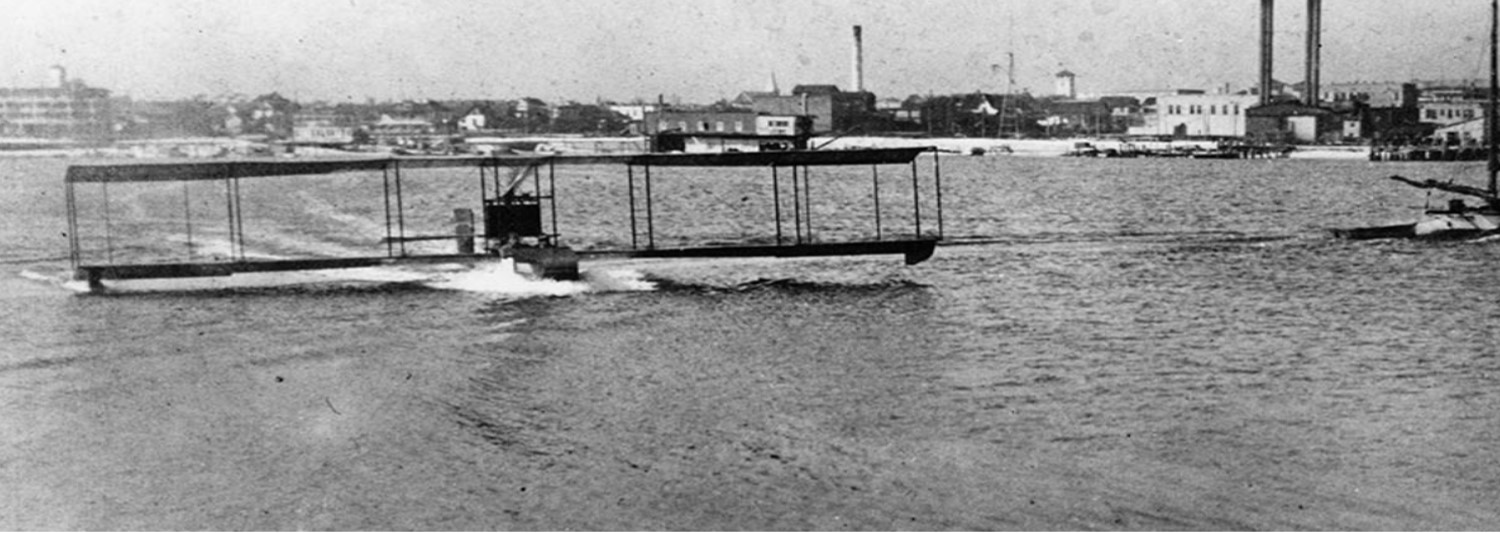
The Benoist XIV, the star of the St. Petersburg-Tampa Airboat Line, was a marvel of its time. It was a biplane flying boat, meaning its fuselage doubled as a boat hull, allowing it to land and take off from water. This design incorporated:
- Buoyant Fuselage: A specially designed hull provided stability and buoyancy on water, integrating the aircraft’s primary structure with its aquatic functionality.
- Push-Propeller Configuration: The engine and propeller were mounted above the wing, keeping the propeller clear of water spray during takeoff and landing, thereby reducing damage and improving efficiency.
- Robust Structure: Built to withstand the stresses of water landings and takeoffs, it was more rugged than many land-based contemporaries.
The selection of the Benoist XIV was a strategic technological choice that directly enabled the St. Petersburg-Tampa Airboat Line to operate effectively and reliably, proving the practicality of this specific aviation technology for commercial use.
Pioneering Routes and Operational Tech Challenges
Launching the world’s first scheduled airline wasn’t just about having the right aircraft; it involved establishing a complex web of operational technologies and protocols to ensure safety, efficiency, and regularity. The challenges were immense, ranging from basic navigation to effective maintenance and communication.
Navigational Primitives: Early Guiding Systems
In 1914, sophisticated air traffic control systems, radar, or GPS were unimaginable. Pilots relied on rudimentary navigational techniques. For the St. Petersburg-Tampa Airboat Line, the relatively short distance across Tampa Bay (about 23 miles) and the clear visual landmarks made navigation feasible. However, even for this route, pilots needed:
- Visual Flight Rules (VFR): Relying on eyesight to follow coastlines, major roads, and recognizable landmarks. This dictated that flights could only operate in good weather conditions, a significant operational constraint.
- Compass and Map: Basic magnetic compasses and paper maps were essential tools, requiring pilots to constantly cross-reference their position with known geographical features.
- Dead Reckoning: Estimating position by calculating direction and speed from a known position, a skill heavily reliant on pilot expertise and environmental conditions.
The very simplicity of these systems highlighted the need for future technological development to expand aviation’s reach and reliability, especially for longer, over-water, or low-visibility flights.
Ground Support and Maintenance: The Unsung Tech Heroes
For any commercial operation, the aircraft itself is only one part of the technological equation. The infrastructure and personnel supporting its operation are equally critical. The St. Petersburg-Tampa Airboat Line established a basic yet effective ground support system:
- Maintenance Crews: Skilled mechanics were essential to inspect, repair, and service the Benoist XIV. Engine tuning, airframe checks, and propeller maintenance were continuous tasks. Early aircraft required frequent attention due to material fatigue, less precise manufacturing, and the inherent stresses of flight.
- Fueling Systems: While primitive by modern standards, safe and efficient refueling procedures were necessary. This often involved manual pumping and careful handling of highly flammable aviation gasoline.
- Passenger Handling: Though not “tech” in the sense of machinery, the system for ticketing, boarding, and managing passengers was an early form of operational technology, designing a flow for human interaction with the new transport method.
The reliability of the St. Petersburg-Tampa Airboat Line, which boasted an impressive operational record during its brief tenure, was as much a testament to its maintenance and ground support technology as it was to the aircraft itself.
Safety Protocols: Engineering Trust in the Skies
Building public trust in a novel and inherently risky technology like aviation was paramount. The St. Petersburg-Tampa Airboat Line focused on demonstrating safety through:
- Experienced Pilots: The selection of skilled pilots, like Tony Jannus, was a key operational safety measure, ensuring expert handling of the aircraft.
- Strict Operating Conditions: Flights were only conducted in favorable weather, minimizing risks associated with high winds, storms, or poor visibility. This was a technological limitation workaround.
- Pre-flight Checks: Though informal compared to today’s rigorous checklists, pilots and mechanics conducted essential inspections to ensure the aircraft was airworthy before each flight.
These rudimentary safety protocols were the progenitors of today’s incredibly sophisticated aviation safety systems, which heavily rely on advanced sensors, data analytics, and redundant control systems.
The St. Petersburg-Tampa Airboat Line: A Case Study in Early Aviation Tech Adoption
The decision to launch the St. Petersburg-Tampa Airboat Line was a calculated risk based on leveraging available technology to meet a specific market need. The air service dramatically cut travel time across Tampa Bay from a several-hour boat or train journey to a mere 23 minutes.
The Benoist XIV: A Purpose-Built Marvel
The heart of the operation was the Benoist XIV flying boat. Designed by Thomas W. Benoist, it was one of the most advanced aircraft of its kind. Its technical specifications were impressive for 1914:
- Engine: A six-cylinder, 75-horsepower Roberts engine, capable of propelling the aircraft at speeds up to 64 mph (103 km/h).
- Capacity: Designed to carry one pilot and one passenger, plus a small amount of cargo or mail. This reflected the practical payload limits of early aviation technology.
- Construction: Primarily wood and fabric, with a robust hull for water landings, balancing strength with the necessity of lightweight design.
The Benoist XIV’s ability to reliably perform multiple flights daily, often with paying passengers, served as irrefutable proof of the emerging maturity of aviation technology.
Setting a Precedent for Future Air Travel Technology
While the St. Petersburg-Tampa Airboat Line operated for only four months (due to the end of its winter tourist season contract), its impact was profound. It proved that:
- Scheduled commercial air travel was feasible: This wasn’t a stunt; it was a regularly scheduled service.
- Aviation technology could be reliable: Despite the primitive nature of the aircraft, it performed consistently.
- There was a demand for faster travel: Technology could create new markets by solving existing problems more efficiently.
This success laid the conceptual and practical groundwork for future generations of commercial airlines, inspiring engineers and entrepreneurs worldwide to invest further in aviation technology.
Legacy and Continuous Innovation: The Modern Airline’s Tech Backbone
The St. Petersburg-Tampa Airboat Line marked the beginning of an unbroken chain of technological innovation in commercial aviation. From the simple Benoist XIV to today’s fly-by-wire jumbo jets, the industry has consistently pushed the boundaries of engineering, materials science, and digital technology.
Digitalization and Automation: From Cockpit to Customer Experience
The most significant technological shift since the early days has been the integration of digital systems and automation. Modern aircraft are essentially sophisticated flying computer networks:
- Fly-by-Wire Systems: Replacing mechanical linkages with electronic interfaces, enhancing control precision and reducing pilot workload.
- Advanced Avionics: Integrated flight decks with multi-function displays, GPS, inertial navigation systems, and sophisticated autopilots.
- Air Traffic Control (ATC) Systems: Ground-based radar, digital communication, and predictive software manage thousands of flights simultaneously, ensuring safety and efficiency in crowded skies.
- Passenger Experience Tech: From online booking and mobile check-in to in-flight entertainment and Wi-Fi, technology now permeates every aspect of the passenger journey.
These digital advancements have transformed air travel, making it safer, more efficient, and more accessible than ever before.
Sustainable Aviation: The Next Frontier in Tech Innovation
Today, the aviation industry faces new technological imperatives, particularly in sustainability. The focus is shifting towards:
- Electric and Hybrid-Electric Propulsion: Developing aircraft powered by batteries or a combination of electric motors and traditional jet engines to reduce emissions.
- Sustainable Aviation Fuels (SAFs): Research into biofuels and synthetic fuels produced from renewable sources to dramatically lower carbon footprints.
- Advanced Aerodynamics and Lightweight Materials: Continuous innovation in aircraft design and materials (e.g., composites) to improve fuel efficiency and reduce weight.
- Optimized Flight Paths: Using advanced algorithms and real-time data to plan the most fuel-efficient routes, minimizing environmental impact.
The spirit of innovation that launched the St. Petersburg-Tampa Airboat Line in 1914 continues to drive the aviation industry forward. The question “what was the first commercial airline” is not just about a historical fact; it’s a reminder of the foundational role of technology in shaping human progress and the relentless pursuit of making the impossible, routine. The journey from a single Benoist flying boat carrying one passenger to a global network of sophisticated jetliners carrying billions annually is a profound narrative of technological evolution.
aViewFromTheCave is a participant in the Amazon Services LLC Associates Program, an affiliate advertising program designed to provide a means for sites to earn advertising fees by advertising and linking to Amazon.com. Amazon, the Amazon logo, AmazonSupply, and the AmazonSupply logo are trademarks of Amazon.com, Inc. or its affiliates. As an Amazon Associate we earn affiliate commissions from qualifying purchases.