
Placer mining, at its core, represents one of humanity’s earliest and most direct engagements with the pursuit of wealth from the natural world. Far more than a mere geological process, it was a pivotal economic activity that shaped continents, fueled migrations, and laid the groundwork for modern financial systems. It wasn’t just about digging for treasure; it was about the rigorous application of basic scientific principles to generate income, accumulate capital, and, for many, realize the dream of financial independence. From the individual prospector panning for gold dust to larger operations employing rudimentary machinery, placer mining epitomizes the raw, often speculative, spirit of entrepreneurship and investment in resource extraction. It teaches enduring lessons about risk, reward, resourcefulness, and the profound impact of natural resources on global economies and individual fortunes.

The Core Mechanics of Placer Mining: Extracting Value from the Earth
Placer mining refers to the extraction of valuable minerals from alluvial or glacial deposits. These deposits, often found in riverbeds, streambeds, and ancient floodplains, contain concentrations of heavy minerals like gold, tin, platinum, and diamonds, which have been eroded from their original rock matrix and transported by water or ice. The genius of placer mining lies in its elegant simplicity, harnessing natural processes to achieve economic ends.
Natural Concentration and Alluvial Deposits
The fundamental premise of placer mining relies on the physical properties of valuable minerals, primarily their high specific gravity (density). Over millennia, weathering and erosion break down rocks containing these minerals. As rivers and streams carry away the lighter sediments, the heavier, more valuable minerals sink and accumulate in specific areas where water currents slow down—such as inside bends of rivers, behind large boulders, in natural depressions, or along the bedrock of a streambed. These naturally occurring “placer deposits” become irresistible targets for those seeking to transform geological formations into personal or commercial wealth. Understanding these natural concentrations was the first step for any prospector aiming to make a profit, essentially acting as an early form of geological survey and investment analysis.
Simple Principles, Profound Returns
The methods employed in placer mining are remarkably straightforward, rooted in the principle of gravity separation. Miners would typically use water to wash away lighter sands and gravels, leaving behind the heavier, more valuable minerals. The tools were often basic yet highly effective:
- Gold Pans: Perhaps the most iconic tool, a gold pan allowed individual prospectors to swirl water and gravel, separating gold flakes and nuggets from lighter materials. It was the entry-level “financial tool” for many, requiring minimal upfront investment but demanding skill and patience.
- Rockers (Cradles): A step up from the pan, rockers were small, portable wooden devices that could process larger volumes of material. By rocking the device back and forth, prospectors used gravity and water to wash material over riffles, trapping heavier gold. This represented a small-scale investment in efficiency, allowing for greater potential income generation.
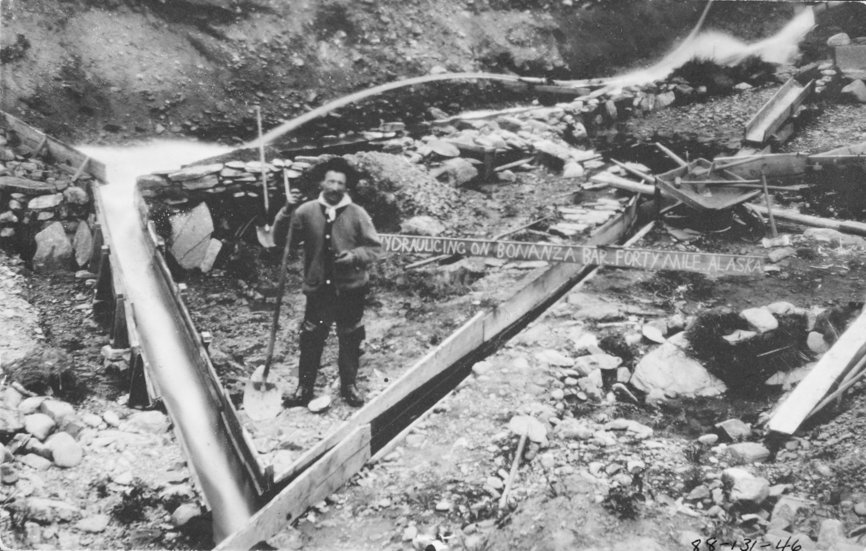
- Sluice Boxes: These longer, more stationary devices consisted of a channel with a series of riffles (bars or grooves) along the bottom. Water and gravel were fed through, and the riffles trapped the heavier gold particles while lighter material washed away. Sluice boxes allowed for continuous operation and significantly higher throughput, moving placer mining from a solitary pursuit to a more organized, potentially multi-person endeavor, hinting at early forms of business finance and operational scaling.
These simple tools, while seemingly primitive, offered the potential for profound returns. A single rich strike could transform a prospector’s financial future overnight, underpinning the intense speculative allure of placer mining.
From Individual Prospector to Commercial Operation
The journey of placer mining often began with individuals, armed with little more than a pan and a pick, seeking their fortune. This archetype of the lone prospector embodies the spirit of self-employment and the pursuit of direct income generation. However, as richer deposits were discovered, and the potential for larger profits became evident, placer mining rapidly evolved into more sophisticated commercial operations.
- Partnerships and Syndicates: Miners would often form partnerships to pool labor, resources, and modest capital, sharing both the risks and the potential rewards. This was an early form of joint venture, a practical approach to business finance in a challenging environment.
- Hydraulic Mining: On a grander scale, hydraulic mining emerged as a powerful, albeit environmentally destructive, method. It involved using high-pressure jets of water to dislodge vast quantities of gravel and sediment, which were then processed through large sluice systems. This required substantial capital investment in pumps, nozzles, and infrastructure, representing a significant jump in business finance and signaling the transition from individual income to industrial-scale profit generation. The immense upfront cost and logistical challenges meant that only well-funded individuals or companies could undertake such operations, highlighting the increasing financial sophistication of the mining industry.
The progression from a solo venture to large-scale industrial operations perfectly illustrates the evolving relationship between resource extraction, investment, and the accumulation of wealth.
Placer Mining and the Global Economy: Fueling Gold Rushes and Development
The impact of placer mining extended far beyond the immediate profits of individual miners. It served as a powerful catalyst for economic development, triggered massive human migrations, and profoundly influenced global financial landscapes. The allure of easily accessible wealth from placer deposits created some of history’s most iconic “gold rushes.”
The Allure of Instant Riches: Economic Migration and Boomtowns
The discovery of rich placer deposits often sparked a frenzied dash for riches, leading to unprecedented economic migration. Events like the California Gold Rush (1848), the Klondike Gold Rush (1896), and the Australian Gold Rushes (1850s) saw hundreds of thousands, if not millions, abandon established lives to seek their fortune.
- Population Booms: These migrations led to sudden, massive population increases in previously sparsely populated areas. This influx of people, driven by the prospect of financial gain, created instant demand for goods and services.
- Boomtown Economies: Mining camps rapidly transformed into bustling boomtowns. Merchants, blacksmiths, innkeepers, and various service providers flocked to these areas, creating vibrant, albeit often chaotic, local economies. The wealth extracted from the ground quickly circulated, stimulating trade, commerce, and early forms of regional financial systems. The immediate availability of gold dust and nuggets as currency facilitated transactions, bypassing traditional banking in its nascent stages.
- Infrastructure Development: To support the growing populations and extract more ore, roads, ports, and even rudimentary banking facilities were developed. These infrastructural investments, driven by the desire to profit from the gold trade, laid the foundations for future economic growth and urbanization.
These gold rushes were powerful engines of capital redistribution and economic acceleration, demonstrating how resource discovery can rapidly reshape geopolitical and financial landscapes.
Financing Empires and Individuals: The Role of Gold
The gold extracted through placer mining served as a fundamental form of wealth, impacting both individual fortunes and national treasuries.
- Individual Wealth Creation: For successful miners, placer gold represented direct, tangible wealth. This newfound capital allowed individuals to purchase land, establish businesses, or simply achieve a level of financial security previously unattainable. It was the ultimate “online income” of its era, albeit requiring physical rather than digital labor.
- Stimulating National Economies: The influx of gold into national economies had profound effects. It expanded the money supply, providing liquidity that could stimulate trade, finance government projects, and back national currencies. The gold extracted from placer deposits directly contributed to the global gold standard, influencing international trade balances and monetary policy for centuries. Nations with significant gold reserves held substantial economic and political power, making placer mining a strategic resource pursuit.
- Financing Ventures and Investments: Gold served as collateral for loans and as direct investment capital. Entrepreneurs used gold to fund new industries, expand existing businesses, and invest in nascent technologies, demonstrating its role as a primary driver of capital formation.
Early Forms of Investment and Speculation
Placer mining itself was a grand experiment in investment and speculation. Individuals “invested” their time, physical labor, and often their entire life savings in the hope of striking rich.
- High-Risk, High-Reward: The uncertainty of finding a rich vein meant that placer mining was inherently a high-risk venture. Many failed, losing everything. But the possibility of an extraordinary reward kept the dream alive, mirroring the speculative nature of modern-day stock markets or venture capital.
- Claim Staking and Real Estate: The staking of a mining claim was an early form of property rights and real estate investment. Miners hoped their chosen patch of land would yield a fortune, effectively betting on the mineral content of specific geographical locations.
- Support Industries as Investment Opportunities: Those who chose not to mine directly often invested in support industries—selling provisions, tools, or providing services to miners. This diversified approach to profiting from a gold rush demonstrates an early understanding of indirect investment strategies, similar to investing in ancillary services for a booming tech sector today.
The Financial Legacy and Modern Echoes of Placer Mining
While the great placer gold rushes may be a thing of the past, the financial lessons and underlying principles of this ancient practice continue to resonate in contemporary economic pursuits.
The Prospector’s Spirit: A Blueprint for Entrepreneurship
The independent placer miner embodies many qualities celebrated in modern entrepreneurship and the pursuit of “online income” or “side hustles”:
- Self-Reliance and Initiative: Miners operated independently, making their own decisions, managing their own time, and bearing full responsibility for their success or failure. This mirrors the drive of solo entrepreneurs.
- Risk-Taking and Perseverance: The willingness to venture into the unknown, endure hardship, and persist despite setbacks is a hallmark of both the prospector and the successful entrepreneur navigating competitive markets or building a new business from scratch.
- Problem-Solving and Adaptability: Faced with unpredictable conditions, miners had to be resourceful, devising new techniques or adapting existing tools. This innovative spirit is crucial for any business seeking to overcome challenges and achieve profitability. The very act of finding a new, more efficient way to extract gold was a direct path to increased income.
From Gold Dust to Digital Gold: Evolution of Wealth Acquisition
The human desire to acquire valuable assets remains constant, even as the “assets” themselves and the methods of acquisition evolve.
- Tangible Assets to Intangible Value: Placer mining focused on extracting a tangible, physical commodity (gold) that held inherent value. Today, while physical commodities remain important, wealth acquisition increasingly involves intangible assets—stocks, intellectual property, or even digital currencies like Bitcoin, often referred to as “digital gold.” The underlying motivation—identifying value and extracting profit—remains the same.
- Resource Extraction in New Forms: Modern “placer mining” might involve identifying undervalued companies, discovering lucrative online niches, or developing innovative software that extracts value from data. The focus shifts from geological deposits to market inefficiencies or technological opportunities, but the core principle of finding and exploiting concentrations of value persists.
Modern Placer Operations: Niche Investments and Hobbyist Income
Placer mining is not entirely relegated to history. It continues today, albeit in more specialized forms:
- Commercial Placer Mining: Large-scale commercial operations still exist, using sophisticated machinery and geological surveys to extract gold and other minerals from extensive placer deposits. These are major investment ventures, requiring significant capital and advanced financial planning.
- Recreational Gold Panning and Prospecting: For many, gold panning and prospecting remain a popular hobby, often pursued in state parks or designated recreational areas. While primarily recreational, finds can occasionally yield a modest income or supplement savings, serving as a unique “side hustle” for enthusiasts. Equipment for modern recreational prospecting, from advanced metal detectors to portable sluice boxes, represents a small, dedicated market of financial tools for a niche pursuit.
- Investing in Mining Companies: Instead of directly panning for gold, modern investors can participate in the potential profits of placer mining (and other forms of mining) by investing in mining stocks or exchange-traded funds (ETFs) that track precious metals. This is a far less physically demanding way to potentially capitalize on resource extraction, shifting the risk from individual labor to market performance.
The Enduring Lessons from the Gold Fields
The legacy of placer mining offers profound insights into economic behavior and wealth generation that are still relevant today.
Risk vs. Reward: The Fundamental Equation
Placer mining was a stark illustration of the direct relationship between risk and reward. The potential for immense wealth was counterbalanced by the high probability of failure, arduous labor, and dangerous conditions. This fundamental equation underpins all investment decisions, from conservative savings to high-stakes venture capital. Understanding this balance is critical for any individual or business aiming for financial success.
Resourcefulness and Innovation in Pursuit of Wealth
The necessity of extracting gold from complex natural environments spurred remarkable ingenuity. Miners constantly innovated, from improving pan techniques to designing more efficient sluice boxes. This demonstrates that innovation, driven by the desire for financial gain, is a powerful force for progress and is applicable to every sector, from digital tools to financial instruments.

The Community and Competition of Riches
Mining camps were microcosms of economic society, characterized by both fierce competition for prime claims and a surprising degree of community and cooperation. Informal economies, systems of credit (often based on gold dust), and rudimentary governance structures emerged rapidly. This highlights the complex social and economic dynamics inherent in any pursuit of wealth, where individual ambition intersects with collective need and market forces.
In conclusion, placer mining was more than a method for extracting minerals; it was a powerful economic engine, a school for entrepreneurs, and a crucible for wealth creation. Its history is a rich tapestry of financial ambition, technological innovation, speculative investment, and profound economic impact. Understanding “what was placer mining” provides a unique lens through which to appreciate the timeless human drive for fortune and the enduring principles that govern the generation and distribution of wealth, echoing through history right into our modern financial world.
aViewFromTheCave is a participant in the Amazon Services LLC Associates Program, an affiliate advertising program designed to provide a means for sites to earn advertising fees by advertising and linking to Amazon.com. Amazon, the Amazon logo, AmazonSupply, and the AmazonSupply logo are trademarks of Amazon.com, Inc. or its affiliates. As an Amazon Associate we earn affiliate commissions from qualifying purchases.