
The hum of a refrigerator, the glow of a laptop screen, the rapid charge of a smartphone—all are made possible by the unseen force of electricity flowing through our homes and offices. In the United States, this ubiquitous energy operates under a specific set of voltage standards that, while seemingly straightforward, are a testament to decades of engineering, safety considerations, and technological evolution. Understanding “what voltage is used in the US” is more than a technical curiosity; it’s fundamental to appreciating how our modern technological landscape functions, ensuring safety, and navigating a globally connected world of devices and appliances.
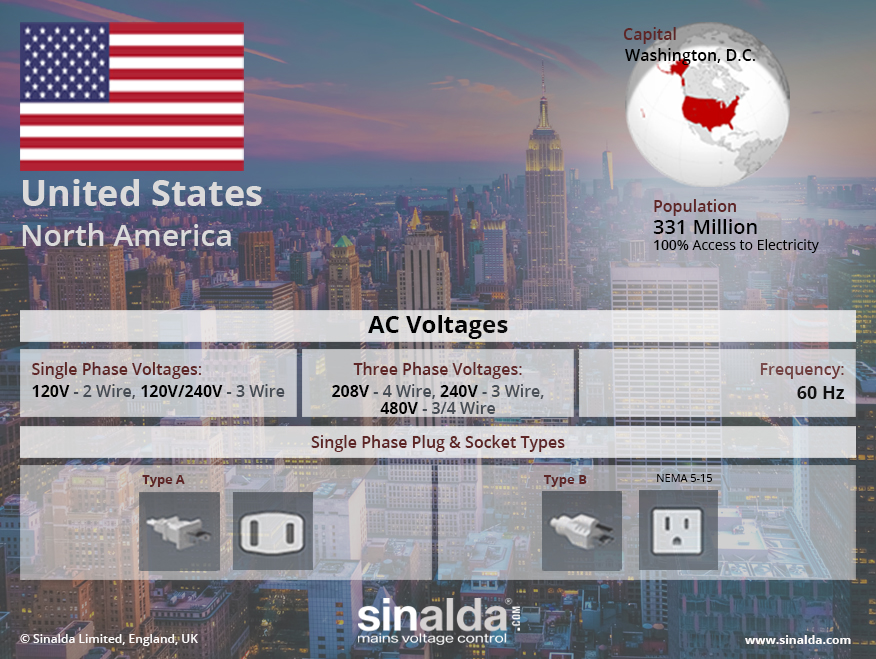
While many might quickly offer “120 volts” as the answer, the reality is a nuanced dual-voltage system designed to efficiently and safely power everything from sensitive electronics to heavy-duty machinery. This article will demystify the US electrical grid, delve into its engineering principles, explore its global implications, and touch upon its future evolution, all through the lens of technology.
The Standard US Electrical Grid: A Dual-Voltage System at Work
At its core, the American electrical system for residential and light commercial use is characterized by a split-phase alternating current (AC) delivery that provides two primary voltage levels. This ingenious design allows for versatility, efficiency, and safety, catering to the diverse power demands of a technological society.
120 Volts: Powering Everyday Life and Modern Gadgets
The most commonly encountered voltage in US homes and offices is approximately 120 volts. More precisely, it’s often within a range of 110-127 volts, with 120V being the nominal standard. This voltage is delivered via standard wall outlets, identifiable by their two vertical slots and a round grounding hole (NEMA 5-15R).
This 120V supply is the workhorse for the vast majority of our personal technology and daily conveniences. Think of your laptop charger, smartphone power adapter, television, lamps, small kitchen appliances like blenders and toasters, and various entertainment systems. These devices are designed to operate safely and efficiently at this voltage. The choice of 120V (derived from historical 110V/115V systems) was largely influenced by factors like safety (lower voltage means less current for a given power, which can be safer to handle), and the initial prevalence of incandescent lighting, which was economical at this voltage. The ubiquity of 120V ensures that a wide array of consumer electronics and plug-and-play gadgets are directly compatible, making them easy to use straight out of the box without special adapters within the US.
240 Volts: The Heavy Lifters of Home Technology
While 120V handles the lighter loads, the US electrical system also provides 240 volts for appliances and technologies that demand significantly more power. This higher voltage isn’t a separate grid; it’s derived from the same split-phase service entering a building, effectively using both “hot” legs of the incoming power simultaneously.
Appliances like electric clothes dryers, ovens and ranges, central air conditioning units, electric water heaters, and increasingly, Level 2 electric vehicle (EV) chargers, all utilize 240V. These devices require more power to operate their heating elements or large motors efficiently. The advantage of using 240V for these high-demand applications lies in electrical physics: for a given amount of power (watts), doubling the voltage halves the current (amperes). Lower current means smaller gauge wiring can be used, less heat is generated in the wires, and power transmission is more efficient, reducing energy loss and ensuring the appliance performs optimally without tripping circuit breakers designed for 120V circuits. These 240V outlets are distinct from 120V ones, often featuring different prong configurations (e.g., NEMA 10-30R, 14-30R, 14-50R) to prevent accidental plugging in of 120V devices, highlighting a critical safety and design consideration in the tech world.
The Engineering and Safety of US Electrical Systems
The dual-voltage system is not merely a historical artifact; it’s a sophisticated engineering solution that balances power delivery with safety and efficiency. Understanding the underlying principles reveals the depth of thought that went into creating our robust electrical infrastructure.
Split-Phase Power: The Genius Behind the Grid
The secret to the US dual-voltage system lies in “split-phase” power. Electricity enters a typical US home from a utility pole transformer, which steps down the high voltage from power lines to a more usable level. This transformer delivers two 120V “hot” wires (often referred to as L1 and L2) that are 180 degrees out of phase with each other, along with a neutral wire and a ground wire.
When a device is connected between one of the 120V hot wires and the neutral wire, it receives 120V. When a device is connected between the two 120V hot wires (L1 and L2), the voltage difference between them is 240V. The neutral wire carries any unbalanced current back to the transformer, while the ground wire provides a critical safety path for fault currents. This elegant solution offers the flexibility to power both low-demand electronics and high-demand appliances from a single service entrance, optimizing infrastructure and reducing costs compared to separate single-voltage systems.
AC vs. DC: Why Alternating Current Dominates
It’s also worth briefly acknowledging the “War of the Currents” between Thomas Edison’s direct current (DC) and Nikola Tesla’s alternating current (AC). AC emerged victorious for grid-scale power distribution, primarily because its voltage can be easily stepped up or down using transformers. High voltages are ideal for long-distance transmission, as they minimize energy loss (power loss is proportional to the square of the current, so higher voltage means lower current for the same power). Once power reaches a local substation, transformers step it down to distribution voltages, and finally, for residential use, to the 120/240V we utilize. While many modern electronic devices operate internally on DC (using rectifiers and converters in their power supplies), AC remains the most practical and efficient method for large-scale power delivery.
Grounding and Electrical Safety Standards
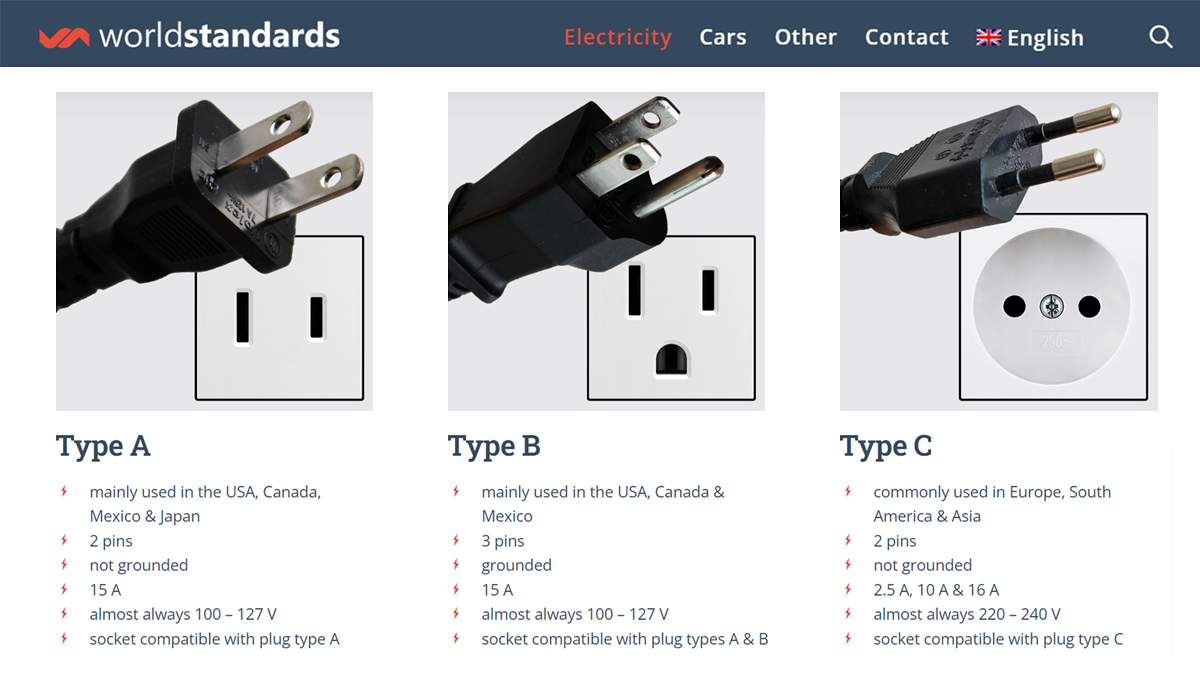
Safety is paramount in electrical systems, especially with the proliferation of sensitive electronics and high-power appliances. The third, round prong on many US plugs is the “ground” or “earth” connection. This ground wire provides a direct path to the earth for any stray current in the event of an electrical fault (e.g., a short circuit where a hot wire touches the metal casing of an appliance). This rapidly directs the fault current away from the user and back to the source, typically tripping a circuit breaker or blowing a fuse, thus preventing electric shock and fire.
The National Electrical Code (NEC), enforced throughout the US, sets the standards for safe electrical installation and wiring. Beyond basic grounding, modern safety technologies like Ground Fault Circuit Interrupters (GFCIs) in bathrooms and kitchens, and Arc Fault Circuit Interrupters (AFCIs) in bedrooms, further enhance protection. GFCIs detect minuscule differences in current flow, indicating a ground fault, and quickly shut off power. AFCIs detect dangerous electrical arcs (which can cause fires) and interrupt the circuit. These technological advancements in safety demonstrate a continuous evolution to protect users and property in an increasingly electrified world.
Global Voltage Variations and Their Tech Implications
For the tech-savvy individual, the world extends beyond US borders. International travel, global e-commerce, and multinational businesses frequently encounter different electrical standards, making an understanding of US voltage even more critical in a global context.
Navigating International Power: Adapters vs. Converters
When traveling abroad, or importing electronics, the difference between plug adapters and voltage converters (or transformers) becomes vitally important.
- Plug Adapters: These are purely mechanical devices that change the shape of a plug’s prongs to fit into a foreign outlet. They do not change the voltage. If you plug a 120V US device into a 240V European outlet using only an adapter, you risk severely damaging the device or even causing a fire.
- Voltage Converters/Transformers: These devices electrically alter the voltage. A step-down converter transforms higher foreign voltage (e.g., 240V) to lower US voltage (120V), and a step-up converter does the reverse. Converters are essential for single-voltage devices (like many hair dryers, curling irons, or older small appliances) when used in a country with a different voltage standard.
The good news for modern technology is that many gadgets, such as laptop power bricks, smartphone chargers, and camera battery chargers, are “universal voltage” compatible. They often have an input rating like “Input: 100-240V ~ 50/60Hz,” meaning they can automatically adapt to voltages between 100V and 240V and frequencies of 50 or 60 Hz. For these devices, only a simple plug adapter is needed. This technological innovation significantly simplifies international travel for digital nomads and global professionals.
The Impact on Gadgets and Appliances
The disparity in global voltages poses significant challenges for appliance manufacturers and consumers. A company selling an electric kettle in the US must design it for 120V operation, while the same company selling in the UK would design it for 230V. This often means different internal components (e.g., heating elements) and potentially different power ratings, making cross-border use of single-voltage appliances problematic without the correct conversion equipment.
For consumers, failure to heed voltage differences can lead to anything from a non-functional device to a dangerous electrical hazard. It underscores the importance of checking the voltage specifications on any electronic device or appliance before plugging it into an unfamiliar outlet, whether domestically or internationally. This global perspective highlights how crucial national voltage standards are in shaping the design and usability of technology worldwide.
Evolving Power Needs: The Future of US Voltage
The electrical grid isn’t static; it’s constantly evolving to meet new technological demands and environmental imperatives. Understanding the current voltage standards also helps us appreciate the challenges and innovations shaping the future of power delivery in the US.
Renewable Energy Integration
The rise of renewable energy sources like solar and wind power presents unique challenges and opportunities for the existing AC grid. Solar panels generate DC power, which must be converted to AC by inverters to be compatible with home electrical systems and the wider grid. Wind turbines generate AC power, but often at varying frequencies and voltages, requiring sophisticated power electronics to synchronize with the grid. Integrating these distributed energy resources efficiently and maintaining grid stability requires continuous innovation in power conversion technology, smart grid management systems, and robust infrastructure that can handle bidirectional power flow.
Electric Vehicles and Charging Infrastructure
The rapid adoption of electric vehicles (EVs) is significantly impacting residential and public electrical infrastructure. While Level 1 charging uses standard 120V outlets (albeit slowly), Level 2 charging typically requires a 240V circuit, similar to an electric clothes dryer. The proliferation of home EV chargers means more 240V circuits are being installed in garages, placing a higher, continuous load on residential electrical services. Furthermore, public DC Fast Charging stations operate at much higher voltages and currents, posing substantial demands on local grid capacity. This shift necessitates upgrades to transformers, wiring, and potentially even the service entrance of homes and communities, driving further technological developments in energy management and distribution.
Smart Homes and Energy Efficiency
The smart home revolution relies heavily on stable and clean power. Smart thermostats, lighting systems, security cameras, and voice assistants are all sensitive electronic devices that require reliable voltage. Advances in power monitoring and control allow these devices to optimize energy consumption, but their functionality depends on the underlying electrical infrastructure. The drive towards energy efficiency also influences voltage standards, as engineers seek ways to minimize power loss across the grid and within individual appliances, potentially exploring localized DC microgrids or higher-efficiency AC systems in the future.
Conclusion
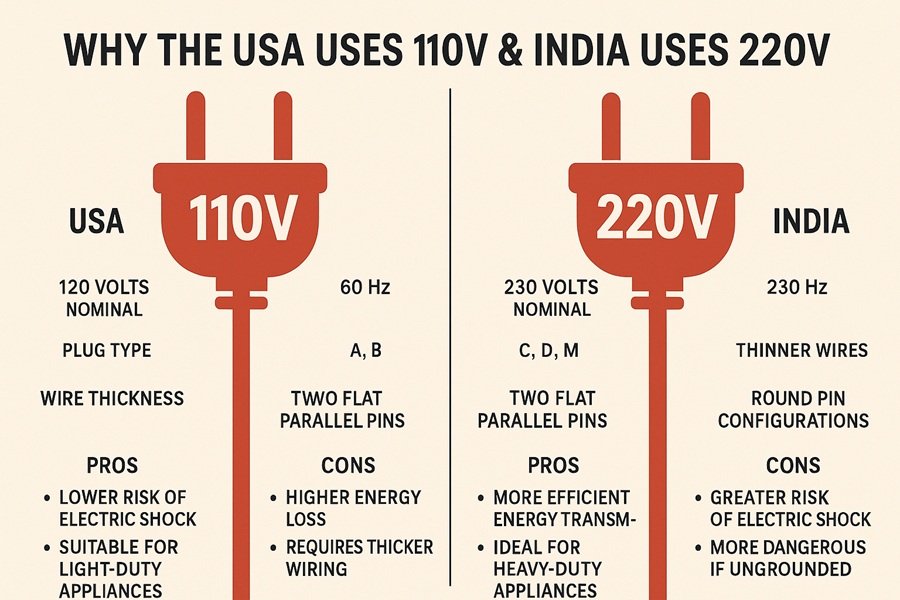
The question “what voltage is used in the US?” reveals a sophisticated engineering marvel: a dual-voltage system delivering 120V for everyday electronics and 240V for high-power appliances. This strategic design balances safety, efficiency, and versatility, enabling the technological conveniences we often take for granted. From the precise engineering of split-phase power to the critical role of grounding and the ever-evolving landscape of global voltage standards, understanding our electrical infrastructure is crucial for anyone interacting with modern technology. As renewable energy, electric vehicles, and smart homes continue to reshape our energy demands, the fundamental principles of US voltage will remain a critical foundation, constantly adapting to power the next wave of American innovation.
aViewFromTheCave is a participant in the Amazon Services LLC Associates Program, an affiliate advertising program designed to provide a means for sites to earn advertising fees by advertising and linking to Amazon.com. Amazon, the Amazon logo, AmazonSupply, and the AmazonSupply logo are trademarks of Amazon.com, Inc. or its affiliates. As an Amazon Associate we earn affiliate commissions from qualifying purchases.