
The hum of electricity is the unspoken soundtrack to modern life, powering everything from our morning coffee makers to the intricate data centers driving global communication. Yet, a fundamental question often goes unasked: what specific voltage standards underpin this ubiquitous utility in the United States? This seemingly simple query unravels a complex interplay of historical decisions, technical engineering, and practical implications that shape how technology functions and innovates across the nation. Understanding the specific voltage standards—primarily 120V and 240V—is not just an academic exercise; it’s crucial for appliance compatibility, electrical safety, and appreciating the foundational technology that fuels American homes and industries.
The Standard American Electrical Supply: 120V and 240V
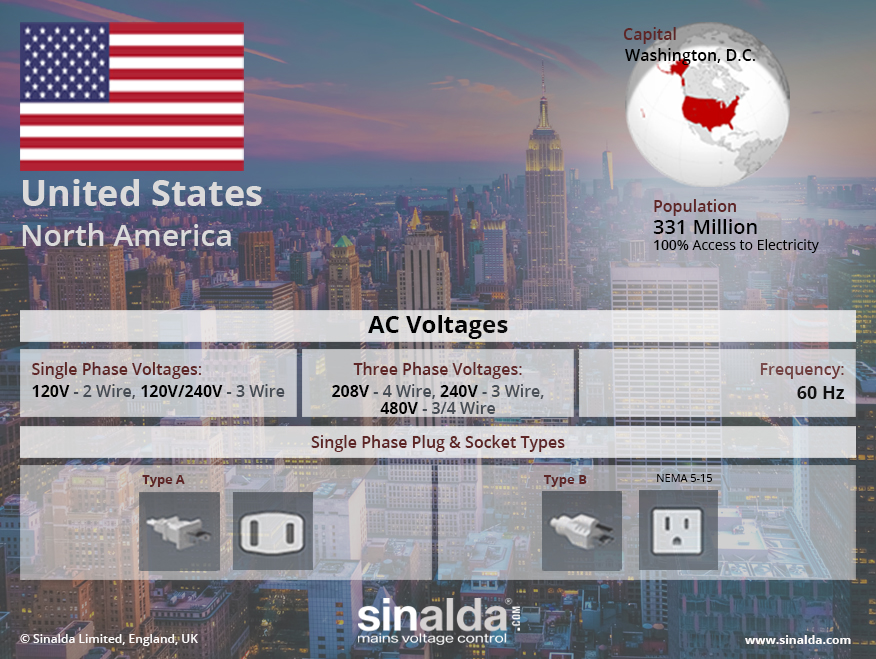
The United States employs a distinctive electrical system characterized by two primary voltage levels for residential and light commercial use: 120 volts and 240 volts. This dual-voltage standard is a hallmark of the American power grid, designed to efficiently supply a wide array of electrical devices, from low-power electronics to high-demand appliances.
The Ubiquitous 120-Volt Standard
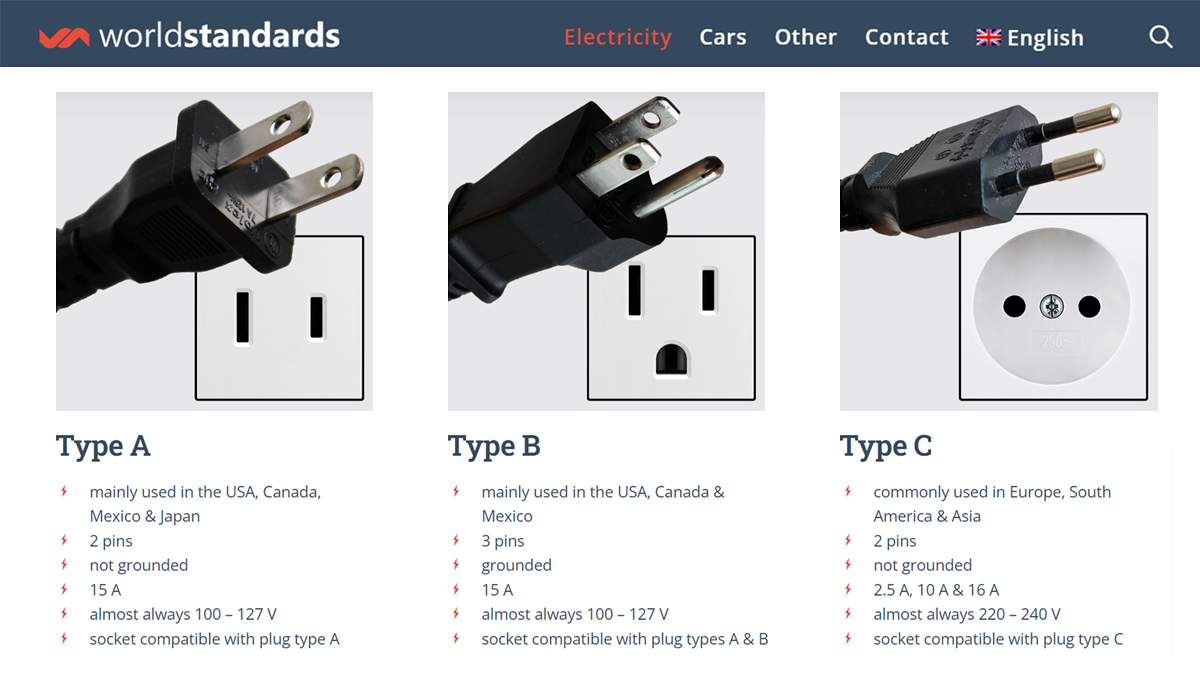
For the vast majority of consumer electronics, lighting fixtures, and small household appliances, the standard voltage supplied to outlets is 120 volts (V). Historically, this was often referred to as 110V or 115V, and while the nominal standard is 120V, minor fluctuations within this range are common and generally safe for modern devices. This single-phase alternating current (AC) supply is delivered through standard NEMA 5-15R receptacles (the common three-prong wall outlets).
The 120V standard is ideal for devices that don’t require significant power to operate. Think of smartphone chargers, lamps, televisions, computers, blenders, and vacuum cleaners. These devices are designed to draw relatively low amperage at 120V, making the system safer and easier to manage for general use. The RMS (Root Mean Square) voltage, which represents the effective voltage of the AC waveform, is what we refer to when we say 120V. This standard ensures that everyday gadgets and essential household items can operate reliably and safely without requiring complex power conversion.
The Robust 240-Volt Standard
While 120V handles the everyday, certain high-power appliances demand a more robust electrical supply. This is where the 240-volt standard comes into play. Appliances such as electric clothes dryers, ovens, water heaters, central air conditioning units, and some electric vehicle chargers typically utilize 240V. Delivering power at a higher voltage for these energy-intensive devices allows them to operate more efficiently and draw less current, which can reduce heat generation in the wiring and enable smaller gauge wiring than would be needed if they operated on 120V.
The 240V supply in a residential setting is derived from what is known as a “split-phase” system. Instead of simply doubling the voltage, the utility provides two 120V “hot” wires that are 180 degrees out of phase with each other, along with a neutral wire and a ground wire. When an appliance is connected across these two hot wires, it receives a potential difference of 240V. This ingenious setup allows a single service drop from the utility pole to provide both 120V and 240V power throughout a home, offering remarkable versatility.
Why Not Higher Voltages Like Europe? A Historical Perspective
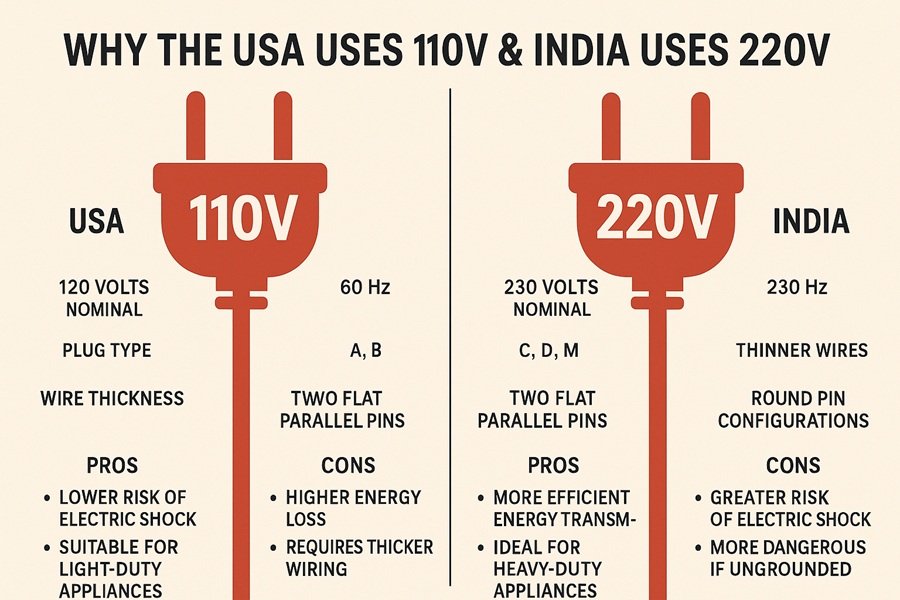
The United States’ preference for 120V, as opposed to the 230V or 240V common in many parts of Europe and other regions, is rooted deeply in the history of electrical distribution. Thomas Edison’s early direct current (DC) systems in the late 19th century initially used 110V for incandescent lighting, primarily due to the limitations of lamp filament technology at the time. When Nikola Tesla and George Westinghouse championed alternating current (AC), they largely adopted similar voltage levels to facilitate the conversion and adoption of AC systems without requiring wholesale changes to existing DC-era infrastructure and appliances.
The decision to stick with 120V also had perceived safety advantages. At the time of widespread electrical adoption, lower voltages were believed to be inherently safer for general public use, reducing the risk of fatal shocks. While modern electrical safety standards and grounding practices significantly mitigate these risks regardless of voltage, the historical precedent was set. Europe, facing different technological and economic landscapes during their electrification, often started with higher voltages, which allowed for more efficient power transmission over longer distances with thinner wires, an economic advantage that became more pronounced over time. This divergence in standards created the two major electrical “camps” we see globally today.
The Technical Mechanics of US Electrical Distribution
Understanding the nominal voltages is just one piece of the puzzle. The underlying technical mechanics of how electricity is generated, transmitted, and ultimately delivered to homes and businesses in the US are equally critical for comprehending the reliability and safety of the system.
From Grid to Home: The Journey of Electricity
The journey of electricity in the US begins at power generation plants, where massive generators produce electricity at tens of thousands of volts. This power is then stepped up by transformers to extremely high transmission voltages (hundreds of thousands of volts) to minimize energy loss over long distances across the national grid. These high-voltage lines crisscross the country, feeding into substations.
At substations, transformers step down the voltage to lower levels (e.g., 7,200V or 12,470V) for local distribution within communities. From these distribution lines, pole-mounted or pad-mounted transformers further step down the voltage to the specific levels used in homes and businesses. For a typical residential service, this final transformer converts the distribution voltage to the familiar 240V split-phase supply that is delivered to the customer’s service entrance (the electrical meter).
Split-Phase Wiring and its Advantages
The split-phase system is a cornerstone of American residential wiring. From the utility pole transformer, three wires typically run to a home: two “hot” wires (L1 and L2) and one “neutral” wire. Both L1 and L2 carry 120V relative to the neutral wire, but they are 180 degrees out of phase with each other. This means when L1 is at its peak positive voltage, L2 is at its peak negative voltage, and vice-versa.
This configuration offers distinct advantages. By connecting an appliance between L1 and the neutral, or L2 and the neutral, you get 120V. By connecting an appliance between L1 and L2, you get 240V. This flexibility allows a single electrical panel to accommodate both low-power and high-power appliances. Additionally, it helps balance the load across the two legs of the transformer, ensuring more efficient and stable power delivery to the entire residence. The neutral wire carries the unbalanced current between the two hot legs, ensuring that the total current returning to the transformer is minimized if the loads on L1 and L2 are balanced.
Understanding Cycles and Frequency: 60 Hertz
Beyond voltage, another critical electrical standard in the US is frequency, which is set at 60 Hertz (Hz). Hertz refers to the number of complete cycles (alternations) the AC current makes per second. This means the direction of current flow reverses 60 times per second.
The 60 Hz standard affects the operation of many electrical devices, particularly those with motors, transformers, and certain electronic timing circuits. For instance, an electric motor designed for 60 Hz will operate at a different speed and efficiency if supplied with 50 Hz power, and vice-versa. This is why international travelers often need to consider not just voltage but also frequency compatibility for some appliances, especially older ones or those with mechanical components. The choice of 60 Hz in the US (and 50 Hz in many other countries) also stems from historical factors, largely influenced by early generator and motor designs, and once established, changing such a fundamental grid parameter becomes prohibitively expensive and disruptive.
Implications for Technology, Gadgets, and Safety
The specific voltage and frequency standards in the US have profound implications for technology development, consumer electronics, industrial applications, and, most critically, electrical safety.
Appliance Compatibility and Converters
One of the most immediate consequences of varying international electrical standards is appliance compatibility. A device designed to operate solely on 230V/50Hz will likely be damaged if plugged directly into a 120V/60Hz outlet in the US without the proper equipment. Similarly, a 120V device might not function optimally or could even be damaged if taken to a 230V country without adaptation.
Modern electronics, especially laptops, phone chargers, and many travel appliances, often feature “universal” or “auto-sensing” power supplies, marked with input ratings like “Input: 100-240V ~ 50/60Hz.” These devices can automatically adjust to the available voltage and frequency, requiring only a simple physical plug adapter. However, high-power appliances like hair dryers, curling irons, or small kitchen appliances usually require a step-down voltage converter (a transformer) when traveling from a higher voltage region to a lower voltage region, or vice-versa, to physically transform the voltage. Failing to distinguish between these needs can lead to damaged devices or, worse, electrical hazards.
Data Centers and Industrial Applications
While 120V and 240V are standard for residential use, large-scale commercial and industrial facilities, particularly data centers, often utilize different voltage standards for efficiency and power delivery. Common industrial voltages include three-phase 208V, 480V, or even higher, often at the same 60 Hz frequency. Three-phase power is significantly more efficient for large motors and heavy industrial equipment, providing constant power delivery and reducing current requirements for very high loads.
Data centers, which consume immense amounts of electricity, benefit greatly from higher voltages. Deploying servers and networking equipment directly on 208V or 240V (from a three-phase system) reduces current draw, allowing for thinner wiring, less heat generation, and greater power density within server racks. This optimization is critical for managing cooling costs and ensuring uninterrupted operation of critical digital infrastructure.
Electrical Safety and Grounding
The design of the US electrical system places a strong emphasis on safety. Beyond simply providing power, the system incorporates features like grounding and circuit breakers to protect users and property. The third, round prong on a standard NEMA 5-15P plug is connected to the grounding wire, which provides a safe path for fault currents directly back to the earth, bypassing the user in case of an insulation failure or short circuit. This drastically reduces the risk of electrical shock.
Ground Fault Circuit Interrupter (GFCI) outlets, commonly found in bathrooms, kitchens, and outdoor areas, provide an additional layer of protection. GFCIs monitor the current flowing in and out of a circuit. If they detect an imbalance—indicating that current is leaking out through an unintended path, such as through a person—they rapidly trip and cut off power, preventing electrocution. These safety mechanisms are integral to making the 120V/240V system safe for daily interaction.
The Future of US Power: Smart Grids and Renewables
The US electrical grid is not static; it’s undergoing significant transformation. The move towards smart grids involves integrating digital technologies to monitor, manage, and optimize the delivery of electricity, often leveraging two-way communication. Renewable energy sources like solar panels and wind turbines are increasingly feeding power back into the grid, sometimes at the local level.
Electric vehicle (EV) charging also presents new demands on residential and commercial electrical systems, often requiring dedicated 240V circuits. As distributed generation and EV adoption grow, understanding voltage stability, power quality, and the capacity of existing infrastructure becomes even more critical. The foundational 120V/240V standards will continue to serve as the baseline, but intelligent management systems and potentially new localized voltage regulation technologies will play a crucial role in maintaining reliability and efficiency in this evolving landscape.
Practical Considerations for Consumers and Businesses
For anyone interacting with the electrical system, whether setting up a new appliance or planning a home renovation, a basic understanding of US voltage standards translates into practical benefits and informed decisions.
Home Renovation and Electrical Upgrades
When undertaking home renovations, particularly those involving new kitchens, laundry rooms, or additions, it’s vital to consider the electrical requirements. Installing high-power appliances like an electric stove, oven, or clothes dryer typically necessitates running a dedicated 240V circuit with appropriate wiring gauge and a corresponding breaker in the electrical panel. An older home’s electrical panel might not have the capacity or available slots for new 240V circuits, or even sufficient 120V circuits for modern loads. Consulting with a licensed electrician is crucial for assessing current capacity, planning upgrades, and ensuring all work complies with the National Electrical Code (NEC) for safety and efficiency. Attempting DIY electrical work beyond simple outlet replacement can be dangerous and lead to severe hazards.
Traveling with Electronics: What to Know
For international travelers visiting the US, or Americans traveling abroad, knowing the voltage difference is paramount. Always check the input voltage specifications on your electronic devices. As mentioned, most modern portable electronics (laptops, phones, tablets) are dual-voltage (100-240V) and only require a simple plug adapter to fit US outlets. However, for higher-wattage devices that are single-voltage, a step-down transformer (voltage converter) is necessary. Using the wrong equipment can result in appliance damage, blown fuses, or even fire hazards. It’s always safer to err on the side of caution and verify compatibility or use a trusted converter.
Energy Efficiency and Voltage Optimization
While the utility provides power at nominal voltages, minor fluctuations can occur. Maintaining stable voltage within specified tolerances is important for energy efficiency. Appliances are designed to operate optimally within a certain voltage range. Significant deviations can lead to reduced efficiency, increased energy consumption, or premature wear and tear on components. In some industrial settings, voltage optimization systems are employed to ensure consistent power delivery and maximize the lifespan and efficiency of sensitive equipment. For residential consumers, ensuring good wiring and avoiding heavily overloaded circuits can contribute to more stable voltage and efficient operation of their electronics and appliances.
The question “what voltage is used in the United States?” opens a window into the foundational technical infrastructure that powers American life. The dual 120V and 240V system, alongside the 60 Hz frequency, is a legacy of historical choices and engineering ingenuity, meticulously designed for both versatility and safety. From the historical battles of AC vs. DC to the complex split-phase wiring within our homes, and from the safety features of GFCI outlets to the high-demand needs of data centers, these electrical standards are not mere technical specifications. They are the silent, constant force enabling our digital age, fueling innovation, and ensuring the seamless operation of the vast array of technologies that define modern American society. Understanding these fundamentals empowers us to use technology more safely, efficiently, and effectively in an increasingly electrified world.
aViewFromTheCave is a participant in the Amazon Services LLC Associates Program, an affiliate advertising program designed to provide a means for sites to earn advertising fees by advertising and linking to Amazon.com. Amazon, the Amazon logo, AmazonSupply, and the AmazonSupply logo are trademarks of Amazon.com, Inc. or its affiliates. As an Amazon Associate we earn affiliate commissions from qualifying purchases.