
The phenomenon of the Family Guy Star Wars episodes transcends mere entertainment; it represents a fascinating case study in brand strategy, intellectual property navigation, and the power of creative content to sustain and expand audience engagement. While the primary question might be a straightforward query about seasonal placement, the deeper insight lies in understanding why these episodes were created, how they impacted the Family Guy brand, and what lessons they offer for contemporary brand development and marketing. At their core, these episodes are a masterclass in leveraging established cultural touchstones to reinforce brand identity and create enduring value.

The Galactic Symphony: Unpacking the Family Guy Star Wars Phenomenon
The Family Guy Star Wars parodies, collectively known as the “Laugh It Up, Fuzzball” trilogy, are iconic within the animated comedy landscape. They are renowned for their meticulous recreation of key Star Wars scenes, combined with Family Guy‘s signature irreverent humor and cutaway gags. This unique blend created content that appealed simultaneously to devout Star Wars fans and the loyal Family Guy viewership, effectively doubling down on existing brand affinities.
A Chronological Overview: The “Laugh It Up, Fuzzball” Trilogy
To directly answer the question, the Family Guy Star Wars episodes are spread across several seasons, each parodying an original Star Wars film:
- “Blue Harvest” (Season 6, Episode 1): A parody of Star Wars: Episode IV – A New Hope. This episode aired on September 23, 2007, marking the beginning of the trilogy.
- “Something, Something, Something, Dark Side” (Season 8, Episode 20): This installment parodies Star Wars: Episode V – The Empire Strikes Back. It was released directly to DVD and Blu-ray on December 22, 2009, before airing on television on May 23, 2010.
- “It’s a Trap!” (Season 9, Episode 18): Concluding the trilogy, this episode parodies Star Wars: Episode VI – Return of the Jedi. It also saw an initial release on DVD and Blu-ray on December 21, 2010, before its television broadcast on May 22, 2011.
While the “Laugh It Up, Fuzzball” trilogy officially covers the original three Star Wars films, the influence and cultural impact extend far beyond these specific seasons, cementing Family Guy‘s reputation for audacious and culturally resonant parodies.
More Than Just a Parody: A Brand-Building Masterstroke
The decision to embark on such an ambitious parody project was not merely a creative whim; it was a strategic brand maneuver. By immersing its characters in the Star Wars universe, Family Guy managed to achieve several critical branding objectives. It demonstrated the show’s cultural fluency, its ability to comment on and engage with massive pop culture narratives, and its willingness to push creative boundaries. This wasn’t just a funny episode; it was a statement about Family Guy‘s brand identity: sharp, satirical, and unafraid to tackle sacred cows, even those owned by other media giants.
Strategic Brand Alchemy: Leveraging Iconic IP for Enduring Engagement
The success of the Family Guy Star Wars episodes offers a compelling blueprint for how brands can creatively engage with existing intellectual property (IP) to enhance their own market position and audience connection. It highlights a sophisticated understanding of fan culture and the dynamics of popular media.
The Universal Appeal of Crossover Content
Crossover content, particularly when it involves two widely recognized brands like Family Guy and Star Wars, inherently taps into multiple fan bases. This creates a powerful synergy: Star Wars fans, curious to see their beloved saga satirized, tuned in to Family Guy, potentially discovering a new show. Conversely, Family Guy fans, already familiar with the show’s humor, were treated to a unique interpretation of a cultural phenomenon, deepening their appreciation for the show’s creative range. This cross-pollination is invaluable for brand growth, introducing the brand to new demographics without expensive, traditional marketing campaigns. It’s an organic form of audience expansion driven by shared cultural touchpoints.
The Art of Homage and Transformation: Branding Through Parody
Parody, when executed skillfully, is more than simple imitation; it’s a transformative art form. The Family Guy episodes succeeded because they were not malicious or disrespectful; rather, they were a loving homage filtered through Family Guy‘s distinctive comedic lens. The show meticulously recreated scenes and dialogue, allowing fans to appreciate the familiarity, while simultaneously subverting expectations with its characteristic humor. This approach reinforced Family Guy‘s brand as clever and observant, capable of both reverence and ridicule. For Star Wars, it was an acknowledgment of its pervasive cultural influence, demonstrating that the brand was robust enough to withstand and even thrive under playful satire. This dynamic interaction between brands, even without formal partnership, speaks volumes about the original IP’s strength and the parodist’s creative prowess.
Expanding Reach and Reinforcing Brand Identity
These episodes profoundly impacted Family Guy‘s brand. They elevated its status from a popular animated sitcom to a cultural commentator. By engaging with such a monumental franchise, Family Guy demonstrated its capacity for ambition and its understanding of the broader entertainment landscape. For Star Wars, even as the subject of parody, it underlined its status as an inescapable cultural touchstone, constantly being referenced and reinterpreted. This indirect interaction ultimately strengthened both brands by making them more visible, more relevant, and more conversation-worthy within the broader pop culture discourse. The episodes became a talking point, extending the lifespan and cultural relevance of both franchises in new and exciting ways.
The Business of Pop Culture Crossovers: Measuring Brand Value and Impact
Beyond creative accolades, the Family Guy Star Wars episodes delivered significant commercial and strategic benefits, underscoring the tangible value of intelligent brand-to-brand engagement, even in the absence of a formal co-branding agreement.
Fan Loyalty and Community Building
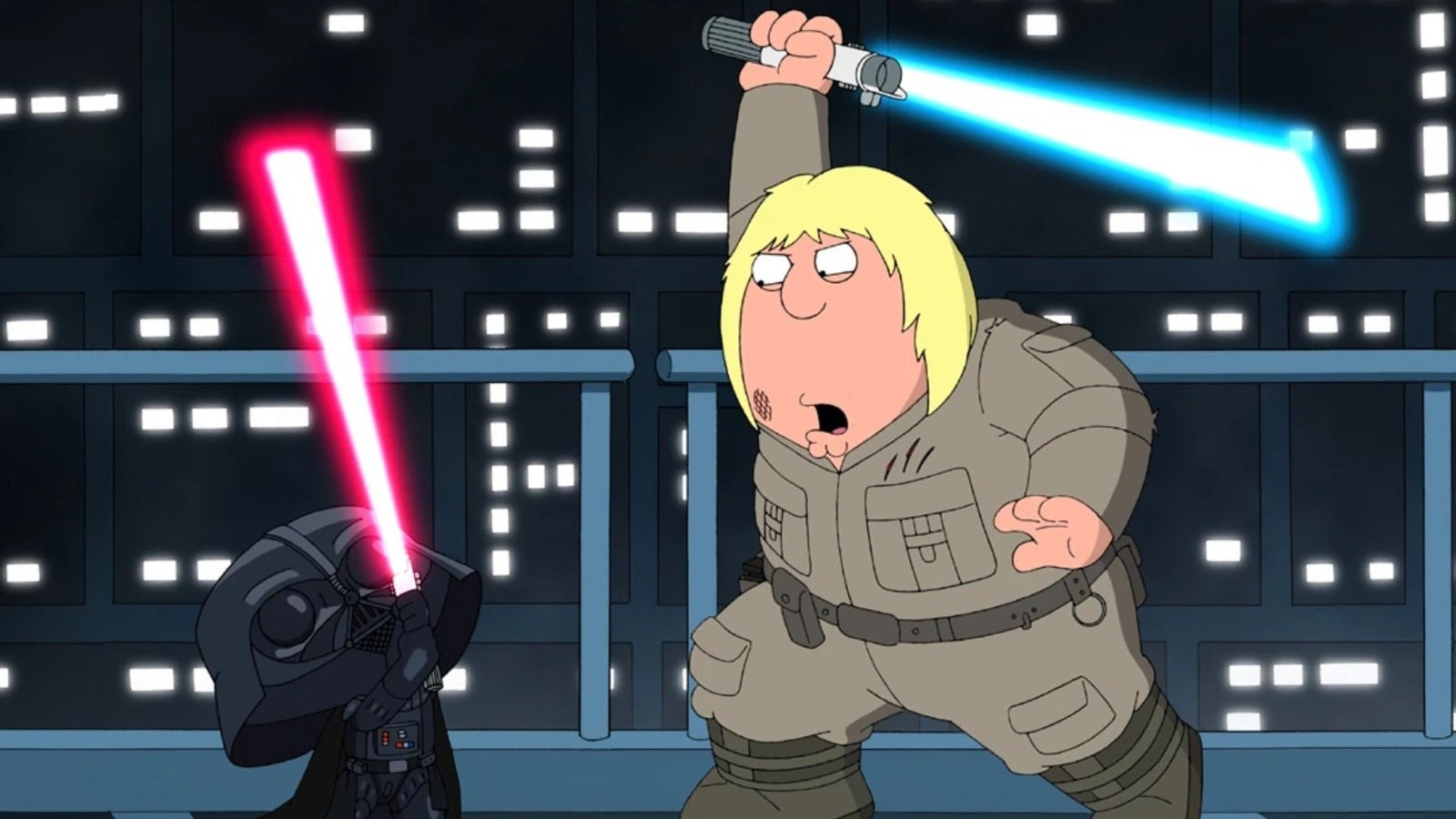
The “Laugh It Up, Fuzzball” trilogy was a gift to existing fans and a beacon for new ones. It created shared experiences and talking points, fostering a stronger sense of community around the Family Guy brand. Discussions about the accuracy of the parodies, the cleverness of the jokes, and the juxtaposition of characters became fodder for online forums, social media, and water cooler conversations. This level of organic engagement is a hallmark of strong brand loyalty. By catering to a dual fandom, Family Guy solidified its position as a show that understood its audience’s diverse interests, further entrenching viewer loyalty and encouraging continued viewership.
Merchandise, Ancillary Products, and Revenue Streams
While exact figures are often proprietary, the commercial success of these episodes was evident through DVD sales, merchandise, and continued syndication. Special edition DVDs and Blu-rays of the trilogy were highly anticipated and sold well, generating significant ancillary revenue. The unique appeal of Family Guy characters dressed as Star Wars characters also opened up new avenues for merchandise, from action figures to apparel, extending the Family Guy brand into new product categories. This demonstrates how compelling content, even if it’s a parody, can become a valuable asset in itself, capable of driving diverse income streams beyond initial broadcast revenue. It’s a testament to the fact that cultural impact often translates directly into financial success for a well-managed brand.
A Cultural Barometer: Setting Trends in Brand Storytelling
The Family Guy Star Wars episodes weren’t just successful; they were trendsetting. They demonstrated a powerful model for engaging with iconic IP that has since been emulated in various forms across different media. They proved that brands could play with established narratives in a way that feels fresh, relevant, and respectful, without needing direct corporate collaboration. This approach has informed how other brands consider their relationship with pop culture, encouraging a more playful and referential approach to content creation. They set a high bar for what a parody could achieve, not just as comedy, but as a strategic brand move, influencing how future brands would tell their stories and connect with their audiences.
Navigating the Intellectual Property Landscape: Lessons for Modern Brands
The creation and reception of the Family Guy Star Wars episodes also provide invaluable insights into the complex world of intellectual property, particularly the nuanced relationship between parody, fair use, and implied consent in an era of ubiquitous content sharing.
The Fine Line Between Homage and Infringement
One of the most delicate aspects of the “Laugh It Up, Fuzzball” trilogy was its navigation of IP law. In the United States, parody is generally protected under the “fair use” doctrine of copyright law, which allows limited use of copyrighted material without permission for purposes such as criticism, comment, news reporting, teaching, scholarship, or research. Parody, specifically, is considered transformative because it creates new meaning or messages by satirizing the original work. Family Guy successfully walked this line, making it clear that their episodes were comedic reinterpretations rather than attempts to usurp or directly compete with the original Star Wars films. This careful approach is a vital lesson for any brand considering content that draws heavily from existing IP: the intent and transformative nature of the new work are paramount.
Brand Synergy Without Formal Collaboration
What makes the Family Guy Star Wars episodes particularly noteworthy from a brand perspective is that they were produced without an official, direct licensing agreement between 20th Century Fox (then owners of Family Guy) and Lucasfilm (then owners of Star Wars, prior to Disney’s acquisition). While there was an informal understanding and reportedly a degree of approval from George Lucas himself, it wasn’t a traditional brand partnership. This illustrates that brands can achieve significant synergy and mutual benefit through respectful, transformative use of another brand’s IP, provided they operate within legal boundaries and with an understanding of cultural norms. It highlights the power of “borrowed equity” when done thoughtfully and strategically.
A Model for Future Content Creators and IP Holders
For content creators, the Family Guy trilogy serves as an aspirational model for how to engage with beloved IP in a creative, successful, and legally sound manner. For IP holders, it offers a perspective on the benefits of allowing controlled or culturally understood parody. By embracing, or at least tolerating, such creative interpretations, IP owners can see their brands’ reach and cultural resonance expand, often without direct financial investment. It suggests a more fluid, interconnected understanding of brand ecosystems, where influence and commentary can be as valuable as direct commercial collaboration.
The Enduring Legacy: Why These Episodes Continue to Resonate
Years after their initial release, the Family Guy Star Wars episodes remain a benchmark for pop culture parody and a testament to clever brand strategy. Their continued relevance underscores the enduring power of well-executed creative content.
The Timelessness of Iconic Storytelling
Both Family Guy and Star Wars are built on strong, recognizable narrative structures and character archetypes. Star Wars offers a classic hero’s journey, while Family Guy provides a modern, cynical take on family and societal norms. The intersection of these distinct storytelling styles created something that felt both familiar and revolutionary. The timelessness of the Star Wars saga, combined with Family Guy‘s evergreen humor, ensures that these parodies continue to find new audiences and resonate with existing fans, further embedding both brands into the cultural consciousness.
Cultivating a Niche Within a Niche: Double Fandom
The trilogy successfully cultivated a “double fandom” – appealing to people who loved Family Guy, Star Wars, or both. This niche-within-a-niche strategy is incredibly powerful for brand engagement. It creates highly dedicated audiences who feel uniquely catered to, fostering a deeper sense of connection and loyalty. This approach teaches brands the value of understanding the overlapping interests of their target demographics and designing content that speaks to these specific, often passionate, intersections.

Looking Ahead: The Future of Brand-Adjacent Content
The legacy of the Family Guy Star Wars episodes continues to inform how brands think about their content strategy in an increasingly interconnected media landscape. As streaming services proliferate and user-generated content blurs the lines between creator and consumer, the lessons from this trilogy—about strategic leveraging of IP, the power of parody, and the cultivation of dual fandoms—remain critically relevant. They stand as a shining example of how understanding cultural context and executing with creative precision can lead to sustained brand growth, audience delight, and a significant footprint in popular culture, long after the final credits roll.
aViewFromTheCave is a participant in the Amazon Services LLC Associates Program, an affiliate advertising program designed to provide a means for sites to earn advertising fees by advertising and linking to Amazon.com. Amazon, the Amazon logo, AmazonSupply, and the AmazonSupply logo are trademarks of Amazon.com, Inc. or its affiliates. As an Amazon Associate we earn affiliate commissions from qualifying purchases.