
The phrase “what planet have we landed on?” typically evokes a sense of bewilderment, wonder, or even mild alarm at a situation that feels utterly alien or unprecedented. In the realm of technology, this sentiment has never been more apt. We are living through an era of exponential growth and disruptive innovation that is rapidly reshaping our reality, often at a pace that leaves us questioning the very fabric of our existence. From the sudden ubiquity of sophisticated artificial intelligence that writes, codes, and creates, to immersive virtual worlds promising parallel lives, and the subtle yet pervasive influence of algorithms dictating our daily experiences, the technological landscape of today bears little resemblance to that of even a decade ago. It’s a world where the lines between science fiction and reality blur with alarming regularity, where advancements once confined to speculative novels are now becoming tangible tools and environments.
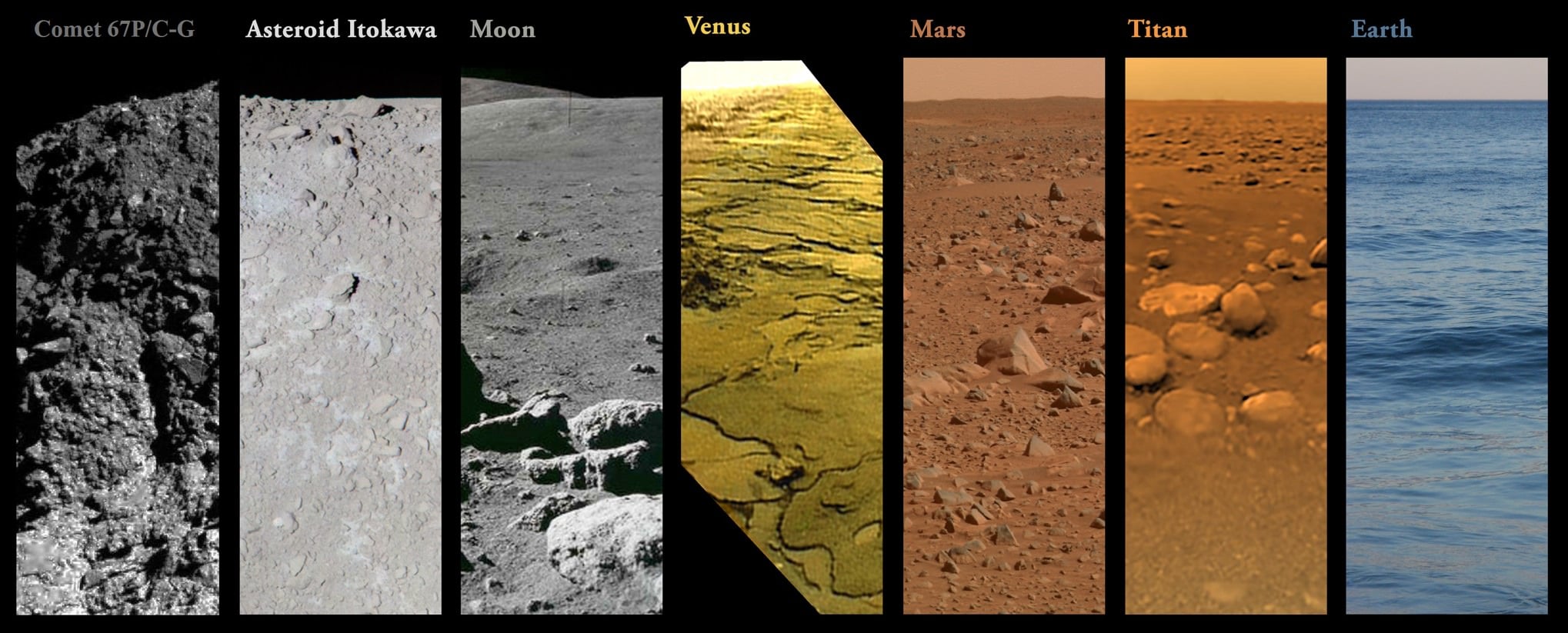
This isn’t merely a period of incremental progress; it’s a transformative epoch. The digital tools and platforms we interact with daily are not just improving existing processes; they are forging entirely new paradigms for communication, commerce, creativity, and human interaction. This rapid evolution presents both exhilarating opportunities and profound challenges, compelling us to fundamentally rethink our relationship with technology, society, and even ourselves. The question isn’t just rhetorical; it’s an invitation to pause, reflect, and attempt to comprehend the astonishing new world that technology is continually constructing around us, a world that indeed feels like a venture onto an entirely different planet.
The Disorienting Pace of Innovation: Redefining Reality
The sensation of having “landed on a new planet” in the tech world is largely driven by the breakneck speed at which groundbreaking innovations are emerging and becoming integrated into our lives. What once took decades to develop and deploy now unfolds in mere years, sometimes even months. This rapid acceleration isn’t confined to a single sector; it’s a multi-front assault on the status quo, pushing the boundaries of what we previously thought possible.
AI’s Exponential Leap and Its Creative Frontier
Perhaps no technological advancement embodies this “new planet” feeling more profoundly than the exponential leap in Artificial Intelligence. Just a few years ago, AI was largely perceived as a tool for automation, data analysis, or niche expert systems. Today, Large Language Models (LLMs) and generative AI have burst onto the scene, demonstrating capabilities that astound and sometimes unsettle. AI can now write eloquent articles, compose intricate musical pieces, generate photorealistic images from simple text prompts, and even develop complex software code with minimal human oversight. This creative frontier of AI challenges our long-held notions of intelligence, artistry, and what constitutes human endeavor. Industries from content creation and marketing to software development and scientific research are being irrevocably transformed. The efficiency gains are immense, but so too are the ethical dilemmas and the questions about the future of work and human creativity. It’s a powerful new force, capable of mimicking and augmenting human intellect and artistry to a degree that was unimaginable only recently, making the digital landscape feel genuinely alien in its new capabilities.
The Metaverse and Blurring Realities
Another frontier that screams “new planet” is the burgeoning concept of the metaverse. More than just virtual reality (VR) or augmented reality (AR), the metaverse envisions a persistent, shared, interconnected digital space where users can interact as avatars, build virtual assets, conduct commerce, and experience a wide array of activities that mirror or transcend real-world possibilities. While still in its nascent stages, the underlying technologies—VR headsets, haptic feedback, sophisticated 3D graphics, and blockchain-based economies—are advancing rapidly. The prospect of digital twins of ourselves and our environments, living, working, and socializing in a parallel virtual existence, blurs the lines between physical and digital reality in unprecedented ways. It raises questions about identity, ownership, and the very nature of human connection. The idea that significant portions of our lives, from entertainment and education to business meetings and social gatherings, could eventually unfold in these immersive digital worlds is a profound shift that feels undeniably extraterrestrial.
Quantum Computing’s Looming Revolution
Beneath the surface of current consumer-facing tech, a more fundamental revolution is brewing: quantum computing. While not yet a mainstream technology, its theoretical capabilities promise to unlock computational power orders of magnitude beyond even the most powerful supercomputers today. Quantum computers leverage the principles of quantum mechanics to process information in ways classical computers cannot, offering the potential to solve problems currently deemed intractable. This includes breaking modern encryption standards, simulating complex molecular structures for drug discovery, optimizing logistics on a global scale, and advancing AI beyond current limitations. The very notion of quantum entanglement and superposition feels like something out of a theoretical physics textbook, yet researchers are steadily making progress towards stable, scalable quantum systems. Its widespread adoption is still a ways off, but its potential to utterly redefine computing and, by extension, every science and industry that relies on it, signifies a future so advanced it’s almost incomprehensible from our current vantage point. The planet we are landing on will undoubtedly be shaped by its incredible, albeit abstract, power.
Navigating the New Digital Ecosystem: Rules for an Uncharted Territory
As technology rapidly redefines our world, it simultaneously creates a complex new digital ecosystem with its own evolving rules, norms, and challenges. Navigating this territory requires constant adaptation, a critical mindset, and a deep understanding of the invisible forces at play. We are no longer merely users of technology; we are inhabitants of a sprawling digital realm that influences nearly every facet of modern life.
Redefining Digital Identity and Ownership
On this new tech planet, our digital identity is becoming as significant, if not more so, than our physical one. Avatars, online profiles, data footprints, and digital credentials coalesce to form a complex tapestry that represents who we are in the virtual sphere. Technologies like blockchain are introducing new paradigms for digital ownership, from cryptocurrencies and NFTs (Non-Fungible Tokens) representing unique digital assets to decentralized autonomous organizations (DAOs) that reimagine corporate governance. This redefinition challenges traditional notions of property, authenticity, and personal identity. Who truly owns our data? How do we prove our uniqueness in a world of deepfakes and generative AI? How do we secure our digital assets against evolving threats? These are not trivial questions but fundamental inquiries into the nature of self and sovereignty in a digitized world. The very concept of “self” is being fragmented and reconstructed across various platforms and digital experiences, making the familiar territory of personal identity feel radically foreign.
The Ethics of Algorithmic Power and Bias
The algorithms that power much of our new digital planet are omnipresent, shaping everything from our news feeds and search results to credit scores and job applications. These complex computational models, often driven by machine learning, wield immense power, capable of influencing opinions, dictating access, and even subtly nudging societal norms. However, algorithms are not neutral; they are reflections of the data they are trained on, often inheriting and amplifying human biases present in that data. The ethical implications are profound. How do we ensure fairness and transparency in algorithmic decision-making? How do we prevent discriminatory outcomes in areas like justice, finance, and healthcare? The challenge lies in creating explainable AI and building ethical frameworks that govern the design and deployment of these powerful systems, ensuring that they serve humanity rather than inadvertently perpetuate inequities or undermine democratic processes. Ignoring these ethical considerations would be akin to populating a new planet without first establishing a moral compass, leading to an unpredictable and potentially hostile environment.
Cybersecurity in a Hyper-Connected World
With every new technological leap, the attack surface for cyber threats expands exponentially. On this new planet, where everything from our smart home devices and vehicles to critical national infrastructure is connected, cybersecurity is not merely an IT department concern; it’s a fundamental societal imperative. The sophistication of cyberattacks – ransomware, state-sponsored espionage, data breaches – is escalating in parallel with technological advancements. The increasing reliance on cloud computing, the proliferation of IoT devices, and the blurring of personal and professional digital lives create a complex web of vulnerabilities. Protecting sensitive data, maintaining system integrity, and ensuring privacy in a hyper-connected environment demand constant vigilance, innovative security solutions, and a global collaborative effort. The stakes are higher than ever; a significant breach can have far-reaching consequences, disrupting economies, compromising national security, and eroding public trust. Securing our digital future on this new planet is paramount to its habitability.
The Human-Tech Symbiosis: Opportunities and Challenges for Our Species
As we delve deeper into this technologically advanced world, the relationship between humanity and its creations becomes increasingly symbiotic. Technology is no longer just a tool; it’s becoming an extension of our capabilities, influencing our evolution and posing profound questions about what it means to be human in an increasingly intelligent and automated landscape.
Augmenting Human Capabilities and Cognitive Load
On this new planet, technology is not merely automating tasks but actively augmenting human capabilities. Wearable tech monitors our health, AI assistants handle administrative burdens, and advanced prosthetics restore or even enhance physical functions. Brain-computer interfaces (BCIs), still in experimental stages, promise direct communication between the human mind and external devices, potentially revolutionizing how we interact with technology and even each other. This augmentation brings incredible opportunities for personal development, accessibility for those with disabilities, and enhanced productivity across all sectors. However, it also raises concerns about cognitive load and dependency. Are we outsourcing too much of our thinking and memory to algorithms? Are we becoming overly reliant on digital crutches, potentially atrophying our inherent cognitive abilities? Maintaining a balance between leveraging technological enhancement and preserving fundamental human skills is a critical challenge.
The Digital Divide Reimagined: Access and Literacy
While technology offers incredible promise, its unequal distribution and accessibility risk creating new chasms within society. The “digital divide” is not just about who has internet access; it’s about who has access to high-speed, reliable connectivity, the necessary hardware, and, critically, the digital literacy to effectively navigate and leverage these advanced tools. As AI, the metaverse, and quantum computing become increasingly integral to economic opportunity, education, and social participation, those without access or the requisite skills risk being left behind on a different, less advanced “planet.” Bridging this divide requires concerted efforts in infrastructure development, affordable access initiatives, and comprehensive digital education programs that equip everyone, regardless of socio-economic status or geographical location, with the competencies needed to thrive in this new tech-driven world. Failure to do so would create a fragmented society, where some citizens are native to the new planet while others remain stranded in the past.
Preserving Humanity in the Machine Age
Perhaps the most philosophical question posed by our arrival on this technologically advanced planet is how to preserve our humanity in the machine age. As AI becomes more sophisticated, mimicking human intelligence and creativity, and as virtual worlds offer compelling alternatives to physical reality, how do we define and maintain our unique human essence? The challenges include combating deepfake technology that can erode trust in reality, safeguarding privacy in an age of ubiquitous surveillance, and ensuring that our emotional and social connections are not diluted by purely digital interactions. It’s about consciously designing technology that enhances human flourishing rather than diminishing it, fostering empathy, critical thinking, and genuine connection. We must actively shape the future to ensure that this new technological planet remains a place where human values, ethics, and well-being are prioritized above all else. This requires ongoing dialogue, ethical considerations embedded in design, and a collective commitment to leveraging technology as a force for good.
Charting the Uncharted: Preparing for Tomorrow’s Earth (and Beyond)
The question “what planet have we landed on?” is not just a reflection of current marvels but a prelude to even more profound changes. As we stand at the precipice of these technological shifts, preparing for tomorrow isn’t just about reacting to innovation; it’s about proactively shaping the future and establishing the frameworks for a prosperous and ethical existence on this continuously evolving technological frontier.
Future-Proofing Skills and Industries
In a world where AI can automate complex tasks and new industries emerge overnight, the concept of “future-proofing” skills and entire sectors becomes paramount. Education systems must adapt to foster critical thinking, creativity, problem-solving, and adaptability – uniquely human traits that are difficult for machines to replicate. Continuous learning and upskilling will not be optional but essential for individuals to remain relevant in a dynamic job market. Industries, too, must embrace digital transformation, integrate AI responsibly, and leverage new technologies to innovate and create new value. This isn’t about fearing automation but about understanding how humans can collaborate with intelligent machines to achieve unprecedented levels of productivity and innovation. The goal is to evolve alongside technology, not be replaced by it, ensuring that our collective skills remain valuable currency on this new economic planet.
Fostering Responsible Innovation and Governance
The rapid pace of technological development often outstrips the ability of legal and ethical frameworks to keep up. To ensure that this new technological planet is habitable for all, there is an urgent need for responsible innovation and proactive governance. This involves developing robust regulatory frameworks for AI ethics, data privacy, cybersecurity, and the metaverse. It requires international collaboration to address global challenges posed by emerging technologies, such as the weaponization of AI or the environmental impact of massive data centers. Companies, too, bear a significant responsibility to develop and deploy technology ethically, transparently, and with human well-being at the forefront. A collaborative approach involving governments, industry, academia, and civil society is crucial to establish guardrails that promote beneficial innovation while mitigating potential harms, ensuring that this new planet is built on principles of justice and sustainability.
The Promise of a Technologically Advanced Society
Despite the challenges and the occasional disorientation, the planet we have landed on holds immense promise. Technologies like AI, quantum computing, and advanced biotechnologies have the potential to solve some of humanity’s most pressing problems: curing diseases, combating climate change, eradicating poverty, and extending human potential in ways we can only begin to imagine. A truly technologically advanced society could offer unparalleled opportunities for creativity, connection, and human flourishing, freeing us from mundane tasks to pursue higher intellectual and artistic endeavors. It’s a future where personalized medicine becomes standard, where global communication is seamless, and where access to knowledge is universal. The question “what planet have we landed on?” ultimately invites us to envision and actively build the best possible version of this new technological world, one that empowers humanity and creates a more equitable, intelligent, and sustainable future for all its inhabitants.
aViewFromTheCave is a participant in the Amazon Services LLC Associates Program, an affiliate advertising program designed to provide a means for sites to earn advertising fees by advertising and linking to Amazon.com. Amazon, the Amazon logo, AmazonSupply, and the AmazonSupply logo are trademarks of Amazon.com, Inc. or its affiliates. As an Amazon Associate we earn affiliate commissions from qualifying purchases.