
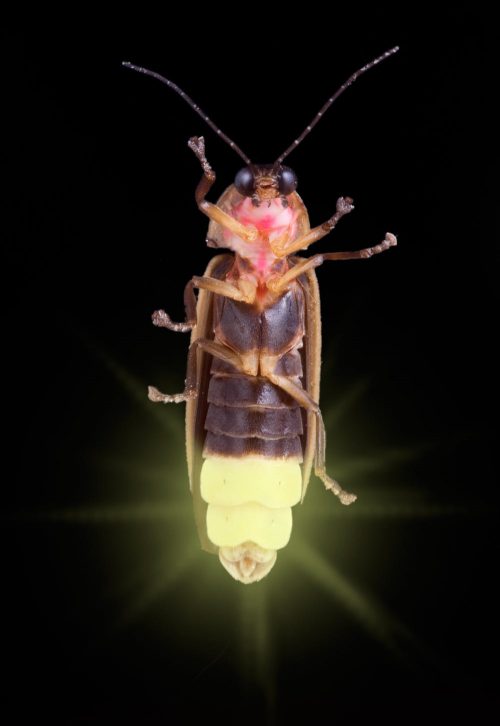
The fleeting magic of a firefly’s glow has captivated humanity for millennia. What appears to be a simple, enchanting display is, in fact, a sophisticated feat of biological engineering – a natural technology that far predates human innovation. Within the realm of technology, understanding the intricate mechanisms behind bioluminescence in fireflies offers profound insights, inspiring a new generation of advancements in sustainable lighting, diagnostic tools, and even genetic engineering. This article delves into the technological marvel of the firefly’s light, exploring its bio-chemical circuitry, the principles of biomimicry it inspires, and the cutting-edge applications emerging from our efforts to replicate and harness this natural phenomenon.

The Biological Engineering Behind Bioluminescence: A Natural Nanotechnology
At its core, a firefly’s glow is a remarkably efficient biochemical reaction, a testament to evolution’s prowess in developing complex biological systems. This process, known as bioluminescence, represents an exquisite form of natural nanotechnology, where molecular components work in perfect synchronicity to produce light with minimal energy waste.
The Luciferin-Luciferase System: A Molecular Machine
The primary engine of the firefly’s light is a finely tuned molecular machine involving two key components: luciferin and luciferase. Luciferin is the light-emitting substrate, a complex organic molecule unique to fireflies, while luciferase is the enzyme that acts as the catalyst for the light-producing reaction. Think of luciferin as the fuel and luciferase as the precise engine that burns it. This enzymatic reaction is highly specific and operates with remarkable efficiency, converting chemical energy directly into light energy, rather than heat. Unlike incandescent bulbs that lose over 90% of their energy as heat, firefly light is “cold light,” with nearly 100% of the energy directed towards photon emission. This efficiency is a holy grail for human engineering, constantly sought in our own lighting and energy systems.
Oxygen as the Catalyst: An Efficient Power Source
Oxygen plays a critical role in initiating and controlling the bioluminescent reaction. In the firefly’s specialized light-producing organ, the photocyte, luciferin, luciferase, and ATP (adenosine triphosphate – the energy currency of cells) are always present. However, the light only switches on when oxygen is introduced. The firefly precisely regulates oxygen flow to its photocytes through specialized tracheal tubes and nitric oxide. When nitric oxide is present, it binds to mitochondrial enzymes, temporarily inhibiting oxygen consumption and allowing oxygen to flood the photocytes, triggering the glow. When nitric oxide levels drop, oxygen is consumed by the mitochondria, and the light switches off. This “on-demand” oxygen control mechanism is a sophisticated biological switch, allowing fireflies to modulate their light signals with incredible precision – a form of biological pulse-width modulation, if you will.
Neural Control and Signal Processing: Precision in Light Emission
Beyond the chemical reaction, the firefly’s nervous system provides the ultimate control interface. Neural signals govern the release and reabsorption of nitric oxide, dictating the duration, intensity, and pattern of light flashes. Different species employ distinct flash patterns for mating signals, territorial defense, and even predator avoidance. This complex “communication protocol” demonstrates advanced biological signal processing, where subtle variations in timing and rhythm convey critical information. From a technological perspective, this is akin to a sophisticated wireless communication system, optimized for specific environmental conditions and biological interactions. Understanding these neural pathways and their biochemical actuators offers blueprints for designing intelligent sensing and signaling systems.
From Nature’s Lab to Human Innovation: Biomimicry and Firefly-Inspired Tech
The firefly’s glow is not merely a biological curiosity; it’s a profound source of inspiration for biomimicry – the design and production of materials, structures, and systems that are modeled on biological entities and processes. The efficiency and control demonstrated by fireflies offer tangible lessons for various technological applications.
Designing Sustainable Illumination: The Promise of Bioluminescent Lighting
The concept of “cold light” from bioluminescence has long fascinated lighting engineers. The goal is to create light sources that consume significantly less energy and produce minimal heat, leading to more sustainable and eco-friendly illumination. Research focuses on replicating the luciferin-luciferase reaction synthetically or by genetically engineering organisms to produce light. Imagine cities lit by biological streetlights that draw minimal power, or homes illuminated by ambient, living light sources. While challenges remain in achieving scalable, stable, and cost-effective solutions, the firefly provides the ultimate benchmark for energy-efficient lighting. Furthermore, the light-emitting organs of some fireflies feature intricate nano-structures that enhance light extraction. Studying these “optical coatings” can lead to improved LED designs and display technologies that scatter and direct light more effectively.
Bio-Sensors and Diagnostics: Glowing for Health and Environment
The specificity of the luciferin-luciferase reaction, coupled with its light-emitting output, makes it an excellent candidate for highly sensitive bio-sensors. In medical diagnostics, luciferase is widely used as a “reporter gene.” By attaching the gene for luciferase to specific cellular processes or disease markers, scientists can make those processes “glow,” allowing for real-time visualization and quantification. For instance, researchers can monitor gene expression, detect bacterial contamination, or track tumor growth by observing the light emitted. This provides non-invasive, highly sensitive data output, far surpassing traditional methods in some applications. Beyond medicine, bioluminescent sensors are being developed for environmental monitoring, detecting pollutants in water or air by engineering organisms to glow in the presence of specific toxins.
Green Technology: Reduced Energy Footprint

The firefly’s biological system operates with remarkable efficiency at ambient temperatures and pressures, requiring no external power grid beyond its internal energy stores. This drastically reduces the energy footprint compared to most industrial light production. Applying these principles, firefly-inspired technologies hold the promise of significantly lowering energy consumption across various sectors. From self-powered indicators to low-energy data transmission, the efficiency gains envisioned from emulating bioluminescence could contribute substantially to global sustainability efforts, mitigating the energy demands associated with our increasingly illuminated and data-driven world.
The Frontier of Synthetic Biology: Replicating and Enhancing Firefly Tech
Synthetic biology takes biomimicry a step further, aiming not just to imitate but to reprogram and engineer biological systems to perform novel functions. The firefly’s bioluminescent system is a prime target for these advanced bio-engineering efforts.
Genetic Engineering: Creating ‘Glowing’ Organisms
One of the most impactful applications of firefly tech in synthetic biology is the use of luciferase genes in genetic engineering. By inserting the gene for luciferase into the DNA of other organisms – from bacteria and plants to mice – scientists can create “glowing” versions that serve as powerful research tools. This allows for real-time visualization of cellular processes, genetic expression, and even organismal health. For example, glowing plants could signal nutrient deficiencies or environmental stress before visible symptoms appear. While the primary use is currently in research, the potential for practical applications, such as bio-illuminated Christmas trees or self-reporting agricultural crops, stirs both excitement and ethical debate.
Synthetic Luciferase Production: Industrial Applications
The ability to produce luciferin and luciferase synthetically or through engineered microbes is crucial for scaling up bioluminescent technologies. Advances in industrial biotechnology allow for the mass production of these enzymes, reducing reliance on natural extraction (which is often unsustainable). This synthetic production pathway makes bioluminescent reagents more accessible for research, diagnostic kits, and potential industrial applications. For instance, synthetic bioluminescence is already used in ATP assays to quickly detect microbial contamination in food safety and hygiene monitoring, providing rapid, sensitive results that are vital for quality control. The precision and speed of these bio-engineered detection systems are far superior to many traditional methods.
Optimizing Light Output and Control: Beyond Natural Limitations
Synthetic biology also allows researchers to “tweak” and optimize the natural firefly system. By modifying the genes for luciferase, scientists can engineer enzymes with altered properties – different colors of light emission, increased stability, or enhanced brightness. This extends the utility of bioluminescence beyond what is naturally found. Furthermore, researchers are exploring novel ways to control the light output, integrating bioluminescent systems with electronic circuits for finer-grained control over light patterns and intensity, paving the way for bio-hybrid technologies where biological and electronic components work seamlessly together.
Challenges, Ethics, and the Bright Future of Bioluminescent Applications
While the promise of firefly-inspired technology is immense, its development is not without significant challenges and important ethical considerations.
Scalability, Stability, and Cost-Effectiveness
Transitioning bioluminescent concepts from the lab to widespread commercial application faces hurdles related to scalability, stability, and cost-effectiveness. Maintaining the enzymatic activity of luciferase outside of its natural environment, ensuring long-term light output, and producing the components at a competitive price point are critical areas of ongoing research. Developing stable, non-toxic, and long-lasting bioluminescent systems that can withstand varying environmental conditions is essential for practical applications in lighting or environmental sensing. Researchers are actively working on encapsulation techniques and protein engineering to enhance enzyme robustness.
Ethical Implications of Bio-Engineered Organisms
As we move towards creating glowing plants, animals, or microorganisms for various purposes, ethical questions regarding genetic modification, environmental impact, and animal welfare become paramount. The release of genetically engineered bioluminescent organisms into ecosystems could have unforeseen consequences, requiring careful regulation and thorough ecological impact assessments. Transparency and public engagement are crucial to navigate these complex ethical landscapes, ensuring that technological advancement aligns with societal values and responsible scientific practice.
The Ever-Expanding Horizon: Beyond Illumination
Looking ahead, the technological implications of understanding “what makes a firefly glow” extend far beyond mere illumination. Imagine bio-integrated circuits that use light for communication within devices, self-powering sensors embedded in infrastructure, or even advanced therapeutic tools that light up diseased cells for targeted treatment. The firefly’s humble glow serves as a powerful reminder that nature is the ultimate engineer, continuously providing blueprints for revolutionary technologies. By diligently studying and thoughtfully applying the principles of bioluminescence, we are stepping into an era where our technological innovations are not only advanced but also inherently more sustainable, efficient, and harmoniously integrated with the natural world.
aViewFromTheCave is a participant in the Amazon Services LLC Associates Program, an affiliate advertising program designed to provide a means for sites to earn advertising fees by advertising and linking to Amazon.com. Amazon, the Amazon logo, AmazonSupply, and the AmazonSupply logo are trademarks of Amazon.com, Inc. or its affiliates. As an Amazon Associate we earn affiliate commissions from qualifying purchases.