
In the realm of modern space exploration and planetary science, the question “What is Venus’s gravity?” is more than a simple inquiry into physics—it is a fundamental engineering parameter that dictates the design of every sensor, thruster, and heat shield we send into the cosmos. Often called Earth’s “evil twin,” Venus presents a unique set of challenges for technologists. While its gravity is remarkably similar to our own, the interplay between that gravitational pull and its crushing atmosphere creates a technological bottleneck that has stymied exploration for decades.
As we enter a new era of interplanetary missions, understanding the gravity of Venus is the first step in developing the next generation of space tech. From AI-driven landing sequences to advanced material science, the 8.87 m/s² gravitational constant of Venus serves as the baseline for the most complex hardware ever conceived by human engineers.
Understanding the Physics: Gravity as a Constant in Space Tech
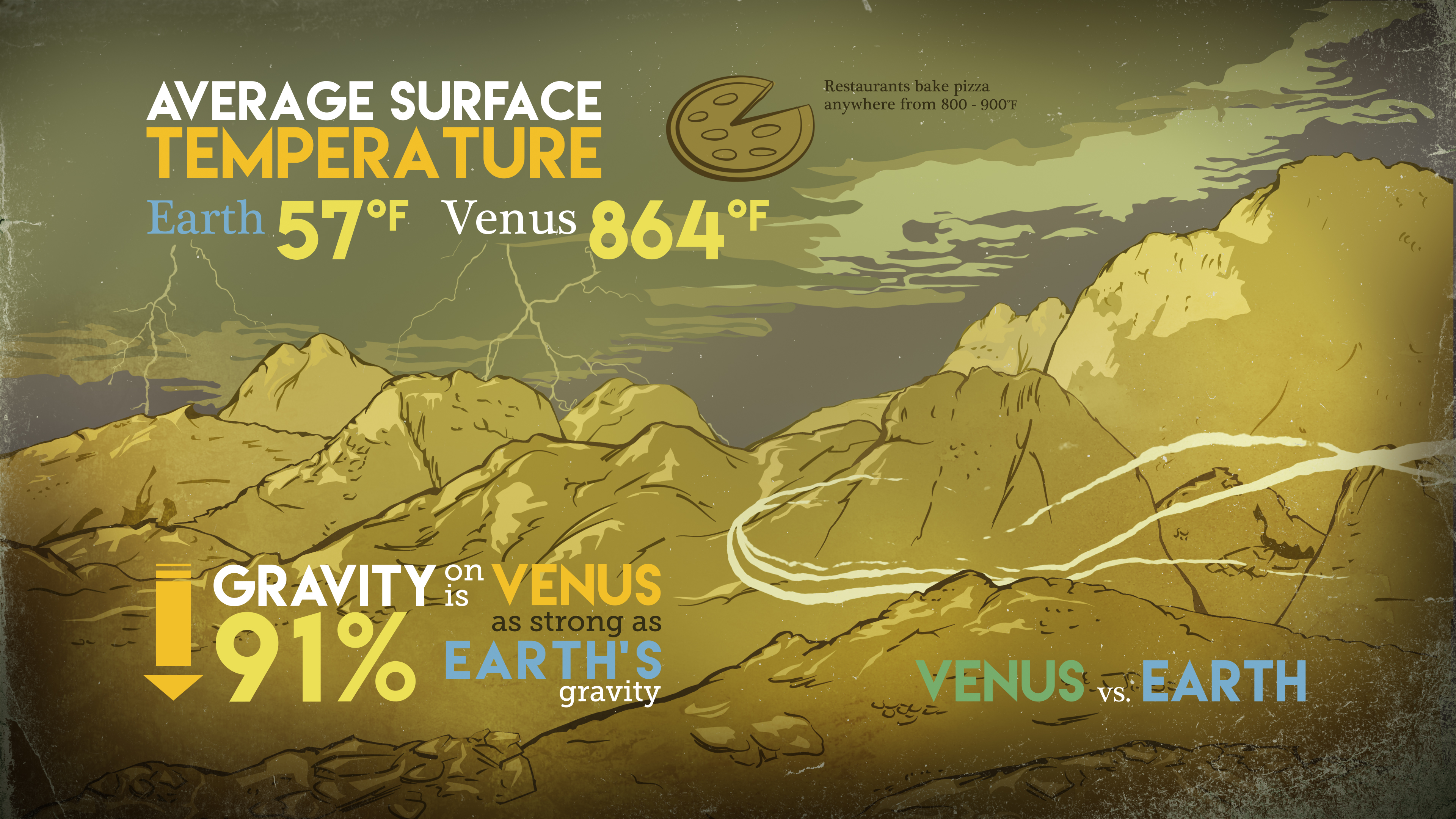
Gravity is the invisible hand that guides all orbital mechanics and entry, descent, and landing (EDL) protocols. For Venus, this force is approximately 91% of Earth’s gravity. If you weigh 100 kilograms on Earth, you would weigh 91 kilograms on Venus. While this might seem negligible compared to the extreme differences found on the Moon or Mars, it presents a specific set of requirements for aerospace software and propulsion systems.
The 90% Factor: Comparing Earth and Venus
In the development of simulation software, engineers must account for this subtle decrease in weight. Unlike Mars, where the low gravity (38% of Earth’s) allows for relatively lightweight landing structures, Venus requires robust systems that can handle a near-Earth load while simultaneously battling the most hostile atmospheric conditions in the solar system. Tech firms specializing in digital twin modeling use these gravitational constants to simulate the stress on robotic joints and landing struts, ensuring that the structural integrity of a probe can withstand the descent.
How Gravitational Pull Affects Orbital Mechanics
For satellite technology and orbital insertion, Venus’s gravity acts as a powerful “gravity well.” When a spacecraft like NASA’s upcoming VERITAS mission approaches the planet, the gravitational pull accelerates the craft, requiring precise “braking” maneuvers. This is where advanced propulsion technology comes into play. Spacecraft must utilize autonomous navigation systems to calculate the exact amount of delta-v (change in velocity) needed to enter a stable orbit. A fraction of a percent error in calculating the gravitational influence could result in the craft either skipping off the atmosphere or burning up prematurely.
The Engineering Hurdle: Overcoming Surface Gravity and Atmospheric Density
While Venus’s gravity is 91% of Earth’s, its atmospheric pressure is 92 times that of Earth’s at sea level. This creates a “thick” environment where gravity and pressure work in tandem to crush conventional electronics. The tech industry’s response to this has been the development of “hardened” systems—electronics and structures designed to function under conditions that would liquify a standard laptop.
Structural Integrity and Material Science
To survive the descent through Venusian gravity, engineers are moving away from traditional aluminum frames and toward exotic alloys and ceramic composites. These materials must be light enough to be launched by Earth’s rockets yet strong enough to resist the combination of gravity-induced acceleration and atmospheric crushing. The technological trend here is the use of 3D-printed superalloys, which allow for complex internal geometries that distribute stress more efficiently than solid-cast parts.
AI-Driven Landing Systems in High-Pressure Environments
One of the most significant breakthroughs in space tech is the implementation of autonomous AI pilots for planetary landing. Because it takes several minutes for a signal to travel from Venus to Earth, a probe cannot be “driven” by a human operator during its final descent. The probe’s onboard AI must interpret data from radar and gravitational sensors in real-time. These AI models are trained on Earth using high-fidelity simulations of Venus’s gravity to ensure the craft can make split-second adjustments to its descent path, accounting for the drag of the thick atmosphere as it is pulled toward the surface.
Technological Applications in Venus Exploration
The quest to measure and map Venus’s gravity has led to the creation of some of the most sensitive instruments in the world. These technologies don’t just help us understand another planet; they drive innovation in sensors and remote sensing that eventually trickle down to Earth-based applications.
Aerobraking and Orbital Maneuvering Technology
Aerobraking is a technique where a spacecraft uses a planet’s atmosphere to slow down. Because Venus has significant gravity and a dense atmosphere, it is the perfect—albeit dangerous—testing ground for this technology. New software algorithms are being developed to manage “deep dip” maneuvers, where a satellite skims the upper atmosphere. The data gathered from how Venus’s gravity tugs on the craft during these dips helps refine global positioning systems (GPS) and satellite drag models used here on Earth for low-Earth orbit (LEO) satellites.
Robotic Longevity: Cooling Systems and Power Supplies
Gravity influences how fluids move, which is a critical factor in the cooling systems of Venusian rovers. On Earth, we rely on convection (hot air rising), but in the dense, high-gravity environment of Venus, traditional cooling fails. This has forced tech companies to innovate “Stirling cycle” cooling systems and high-temperature batteries. These power cells are designed to operate at 470°C, a feat of chemical engineering that has implications for deep-well drilling and high-heat industrial sensors on Earth.
The Future of Space Tech: Using Venus as a Testing Ground
As we look toward the future, Venus is becoming a primary focus for organizations like NASA, ESA, and private tech firms. The planet serves as a “stress test” for interplanetary hardware. If a piece of technology can survive the gravitational and atmospheric gauntlet of Venus, it can survive almost anywhere.
Sustainable Propulsion Systems for Interplanetary Travel
To leave Venus after a hypothetical sample-return mission, a rocket would need to overcome its 8.87 m/s² gravity. This requires significant thrust—far more than is needed to leave Mars. Tech startups are currently researching “in-situ resource utilization” (ISRU), which involves extracting chemicals from the Venusian atmosphere to create rocket fuel. The goal is to develop a propulsion system that can lift a payload out of Venus’s gravity well using the very environment that makes the planet so hostile.
Remote Sensing and High-Resolution Mapping
Current technological trends in synthetic aperture radar (SAR) allow us to “see” through the thick clouds of Venus to map its surface in unprecedented detail. These sensors measure the minute variations in gravity across the planet’s surface (gravity anomalies), which tell scientists about the density of the crust and the presence of volcanic activity. The software used to process this “gravimetric” data is at the forefront of big-data analytics, utilizing machine learning to filter out atmospheric noise and reveal the geological secrets hidden beneath the clouds.
Conclusion: The Gravitational Blueprint
In conclusion, “What is Venus’s gravity?” is a question that serves as a blueprint for the future of aerospace technology. At 8.87 m/s², it is a force that is familiar yet challenging, requiring a total rethink of how we build, power, and navigate our machines. The tech developed to conquer this gravity—from AI-driven descent modules to high-pressure electronics—represents the pinnacle of human ingenuity.
As we deploy missions like the DAVINCI probe and the EnVision orbiter, we aren’t just sending cameras to take pictures; we are sending sophisticated computers into a gravitational pressure cooker. The lessons learned from these missions will redefine material science, autonomous robotics, and environmental sensing for decades to come. Venus’s gravity may be slightly less than Earth’s, but the technological effort required to master it is arguably the greatest challenge in the history of space exploration.
aViewFromTheCave is a participant in the Amazon Services LLC Associates Program, an affiliate advertising program designed to provide a means for sites to earn advertising fees by advertising and linking to Amazon.com. Amazon, the Amazon logo, AmazonSupply, and the AmazonSupply logo are trademarks of Amazon.com, Inc. or its affiliates. As an Amazon Associate we earn affiliate commissions from qualifying purchases.