
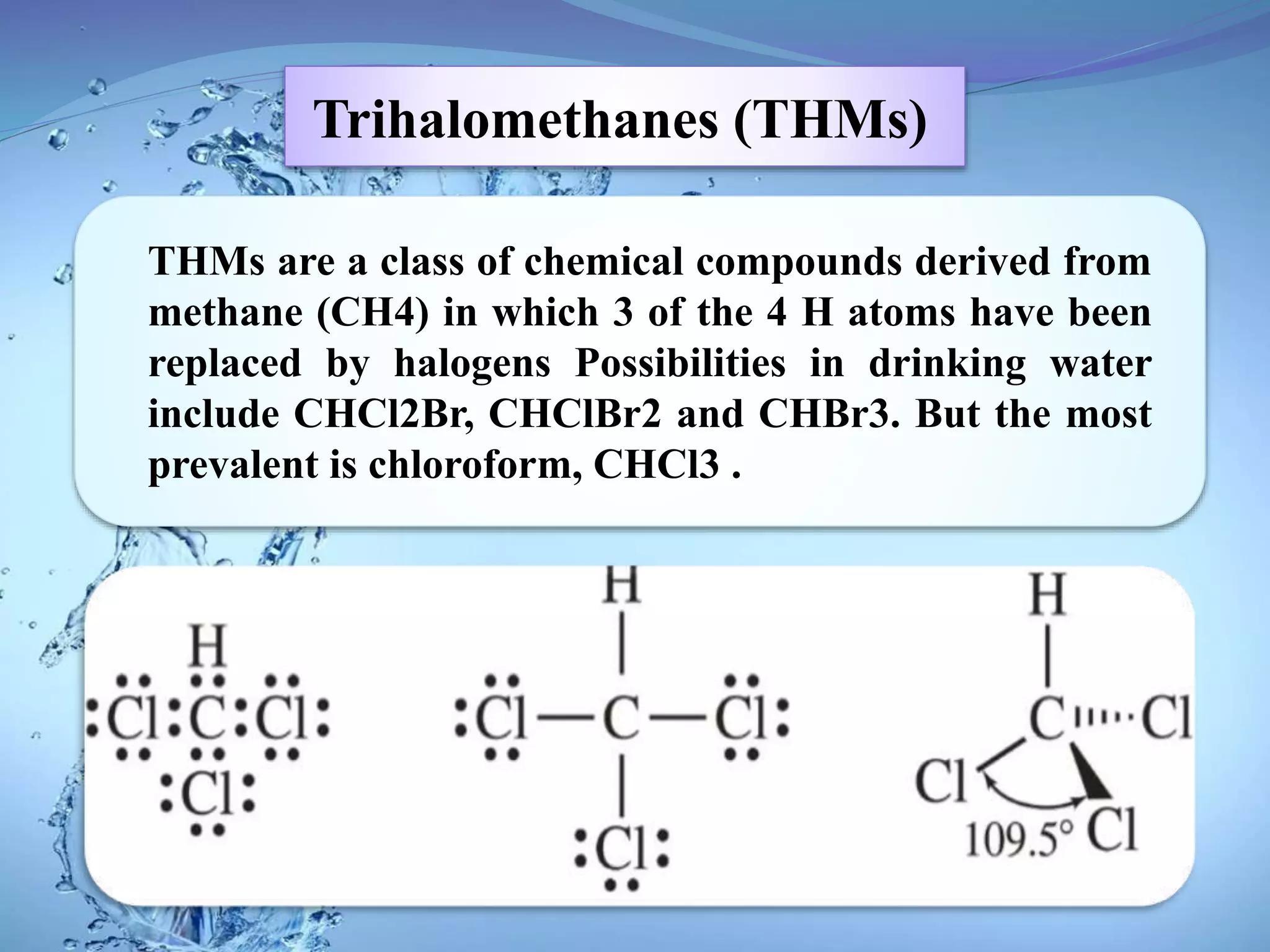
Trihalomethanes (THMs) are a group of chemical compounds that frequently emerge as byproducts when chlorine and other disinfectants react with naturally occurring organic matter in water. While chlorination has been a monumental public health achievement, effectively eradicating waterborne diseases for over a century, the formation of THMs presents a complex challenge. Understanding “what is trihalomethanes” necessitates a dive into their chemical genesis, potential health implications, and, crucially, the sophisticated technological solutions being deployed to mitigate their presence in our drinking water systems.
In an increasingly technologically advanced world, the battle against THMs is waged not just in chemistry labs but through smart sensors, advanced filtration systems, predictive AI models, and sophisticated water treatment processes. This article will explore the nature of THMs through a technological lens, detailing the innovations that help detect, monitor, and remove these compounds, ensuring the safety and quality of our most vital resource.

The Genesis of THMs: A Byproduct of Essential Disinfection, and a Technological Challenge
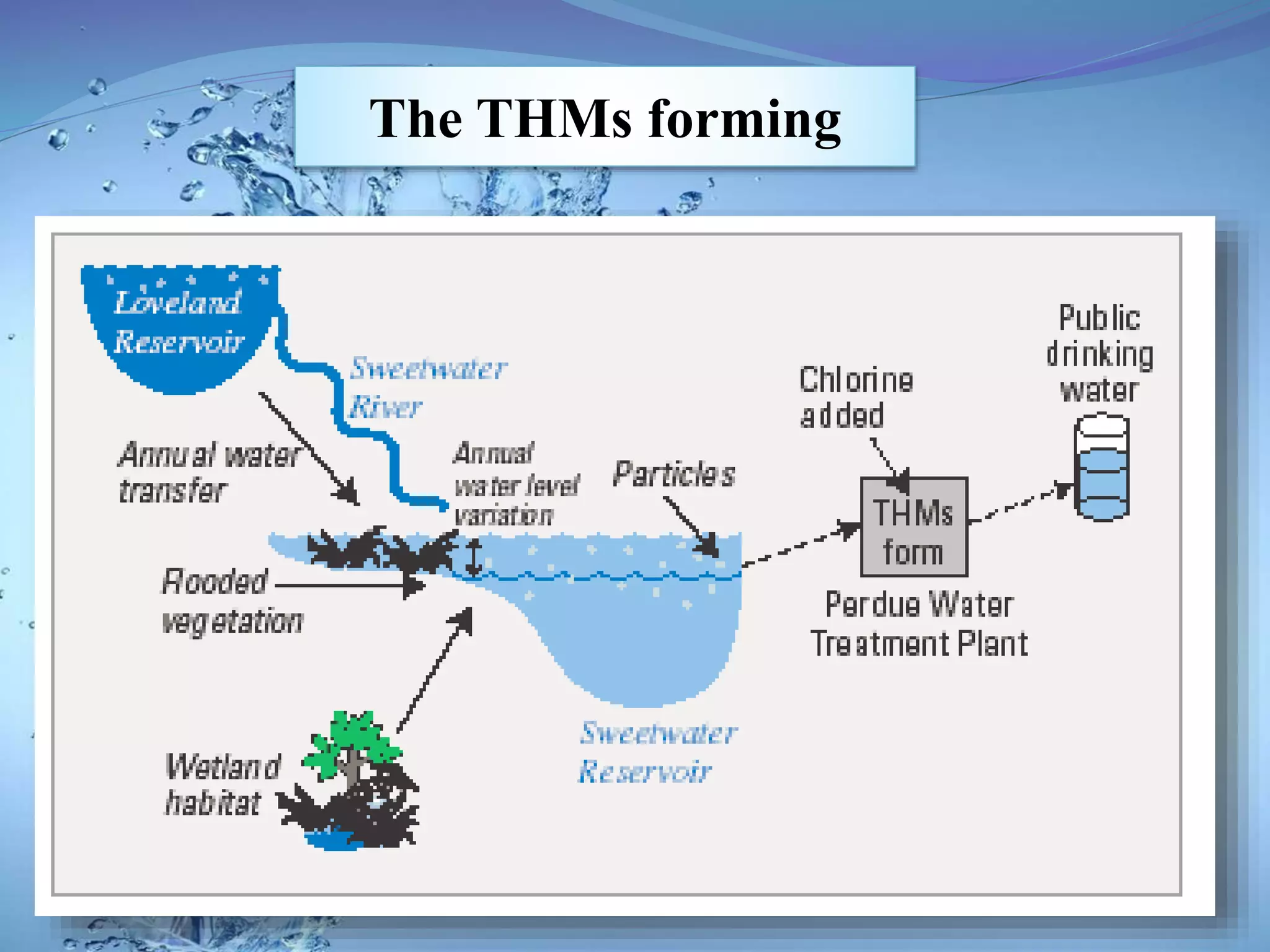
The very process that makes our water safe – disinfection – can, paradoxically, introduce new complexities. THMs are the most common type of disinfection byproducts (DBPs), forming when disinfectants like chlorine, chloramines, or ozone interact with naturally present organic and inorganic materials in source water. This reaction creates a suite of compounds, primarily chloroform, bromodichloromethane, dibromochloromethane, and bromoform, collectively known as total trihalomethanes (TTHM).
Origins in Disinfection Byproducts (DBPs)
The presence of organic matter, such as decaying leaves, algae, and soil runoff, in raw water is a natural phenomenon. When chlorine is added to kill pathogens, it oxidizes these organic compounds. This oxidation process, however, is not always selective and can lead to the substitution of hydrogen atoms in the organic molecules with halogen atoms (chlorine or bromine), thus forming THMs. The specific types and concentrations of THMs depend on several factors: the amount and type of organic matter, the disinfectant dose, contact time, pH, temperature, and the presence of bromide ions in the source water. For example, higher bromide concentrations often lead to the formation of more brominated THMs, which can sometimes be more challenging to remove.
The core technological challenge here is to achieve effective microbial inactivation while minimizing DBP formation. This involves sophisticated control systems that optimize disinfectant dosage and contact time, relying on real-time data from various sensors deployed throughout the water treatment plant and distribution network. Balancing pathogen removal with DBP minimization requires continuous monitoring and algorithmic adjustments, a task increasingly managed by advanced computational tools.
Health Concerns and Regulatory Landscape
While the immediate health risks of consuming disinfected water far outweigh the risks from DBPs, long-term exposure to elevated levels of THMs has been associated with potential health concerns, including links to certain types of cancer and reproductive issues. This has driven regulatory bodies worldwide, such as the U.S. Environmental Protection Agency (EPA) and the World Health Organization (WHO), to establish strict maximum contaminant levels (MCLs) for TTHMs in drinking water. In the United States, the current MCL for TTHMs is 80 parts per billion (ppb).
Adhering to these stringent standards requires more than just good intentions; it demands a robust technological infrastructure. Water utilities must employ precise analytical methods for compliance monitoring, coupled with innovative treatment technologies capable of reducing THM levels to acceptable limits. The regulatory landscape continually evolves, often pushing the boundaries of what current technology can achieve and spurring further innovation in water quality management.
Cutting-Edge Technologies for THM Detection and Monitoring
Accurate and timely detection is the first line of defense against elevated THM levels. Significant technological advancements have transformed how water utilities monitor these compounds, moving from infrequent lab tests to continuous, real-time surveillance.
Advanced Analytical Instruments
The gold standard for THM analysis relies on highly sophisticated laboratory instrumentation. Gas Chromatography-Mass Spectrometry (GC-MS) is preeminent in this field. It works by separating the individual THM compounds in a water sample using a gas chromatograph, then identifying and quantifying them based on their unique mass spectra. This technology provides precise and reliable measurements, crucial for regulatory compliance and understanding the specific THM profile of a water system. Recent advancements include automation of sample preparation, high-throughput analysis, and miniaturized versions of these instruments, making testing more efficient and accessible.
Beyond GC-MS, other spectroscopic methods and advanced chemical sensors are emerging for more rapid, in situ analysis. These tools are designed to provide quicker feedback loops, allowing operators to make timely adjustments to treatment processes before THM levels become problematic. The integration of these instruments with Laboratory Information Management Systems (LIMS) further streamlines data processing, reporting, and archival, enhancing overall operational efficiency and regulatory compliance.
Sensor Networks and IoT in Water Quality
The Internet of Things (IoT) is revolutionizing water quality monitoring. Networks of smart sensors, deployed throughout water treatment plants and vast distribution systems, continuously collect data on various parameters relevant to THM formation, such as chlorine residuals, pH, temperature, turbidity, and organic carbon levels. These sensors transmit data wirelessly to a central platform, providing a real-time, comprehensive overview of water quality across the entire network.
This continuous monitoring allows utilities to detect anomalies instantly, predict potential THM hotspots, and respond proactively. For instance, a sudden drop in chlorine residual combined with high organic load might signal an increased risk of THM formation in a particular zone, prompting operators to adjust disinfection or flushing protocols. The scalability and connectivity of IoT enable a level of oversight that was previously unimaginable, transforming reactive problem-solving into predictive management.
Predictive Modeling and AI for Risk Assessment
Harnessing the vast amounts of data generated by sensor networks, advanced analytics, and Artificial Intelligence (AI) are becoming indispensable tools for THM management. Predictive modeling uses historical data and real-time inputs to forecast THM formation trends. These models can simulate different operational scenarios, allowing utilities to optimize disinfectant dosages, modify blending strategies, or predict the impact of changes in source water quality on THM levels.
Machine Learning (ML) algorithms take this a step further, identifying complex, non-obvious correlations between environmental factors, operational parameters, and THM concentrations. AI-powered systems can learn from past incidents, continually refine their predictions, and even recommend optimal treatment strategies. For instance, an AI might suggest adjusting the point of chlorine addition, increasing the pre-treatment effectiveness, or activating specific filters based on anticipated organic loading and demand patterns, minimizing DBP formation while maintaining disinfection efficacy. This proactive, data-driven approach moves beyond simple monitoring to intelligent, adaptive water management.
Technological Solutions for THM Mitigation and Removal
Detecting THMs is one thing; effectively mitigating their formation and removing them from water is another. This requires a suite of sophisticated treatment technologies, often used in combination, to achieve stringent water quality goals.
Pre-treatment Innovations
Reducing the precursors to THM formation is often the most effective strategy. Traditional water treatment includes coagulation, flocculation, sedimentation, and filtration, which remove particulate matter and some dissolved organic carbon. However, enhanced conventional treatment utilizes optimized coagulant doses and pH control to achieve greater removal of dissolved organic precursors.
Beyond this, advanced pre-oxidation methods like ozonation can oxidize organic matter before chlorination, making it less reactive with chlorine and thus reducing THM formation. However, ozone itself can form other DBPs, requiring careful management. Biological filtration, where microorganisms consume organic matter, is another burgeoning pre-treatment technology that shows promise in reducing THM precursors without relying on harsh chemicals, offering a more sustainable approach.
Advanced Oxidation Processes (AOPs)
AOPs involve the generation of highly reactive hydroxyl radicals (•OH), which are powerful oxidants capable of degrading organic contaminants, including THMs themselves and their precursors. Common AOPs used in water treatment include UV irradiation combined with hydrogen peroxide (UV/H2O2), ozonation with hydrogen peroxide (O3/H2O2), or Fenton’s reagent. These technologies leverage advanced engineering principles to create conditions where these short-lived, potent radicals can effectively break down complex organic molecules into simpler, less harmful compounds, or even mineralize them completely. AOPs represent a significant leap in treatment capability for recalcitrant organic contaminants.
Membrane Filtration Systems
Membrane technologies offer a physical barrier to contaminants. While microfiltration and ultrafiltration are effective for particle and pathogen removal, nanofiltration (NF) and reverse osmosis (RO) membranes are capable of removing dissolved organic matter, including THM precursors and even some THMs themselves. NF membranes, with pore sizes in the nanometer range, are particularly effective at removing higher molecular weight organic molecules that are key THM precursors, significantly reducing the potential for DBP formation downstream. RO, with even finer pores, can remove nearly all dissolved solids. The precise engineering of membrane materials and modules is a critical technological aspect, as is the development of robust cleaning and maintenance protocols to prevent fouling and extend membrane lifespan.
Granular Activated Carbon (GAC) and Adsorption Technologies
Granular Activated Carbon (GAC) filtration is a well-established and highly effective technology for removing organic contaminants, including THMs and their precursors, from water. GAC works through a process called adsorption, where organic molecules adhere to the vast porous surface area of the activated carbon. The carbon’s internal structure acts like a molecular sieve and a magnet for organic compounds. GAC filters can be deployed as post-treatment units to remove formed THMs or as pre-treatment units to remove precursors.
Technological advancements in GAC involve optimizing carbon media properties (e.g., pore size distribution, surface chemistry), designing more efficient contactor systems, and developing methods for regeneration of spent carbon to enhance sustainability and cost-effectiveness. Other advanced adsorption media, beyond traditional GAC, are also under development, offering enhanced selectivity and capacity for specific contaminants.
The Future of THM Management: Integrated Digital Water Solutions
The trajectory of THM management is moving towards highly integrated, intelligent systems that leverage digital technologies to provide holistic control over the entire water cycle.
Smart Water Grids and Digital Twins
The concept of Smart Water Grids envisions water infrastructure interconnected by sensors, control systems, and communication networks, enabling real-time monitoring, predictive analytics, and automated response. Within this framework, Digital Twins are virtual replicas of physical water systems – from treatment plants to distribution networks. These digital models incorporate real-time data, allowing operators to simulate various scenarios, test operational changes without impacting the physical system, and predict the outcome of different THM mitigation strategies. This powerful simulation capability helps optimize everything from chemical dosing to pipe network flushing schedules, ensuring proactive THM management.
Sustainable Innovations and Green Chemistry
Future advancements will increasingly focus on sustainable and environmentally friendly approaches. This includes developing non-chlorine disinfectants (e.g., UV, certain advanced oxidation processes, or novel chemical agents) that are equally effective against pathogens but generate fewer or no harmful DBPs. Furthermore, research into bio-filtration and ecological engineering solutions aims to leverage natural processes to remove organic precursors, reducing the reliance on chemical treatments. Green chemistry principles guide the search for safer alternatives, minimizing the environmental footprint of water treatment while maximizing public health protection.
The Role of Data Analytics and Machine Learning
The exponential growth in data generated by water systems demands sophisticated tools for analysis. Advanced Data Analytics and Machine Learning will play an even more central role in interpreting complex relationships between source water quality, treatment processes, distribution system dynamics, and THM formation. These technologies will enable utilities to develop highly granular, localized strategies for THM control, moving beyond generalized approaches. They can optimize operational parameters in real-time, anticipate future challenges, and provide actionable insights for long-term planning and infrastructure investment. This evolution ensures that water management becomes increasingly precise, efficient, and responsive to emerging threats.
Conclusion
Understanding “what is trihalomethanes” goes far beyond a simple chemical definition; it encompasses a complex challenge at the intersection of public health, environmental science, and cutting-edge engineering. While THMs represent an unintended consequence of effective disinfection, the tireless efforts of scientists and engineers, armed with a growing arsenal of technological innovations, are continually advancing our ability to manage them. From advanced analytical instruments and pervasive sensor networks to sophisticated treatment processes like AOPs and membrane filtration, technology is at the forefront of ensuring safe, high-quality drinking water. As we move forward, the integration of AI, predictive modeling, and sustainable solutions within smart water grids promises an even more resilient and proactive approach to managing THMs, safeguarding public health for generations to come.
aViewFromTheCave is a participant in the Amazon Services LLC Associates Program, an affiliate advertising program designed to provide a means for sites to earn advertising fees by advertising and linking to Amazon.com. Amazon, the Amazon logo, AmazonSupply, and the AmazonSupply logo are trademarks of Amazon.com, Inc. or its affiliates. As an Amazon Associate we earn affiliate commissions from qualifying purchases.