
The hum of a car traveling down the highway, the smooth glide around a corner, the precise response of the steering wheel – these are all experiences we take for granted, underpinned by an intricate network of mechanical and electronic systems. Among the unsung heroes of this complex machinery is the wheel bearing. Far from a simple component, the wheel bearing is a marvel of engineering, a critical piece of automotive technology that facilitates motion, supports vehicle weight, and ensures the stability and safety of your ride. To truly understand its significance is to appreciate the sophisticated design that allows a multi-ton vehicle to move effortlessly and reliably.
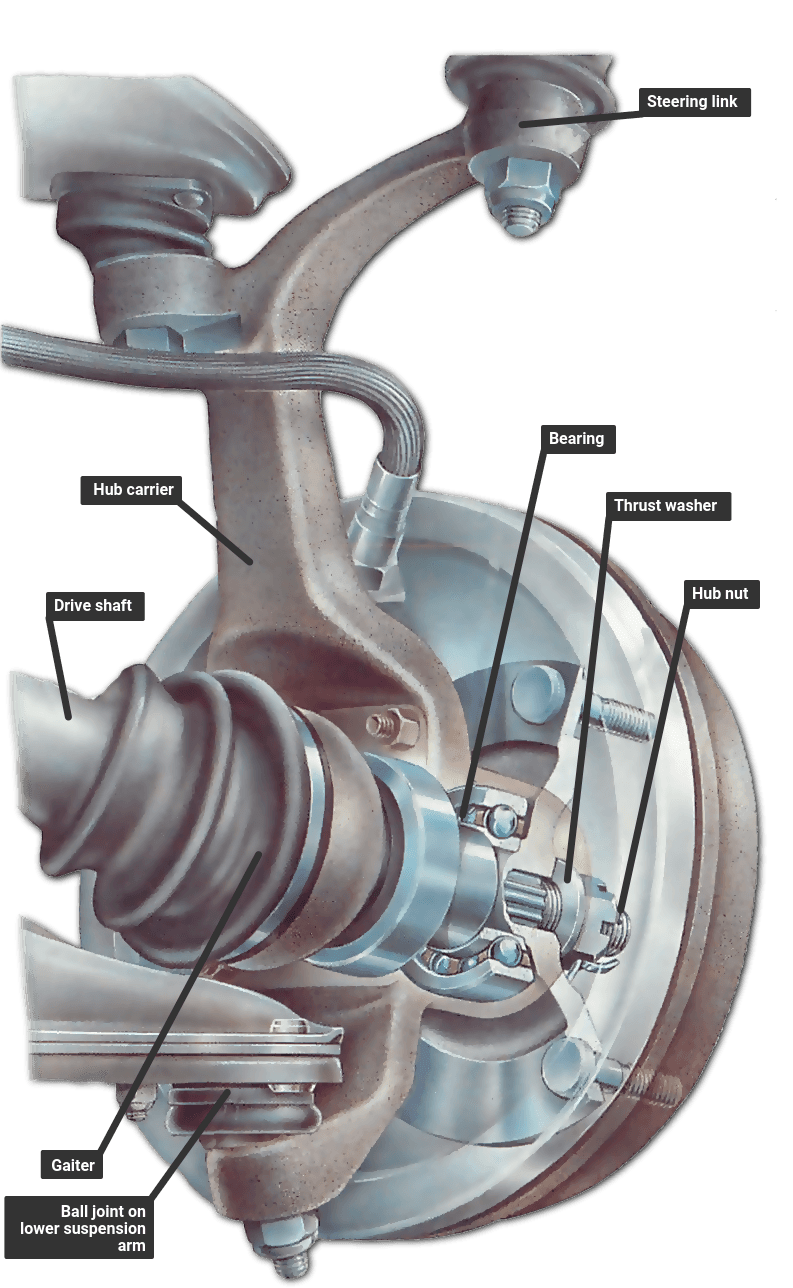
In the broadest sense, a wheel bearing is a set of steel balls or rollers held together by a metal ring, designed to enable the wheel to spin with minimal friction. It is a fundamental component of the wheel hub assembly, connecting the wheel to the axle and effectively bridging the gap between static and dynamic forces. While its primary function might seem straightforward, the technology encased within this compact unit is continually evolving, driven by demands for greater efficiency, durability, and integration with advanced vehicle systems. This deep dive will explore the wheel bearing from a technological perspective, dissecting its function, its integration within modern vehicles, diagnostic methodologies, and the future innovations shaping its design.
The Core Technology of Automotive Motion
At the heart of any vehicle’s movement lies the ability for its wheels to rotate freely and efficiently. This seemingly simple action is made possible by sophisticated bearing technology, which minimizes resistance and manages immense forces.
Defining the Wheel Bearing: A Critical Component
A wheel bearing is essentially a precision-engineered component that serves as a crucial interface between the wheel and the vehicle’s chassis. Its fundamental purpose is twofold: to reduce friction and to support the radial and axial loads exerted on the wheel. Without wheel bearings, the metal-on-metal contact would generate excessive heat, wear, and resistance, making movement impractical, if not impossible. By design, bearings contain highly polished, hardened steel elements (either balls or rollers) that roll between two races, or rings. This rolling motion transforms sliding friction into rolling friction, which is significantly lower, thereby allowing the wheel to spin smoothly and efficiently.
The wheel bearing is housed within the wheel hub assembly, a robust structure that bolts to the vehicle’s suspension system. This assembly not only contains the bearing but also provides the mounting point for the brake rotor or drum and the wheel itself. Its strategic placement ensures that the bearing can effectively distribute the vehicle’s weight, absorb impacts from road irregularities, and withstand the dynamic forces generated during acceleration, braking, and cornering. The integrity of the wheel bearing is paramount; any compromise in its function can lead to a cascade of issues affecting vehicle performance, safety, and comfort.
Types of Wheel Bearings: Evolution and Design
The technology of wheel bearings has undergone significant evolution, moving from simpler designs to highly integrated, multi-functional units. The choice of bearing type depends on the specific demands of the vehicle and its intended application, influencing everything from load capacity to maintenance requirements.
Early automotive designs often utilized cup and cone bearings, also known as tapered roller bearings. These bearings consist of an inner race (cone), an outer race (cup), and a set of tapered rollers. Their design is particularly adept at handling both radial loads (forces perpendicular to the axis of rotation) and axial loads (forces parallel to the axis of rotation), making them suitable for applications where forces can come from multiple directions. These typically require periodic greasing and adjustment, representing an older, more maintenance-intensive technology.
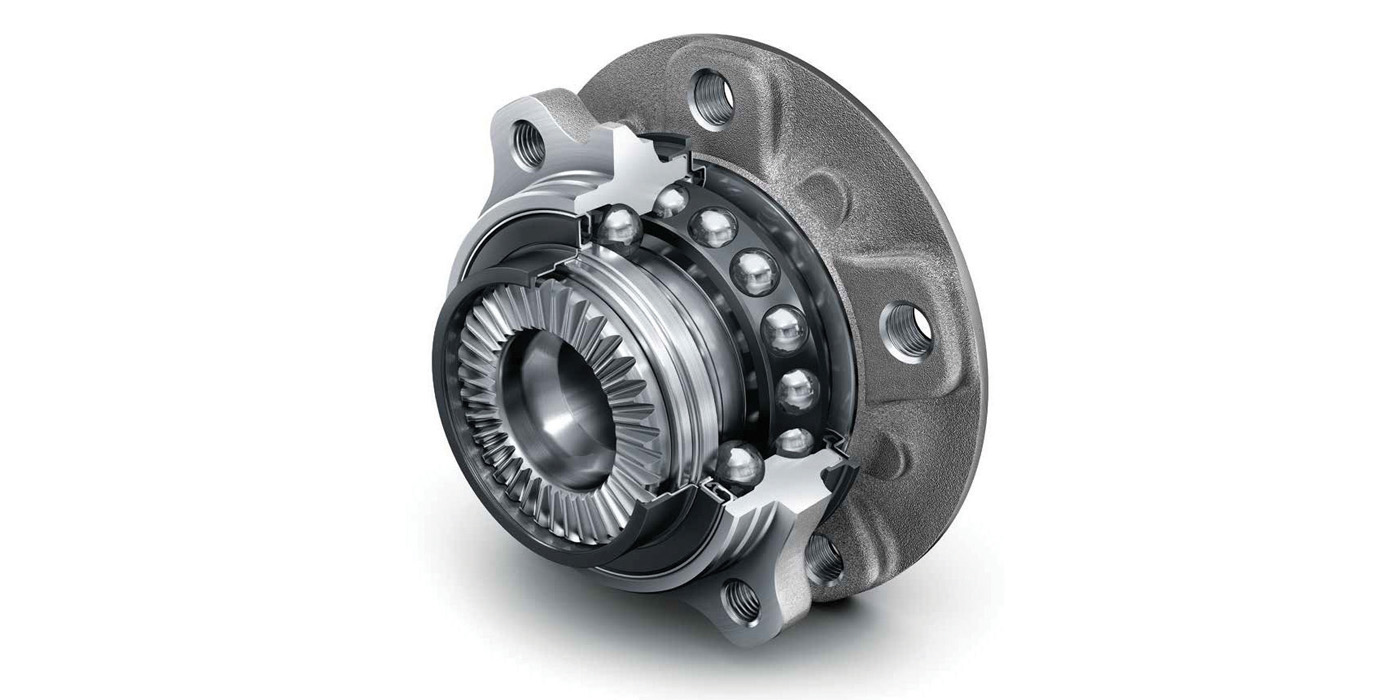
The advent of sealed bearing units marked a significant technological leap. These units, often referred to as hub bearing units, come pre-greased and sealed for life, eliminating the need for periodic maintenance. They are integrated assemblies that include the bearing, races, and seals in a single, compact unit, significantly simplifying installation and improving reliability. Modern vehicles predominantly feature these sealed units, which are often classified into generations:
- Generation 1: Individual sealed bearing cartridge, often pressed into the wheel hub.
- Generation 2: Bearing unit with an integrated flange for mounting to the suspension (often for non-driven wheels).
- Generation 3: Fully integrated hub unit that includes both inner and outer flanges, and often an ABS sensor, making it a complete, bolt-on assembly. This represents the pinnacle of current production bearing technology, offering maximum integration and minimal complexity for the vehicle manufacturer and mechanic.
The materials science behind these bearings is also crucial. High-carbon chromium steel is commonly used for bearing races and rolling elements due to its exceptional hardness, wear resistance, and fatigue strength. Advanced heat treatments and surface finishing techniques further enhance their durability and reduce friction, contributing to improved fuel efficiency and extended lifespan. The evolution of wheel bearing design is a testament to the continuous pursuit of robust, maintenance-free, and increasingly intelligent automotive components.
How Wheel Bearings Integrate into Vehicle Systems
Modern vehicles are intricate networks of interconnected systems, where each component plays a synergistic role. Wheel bearings, far from being isolated mechanical parts, are deeply integrated, influencing and being influenced by various other technologies within the vehicle.
The Role in Suspension and Steering Dynamics
The wheel bearing is a foundational element in the vehicle’s suspension and steering systems, directly impacting handling, stability, and the overall driving experience. By allowing the wheel to rotate smoothly, it forms the critical pivot point where the wheel connects to the steering knuckle and the suspension arms. This connection is not merely structural; it’s dynamic.
The bearing’s integrity directly affects how the steering system translates driver input into wheel movement. A healthy bearing ensures precise wheel alignment and consistent steering response. Conversely, a worn bearing can introduce play or looseness, leading to vague steering, reduced control, and even dangerous instability, particularly at higher speeds or during hard braking. Furthermore, the bearing’s ability to withstand various loads—vertical loads from the vehicle’s weight, lateral loads during cornering, and longitudinal loads from acceleration and braking—is crucial for maintaining proper suspension geometry. It helps to ensure that the tires maintain optimal contact with the road surface, which is vital for grip and safety.
Interaction with ABS and Traction Control Systems
Perhaps one of the most significant technological advancements in wheel bearing design is the integration of wheel speed sensors, crucial components for modern safety systems like Anti-lock Braking Systems (ABS) and Traction Control Systems (TCS). These “active wheel bearings” are typically Generation 3 units, where a magnetic encoder ring is built directly into the bearing seal. This ring, often with alternating north and south poles, passes by a stationary magnetic pickup (the ABS sensor) as the wheel rotates.
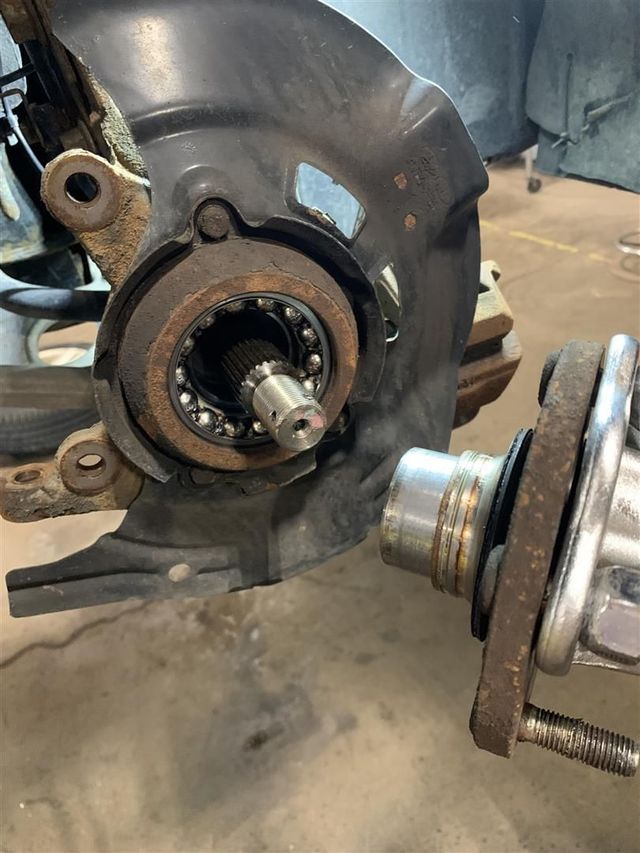
As the wheel spins, the magnetic field changes, inducing an electrical signal in the sensor. The frequency of this signal is directly proportional to the wheel’s rotational speed. This data is continuously fed to the vehicle’s Engine Control Unit (ECU) or a dedicated ABS/TCS module. The ECU uses this information to:
- Prevent wheel lock-up during braking (ABS): By monitoring individual wheel speeds, the system can detect if a wheel is about to lock up and modulate brake pressure to that wheel, maintaining steering control.
- Prevent wheel spin during acceleration (TCS): If one wheel starts spinning faster than the others, indicating a loss of traction, the system can reduce engine power or apply braking to that wheel to regain grip.
- Contribute to Electronic Stability Control (ESC): ESC systems use wheel speed data, along with yaw rate and steering angle sensors, to detect and correct skids, significantly enhancing vehicle stability in challenging conditions.
The seamless integration of these sensors transforms the wheel bearing from a purely mechanical component into a vital data provider for the vehicle’s sophisticated electronic safety and performance management systems. This synergy highlights the interconnected nature of automotive technology and how a seemingly simple part can underpin complex digital control.
Recognizing and Addressing Wheel Bearing Issues: A Diagnostic Tutorial
Despite their robust design, wheel bearings are subjected to immense stress and will eventually wear out. Recognizing the symptoms of a failing wheel bearing early is crucial for safety and preventing further damage to associated components. This section serves as a diagnostic tutorial, detailing common indicators and inspection techniques.
Common Symptoms of a Failing Wheel Bearing
A failing wheel bearing typically manifests through distinct auditory and tactile cues that signal a problem:
- Noise: This is often the most prominent symptom. It can range from a low-pitched humming or growling sound that increases with vehicle speed, to a high-pitched whirring or grinding noise. The sound may change in intensity when turning (e.g., louder when turning left might indicate a failing right wheel bearing, as the load shifts). This noise is caused by damaged rolling elements or races, leading to increased friction and vibration.
- Vibration: A worn bearing can introduce vibration, which may be felt through the steering wheel, the floorboard, or the accelerator pedal. This vibration often becomes more pronounced at specific speeds.
- Loose Steering or Wandering: Excessive play in the bearing can lead to a feeling of looseness in the steering, making the vehicle feel less responsive and requiring constant minor corrections to stay in a straight line.
- Uneven Tire Wear: While not a direct symptom, prolonged driving with a bad bearing can lead to uneven tire wear patterns (e.g., cupping or scalloping) due to the wheel not maintaining consistent contact with the road.
- ABS/Traction Control Light: If the integrated wheel speed sensor within a modern bearing fails, or if the bearing’s excessive play disrupts the sensor’s reading, the ABS or traction control warning light on the dashboard may illuminate. This indicates a malfunction in these critical safety systems.
Diagnostic Techniques and Tools
Diagnosing a failing wheel bearing can often be done with a combination of observation and hands-on inspection:
- Road Test and Listening: A professional technician will perform a road test, paying close attention to the sounds emanating from the wheels at various speeds and during turns. This helps isolate which side of the vehicle the noise is coming from.
- Lift and Shake Test: With the vehicle safely lifted off the ground, grip the wheel at the 12 and 6 o’clock positions and attempt to rock it. Then repeat at the 3 and 9 o’clock positions. Any noticeable play or clunking indicates excessive looseness, often pointing to a worn wheel bearing or a ball joint issue.
- Wheel Spin and Listen: With the vehicle still lifted, spin the wheel by hand while listening for grinding, scraping, or rough sounds. A mechanic’s stethoscope or a chassis ear (an electronic listening device) can be used to pinpoint the exact source of the noise.
- Temperature Check: After a drive, carefully feel the wheel hubs. A significantly hotter hub compared to the others can indicate excessive friction from a failing bearing.
- Professional Diagnostic Equipment: For vehicles with integrated ABS sensors, specialized scan tools can read fault codes related to wheel speed sensors. This provides precise electronic data, often confirming an issue within the bearing unit itself, even before mechanical symptoms become severe. The technological aspect of diagnostic tools allows for a much more accurate and efficient identification of the problem, preventing unnecessary replacements and ensuring the correct repair is made.
Maintenance and Longevity: Preserving Automotive Technology
While modern wheel bearings are designed for durability and minimal maintenance, understanding the factors that influence their lifespan and the proper procedures for their replacement is key to preserving their technological integrity and ensuring vehicle longevity.
Factors Affecting Wheel Bearing Lifespan
The lifespan of a wheel bearing is not immutable; it’s influenced by a confluence of environmental, operational, and physical factors:
- Driving Conditions: Aggressive driving, frequent encounters with potholes, curbs, or rough, unpaved roads subject bearings to excessive impact loads, accelerating wear. Off-roading, in particular, places extraordinary stress on these components.
- Impact Damage: Even a single severe impact, such as hitting a large pothole at speed or being involved in a minor accident, can cause internal damage to the bearing races or rolling elements, leading to premature failure.
- Exposure to Contaminants: While modern bearings are sealed, seals can degrade over time or be damaged. Once water, dirt, salt, or other corrosive elements penetrate the bearing, they can contaminate the grease and cause rapid wear and corrosion of the precision-machined internal components.
- Manufacturing Quality: The quality of materials (steel hardness, grease formulation) and the precision of manufacturing processes play a significant role. High-quality Original Equipment Manufacturer (OEM) or reputable aftermarket bearings typically offer superior durability.
- Vehicle Weight and Type: Heavier vehicles and those designed for heavy-duty applications naturally place greater stress on their bearings, which are typically designed to accommodate these loads. However, even these robust designs have limits.
- Installation Error: Incorrect installation, such as improper torqueing of the axle nut or damage during pressing, can significantly reduce the bearing’s life.
Preventive Measures and Replacement Considerations
While bearings are generally considered “maintenance-free” due to their sealed design, certain practices can contribute to their longevity and ensure timely replacement:
- Regular Inspections: During routine maintenance like tire rotations, brake checks, or suspension inspections, technicians should always include a check of the wheel bearings for play or noise. Early detection can prevent secondary damage to other components.
- Mindful Driving: Avoiding potholes and curbing wheels reduces unnecessary stress and impact on the bearings.
- Professional Installation: When a wheel bearing needs replacement, it is crucial to have it done by a qualified technician using the correct tools and procedures. Improper installation, especially with press-in bearings, can damage the new bearing or surrounding components. Specialized tools, such as bearing presses and torque wrenches, are essential for correct installation. The precise torque specification for the axle nut, for instance, is critical; over-tightening can preload the bearing excessively, leading to rapid wear, while under-tightening can cause play and premature failure.
- Quality Replacement Parts: Investing in high-quality replacement bearings from reputable manufacturers is advisable. While cheaper alternatives exist, they often use lower-grade materials or less precise manufacturing, leading to a shorter lifespan and potentially repeat failures. Considering the integrated nature of modern hub units, choosing a quality part ensures the reliable function of not just the bearing, but also the embedded ABS sensor.
The Future of Wheel Bearing Technology
The wheel bearing, seemingly a humble mechanical component, is not immune to the relentless march of technological innovation. As vehicles become smarter, more connected, and increasingly electrified, the demands on and capabilities of wheel bearings are also evolving.
Smart Bearings and Integrated Sensors
The current trend of integrating ABS sensors into wheel bearings is just the beginning. The future points towards “smart bearings” equipped with an array of advanced sensors capable of providing real-time data beyond just rotational speed. These could include:
- Temperature Sensors: Monitoring the bearing’s operating temperature can provide early warnings of impending failure due to overheating, enabling predictive maintenance before catastrophic damage occurs.
- Vibration and Load Sensors: Micro-electromechanical systems (MEMS) sensors integrated into the bearing could detect subtle changes in vibration patterns or excessive loads, indicating wear or damage that might not be audible or palpable to the driver.
- Bearing Condition Monitoring: By continuously analyzing data from these integrated sensors, the vehicle’s onboard diagnostics system could assess the health of each wheel bearing and alert the driver or mechanic to specific issues, moving from reactive maintenance to truly predictive maintenance. This would significantly reduce downtime, prevent roadside failures, and optimize maintenance schedules.
- Integration with ADAS: Real-time data from highly sophisticated wheel bearings could further enhance Advanced Driver-Assistance Systems (ADAS), providing more precise information for systems like adaptive cruise control, lane-keeping assist, and automatic emergency braking, improving their accuracy and responsiveness.
Material Innovations and Efficiency
The pursuit of greater efficiency and sustainability in automotive engineering will also drive advancements in wheel bearing materials and design:
- Lighter, Stronger Materials: Research into advanced alloys and composite materials could lead to bearings that are significantly lighter, reducing unsprung weight and improving vehicle dynamics and fuel economy, particularly critical for electric vehicles where range is paramount.
- Reduced Friction and Enhanced Lubrication: Innovations in surface coatings, lubricants, and bearing geometries aim to further minimize internal friction. This not only extends bearing life but also contributes to marginal gains in fuel efficiency for internal combustion engine vehicles and increased range for EVs by reducing energy losses.
- Self-Lubricating and Longer-Life Designs: The development of advanced grease formulations with extended lifespans, or even truly self-lubricating materials, could lead to bearings that last the entire service life of the vehicle, further reducing maintenance requirements and environmental impact.
In conclusion, the wheel bearing is far more than a simple mechanical part; it is a sophisticated piece of automotive technology that plays an indispensable role in vehicle performance, safety, and driver experience. From its fundamental function of enabling smooth rotation to its intricate integration with advanced electronic safety systems and its future as a ‘smart’ component, the wheel bearing exemplifies the continuous evolution and interconnectedness of modern automotive engineering. Understanding its operation, recognizing its failure points, and appreciating its technological trajectory is key to both maintaining current vehicles and envisioning the future of mobility.
aViewFromTheCave is a participant in the Amazon Services LLC Associates Program, an affiliate advertising program designed to provide a means for sites to earn advertising fees by advertising and linking to Amazon.com. Amazon, the Amazon logo, AmazonSupply, and the AmazonSupply logo are trademarks of Amazon.com, Inc. or its affiliates. As an Amazon Associate we earn affiliate commissions from qualifying purchases.