
The United Arab Emirates (UAE) stands as a beacon of economic prosperity and innovation in the Middle East, a hub for international business, tourism, and a melting pot of cultures. At the heart of its vibrant economy, facilitating every transaction from the daily purchase of spices in a souk to multi-million dollar real estate deals, is its national currency. For anyone looking to understand the UAE’s financial landscape – be it an aspiring investor, a curious tourist, or a business professional – the first crucial step is to grasp the identity and significance of its monetary unit.
The official currency of the United Arab Emirates is the Dirham, abbreviated internationally as AED. Often, you will also see it represented by its symbol, د.إ (pronounced “dinar” or “dirham”). This currency is not merely a medium of exchange; it is a symbol of the nation’s economic stability, its historical journey, and its ambitious vision for the future. Understanding the Dirham goes beyond knowing its name; it involves appreciating its structure, its stability mechanisms, and its pivotal role in both the regional and global financial ecosystems.
Understanding the UAE Dirham (AED)
The Dirham’s journey is intertwined with the very formation of the UAE itself, reflecting a calculated move towards financial sovereignty and stability. Established in 1973, following the creation of the federation, the Dirham replaced several currencies circulating in the emirates, including the Bahraini Dinar and the Qatar and Dubai Riyal, consolidating a unified monetary system crucial for national development.
The Official Name and Symbol
The term “Dirham” has deep historical roots, dating back to ancient Greece (drachma) and finding its way into Islamic finance through centuries. This nomenclature connects the modern UAE with a rich tradition of trade and currency. The official ISO 4217 code for the UAE Dirham is AED. While less common in everyday usage, financial institutions and foreign exchange markets widely use this three-letter code to denote the currency. The Arabic symbol د.إ is a common sight in local contexts, providing a distinct identity to the national currency. Each Dirham is subdivided into 100 fils, a smaller denomination that facilitates precise pricing, though physical fils coins are less frequently encountered in daily transactions for small amounts today.
Denominations: Banknotes and Coins
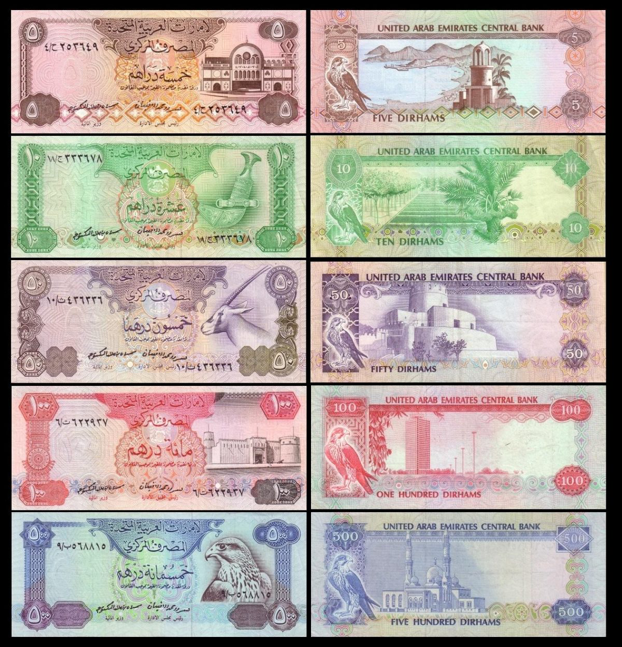
The UAE Central Bank issues the Dirham in various denominations, designed to cater to the diverse needs of its economy. The banknotes are particularly striking, often featuring iconic landmarks, historical figures, and symbols of national pride, making them not just currency but miniature works of art that tell the story of the UAE.
- Banknotes: Common denominations include 5, 10, 20, 50, 100, 200, 500, and 1000 Dirhams. The designs have evolved over time, with newer series incorporating advanced security features to combat counterfeiting. The higher denominations (e.g., 500 and 1000 AED) are critical for larger transactions, reflecting the significant economic activity within the country, while smaller notes are staples for daily spending. The newer polymer notes, like the 5, 10, 50, and recently launched 100 Dirham notes, represent a step towards greater durability and enhanced security.
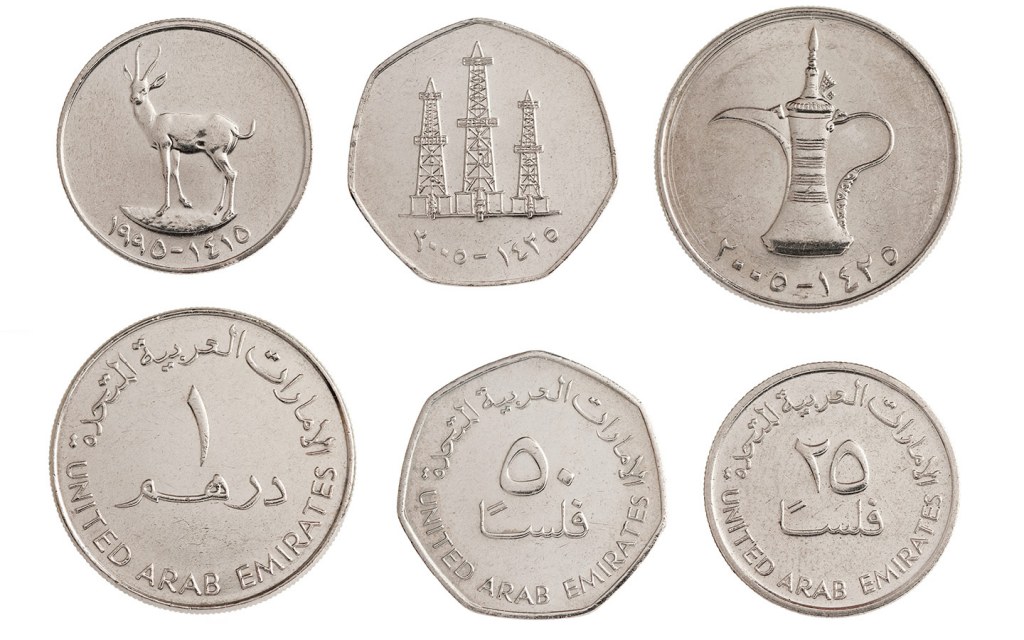
- Coins: While less common in circulation for small purchases due to the relatively high value of even the smallest Dirham note, coins exist for 1 Dirham and for fils (25 and 50 fils). They typically feature traditional symbols, such as a Dallah (traditional Arab coffee pot) or a gazelle, connecting the modern currency to the nation’s cultural heritage.
The meticulous design and robust security features of both banknotes and coins underscore the Central Bank’s commitment to maintaining the integrity and trustworthiness of the UAE Dirham, a cornerstone of financial confidence.
Historical Context and Evolution
The establishment of the UAE Dirham in 1973 was a pivotal moment, marking a significant step in the young nation’s consolidation and economic independence. Before this, various currencies circulated, creating a fragmented monetary landscape. The adoption of a single, unified currency under the supervision of the UAE Central Bank provided a stable foundation for economic growth, facilitated inter-emirate trade, and presented a clear financial identity to the international community. Over the decades, the Dirham has matured alongside the UAE’s economy, adapting to global financial shifts while maintaining its core stability, a testament to prudent monetary policy.
The Dirham’s Role in the UAE Economy
The Dirham is far more than just cash; it is the economic lifeblood of the UAE, deeply integrated into its financial policies and global standing. Its stability and management are crucial factors contributing to the UAE’s reputation as a secure and attractive destination for investment and business.
Pegged Exchange Rate and Stability
One of the most defining characteristics of the UAE Dirham, and a key factor in its remarkable stability, is its fixed exchange rate against the US Dollar. Since 1997, the Dirham has been officially pegged at a rate of 1 US Dollar = 3.6725 Dirhams. This peg provides an anchor of stability, shielding the UAE economy from much of the volatility that can affect currencies in developing or resource-dependent nations.
The benefits of a pegged currency are manifold:
- Reduced Exchange Rate Risk: Businesses engaged in international trade and foreign investors benefit from predictable currency conversions, making financial planning simpler and more reliable.
- Inflation Control: The peg helps to import the low inflation rates of the US economy, contributing to price stability within the UAE.
- Investor Confidence: The stability provided by the peg enhances investor confidence, as they are less concerned about currency devaluation eroding their returns.
- Facilitates Oil Trade: Given that oil, the UAE’s historical primary export, is priced in US Dollars, the peg simplifies transactions and reduces currency conversion complexities for the state’s main revenue stream.
The UAE Central Bank actively manages this peg through its monetary policy, ensuring sufficient foreign exchange reserves to maintain the fixed rate, thereby bolstering economic confidence both domestically and internationally.
Impact on Trade and Foreign Investment
The Dirham’s stability, underpinned by its peg to the US Dollar, significantly impacts the UAE’s robust trade relations and its appeal to foreign direct investment (FDI). For international businesses considering establishing a presence in Dubai, Abu Dhabi, or other emirates, the predictable currency environment reduces financial risk and simplifies cost analysis. This certainty is a major draw for multinational corporations and foreign investors, contributing to the UAE’s status as a global financial and trade hub.
Moreover, the Dirham facilitates smooth international transactions, making the UAE an attractive base for re-export activities and global supply chains. The ease of converting Dirhams to major international currencies, particularly the US Dollar, streamlines operations for businesses engaged in importing goods, exporting products, or providing international services, thus reinforcing the UAE’s position in global commerce.
Local Business and Consumer Transactions
Domestically, the Dirham is the undisputed medium for all economic activities. From purchasing groceries and paying rent to processing salaries and settling business invoices, the Dirham underpins every facet of the UAE’s internal economy. Its consistent value provides a stable environment for local businesses to plan and grow, and for consumers to manage their personal finances without the constant worry of rapid currency fluctuations eroding their purchasing power. This stability fosters consumer confidence and encourages economic activity, contributing to the UAE’s dynamic and thriving domestic market.
Practical Aspects for Residents and Visitors
Navigating the financial landscape of the UAE, whether as a long-term resident, an expat professional, or a short-term tourist, requires a practical understanding of how to handle the Dirham. From exchanging currency to utilizing modern payment methods, smart financial practices can enhance one’s experience and financial well-being.
Exchanging Currency: Best Practices
For visitors, exchanging foreign currency into Dirhams is a common necessity. While major currencies like the USD, EUR, GBP, and JPY are widely accepted at exchange houses, it’s advisable to understand the best practices:
- Exchange Houses vs. Banks: Dedicated currency exchange houses often offer more competitive rates and lower fees compared to commercial banks or airport exchange kiosks. They are plentiful in malls, city centers, and tourist areas.
- ATMs: ATMs are ubiquitous and provide a convenient way to withdraw Dirhams using international debit or credit cards. However, be mindful of potential foreign transaction fees charged by your home bank and the local ATM operator.
- Credit/Debit Cards: Major credit and debit cards (Visa, MasterCard, American Express) are widely accepted across the UAE, from hotels and restaurants to supermarkets and larger retail outlets. This often negates the need to carry large amounts of cash.
- Avoid Airport Exchange: While convenient upon arrival, airport exchange rates are typically less favorable. It’s better to exchange a small initial amount for immediate needs and then seek better rates in the city.
Digital Payments and Financial Inclusion
The UAE is at the forefront of digital transformation, and its financial sector is no exception. Digital payment solutions are increasingly prevalent, offering convenience and security for both residents and visitors.
- Contactless Payments: Most POS terminals support contactless payments, allowing users to tap their cards or smartphones (via Apple Pay, Google Pay, Samsung Pay) for quick transactions.
- Mobile Wallets and Apps: A growing number of local mobile payment apps are gaining traction, often linked to bank accounts or credit cards, providing seamless transaction experiences.
- Online Banking: UAE banks offer robust online and mobile banking platforms, enabling residents to manage their accounts, pay bills, and transfer funds efficiently.
- Financial Inclusion Initiatives: The government and financial institutions are continually working towards greater financial inclusion, leveraging technology to provide access to banking services for all segments of the population, including the large expat workforce.
Managing Finances: Tips for Expats and Tourists
Effective financial management is key to thriving in the UAE.
- Budgeting in AED: Expats should create a comprehensive budget in Dirhams, accounting for rent, utilities, transport, food, and leisure, which can be significantly different from their home countries.
- Understanding Cost of Living: While salaries can be attractive, the cost of living, particularly in cities like Dubai and Abu Dhabi, can be high. Researching typical expenses in Dirhams before relocating is crucial.
- Banking Services: Opening a local bank account is essential for expats for salary transfers, bill payments, and managing daily expenses. Banks offer various account types, often with specific benefits for residents.
- Currency Conversion Awareness: Tourists should always be aware of the prevailing exchange rates and any fees when converting money. When offered to pay in your home currency on a credit card (Dynamic Currency Conversion), it’s often more expensive than paying in Dirhams.
- Emergency Funds: For both residents and visitors, having an accessible emergency fund in Dirhams is a prudent financial strategy.
Future of the Dirham and Financial Landscape
The UAE is renowned for its visionary leadership and proactive approach to economic development. The Dirham, as the backbone of this economy, is naturally positioned to evolve alongside the nation’s ambitious plans, facing new challenges and embracing innovations in the global financial arena.
Economic Diversification and the Dirham
Historically, the UAE’s economy was heavily reliant on oil and gas revenues. However, under strategic national visions like “UAE Centennial 2071” and “Dubai Plan 2021,” there has been a significant push towards economic diversification, focusing on sectors such as tourism, logistics, technology, finance, and renewable energy. This diversification strategy aims to reduce dependence on hydrocarbons and build a sustainable, knowledge-based economy.
The Dirham plays a critical role in this transition. A diversified economy will inherently lead to a broader base of revenue streams, further strengthening the Dirham’s stability and resilience against fluctuations in global oil prices. As non-oil sectors grow, the Dirham’s value will increasingly reflect the health and productivity of these new industries, cementing its position as a robust currency backed by a resilient and multi-faceted economy. This sustained economic growth, fueled by diversification, will continue to attract foreign investment, further bolstering the Dirham’s international standing.
Fintech Innovations and Digital Currency Discussions
The UAE has emerged as a regional leader in embracing financial technology (Fintech), actively promoting innovation within its financial sector. The Central Bank of the UAE (CBUAE) is at the forefront of exploring the potential of emerging technologies, including blockchain and digital currencies.
- Project Aber: A notable initiative, Project Aber, was a joint venture between the CBUAE and the Saudi Central Bank to explore a common digital currency for cross-border payments between the two countries, leveraging distributed ledger technology. While not a retail CBDC, it demonstrated the CBUAE’s readiness to explore new frontiers.
- CBDC Exploration: The CBUAE has also been actively researching and developing its own Central Bank Digital Currency (CBDC). A digital Dirham could potentially enhance payment efficiency, reduce transaction costs, foster financial inclusion, and improve monetary policy implementation. The CBUAE’s “Financial Infrastructure Transformation Programme (FITP)” specifically includes the issuance of a digital Dirham as one of its key pillars.
- Regulatory Sandboxes: The establishment of regulatory sandboxes and incubators by financial free zones like Abu Dhabi Global Market (ADGM) and Dubai International Financial Centre (DIFC) provides a testing ground for innovative Fintech solutions, ensuring that the UAE remains at the cutting edge of financial services.
These initiatives indicate a future where the Dirham, while maintaining its physical form, could also exist and transact significantly in digital formats, reflecting the global trend towards cashless societies and digital finance. This would not only modernize the payment landscape but also potentially enhance the Dirham’s international utility and accessibility.

Global Standing and Economic Resilience
The Dirham’s consistent stability, backed by the UAE’s strong economic fundamentals, prudent fiscal policies, and substantial foreign reserves, contributes significantly to the nation’s global standing. The UAE is often viewed as a safe haven economy, and its currency reflects this perception. The peg to the US Dollar, while providing stability, is also supported by the UAE’s massive trade surpluses and its ability to attract substantial foreign investment, creating a self-reinforcing cycle of economic confidence.
Looking ahead, as the UAE continues its trajectory of innovation and diversification, the Dirham is poised to maintain its status as a reliable and respected currency on the international stage. Its resilience will be tested and proven by global economic shifts, but the nation’s proactive strategies in economic planning, technological adoption, and financial market development suggest a strong and stable future for the UAE Dirham, underpinning the continued prosperity of the United Arab Emirates. For individuals and businesses worldwide, understanding and engaging with the Dirham will remain a cornerstone of successful financial interaction with this dynamic nation.
aViewFromTheCave is a participant in the Amazon Services LLC Associates Program, an affiliate advertising program designed to provide a means for sites to earn advertising fees by advertising and linking to Amazon.com. Amazon, the Amazon logo, AmazonSupply, and the AmazonSupply logo are trademarks of Amazon.com, Inc. or its affiliates. As an Amazon Associate we earn affiliate commissions from qualifying purchases.