
In the world of traditional finance, the concept of an infinite money supply has become a standard, albeit controversial, reality. Central banks across the globe regularly engage in quantitative easing, adjusting the money supply to meet economic targets. However, the advent of Bitcoin introduced a radical departure from this norm: programmatic scarcity. For investors and financial enthusiasts, the question of “how many Bitcoin have been mined” is not merely a technical statistic; it is the cornerstone of the asset’s value proposition as “digital gold.”
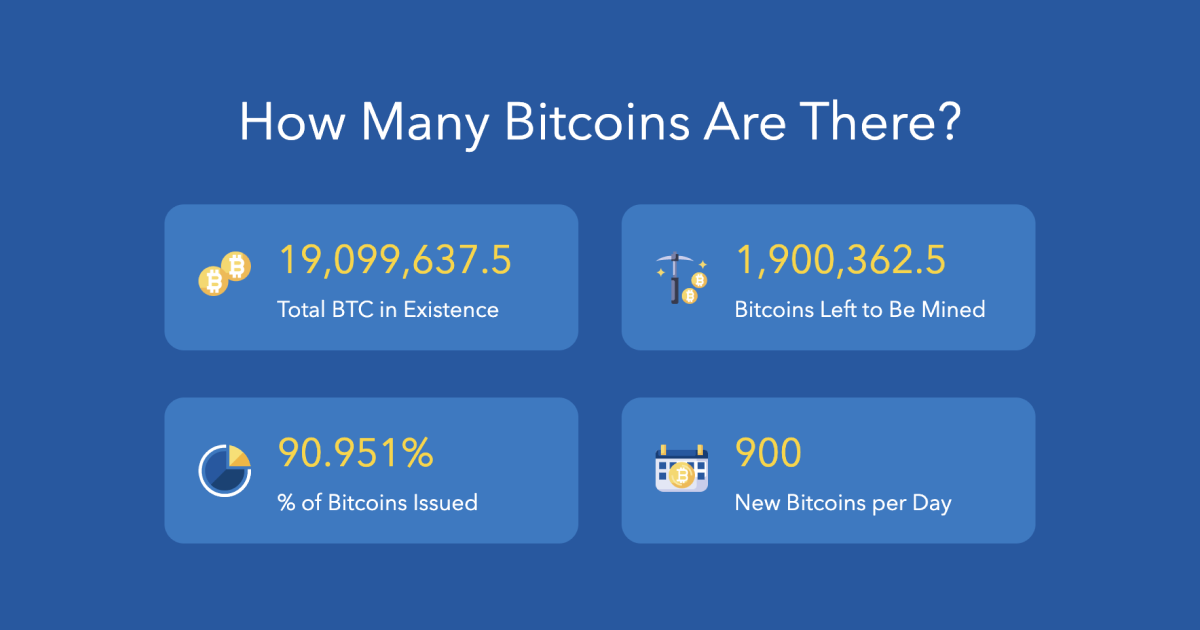
As of mid-2024, approximately 19.7 million Bitcoins have been mined. This leaves fewer than 1.3 million coins left to be brought into existence over the next century. This finite nature is what separates Bitcoin from every other financial asset in history. In this article, we will explore the financial mechanics behind Bitcoin’s supply, the implications of its decreasing issuance rate, and what the remaining supply means for the future of global wealth preservation.
The Economics of Scarcity: The 21 Million Hard Cap
The most critical figure in the Bitcoin ecosystem is 21 million. This is the absolute maximum number of coins that will ever exist, hardcoded into the protocol by its anonymous creator, Satoshi Nakamoto. Unlike fiat currencies, which can be printed at the discretion of government entities, Bitcoin’s supply is governed by transparent, immutable mathematical laws.
The Monetary Policy of Mathematics
Bitcoin operates on a transparent monetary policy that is visible to everyone. While a central bank might change interest rates or increase the monetary base behind closed doors, Bitcoin’s issuance is predictable. Every ten minutes, a new “block” is added to the blockchain, and with it, new Bitcoins are released into circulation. This predictability allows investors to model future supply with 100% accuracy, a feat impossible with the US Dollar, Euro, or Yen. This transition from “human-governed money” to “math-governed money” represents a paradigm shift in how we perceive value.
Current Supply and the “Last Satoshi”
With over 19.7 million coins already in circulation, we have reached a point where roughly 93.8% of the total supply has already been distributed. However, the remaining 6.2% will take significantly longer to mine than the first 93%. Due to the programmed reduction in issuance, the final Bitcoin is not expected to be mined until approximately the year 2140. For the modern investor, this means we are currently living through the most significant period of supply expansion Bitcoin will ever see. Once this phase concludes, the asset enters a state of absolute terminal scarcity.
The Halving Mechanism: Managing Inflation and Liquidity
To understand why the remaining Bitcoins will take over a century to mine, one must understand the “Halving.” Approximately every four years (or every 210,000 blocks), the reward given to Bitcoin miners for securing the network is cut in half. This is the primary mechanism Bitcoin uses to control inflation and simulate the increasing difficulty of extracting a natural resource like gold.
How Block Rewards Shape Market Supply
When Bitcoin first launched in 2009, the block reward was 50 BTC. In 2012, it dropped to 25; in 2016, to 12.5; in 2020, to 6.25; and most recently in April 2024, it dropped to 3.125 BTC. This periodic reduction creates a “supply shock.” While demand for the asset may stay the same or grow, the rate at which new supply enters the market is slashed. From a purely economic standpoint, if demand remains constant while new supply is halved, the pressure on price is theoretically upward.
The Transition to a Transaction Fee Economy
As the number of Bitcoins mined nears the 21 million limit, a common concern for investors is the incentive for miners to continue securing the network. Currently, miners are paid in both newly minted Bitcoin and transaction fees. As the block reward approaches zero, transaction fees will become the primary source of revenue for the mining industry. This transition is a vital component of Bitcoin’s long-term financial viability. If Bitcoin becomes a global settlement layer, the volume of transaction fees should theoretically be sufficient to maintain a robust and secure network, even without the issuance of new coins.

The Reality of Effective Supply: Circulating vs. Lost Coins
While the “mined” number sits near 19.7 million, the effective circulating supply is likely much lower. In the early days of Bitcoin, when the asset had little to no monetary value, many users were careless with their private keys. This has led to a significant portion of the supply being “burned” or lost forever in the digital void.
The Phenomenon of Zombie Coins
Blockchain analysis firms like Chainalysis and Glassnode estimate that between 3 to 4 million Bitcoins are likely lost forever. These “Zombie Coins” belong to individuals who lost their hard drives, forgot their seed phrases, or passed away without leaving instructions for their heirs. Most notably, Satoshi Nakamoto is estimated to hold roughly 1.1 million BTC that has not moved in over a decade. When we subtract these lost coins from the 19.7 million mined, the actual liquid supply available for purchase is closer to 15 or 16 million. For the investor, this increases the scarcity of the asset even further than the 21 million cap suggests.
Institutional Accumulation and the “Illiquid Supply”
In recent years, we have seen a shift from retail “trading” to institutional “holding.” With the approval of Spot Bitcoin ETFs and the entry of firms like MicroStrategy and Tesla into the market, a massive amount of Bitcoin is being moved into “cold storage.” These institutions view Bitcoin as a long-term reserve asset rather than a speculative instrument. As more mined coins move into the hands of long-term holders (often referred to as “Diamond Hands” in market parlance), the “free float”—the amount of Bitcoin actually available on exchanges—continues to shrink. This creates a liquidity crunch that can amplify price movements during bull cycles.
Strategic Portfolio Allocation in a Supply-Constrained Market
Understanding how many Bitcoins have been mined is the first step in developing a sophisticated investment strategy. Because Bitcoin is the first truly scarce global asset, it behaves differently than stocks, bonds, or real estate, which can all be “created” or expanded in various ways.
Bitcoin as a Hedge Against Monetary Debasement
For many financial advisors, the primary reason to hold Bitcoin is its role as a hedge against the expansion of the M2 money supply. When central banks print money, the purchasing power of each unit of currency is diluted. Because the supply of Bitcoin is fixed and nearly all of it has already been mined, it cannot be diluted. In this context, Bitcoin acts as a “Value Store” insurance policy. If the global money supply continues to grow while the Bitcoin supply remains stagnant, the denominated price of Bitcoin in those currencies is likely to rise over long time horizons.
Assessing the “Stock-to-Flow” Model
The Stock-to-Flow (S2F) model is a popular financial metric used to value commodities like gold and silver based on their scarcity. “Stock” refers to the total amount already mined (19.7 million), and “flow” refers to the annual production (the amount mined per year). As the “flow” of Bitcoin decreases with each halving, its Stock-to-Flow ratio increases, indicating higher scarcity. Currently, Bitcoin’s S2F ratio is higher than that of gold, making it—mathematically speaking—the scarcest liquid asset on the planet. For investors, this ratio provides a framework for understanding why Bitcoin has historically outperformed traditional asset classes over four-year cycles.

Conclusion: The Final Frontier of Finance
The journey of Bitcoin mining is more than halfway over in terms of units, but it is only just beginning in terms of global financial integration. With 19.7 million coins already mined and the “easy” era of high block rewards behind us, we are entering a phase of intense competition for the remaining supply.
For the individual investor, the fixed supply of Bitcoin represents a unique opportunity to own a piece of a global, decentralized network that cannot be manipulated by any government or corporation. As the “flow” of new coins continues to dry up and institutional demand continues to rise, the importance of those 21 million units will only grow. Whether viewed as a speculative venture or a revolutionary savings account, the hard-capped supply of Bitcoin remains the most compelling financial experiment of the 21st century. Understanding the scarcity today is the key to navigating the wealth landscape of tomorrow.
aViewFromTheCave is a participant in the Amazon Services LLC Associates Program, an affiliate advertising program designed to provide a means for sites to earn advertising fees by advertising and linking to Amazon.com. Amazon, the Amazon logo, AmazonSupply, and the AmazonSupply logo are trademarks of Amazon.com, Inc. or its affiliates. As an Amazon Associate we earn affiliate commissions from qualifying purchases.